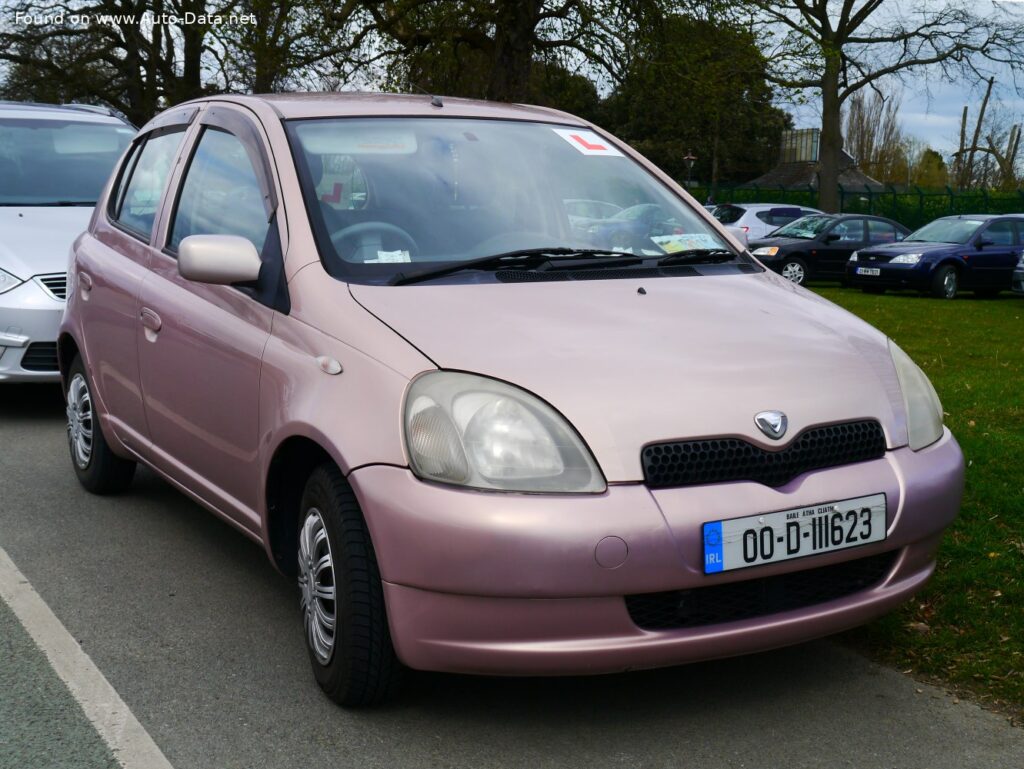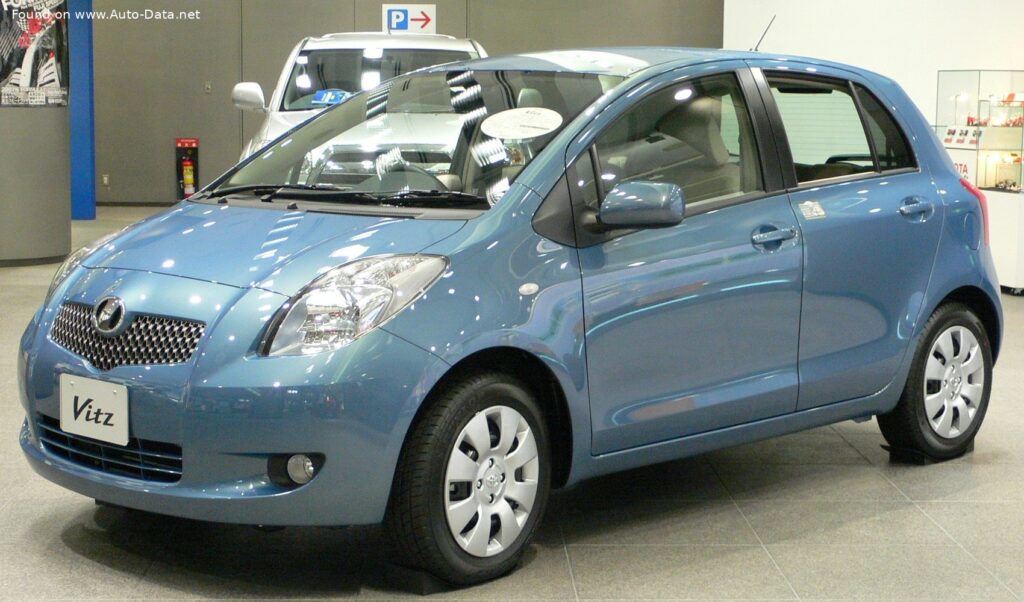
The Toyota Vitz (known as the Toyota Yaris in most global markets, including the United States) is a subcompact hatchback produced by Toyota Motor Corporation. The Vitz II, manufactured between 2005 and 2011, represented a significant evolution of the original Vitz, offering increased space, improved refinement, and a more contemporary design. While not directly sold as the Vitz in the US during this generation, the Yaris served the same market segment – providing an affordable, fuel-efficient, and practical transportation solution. The 1.3 16V RS Automatic variant, detailed here, was a popular choice, particularly in Japan and Europe, offering a balance of performance and economy.
Toyota Vitz II 1.3 16V RS: A Detailed Overview
The Vitz II aimed to address criticisms of the first generation, primarily concerning interior space and overall refinement. The second generation featured a more rounded exterior design and a significantly redesigned interior, offering more legroom and headroom for passengers. The 1.3 16V RS trim level, equipped with the 1.3-liter engine and an automatic transmission, was positioned as a sporty, yet practical, option within the Vitz lineup. It catered to drivers seeking a responsive driving experience without sacrificing the fuel efficiency and ease of use expected from a subcompact vehicle.
Engine & Performance
The heart of the Vitz II 1.3 16V RS is a 1.3-liter (1298 cm3 or 79.21 cubic inches) inline four-cylinder gasoline engine. This naturally aspirated engine produces 98 horsepower at 6200 rpm and 143 Nm (105.47 lb.-ft.) of torque at 4200 rpm. While not a powerhouse, the engine’s power-to-weight ratio of 10 kg/Hp (100 Hp/tonne) provides adequate performance for urban driving and highway cruising. The automatic transmission, featuring four gears, is designed for smooth and efficient operation. The engine utilizes a multi-port fuel injection system and a double overhead camshaft (DOHC) valvetrain, contributing to its relatively efficient combustion process. The engine’s specific output of 75.5 Hp/l demonstrates Toyota’s focus on maximizing power from a small displacement.
Design & Features
The Vitz II is a compact hatchback available in both three-door and five-door configurations. The design prioritized maximizing interior space within a small footprint. The rounded exterior styling was a departure from the more angular design of the first generation, giving the car a more modern and approachable appearance. Inside, the Vitz II offered a surprisingly spacious cabin for its size, with comfortable seating for five passengers. The dashboard layout was functional and user-friendly, with logically placed controls. Safety features, while not as comprehensive as those found in larger vehicles, included an Anti-lock Braking System (ABS) as standard equipment. The Vitz II’s focus was on practicality and affordability, making it a popular choice for first-time car buyers and city dwellers. The hydraulic power steering provided light and easy maneuverability, ideal for navigating tight urban streets.
Technical Specifications
| Brand | Toyota |
| Model | Vitz |
| Generation | Vitz II |
| Type (Engine) | 1.3 16V RS (98 Hp) Automatic |
| Start of production | 2005 |
| End of production | 2011 |
| Powertrain Architecture | Internal Combustion engine |
| Body type | Hatchback |
| Seats | 5 |
| Doors | 3/5 |
| Fuel Type | Petrol (Gasoline) |
| Weight-to-power ratio | 10 kg/Hp |
| Weight-to-torque ratio | 6.9 kg/Nm |
| Power | 98 Hp @ 6200 rpm |
| Power per litre | 75.5 Hp/l |
| Torque | 143 Nm @ 4200 rpm (105.47 lb.-ft. @ 4200 rpm) |
| Engine layout | Front, Transverse |
| Engine displacement | 1298 cm3 (79.21 cu. in.) |
| Number of cylinders | 4 |
| Engine configuration | Inline |
| Cylinder Bore | 75 mm (2.95 in.) |
| Piston Stroke | 73.5 mm (2.89 in.) |
| Compression ratio | 10.5:1 |
| Number of valves per cylinder | 4 |
| Fuel injection system | Multi-port manifold injection |
| Engine aspiration | Naturally aspirated engine |
| Valvetrain | DOHC |
| Kerb Weight | 980 kg (2160.53 lbs.) |
| Fuel tank capacity | 45 l (11.89 US gal | 9.9 UK gal) |
| Wheelbase | 2370 mm (93.31 in.) |
| Front track | 1445 mm (56.89 in.) |
| Rear (Back) track | 1420 mm (55.91 in.) |
| Minimum turning circle (turning diameter) | 8.6 m (28.22 ft.) |
| Drivetrain Architecture | Internal Combustion engine (ICE) drives the front wheels |
| Drive wheel | Front wheel drive |
| Number of gears and type of gearbox | 4 gears, automatic transmission |
| Front suspension | Independent type McPherson |
| Front brakes | Disc |
| Rear brakes | Disc |
| Assisting systems | ABS (Anti-lock braking system) |
| Steering type | Steering rack and pinion |
| Power steering | Hydraulic Steering |
The Toyota Vitz II 1.3 16V RS Automatic, while not a performance car in the traditional sense, offered a compelling package of efficiency, practicality, and ease of use. Its popularity in markets outside of North America demonstrates the demand for well-engineered, compact hatchbacks that prioritize fuel economy and maneuverability. The Vitz II served as a crucial stepping stone in Toyota’s ongoing development of small, efficient vehicles, paving the way for future generations of the Yaris/Vitz.