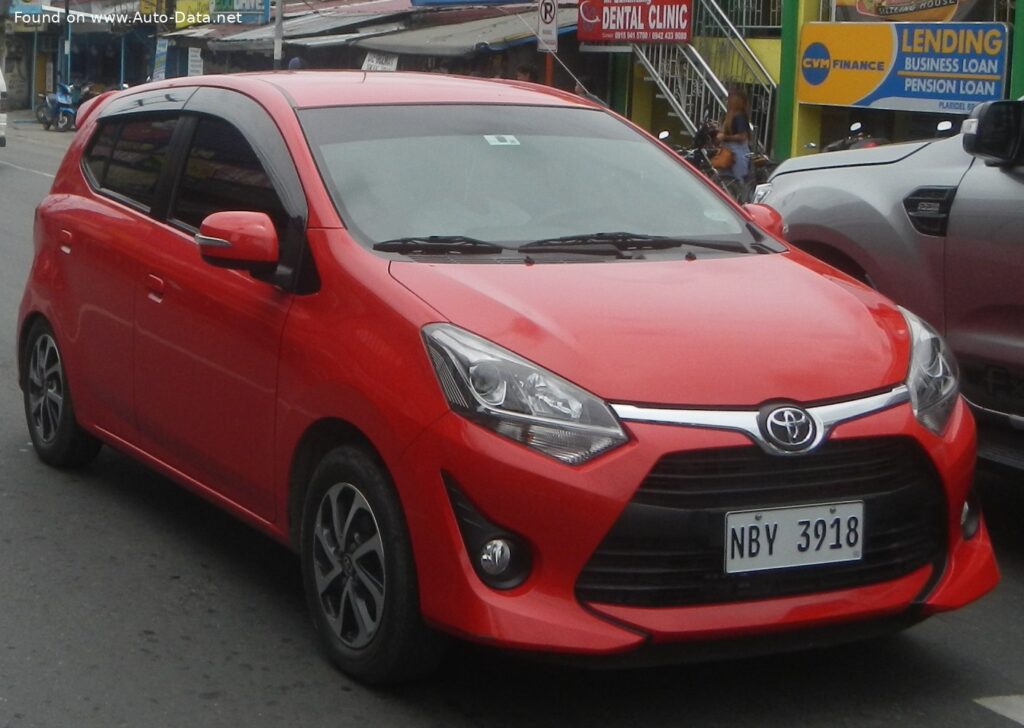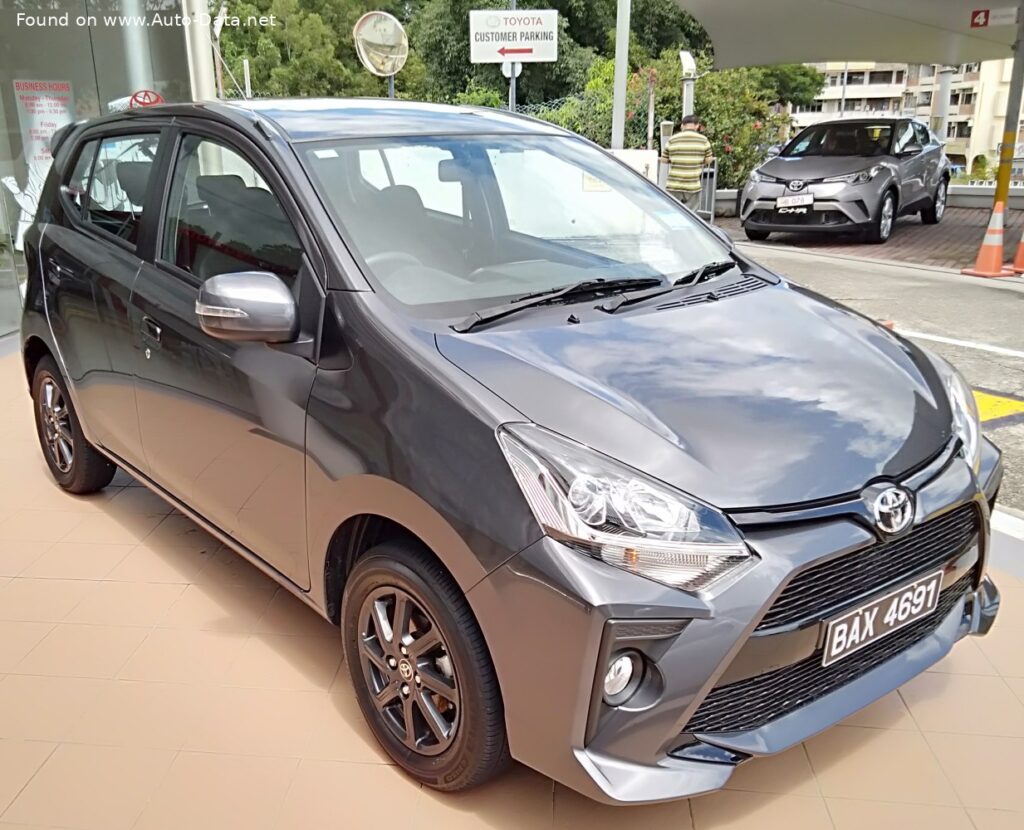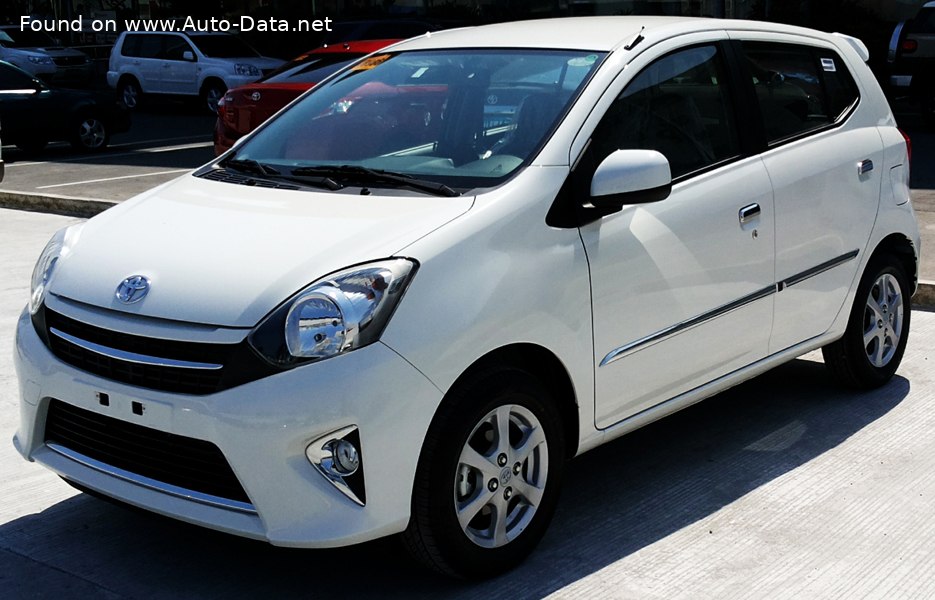
The Toyota Wigo 1.0i Automatic, produced between 2014 and 2017, is a city car primarily aimed at the Southeast Asian market. While not officially sold in the United States, the Wigo represents Toyota’s entry-level offering in countries like the Philippines, Indonesia, and Thailand, where affordable and fuel-efficient transportation is highly valued. It falls into the subcompact hatchback segment, designed for navigating congested urban environments. The Wigo is a rebadged version of the Daihatsu Ayla, a result of the strategic partnership between Toyota and Daihatsu, allowing both companies to leverage shared platforms and reduce development costs. This collaboration is common in Asian markets, offering consumers a range of affordable options.
Toyota Wigo 1.0i: An Overview
The Wigo was introduced to address the growing demand for small, economical vehicles in rapidly developing Asian nations. Its compact size, coupled with a relatively low price point, made it an attractive option for first-time car buyers and those seeking a practical second vehicle for city commuting. The 1.0i designation refers to the engine displacement, and the “Automatic” indicates the transmission type. The Wigo’s design prioritizes functionality and ease of use, rather than outright performance or luxury. It quickly gained popularity due to its reliability, fuel efficiency, and ease of maintenance – characteristics synonymous with the Toyota brand.
Engine & Performance
The Toyota Wigo 1.0i is powered by the 1KR-FE engine, a 998 cc inline-3 cylinder petrol engine. This engine produces 65 horsepower at 6000 rpm and 85 Nm (62.69 lb.-ft.) of torque at 3600 rpm. While not a powerhouse, the engine is designed for efficiency and responsiveness in urban driving conditions. The power-to-weight ratio, at 65.1 hp per liter, is respectable for a vehicle of this size and class. The engine utilizes a multi-port fuel injection system and a double overhead camshaft (DOHC) valvetrain to optimize combustion and power delivery. The engine is transversely mounted at the front of the vehicle, driving the front wheels. The Wigo’s four-speed automatic transmission provides smooth and convenient gear changes, further enhancing its usability in stop-and-go traffic. The 1KR-FE engine is known for its durability and relatively low maintenance requirements, contributing to the Wigo’s overall appeal.
Design & Features
The Toyota Wigo is a five-door hatchback with a practical and functional design. Its compact dimensions – 3600 mm in length, 1620 mm in width, and 1520 mm in height – make it easy to maneuver and park in crowded city streets. The Wigo offers seating for five passengers, although rear passenger space is somewhat limited. The interior is designed with simplicity in mind, featuring durable materials and a straightforward layout. Key features include an electric power steering system for ease of handling, and an Anti-lock Braking System (ABS) for enhanced safety. The Wigo’s ride height of 180 mm (7.09 inches) provides adequate ground clearance for navigating uneven road surfaces. The vehicle rides on 175/65 R14 tires mounted on 5J x 14 inch wheel rims. While not equipped with advanced infotainment systems common in modern vehicles, the Wigo prioritizes essential features and affordability.
Technical Specifications
| Brand | Toyota |
| Model | Wigo |
| Generation | Wigo |
| Type (Engine) | 1.0i (65 Hp) Automatic |
| Start of production | 2014 |
| End of production | 2017 |
| Powertrain Architecture | Internal Combustion engine |
| Body type | Hatchback |
| Seats | 5 |
| Doors | 5 |
| Fuel Type | Petrol (Gasoline) |
| Power | 65 Hp @ 6000 rpm |
| Power per litre | 65.1 Hp/l |
| Torque | 85 Nm @ 3600 rpm / 62.69 lb.-ft. @ 3600 rpm |
| Engine layout | Front, Transverse |
| Engine Model/Code | 1KR-FE |
| Engine displacement | 998 cm3 / 60.9 cu. in. |
| Number of cylinders | 3 |
| Engine configuration | Inline |
| Cylinder Bore | 71 mm / 2.8 in. |
| Piston Stroke | 84 mm / 3.31 in. |
| Number of valves per cylinder | 4 |
| Fuel injection system | Multi-port manifold injection |
| Engine aspiration | Naturally aspirated engine |
| Valvetrain | DOHC |
| Engine oil capacity | 2.7 l / 2.85 US qt | 2.38 UK qt |
| Fuel tank capacity | 33 l / 8.72 US gal | 7.26 UK gal |
| Length | 3600 mm / 141.73 in. |
| Width | 1620 mm / 63.78 in. |
| Height | 1520 mm / 59.84 in. |
| Wheelbase | 2450 mm / 96.46 in. |
| Front track | 1410 mm / 55.51 in. |
| Rear (Back) track | 1405 mm / 55.31 in. |
| Ride height (ground clearance) | 180 mm / 7.09 in. |
| Minimum turning circle (turning diameter) | 9.4 m / 30.84 ft. |
| Drivetrain Architecture | The Internal combustion engine (ICE) drives the front wheels of the vehicle. |
| Drive wheel | Front wheel drive |
| Number of gears and type of gearbox | 4 gears, automatic transmission |
| Front suspension | Independent, type McPherson with coil spring and anti-roll bar |
| Rear suspension | Torsion |
| Front brakes | Ventilated discs |
| Rear brakes | Drum |
| Assisting systems | ABS (Anti-lock braking system) |
| Steering type | Steering rack and pinion |
| Power steering | Electric Steering |
| Tires size | 175/65 R14 |
| Wheel rims size | 5J x 14 |
In conclusion, the Toyota Wigo 1.0i Automatic, while not available in the US market, served a crucial role in providing affordable and reliable transportation in Southeast Asia. Its compact size, fuel efficiency, and durable engine made it a popular choice for urban commuters. The Wigo exemplifies Toyota’s commitment to offering practical and accessible vehicles to a wide range of consumers, even in developing markets.