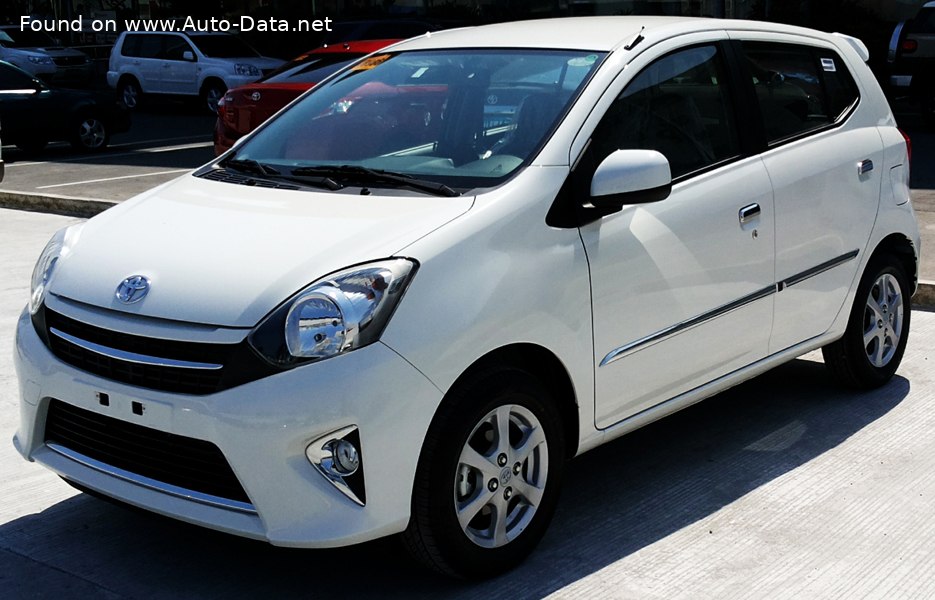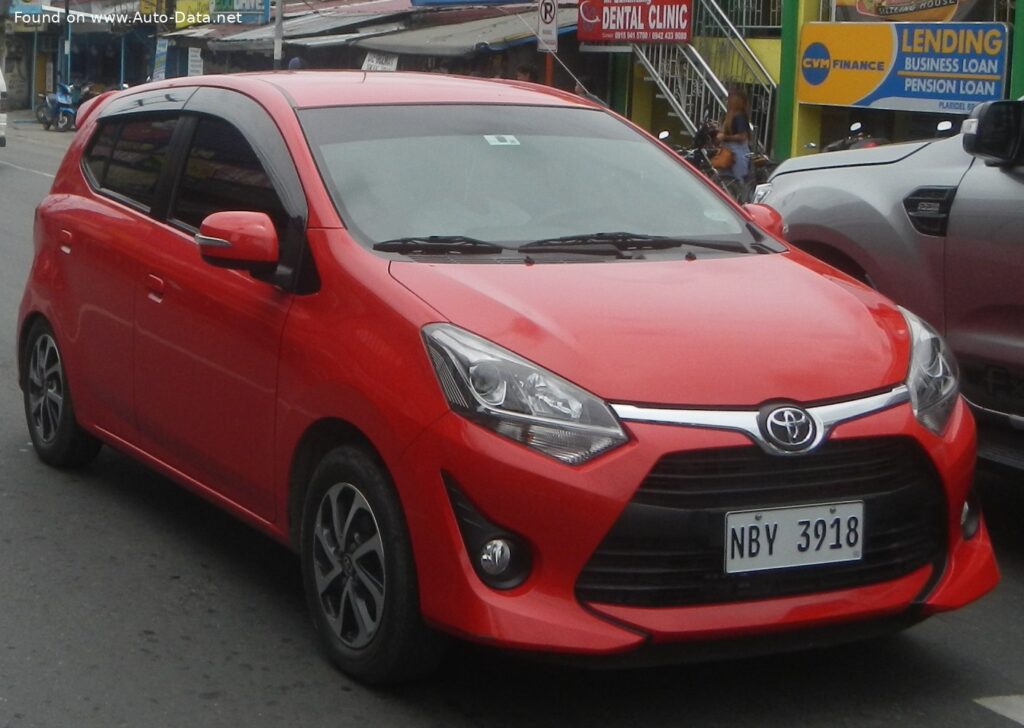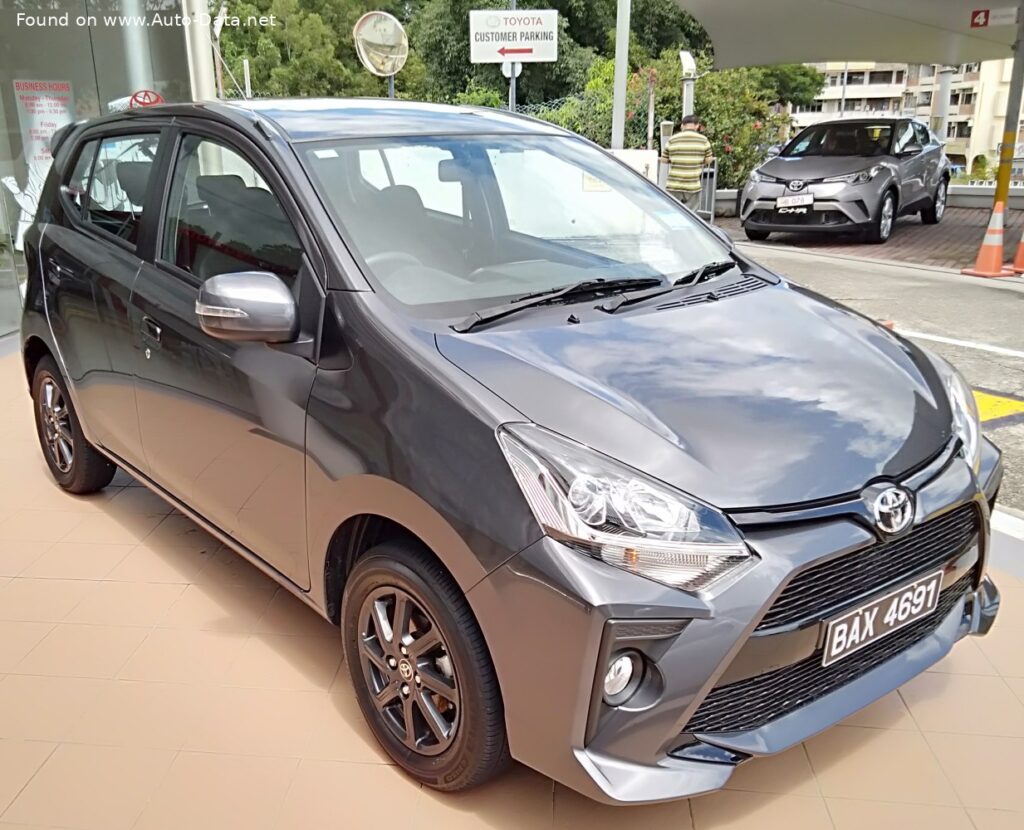
The Toyota Wigo is a city car produced by the Japanese automaker Toyota, primarily aimed at the Southeast Asian market. The Wigo, known as the Toyota Agya in Indonesia, occupies the entry-level hatchback segment, offering an affordable and practical transportation solution. The 2020 facelift represents a significant update to the second generation, introducing revised styling, enhanced features, and continued focus on fuel efficiency. While not officially sold in the United States, understanding the Wigo provides insight into Toyota’s strategy for emerging markets and its commitment to producing accessible vehicles.
Toyota Wigo (Facelift 2020): An Overview
The Wigo (facelift 2020) is a five-door hatchback designed to navigate congested urban environments. It’s characterized by its compact dimensions, making it easy to maneuver and park. The facelift brought with it a more aggressive front fascia, updated interior trim, and improvements to standard equipment. The vehicle is positioned as a budget-friendly option, competing with other small hatchbacks in its class. The 1.0L engine paired with an automatic transmission is a popular configuration, prioritizing ease of use and fuel economy over outright performance.
Engine & Performance
Powering the 2020 Toyota Wigo is a 1.0-liter (998 cm3) inline-3 cylinder gasoline engine, designated the 1KR-VE. This naturally aspirated engine produces 67 horsepower at 6000 rpm and 85 Nm (62.69 lb.-ft.) of torque at 3600 rpm. While not a powerhouse, the engine is designed for efficiency and responsiveness in city driving conditions. The power-to-weight ratio of 11.9 kg/Hp (84.3 Hp/tonne) reflects the vehicle’s lightweight construction. The engine utilizes a multi-port fuel injection system and a Double Overhead Camshaft (DOHC) valvetrain for optimized combustion. A four-speed automatic transmission is standard, providing smooth and convenient gear changes. The Wigo also incorporates a Start & Stop System to further enhance fuel economy. Fuel consumption is rated at 4.4 l/100 km (53.5 US mpg, 64.2 UK mpg, 22.7 km/l), making it one of the more fuel-efficient vehicles in its class. The engine also includes a particulate filter, reflecting increasing environmental regulations.
Design & Features
The 2020 Wigo facelift features a compact hatchback body style with five doors and seating for five passengers. The exterior design is characterized by a more prominent front grille, redesigned headlights, and a sportier bumper. The interior has been updated with improved materials and a more modern dashboard layout. While the Wigo is an entry-level vehicle, it offers essential features such as air conditioning, power windows, and a basic audio system. Safety features include an Anti-lock Braking System (ABS). The vehicle’s dimensions – 3600 mm (141.73 in.) in length, 1620 mm (63.78 in.) in width, and 1520 mm (59.84 in.) in height – contribute to its maneuverability in urban settings. The 2450 mm (96.46 in.) wheelbase provides a relatively stable ride, while the 180 mm (7.09 in.) ground clearance allows it to handle uneven road surfaces. The Wigo’s design prioritizes practicality and affordability, making it a popular choice for first-time car buyers and those seeking a reliable city commuter.
Technical Specifications
| Brand | Toyota |
| Model | Wigo |
| Generation | Wigo (facelift 2020) |
| Type (Engine) | 1.0L (67 Hp) Automatic |
| Start of production | 2020 |
| Powertrain Architecture | Internal Combustion engine |
| Body type | Hatchback |
| Seats | 5 |
| Doors | 5 |
| Fuel consumption (combined) | 4.4 l/100 km (53.5 US mpg, 64.2 UK mpg, 22.7 km/l) |
| Fuel Type | Petrol (Gasoline) |
| Weight-to-power ratio | 11.9 kg/Hp, 84.3 Hp/tonne |
| Weight-to-torque ratio | 9.4 kg/Nm, 106.9 Nm/tonne |
| Power | 67 Hp @ 6000 rpm |
| Power per litre | 67.1 Hp/l |
| Torque | 85 Nm @ 3600 rpm (62.69 lb.-ft. @ 3600 rpm) |
| Engine layout | Front, Transverse |
| Engine Model/Code | 1KR-VE |
| Engine displacement | 998 cm3 (60.9 cu. in.) |
| Number of cylinders | 3 |
| Engine configuration | Inline |
| Number of valves per cylinder | 4 |
| Fuel injection system | Multi-port manifold injection |
| Engine aspiration | Naturally aspirated |
| Valvetrain | DOHC |
| Engine oil capacity | 2.7 l (2.85 US qt | 2.38 UK qt) |
| Coolant capacity | 3.7 l (3.91 US qt | 3.26 UK qt) |
| Kerb Weight | 795 kg (1752.67 lbs.) |
| Max. weight | 1100 kg (2425.08 lbs.) |
| Max load | 305 kg (672.41 lbs.) |
| Fuel tank capacity | 33 l (8.72 US gal | 7.26 UK gal) |
| Length | 3600 mm (141.73 in.) |
| Width | 1620 mm (63.78 in.) |
| Height | 1520 mm (59.84 in.) |
| Wheelbase | 2450 mm (96.46 in.) |
| Front track | 1410 mm (55.51 in.) |
| Rear track | 1405 mm (55.31 in.) |
| Ride height (ground clearance) | 180 mm (7.09 in.) |
| Minimum turning circle | 9.4 m (30.84 ft.) |
| Drivetrain Architecture | Front wheel drive, Internal Combustion engine |
| Number of gears and type of gearbox | 4 gears, automatic transmission |
| Front suspension | Independent type McPherson |
| Rear suspension | Torsion |
| Front brakes | Ventilated discs |
| Rear brakes | Drum |
| Assisting systems | ABS (Anti-lock braking system) |
| Steering type | Steering rack and pinion |
| Power steering | Electric |
| Tires size | 175/65 R14 |
| Wheel rims size | 14 |
The Toyota Wigo (facelift 2020) represents a compelling option in the entry-level hatchback segment, particularly in markets where affordability and fuel efficiency are paramount. Its compact size, practical features, and reliable Toyota engineering make it a popular choice for urban commuters.