
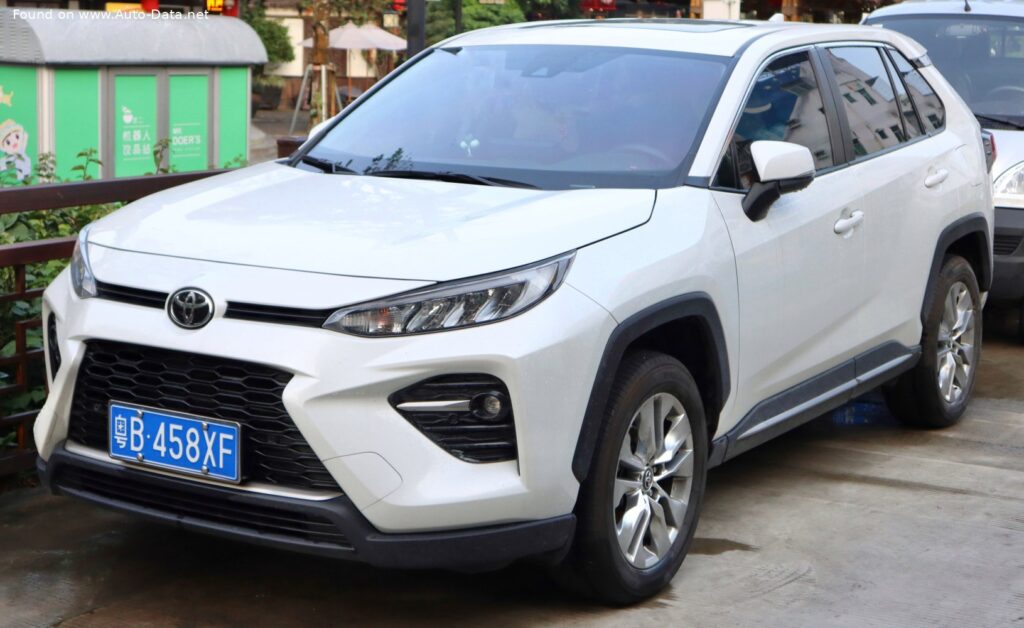
The Toyota Wildlander, a compact SUV produced from 2019 to November 2025, represents Toyota’s entry into a competitive segment, primarily targeted towards the Asian and European markets. While not officially sold in the United States, understanding the Wildlander provides insight into Toyota’s global SUV strategy and its application of modern powertrain and safety technologies. The Wildlander I, powered by a 2.0-liter engine, offers a balance of fuel efficiency and practicality for families and urban drivers. This article details the specifications and features of the Toyota Wildlander I 2.0L (171 Hp) CVT.
Toyota Wildlander I: An Overview
The Toyota Wildlander occupies the compact SUV niche, designed to appeal to buyers seeking a versatile vehicle for daily commuting and weekend adventures. Introduced in 2019, the Wildlander is built on the Toyota New Global Architecture (TNGA) platform, known for its improved rigidity and driving dynamics. It’s essentially a rebadged version of the Toyota RAV4 for markets where the RAV4 isn’t directly offered or where Toyota seeks to differentiate its offerings. The Wildlander I, specifically the 2.0L CVT variant, focuses on providing a comfortable and efficient driving experience, utilizing a continuously variable transmission to optimize fuel economy.
Engine & Performance
The Toyota Wildlander I 2.0L is equipped with the M20C-FKS inline-four cylinder, naturally aspirated gasoline engine. This engine produces 171 horsepower at 6,600 rpm and 209 Nm (154.15 lb.-ft.) of torque between 4,400 and 5,000 rpm. The engine’s power-to-weight ratio is 9 kg/Hp, or 111 Hp/tonne, and the torque-to-weight ratio is 7.4 kg/Nm, or 135.7 Nm/tonne. The engine features direct injection and a multi-port manifold injection system, contributing to both power delivery and fuel efficiency. A key feature is the inclusion of Toyota’s VVT-iE (Variable Valve Timing with intelligence – Electric motor) and VVT-i technologies, optimizing valve timing for improved performance and reduced emissions. The engine displaces 1987 cm³ (121.25 cu. in.) and boasts a compression ratio of 13:1. The powertrain is paired with a 10-speed continuously variable transmission (CVT), designed to provide smooth acceleration and maximize fuel economy. The Wildlander I 2.0L achieves a combined fuel consumption of 5.7-5.9 liters per 100 kilometers (41.3 – 39.9 US mpg, 49.6 – 47.9 UK mpg, 17.5 – 16.9 km/l). The vehicle has a maximum speed of 180 km/h (111.85 mph).
Design & Features
The Toyota Wildlander I is a five-door, five-seat SUV with a modern and robust exterior design. It measures 4665 mm (183.66 in.) in length, 1855 mm (73.03 in.) in width, and 1680 mm (66.14 in.) in height, with a wheelbase of 2690 mm (105.91 in.). The vehicle’s design emphasizes a strong stance and a spacious interior. Standard features include McPherson independent front suspension and a double wishbone rear suspension, providing a comfortable ride. Braking is handled by ventilated discs at the front and discs at the rear, supplemented by an Anti-lock Braking System (ABS). The Wildlander incorporates a Start & Stop System to further enhance fuel efficiency and reduce emissions. A particulate filter is also included to minimize harmful exhaust particles. The interior is designed with practicality in mind, offering ample space for passengers and cargo. The fuel tank capacity is 55 liters (14.53 US gal, 12.1 UK gal). The Wildlander’s approach and departure angles are 17.8° and 20.1° respectively, providing reasonable off-road capability for light terrain.
Technical Specifications
| Brand | Toyota |
| Model | Wildlander |
| Generation | Wildlander I |
| Type (Engine) | 2.0L (171 Hp) CVT |
| Start of production | 2019 |
| End of production | November, 2025 |
| Powertrain Architecture | Internal Combustion engine |
| Body type | SUV |
| Seats | 5 |
| Doors | 5 |
| Fuel consumption (combined) | 5.7-5.9 l/100 km (41.3 – 39.9 US mpg, 49.6 – 47.9 UK mpg, 17.5 – 16.9 km/l) |
| Fuel Type | Petrol (Gasoline) |
| Maximum speed | 180 km/h (111.85 mph) |
| Weight-to-power ratio | 9 kg/Hp, 111 Hp/tonne |
| Weight-to-torque ratio | 7.4 kg/Nm, 135.7 Nm/tonne |
| Power | 171 Hp @ 6600 rpm |
| Power per litre | 86.1 Hp/l |
| Torque | 209 Nm @ 4400-5000 rpm (154.15 lb.-ft. @ 4400-5000 rpm) |
| Engine layout | Front, Transverse |
| Engine Model/Code | M20C-FKS |
| Engine displacement | 1987 cm3 (121.25 cu. in.) |
| Number of cylinders | 4 |
| Engine configuration | Inline |
| Cylinder Bore | 80.5 mm (3.17 in.) |
| Piston Stroke | 97.6 mm (3.84 in.) |
| Compression ratio | 13:1 |
| Number of valves per cylinder | 4 |
| Fuel injection system | Direct injection and Multi-port manifold injection |
| Engine aspiration | Naturally aspirated engine |
| Valvetrain | DOHC, VVT-iE, VVT-i |
| Engine oil capacity | 4.3 l (4.54 US qt | 3.78 UK qt) |
| Coolant | 6.9 l (7.29 US qt | 6.07 UK qt) |
| Kerb Weight | 1540-1595 kg (3395.12 – 3516.37 lbs.) |
| Fuel tank capacity | 55 l (14.53 US gal | 12.1 UK gal) |
| Length | 4665 mm (183.66 in.) |
| Width | 1855 mm (73.03 in.) |
| Height | 1680 mm (66.14 in.) |
| Wheelbase | 2690 mm (105.91 in.) |
| Front track | 1595-1605 mm (62.8 – 63.19 in.) |
| Rear track | 1610-1620 mm (63.39 – 63.78 in.) |
| Minimum turning circle | 11.0-11.4 m (36.09 – 37.4 ft.) |
| Drivetrain Architecture | ICE drives front wheels |
| Drive wheel | Front wheel drive |
| Number of gears | 10 gears, automatic transmission CVT |
| Front suspension | Independent type McPherson |
| Rear suspension | Double wishbone |
| Front brakes | Ventilated discs |
| Rear brakes | Disc |
| Steering type | Steering rack and pinion |
| Power steering | Electric Steering |
| Tires size | 225/60 R18; 235/55 R19 |
| Wheel rims size | 18; 19 |
In conclusion, the Toyota Wildlander I 2.0L CVT offers a compelling package for buyers seeking a fuel-efficient and practical compact SUV. While not available in the US market, it showcases Toyota’s commitment to delivering reliable and technologically advanced vehicles globally.
