
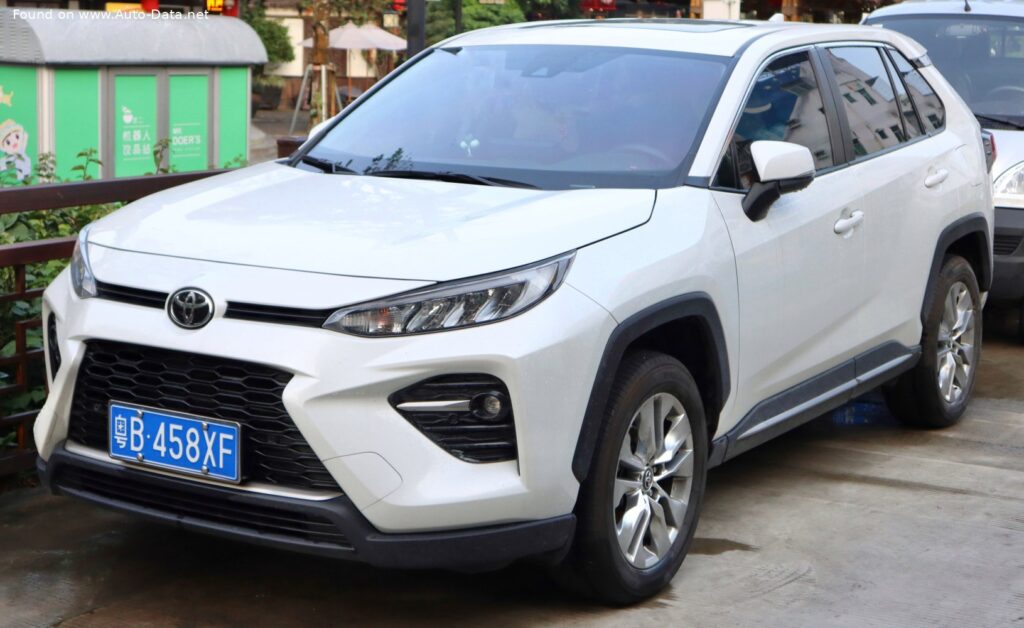
The Toyota Wildlander, known as the Toyota Harrier in markets like Japan and Australia, is a compact crossover SUV produced by Toyota from 2019 to November 2025. Positioned above the RAV4 in some markets, the Wildlander aimed to offer a more stylish and premium alternative within the popular compact SUV segment. While not officially sold in the United States, understanding the Wildlander provides insight into Toyota’s global strategy for hybrid technology and crossover design. This article details the first generation Wildlander, focusing on the 2.5L Hybrid variant.
Toyota Wildlander I 2.5L Hybrid: An Overview
The Wildlander I represents Toyota’s attempt to cater to a growing demand for sophisticated, fuel-efficient SUVs. It leverages Toyota’s established hybrid technology, offering a blend of performance and economy. The vehicle was primarily marketed in regions like Europe, Asia, and Australia, where demand for compact SUVs with hybrid powertrains is particularly strong. The Wildlander’s design emphasizes a sleek, modern aesthetic, differentiating it from the more utilitarian RAV4. It competes with vehicles like the Honda CR-V, Nissan X-Trail, and Mazda CX-5 in its target markets.
Engine & Performance
The core of the Wildlander I 2.5L Hybrid is its Full Hybrid Electric Vehicle (FHEV) powertrain. This system combines a 2.5-liter, inline-four cylinder gasoline engine (designated A25B-FXS) with an electric motor. The gasoline engine produces 178 horsepower at 5700 rpm and 221 Newton-meters (163 lb-ft) of torque between 3600-5200 rpm. The electric motor contributes an additional 120 horsepower and 202 Nm (148.99 lb-ft) of torque. Combined, the system delivers a total output of 218 horsepower. Power is delivered to the front wheels via an electronically controlled continuously variable transmission (e-CVT). This configuration allows for seamless transitions between gasoline and electric power, optimizing fuel efficiency and reducing emissions. The Wildlander achieves a combined fuel consumption of 4.6-4.7 liters per 100 kilometers (51.1-50 US mpg), showcasing the effectiveness of its hybrid system. The vehicle has a top speed of 180 km/h (111.85 mph). The weight-to-power ratio is 7.5 kg/Hp, and the weight-to-torque ratio is 7.4 kg/Nm.
Design & Features
The Toyota Wildlander I boasts a contemporary SUV design. It features a five-door body style with seating for five passengers. The exterior styling is characterized by flowing lines, a prominent grille, and sleek headlights. The vehicle’s dimensions are 4665 mm (183.66 in) in length, 1855 mm (73.03 in) in width, and 1680 mm (66.14 in) in height, with a wheelbase of 2690 mm (105.91 in). Inside, the Wildlander offers a comfortable and well-appointed cabin. Standard features typically include a touchscreen infotainment system, automatic climate control, and a suite of advanced safety technologies. The battery, utilizing Nickel-metal hydride (NiMH) technology with a voltage of 244.8V, is strategically located under the rear seats, minimizing intrusion into passenger or cargo space. Safety features include ABS (Anti-lock braking system) and a comprehensive airbag system. The approach angle is 17.8° and the departure angle is 20.1°.
Technical Specifications
| Brand | Toyota |
| Model | Wildlander |
| Generation | Wildlander I |
| Type (Engine) | 2.5L (218 Hp) Hybrid e-CVT |
| Start of production | 2019 |
| End of production | November, 2025 |
| Powertrain Architecture | FHEV (Full Hybrid Electric Vehicle) |
| Body type | SUV |
| Seats | 5 |
| Doors | 5 |
| Fuel consumption (combined) | 4.6-4.7 l/100 km (51.1 – 50 US mpg) |
| Fuel Type | Petrol (Gasoline) |
| Maximum speed | 180 km/h (111.85 mph) |
| Weight-to-power ratio | 7.5 kg/Hp |
| Weight-to-torque ratio | 7.4 kg/Nm |
| Battery voltage | 244.8 V |
| Battery technology | Nickel-metal hydride (NiMH) |
| Battery location | Under the rear seats |
| Electric motor power | 120 Hp |
| Electric motor Torque | 202 Nm (148.99 lb.-ft.) |
| Electric motor location | Integrated into the transmission |
| Electric motor type | Synchronous |
| System power | 218 Hp |
| Power | 178 Hp @ 5700 rpm |
| Torque | 221 Nm @ 3600-5200 rpm (163 lb.-ft. @ 3600-5200 rpm) |
| Engine layout | Front, Transverse |
| Engine Model/Code | A25B-FXS |
| Engine displacement | 2487 cm3 (151.77 cu. in.) |
| Number of cylinders | 4 |
| Engine configuration | Inline |
| Cylinder Bore | 87.5 mm (3.44 in.) |
| Piston Stroke | 103.4 mm (4.07 in.) |
| Compression ratio | 14:1 |
| Number of valves per cylinder | 4 |
| Fuel injection system | Direct injection and Multi-port manifold injection |
| Engine aspiration | Naturally aspirated engine |
| Valvetrain | DOHC, VVT-iE, VVT-i |
| Engine oil capacity | 4.5 l (4.76 US qt | 3.96 UK qt) |
| Coolant | 6.7 l (7.08 US qt | 5.9 UK qt) |
| Kerb Weight | 1645-1695 kg (3626.6 – 3736.84 lbs.) |
| Fuel tank capacity | 55 l (14.53 US gal | 12.1 UK gal) |
| Length | 4665 mm (183.66 in.) |
| Width | 1855 mm (73.03 in.) |
| Height | 1680 mm (66.14 in.) |
| Wheelbase | 2690 mm (105.91 in.) |
| Front track | 1605 mm (63.19 in.) |
| Rear track | 1620 mm (63.78 in.) |
| Minimum turning circle | 11.0 m (36.09 ft.) |
| Drivetrain Architecture | Front wheel drive. FHEV. ICE and electric motor drive front wheels. |
| Drive wheel | Front wheel drive |
| Number of gears | automatic transmission e-CVT |
| Front suspension | Independent type McPherson |
| Rear suspension | Double wishbone |
| Front brakes | Ventilated discs |
| Rear brakes | Disc |
| Tires size | 225/60 R18 |
| Wheel rims size | 18 |
The Toyota Wildlander I 2.5L Hybrid represents a significant step in Toyota’s commitment to hybrid technology and stylish SUV design. While not available in the US market, it showcases the company’s global approach to meeting diverse consumer needs and preferences. Its efficient powertrain, comfortable interior, and modern features make it a compelling option in the competitive compact SUV segment.
