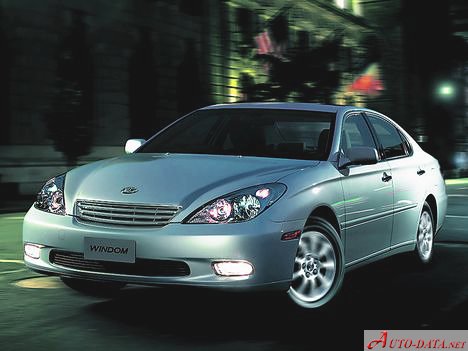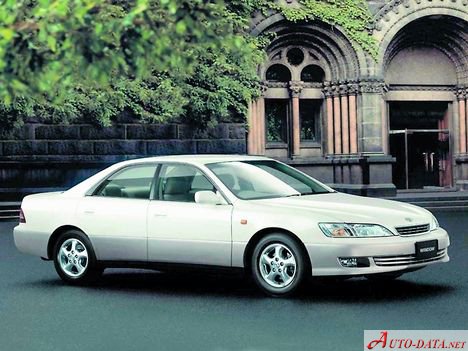
The Toyota Windom (V10), produced from 1991 to 1996, represents Toyota’s foray into the premium, full-size sedan market, primarily aimed at the Japanese domestic market (JDM). Positioned above the Camry and Corona, the Windom was designed to offer a more luxurious and sophisticated experience, competing with vehicles like the Nissan Cefiro and Honda Inspire. While never officially sold in the United States, the Windom is notable for its advanced features for its time and its role as a precursor to the Toyota Avalon, which was eventually introduced to the North American market. The V10 generation established the Windom as a comfortable, well-equipped, and technologically advanced sedan, reflecting Toyota’s commitment to innovation and quality.
Toyota Windom (V10): A Detailed Overview
The Windom V10 was conceived as a vehicle that blended comfort, technology, and a degree of prestige. Toyota sought to create a sedan that appealed to buyers seeking a step up from mainstream offerings without the higher price tag associated with European luxury brands. The V10 Windom distinguished itself through its spacious interior, refined ride quality, and a range of features that were considered cutting-edge for the early 1990s. It was available with a variety of engine options, including inline-six and V6 configurations, with the 2.5-liter V6 24V being a popular choice. The car’s design emphasized elegance and understated sophistication, making it a popular choice among Japanese executives and families.
Origins and Market Positioning
The Windom’s development was heavily influenced by the desire to provide a domestic alternative to imported luxury sedans. Japan’s economic boom in the late 1980s and early 1990s created a demand for higher-end vehicles, and Toyota responded with the Windom. The car was marketed as a premium offering, emphasizing its spaciousness, comfort, and advanced technology. Unlike the Camry, which focused on practicality and affordability, the Windom aimed for a more refined and luxurious experience. The decision not to export the Windom to markets like the United States was likely due to Toyota’s existing product lineup and the anticipated overlap with the Camry and, later, the Avalon.
Engine & Performance
The 2.5 i V6 24V engine powering this Windom variant is a naturally aspirated 2.5-liter V6. This engine produces 175 horsepower, delivering smooth and responsive performance suitable for comfortable cruising and everyday driving. The 24-valve configuration, with dual overhead camshafts, contributes to the engine’s efficiency and power output. While not a performance-oriented engine, it provides ample power for overtaking and maintaining highway speeds. The engine is paired with a four-speed automatic transmission, which further enhances the driving experience by providing smooth and seamless gear changes. The powertrain architecture is a traditional internal combustion engine setup, reflecting the automotive technology prevalent in the early 1990s.
The Windom’s suspension system is tuned for comfort, prioritizing a smooth and quiet ride. Independent suspension on all four wheels helps to absorb bumps and irregularities in the road surface, providing a comfortable experience for both the driver and passengers. Steering is power-assisted, making it easy to maneuver the vehicle in urban environments. Braking is accomplished through ventilated disc brakes on the front wheels and drum brakes on the rear, providing adequate stopping power for the vehicle’s weight and performance capabilities. The overall driving experience is characterized by refinement and ease of use, making the Windom a pleasant and comfortable vehicle to drive.
Design & Features
The Toyota Windom V10 is a four-door sedan with a classic, understated design. The exterior styling is characterized by clean lines, a relatively low-slung profile, and a focus on elegance. The front end features a prominent grille and integrated headlights, while the rear end is distinguished by its sleek taillights and a subtle spoiler. The body type is a traditional sedan, offering ample space for passengers and luggage. The car’s dimensions are typical of a full-size sedan, providing a spacious and comfortable interior.
Inside, the Windom V10 offers a well-appointed cabin with a focus on comfort and convenience. The interior features comfortable seats upholstered in high-quality materials, a wood-grain trim, and a range of features designed to enhance the driving experience. Available features included power windows, power locks, air conditioning, and an audio system. Higher trim levels offered additional features such as leather upholstery, a sunroof, and a more advanced audio system. Safety features, while not as comprehensive as those found in modern vehicles, included seatbelts and airbags. The Windom’s interior was designed to provide a relaxing and comfortable environment for both the driver and passengers, reflecting Toyota’s commitment to quality and refinement.
Technical Specifications
| Brand | Toyota |
| Model | Windom |
| Generation | Windom (V10) |
| Type (Engine) | 2.5 i V6 24V (175 Hp) |
| Start of production | 1991 |
| End of production | 1996 |
| Powertrain Architecture | Internal Combustion engine |
| Body type | Sedan |
| Fuel Type | Petrol (Gasoline) |
| Power | 175 Hp |
| Engine aspiration | Naturally aspirated engine |
The Toyota Windom (V10) 2.5 i V6 24V represents a significant chapter in Toyota’s history, showcasing the company’s ability to create a refined and technologically advanced sedan for the Japanese domestic market. While it never reached American shores, its influence can be seen in the subsequent development of the Toyota Avalon, which successfully filled the role of a premium, full-size sedan in North America. The V10 Windom remains a popular choice among enthusiasts and collectors, appreciated for its comfortable ride, spacious interior, and understated elegance.