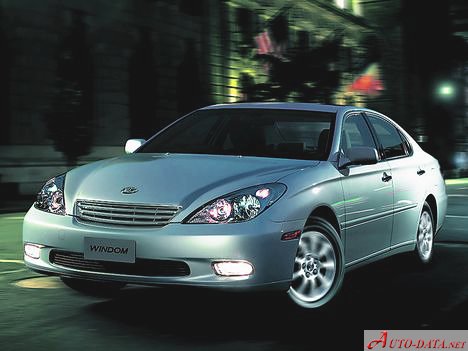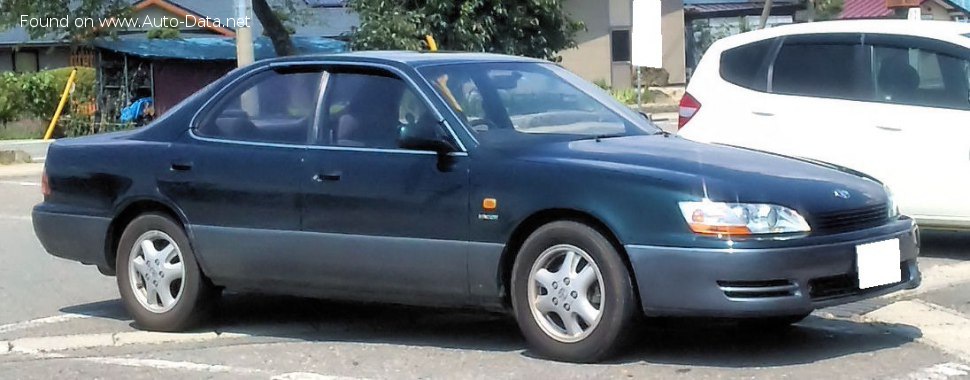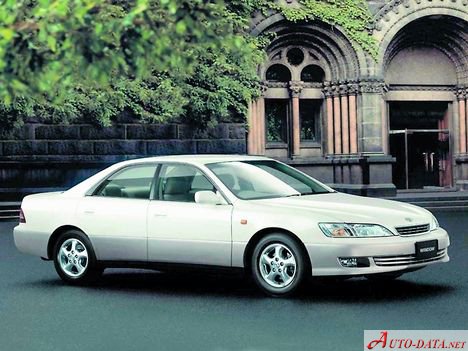
The Toyota Windom (V20), produced between 1996 and 1999, represents a significant offering from Toyota aimed at the upscale, comfort-oriented sedan market. Primarily sold in Japan, the Windom was positioned as a more luxurious and spacious alternative to the Toyota Camry, offering a refined driving experience and a higher level of equipment. While not officially sold in the United States under the Windom name, it shares a platform and many components with the Camry and Lexus ES300 of the same era, reflecting Toyota’s strategy of offering similar vehicles under different brands and names in various global markets. The V20 generation Windom distinguished itself with its elegant styling, comfortable interior, and a focus on quiet operation, catering to buyers seeking a premium mid-size sedan.
Toyota Windom (V20): A Detailed Overview
The Windom V20 was conceived as a vehicle that prioritized passenger comfort and a smooth ride. It occupied a niche between the mainstream Camry and the more overtly luxurious Lexus ES300. This positioning allowed Toyota to offer a vehicle with a higher degree of refinement and features than the Camry, without the higher price point associated with the Lexus brand. The V20 generation was available with a range of engine options, but the 2.5-liter V6, detailed here, was a popular choice, offering a balance of performance and fuel efficiency.
Engine & Performance
The heart of the Toyota Windom (V20) 2.5 i V6 24V is a naturally aspirated 2.5-liter V6 engine. This engine produces 175 horsepower at 6000 rpm and 224 Nm (165.21 lb.-ft.) of torque at 4800 rpm. The engine’s configuration – a V-engine with 4 valves per cylinder and multi-port fuel injection – contributes to its smooth power delivery and relatively efficient operation. The power-to-weight ratio of 8.6 kg/Hp (116.7 Hp/tonne) and torque-to-weight ratio of 6.7 kg/Nm (149.3 Nm/tonne) indicate a respectable, though not overtly sporty, performance profile. Power per liter is rated at 70.1 Hp/l. The engine is transversely mounted at the front of the vehicle, driving the front wheels through a 4-speed automatic transmission. This drivetrain configuration was typical for mid-size sedans of the era, prioritizing front-wheel drive for improved fuel economy and packaging efficiency. Fuel consumption is rated at 8.6 l/100 km (27.4 US mpg, 32.8 UK mpg, 11.6 km/l).
Design & Features
The Toyota Windom (V20) is a four-door sedan with a classic, understated design. Its exterior styling emphasizes elegance and sophistication rather than aggressive sportiness. The vehicle’s dimensions – 4780 mm (188.19 in.) in length, 1780 mm (70.08 in.) in width, and 1390 mm (54.72 in.) in height – provide ample interior space for passengers. The wheelbase of 2620 mm (103.15 in.) contributes to a comfortable ride. Inside, the Windom offers seating for five passengers and features a well-appointed interior with a focus on comfort and convenience. Safety features for the time included an Anti-lock Braking System (ABS). The suspension utilizes a wishbone configuration for both the front and rear axles, designed to provide a smooth and controlled ride. The vehicle rides on 205/65 R15 H tires. The Windom’s design philosophy centered around providing a comfortable and refined experience for both driver and passengers, making it a popular choice for those seeking a premium mid-size sedan.
Technical Specifications
| General Information | |
| Brand | Toyota |
| Model | Windom |
| Generation | Windom (V20) |
| Type (Engine) | 2.5 i V6 24V (175 Hp) |
| Start of production | 1996 |
| End of production | 1999 |
| Powertrain Architecture | Internal Combustion engine |
| Body type | Sedan |
| Seats | 5 |
| Doors | 4 |
| Performance Specs | |
| Fuel consumption (combined) | 8.6 l/100 km (27.4 US mpg, 32.8 UK mpg, 11.6 km/l) |
| Fuel Type | Petrol (Gasoline) |
| Weight-to-power ratio | 8.6 kg/Hp, 116.7 Hp/tonne |
| Weight-to-torque ratio | 6.7 kg/Nm, 149.3 Nm/tonne |
| Engine Specs | |
| Power | 175 Hp @ 6000 rpm |
| Power per litre | 70.1 Hp/l |
| Torque | 224 Nm @ 4800 rpm (165.21 lb.-ft. @ 4800 rpm) |
| Engine layout | Front, Transverse |
| Engine displacement | 2497 cm3 (152.38 cu. in.) |
| Number of cylinders | 6 |
| Engine configuration | V-engine |
| Cylinder Bore | 87.5 mm (3.44 in.) |
| Piston Stroke | 69.2 mm (2.72 in.) |
| Compression ratio | 9.6:1 |
| Number of valves per cylinder | 4 |
| Fuel injection system | Multi-port manifold injection |
| Engine aspiration | Naturally aspirated engine |
| Valvetrain | DOHC |
| Space, Volume and Weights | |
| Kerb Weight | 1500 kg (3306.93 lbs.) |
| Max. weight | 1775 kg (3913.21 lbs.) |
| Max load | 275 kg (606.27 lbs.) |
| Fuel tank capacity | 70 l (18.49 US gal | 15.4 UK gal) |
| Dimensions | |
| Length | 4780 mm (188.19 in.) |
| Width | 1780 mm (70.08 in.) |
| Height | 1390 mm (54.72 in.) |
| Wheelbase | 2620 mm (103.15 in.) |
| Front track | 1545 mm (60.83 in.) |
| Rear track | 1500 mm (59.06 in.) |
| Drivetrain, Brakes & Suspension | |
| Drivetrain Architecture | Front wheel drive. Internal Combustion engine (ICE) |
| Drive wheel | Front wheel drive |
| Number of gears & gearbox type | 4 gears, automatic transmission |
| Front suspension | Wishbone |
| Rear suspension | Wishbone |
| Front brakes | Ventilated discs |
| Rear brakes | Disc |
| Assisting systems | ABS (Anti-lock braking system) |
| Steering type | Steering rack and pinion |
| Power steering | Hydraulic Steering |
| Tires size | 205/65 R15 H |