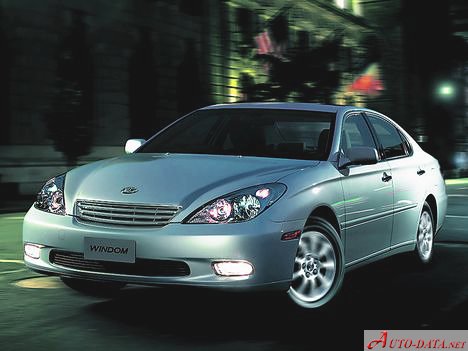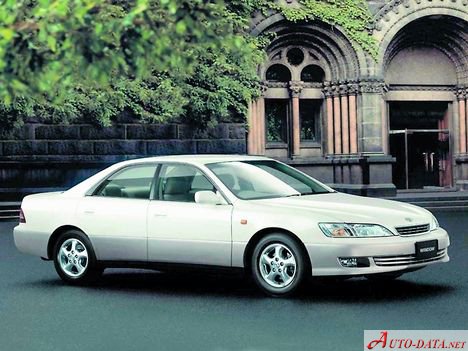
The Toyota Windom (V20), produced between 1996 and 1999, represents a significant offering from Toyota aimed at the upscale, comfort-focused segment of the Japanese domestic market (JDM). While not officially sold in the United States, the Windom served as a more luxurious and spacious alternative to the Toyota Camry, sharing its platform but offering enhanced refinement and features. The V20 generation, specifically the 3.0 i V6 24V variant, showcased Toyota’s engineering prowess with a focus on smooth performance and a comfortable driving experience. This model competed with other Japanese luxury sedans, offering a blend of technology and reliability that appealed to discerning buyers.
Toyota Windom (V20) 3.0 i V6 24V: An Overview
The Windom, known as the Toyota Cressida in some export markets (though the V20 was not widely exported), was designed to provide a premium experience within the mid-size sedan category. The V20 generation marked a shift towards more sophisticated styling and interior appointments. It was positioned above the Camry in Toyota’s lineup, offering a larger cabin, more powerful engine options, and a generally more luxurious feel. The 3.0 i V6 24V model, with its 188 horsepower engine, was a flagship offering, representing the pinnacle of performance within the Windom range. It was a vehicle designed for comfortable highway cruising and refined city driving.
Engine & Performance
The heart of the Toyota Windom 3.0 i V6 24V is a 2.959-liter (180.57 cubic inches) naturally aspirated V6 engine. This engine produces 188 horsepower at 5400 rpm and 255 Nm (188.08 lb-ft) of torque at 4400 rpm. The engine features a double overhead camshaft (DOHC) valvetrain with four valves per cylinder, and utilizes a multi-port fuel injection system. This configuration allows for a good balance of power and efficiency. The engine’s power-to-weight ratio of 8.1 kg/Hp and torque-to-weight ratio of 6 kg/Nm contribute to a responsive driving experience. The engine is transversely mounted in the front of the vehicle, driving the front wheels through a 4-speed automatic transmission. Fuel consumption is rated at 15 l/100 km (15.7 US mpg, 18.8 UK mpg, 6.7 km/l) in urban conditions and 8.6 l/100 km (27.4 US mpg, 32.8 UK mpg, 11.6 km/l) combined.
Design & Features
The Toyota Windom V20 is a four-door sedan with a classic, understated design. Its body measures 4780 mm (188.19 in) in length, 1780 mm (70.08 in) in width, and 1390 mm (54.72 in) in height, with a wheelbase of 2620 mm (103.15 in). The vehicle offers seating for five passengers and boasts a spacious interior. While specific features varied depending on trim level and optional packages, the Windom generally included amenities such as power windows, power locks, and air conditioning. Safety features for the era included an Anti-lock Braking System (ABS). The suspension utilizes a wishbone configuration for both the front and rear axles, providing a comfortable and controlled ride. The vehicle rides on 205/65 R15 H tires. The design prioritized comfort and practicality, with a focus on providing a refined and relaxing driving experience. The interior was typically appointed with high-quality materials and offered a generous amount of space for both passengers and luggage.
Technical Specifications
| Brand | Toyota |
| Model | Windom |
| Generation | Windom (V20) |
| Type (Engine) | 3.0 i V6 24V (188 Hp) |
| Start of production | 1996 |
| End of production | 1999 |
| Powertrain Architecture | Internal Combustion engine |
| Body type | Sedan |
| Seats | 5 |
| Doors | 4 |
| Fuel consumption (urban) | 15 l/100 km (15.7 US mpg, 18.8 UK mpg, 6.7 km/l) |
| Fuel consumption (combined) | 8.6 l/100 km (27.4 US mpg, 32.8 UK mpg, 11.6 km/l) |
| Fuel Type | Petrol (Gasoline) |
| Weight-to-power ratio | 8.1 kg/Hp |
| Weight-to-torque ratio | 6 kg/Nm |
| Power | 188 Hp @ 5400 rpm |
| Power per litre | 63.5 Hp/l |
| Torque | 255 Nm @ 4400 rpm (188.08 lb.-ft. @ 4400 rpm) |
| Engine layout | Front, Transverse |
| Engine displacement | 2959 cm3 (180.57 cu. in.) |
| Number of cylinders | 6 |
| Engine configuration | V-engine |
| Cylinder Bore | 87.5 mm (3.44 in.) |
| Piston Stroke | 82 mm (3.23 in.) |
| Compression ratio | 9.6:1 |
| Number of valves per cylinder | 4 |
| Fuel injection system | Multi-port manifold injection |
| Engine aspiration | Naturally aspirated engine |
| Valvetrain | DOHC |
| Kerb Weight | 1520 kg (3351.03 lbs.) |
| Max. weight | 1795 kg (3957.3 lbs.) |
| Max load | 275 kg (606.27 lbs.) |
| Fuel tank capacity | 70 l (18.49 US gal | 15.4 UK gal) |
| Length | 4780 mm (188.19 in.) |
| Width | 1780 mm (70.08 in.) |
| Height | 1390 mm (54.72 in.) |
| Wheelbase | 2620 mm (103.15 in.) |
| Front track | 1545 mm (60.83 in.) |
| Rear track | 1500 mm (59.06 in.) |
| Drivetrain Architecture | Front wheel drive |
| Drive wheel | Front wheel drive |
| Number of gears | 4 |
| Type of gearbox | automatic transmission |
| Front suspension | Wishbone |
| Rear suspension | Wishbone |
| Front brakes | Ventilated discs |
| Rear brakes | Disc |
| Assisting systems | ABS (Anti-lock braking system) |
| Steering type | Steering rack and pinion |
| Power steering | Hydraulic Steering |
| Tires size | 205/65 R15 H |
The Toyota Windom (V20) 3.0 i V6 24V, while not a household name in the United States, represents a compelling example of Japanese automotive engineering focused on providing a luxurious and comfortable driving experience. Its blend of performance, refinement, and reliability made it a popular choice in its domestic market, and it remains a respected vehicle among enthusiasts today.