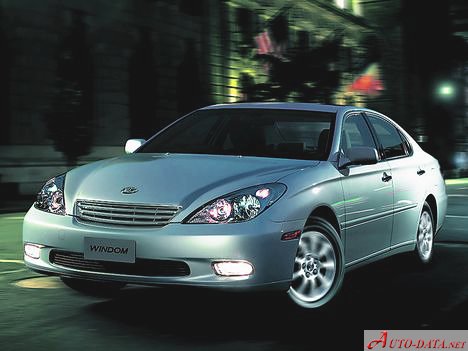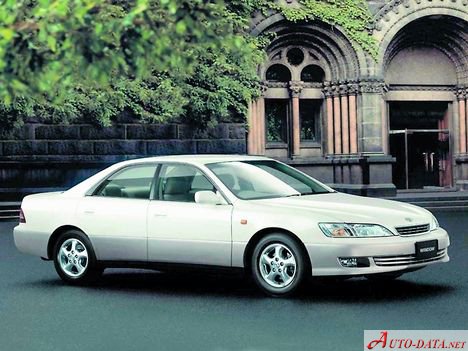
The Toyota Windom (V20), produced between 1996 and 1999, represents a significant offering in the Japanese domestic market (JDM) as a comfortable and well-equipped large sedan. While not officially sold in the United States, the Windom occupied a crucial position as a more luxurious alternative to the Toyota Camry, offering a step up in refinement and features. It was marketed towards buyers seeking a premium experience without the higher price tag of a Lexus. The V20 generation, specifically the 3.0 i V6 24V variant, showcased Toyota’s engineering prowess in delivering a smooth, powerful, and reliable vehicle.
Toyota Windom (V20) 3.0 i V6 24V: An Overview
The Windom, known as the Toyota Cressida in some export markets (though the V20 was not widely exported), was designed to appeal to a discerning clientele. It bridged the gap between mainstream Toyota models and the Lexus luxury brand. The V20 generation introduced a more modern design and enhanced features compared to its predecessors. The 3.0 i V6 24V model, with its 215 horsepower engine, was the top-of-the-line offering, providing a compelling blend of performance and comfort. It was a popular choice for executives and families seeking a spacious and reliable sedan.
Engine & Performance
At the heart of the Windom 3.0 i V6 24V lies a naturally aspirated 3.0-liter V6 engine, designated as a 24-valve configuration. This engine produces 215 horsepower at 5800 rpm and 299 Nm (220.53 lb.-ft.) of torque at 4400 rpm. The engine’s power output translates to a power-to-weight ratio of 142.4 horsepower per tonne and a torque-to-weight ratio of 198 Nm per tonne, providing brisk acceleration and confident highway cruising. The engine features multi-port fuel injection and a double overhead camshaft (DOHC) valvetrain, contributing to its smooth operation and efficient combustion. Power is delivered to the front wheels via a 4-speed automatic transmission. Fuel economy is rated at approximately 10 liters per 100 kilometers (23.5 US mpg) in urban driving and 5.56 liters per 100 kilometers (42.3 US mpg) in extra-urban conditions.
Design & Features
The Toyota Windom V20 is a four-door sedan with a classic, understated design. Its exterior styling emphasizes elegance and sophistication, with clean lines and a relatively conservative profile. The interior is spacious and well-appointed, offering comfortable seating for five passengers. The Windom prioritized passenger comfort and convenience, featuring amenities such as power windows, power locks, and air conditioning as standard equipment. Higher trim levels included features like leather upholstery, a premium sound system, and woodgrain interior trim. Safety features for the era included an Anti-lock Braking System (ABS), which was becoming increasingly common on vehicles in this class. The vehicle’s dimensions – 4845 mm (190.75 in) in length, 1790 mm (70.47 in) in width, and 1395 mm (54.92 in) in height – provide ample interior space and a comfortable ride. The wheelbase measures 2670 mm (105.12 in), contributing to the car’s stability and ride quality.
Technical Specifications
| Brand | Toyota |
| Model | Windom |
| Generation | Windom (V20) |
| Type (Engine) | 3.0 i V6 24V (215 Hp) |
| Start of production | 1996 |
| End of production | 1999 |
| Powertrain Architecture | Internal Combustion engine |
| Body type | Sedan |
| Seats | 5 |
| Doors | 4 |
| Fuel consumption (urban) | 10 l/100 km (23.5 US mpg) |
| Fuel consumption (extra urban) | 5.56 l/100 km (42.3 US mpg) |
| Fuel Type | Petrol (Gasoline) |
| Weight-to-power ratio | 7 kg/Hp |
| Weight-to-torque ratio | 5.1 kg/Nm |
| Power | 215 Hp @ 5800 rpm |
| Power per litre | 71.8 Hp/l |
| Torque | 299 Nm @ 4400 rpm (220.53 lb.-ft. @ 4400 rpm) |
| Engine layout | Front, Transverse |
| Engine displacement | 2994 cm3 (182.71 cu. in.) |
| Number of cylinders | 6 |
| Engine configuration | V-engine |
| Cylinder Bore | 87.5 mm (3.44 in.) |
| Piston Stroke | 83 mm (3.27 in.) |
| Compression ratio | 10.5:1 |
| Number of valves per cylinder | 4 |
| Fuel injection system | Multi-port manifold injection |
| Engine aspiration | Naturally aspirated engine |
| Valvetrain | DOHC |
| Kerb Weight | 1510 kg (3328.98 lbs.) |
| Max. weight | 1785 kg (3935.25 lbs.) |
| Max load | 275 kg (606.27 lbs.) |
| Fuel tank capacity | 70 l (18.49 US gal | 15.4 UK gal) |
| Length | 4845 mm (190.75 in.) |
| Width | 1790 mm (70.47 in.) |
| Height | 1395 mm (54.92 in.) |
| Wheelbase | 2670 mm (105.12 in.) |
| Front track | 1545 mm (60.83 in.) |
| Rear track | 1520 mm (59.84 in.) |
| Drivetrain Architecture | Front wheel drive |
| Drive wheel | Front wheel drive |
| Number of gears | 4 |
| Type of gearbox | automatic transmission |
| Front suspension | Wishbone |
| Rear suspension | Wishbone |
| Front brakes | Ventilated discs |
| Rear brakes | Disc |
| Assisting systems | ABS (Anti-lock braking system) |
| Steering type | Steering rack and pinion |
| Power steering | Hydraulic Steering |
| Tires size | 205/65 R15 |
The Toyota Windom V20 3.0 i V6 24V remains a respected vehicle, particularly within the JDM enthusiast community. Its combination of comfort, reliability, and performance makes it a desirable classic, offering a glimpse into Toyota’s commitment to quality and innovation during the late 1990s. While never officially available in the US market, its design and features reflect the growing demand for refined and spacious sedans globally.