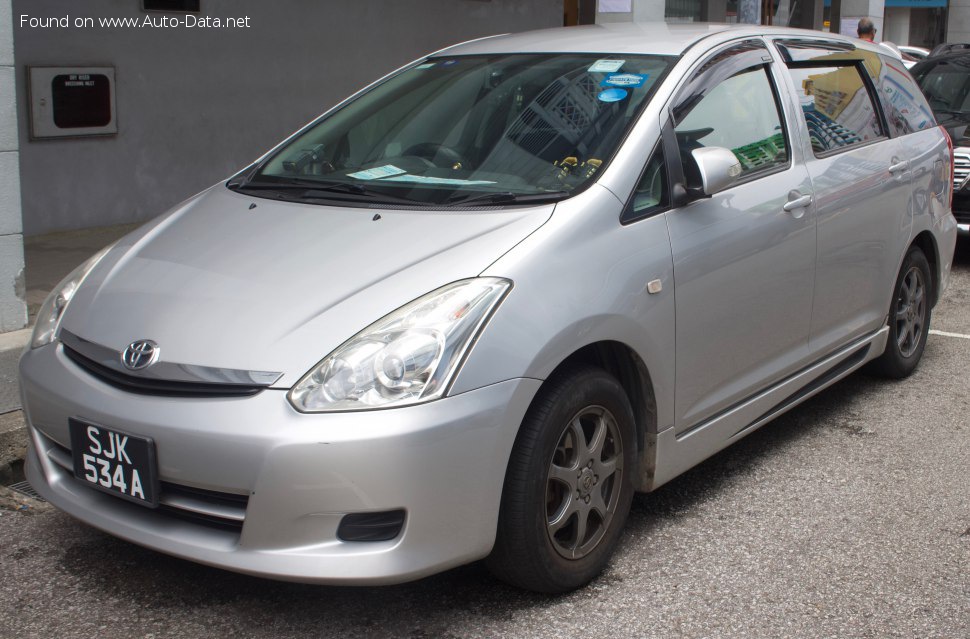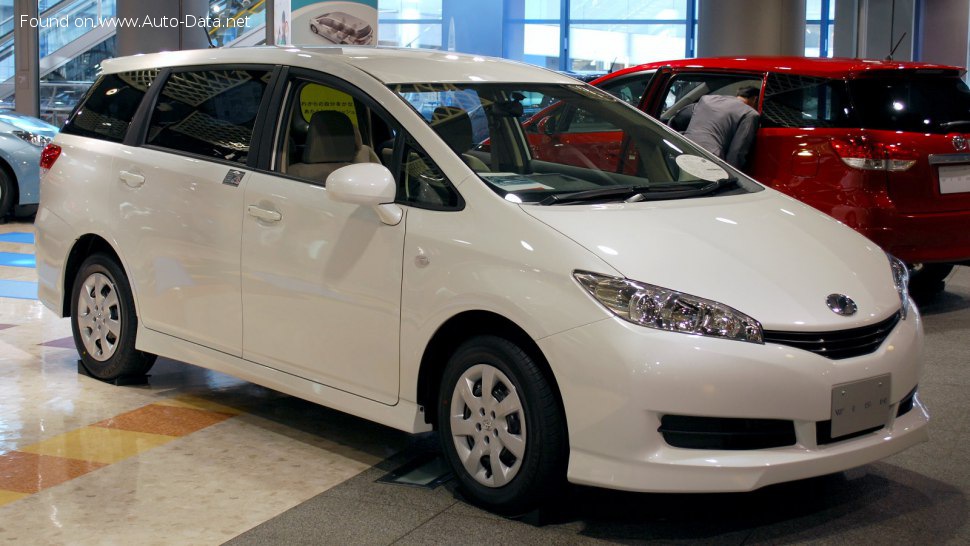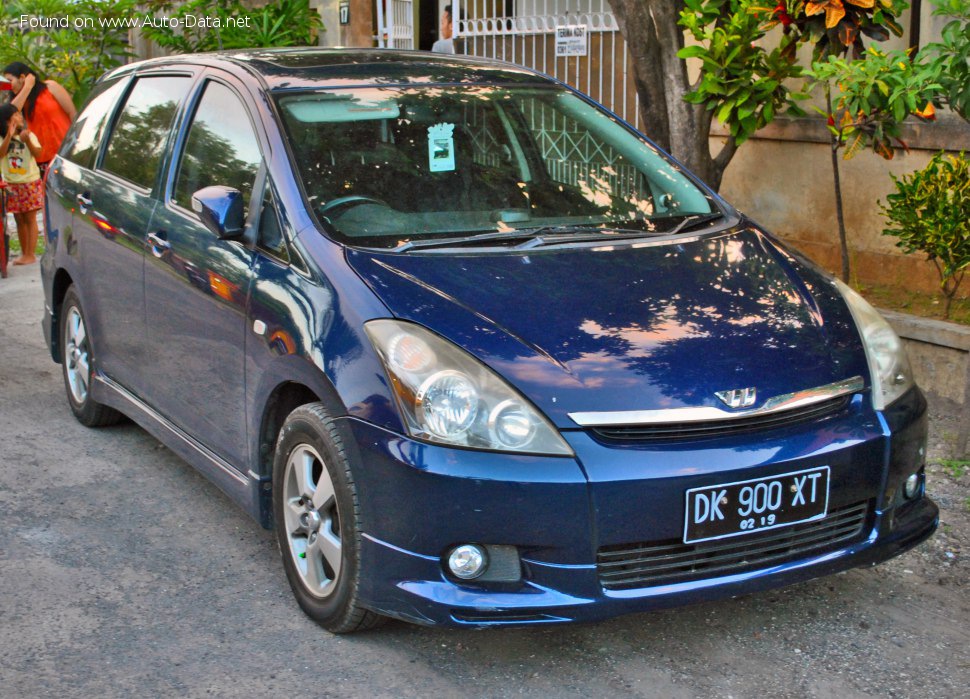
The Toyota Wish is a compact minivan that was initially marketed primarily in Japan and other Asian markets. Produced from 2003 to 2017 across three generations, the Wish aimed to provide a versatile and spacious vehicle in a smaller footprint than traditional minivans. The first generation, known as the Wish I (produced from 2003 to 2005), established the model’s core concept: a seven-seat configuration within a relatively compact body, appealing to families and individuals needing flexible passenger and cargo space. While never officially sold in the United States, the Wish represents Toyota’s response to the demand for multi-purpose vehicles in densely populated urban environments.
Toyota Wish I 1.8 (125 Hp) 4WD Automatic: An Overview
The Wish I, specifically the 1.8-liter, four-wheel-drive automatic variant, was a key offering in Toyota’s lineup during its production run. It targeted consumers seeking a practical and fuel-efficient vehicle capable of handling diverse driving conditions. The 4WD system provided enhanced traction, particularly valuable in regions experiencing inclement weather or varied terrain. This model combined a relatively small engine with a focus on interior space and usability, making it a popular choice for families and those needing a versatile vehicle for both daily commutes and weekend trips.
Engine & Performance
The Toyota Wish I 1.8 4WD Automatic is powered by the 1ZZ-FE engine, a 1.8-liter (1794 cm3 or 109.48 cu. in.) inline-four cylinder gasoline engine. This naturally aspirated engine produces 125 horsepower (Hp) at 6000 rpm and 161 Newton-meters (Nm) of torque at 4200 rpm, which translates to 118.75 lb.-ft. of torque. The engine features a double overhead camshaft (DOHC) valvetrain with four valves per cylinder and utilizes a multi-port fuel injection system. The power-to-weight ratio is 11.2 kg/Hp (89.3 Hp/tonne), and the torque-to-weight ratio is 8.7 kg/Nm (115 Nm/tonne). Power delivery is managed through a four-speed automatic transmission with Electronic Control Technology (ECT), and the all-wheel-drive system ensures optimal traction. Fuel consumption is rated at 7.8 liters per 100 kilometers (30.2 US mpg, 36.2 UK mpg, 12.8 km/l), with CO2 emissions of 184 g/km.
Design & Features
The Toyota Wish I is a five-door minivan designed to accommodate up to seven passengers. Its body style prioritizes interior space and accessibility. The vehicle’s dimensions are 4550 mm (179.13 in) in length, 1695 mm (66.73 in) in width, and 1600 mm (62.99 in) in height, with a wheelbase of 2750 mm (108.27 in). The front and rear tracks measure 1480 mm (58.27 in) and 1460 mm (57.48 in) respectively, and the ride height (ground clearance) is 155 mm (6.1 in). The interior is designed for flexibility, with seating arrangements that can be adjusted to prioritize passenger comfort or cargo capacity. Safety features for the era included ventilated disc brakes on the front wheels and disc brakes on the rear, providing adequate stopping power. The Wish I’s design focused on practicality and maximizing interior volume within a compact exterior footprint. The minimum turning circle is 11.0 meters (36.09 ft).
Technical Specifications
| Brand | Toyota |
| Model | Wish |
| Generation | Wish I |
| Type | 1.8 (125 Hp) 4WD Automatic |
| Start of production | January, 2003 |
| End of production | August, 2005 |
| Powertrain Architecture | Internal Combustion engine |
| Body type | Minivan |
| Seats | 7 |
| Doors | 5 |
| Fuel consumption (combined) | 7.8 l/100 km (30.2 US mpg, 36.2 UK mpg, 12.8 km/l) |
| CO2 emissions | 184 g/km |
| Fuel Type | Petrol (Gasoline) |
| Weight-to-power ratio | 11.2 kg/Hp |
| Weight-to-torque ratio | 8.7 kg/Nm |
| Power | 125 Hp @ 6000 rpm |
| Torque | 161 Nm @ 4200 rpm (118.75 lb.-ft. @ 4200 rpm) |
| Engine layout | Front, Transverse |
| Engine Model/Code | 1ZZ-FE |
| Engine displacement | 1794 cm3 (109.48 cu. in.) |
| Number of cylinders | 4 |
| Engine configuration | Inline |
| Cylinder Bore | 79 mm (3.11 in.) |
| Piston Stroke | 91.5 mm (3.6 in.) |
| Compression ratio | 10:1 |
| Number of valves per cylinder | 4 |
| Fuel injection system | Multi-port manifold injection |
| Engine aspiration | Naturally aspirated |
| Valvetrain | DOHC |
| Engine oil capacity | 3.7 l (3.91 US qt | 3.26 UK qt) |
| Coolant capacity | 6.5 l (6.87 US qt | 5.72 UK qt) |
| Kerb Weight | 1400 kg (3086.47 lbs.) |
| Max. weight | 1785 kg (3935.25 lbs.) |
| Max load | 385 kg (848.78 lbs.) |
| Fuel tank capacity | 60 l (15.85 US gal | 13.2 UK gal) |
| Length | 4550 mm (179.13 in.) |
| Width | 1695 mm (66.73 in.) |
| Height | 1600 mm (62.99 in.) |
| Wheelbase | 2750 mm (108.27 in.) |
| Front track | 1480 mm (58.27 in.) |
| Rear track | 1460 mm (57.48 in.) |
| Ride height (ground clearance) | 155 mm (6.1 in.) |
| Minimum turning circle | 11.0 m (36.09 ft.) |
| Drive wheel | All wheel drive (4×4) |
| Number of gears | 4 |
| Gearbox type | Automatic transmission ECT |
| Front brakes | Ventilated discs |
| Rear brakes | Disc |
| Tires size | 195/65 R15 |
| Wheel rims size | 15 |
The Toyota Wish I 1.8 4WD Automatic, while not a vehicle commonly found in the US market, represents a significant offering in the compact minivan segment, particularly in Asia. Its blend of practicality, fuel efficiency, and all-wheel-drive capability made it a popular choice for families and individuals seeking a versatile and reliable vehicle.