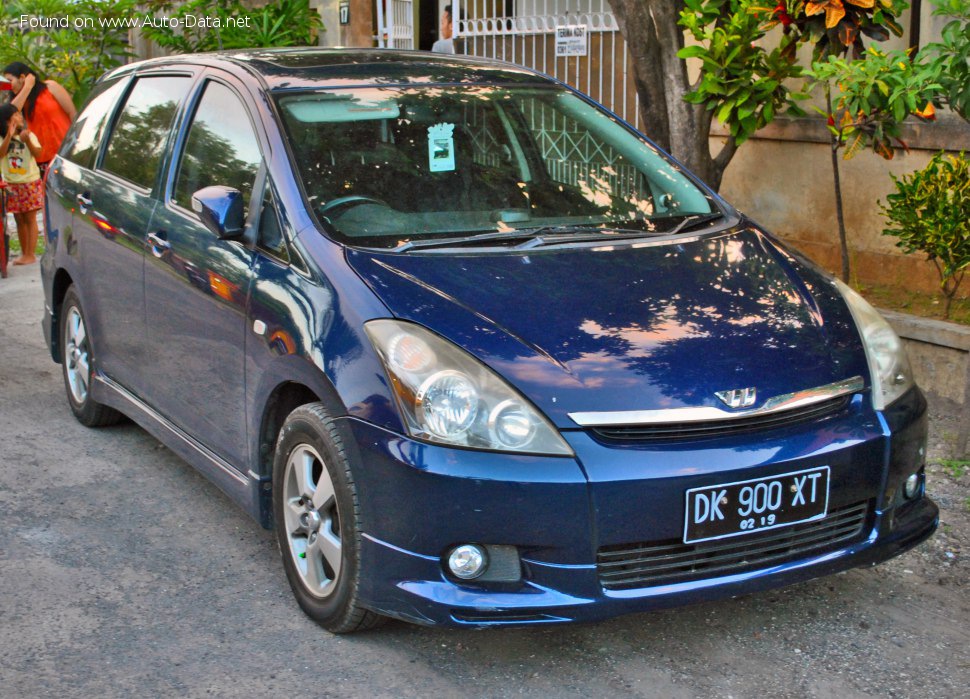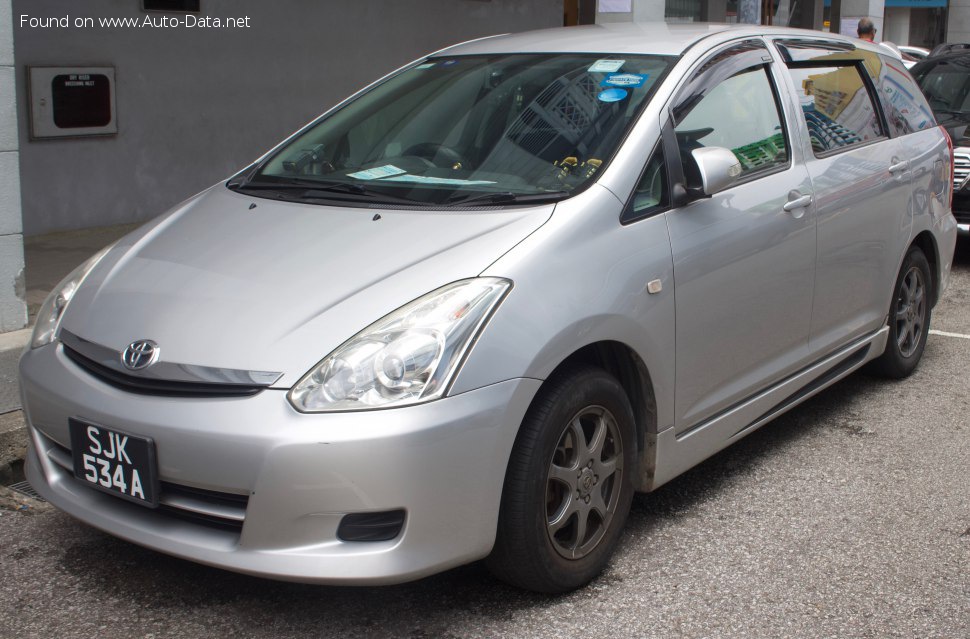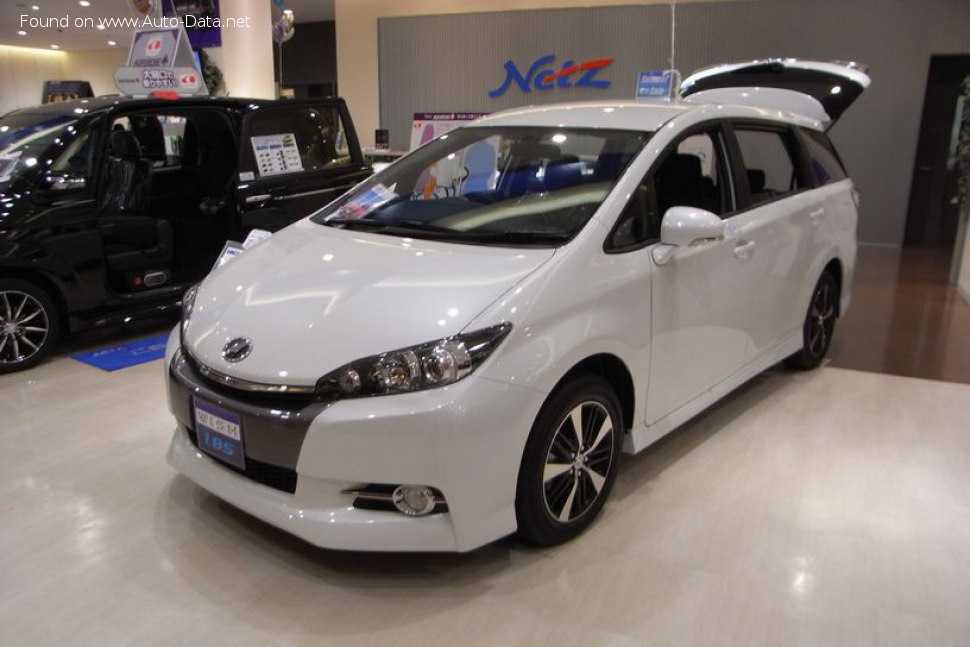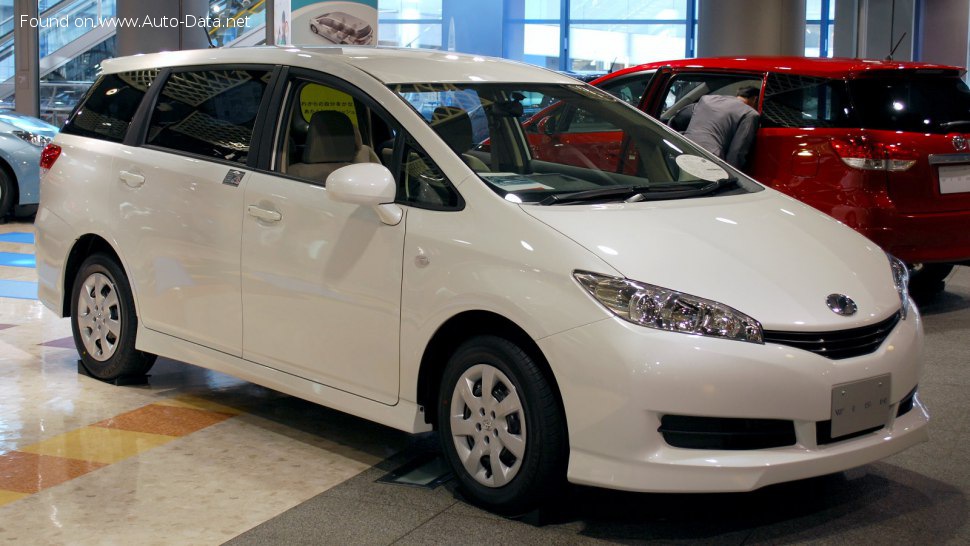
The Toyota Wish II 2.0i (158 Hp) CVT-i is a compact minivan produced by Toyota from 2009 to 2012. Primarily marketed in Japan and other Asian markets, the Wish filled a niche for a versatile, family-oriented vehicle offering seating for six or seven passengers in a relatively small footprint. It was not officially sold in the United States. The Wish II represented a significant refresh of the original Wish, with styling updates, improved interior features, and refinements to the powertrain. It competed with other compact MPVs like the Honda Freed and Nissan Serena in its target markets, offering a blend of practicality, comfort, and Toyota’s reputation for reliability.
Toyota Wish II: Overview and Market Positioning
The Toyota Wish II was designed to cater to the needs of growing families who desired a vehicle that was easy to maneuver in urban environments but still offered ample space for passengers and cargo. Its unique selling point was its flexible seating configuration, allowing for various arrangements to maximize space depending on passenger and luggage requirements. The 2.0i variant, equipped with a 158 horsepower engine and a continuously variable transmission (CVT-i), was a popular choice, balancing performance with fuel efficiency. While not available in North America, the Wish II demonstrated Toyota’s commitment to offering diverse vehicle options tailored to specific regional demands.
Engine & Performance
The Toyota Wish II 2.0i is powered by the 3ZR-FAE 2.0-liter inline-four cylinder gasoline engine. This naturally aspirated engine produces 158 horsepower at 6,200 rpm and 196 Nm (144.56 lb.-ft.) of torque at 4,400 rpm. The engine features a double overhead camshaft (DOHC) valvetrain with four valves per cylinder and multi-port fuel injection. Power is delivered to the front wheels via a CVT-i (Continuously Variable Transmission with intelligence) automatic transmission. This transmission is designed to provide smooth, seamless acceleration and optimize fuel efficiency. The Wish II’s weight-to-power ratio is 8.7 kg/Hp, and its weight-to-torque ratio is 7 kg/Nm, contributing to a responsive driving experience. Fuel consumption is rated at 6.6 liters per 100 kilometers (35.6 US mpg, 42.8 UK mpg).
Design & Features
The Toyota Wish II is a five-door minivan characterized by its sleek, modern styling. The exterior design incorporates rounded edges and a relatively low profile for a minivan, giving it a more dynamic appearance. The interior is designed with practicality and comfort in mind, offering flexible seating arrangements with either six or seven seats. The second-row seats typically feature a sliding and reclining function, allowing for easy access to the third row. The dashboard layout is functional and user-friendly, with a focus on ergonomics. Standard features included air conditioning, power windows, and a basic audio system. Safety features, typical for vehicles of this era, included ABS (Anti-lock Braking System) and airbags. The Wish II’s design prioritized maximizing interior space while maintaining a relatively compact exterior footprint, making it well-suited for urban driving and parking.
Technical Specifications
| General Information | |
| Brand | Toyota |
| Model | Wish |
| Generation | Wish II |
| Type (Engine) | 2.0i (158 Hp) CVT-i |
| Start of production | 2009 |
| End of production | 2012 |
| Powertrain Architecture | Internal Combustion engine |
| Body type | Minivan |
| Seats | 6-7 |
| Doors | 5 |
| Performance Specs | |
| Fuel consumption (combined) | 6.6 l/100 km (35.6 US mpg, 42.8 UK mpg, 15.2 km/l) |
| Fuel Type | Petrol (Gasoline) |
| Weight-to-power ratio | 8.7 kg/Hp |
| Weight-to-torque ratio | 7 kg/Nm |
| Engine Specs | |
| Power | 158 Hp @ 6200 rpm |
| Power per litre | 79.6 Hp/l |
| Torque | 196 Nm @ 4400 rpm (144.56 lb.-ft. @ 4400 rpm) |
| Engine layout | Front, Transverse |
| Engine Model/Code | 3ZR-FAE |
| Engine displacement | 1986 cm3 (121.19 cu. in.) |
| Number of cylinders | 4 |
| Engine configuration | Inline |
| Cylinder Bore | 80.5 mm (3.17 in.) |
| Piston Stroke | 97.6 mm (3.84 in.) |
| Compression ratio | 10:1 |
| Number of valves per cylinder | 4 |
| Fuel injection system | Multi-port manifold injection |
| Engine aspiration | Naturally aspirated |
| Valvetrain | DOHC |
| Engine oil capacity | 4.2 l (4.44 US qt | 3.7 UK qt) |
| Space, Volume and Weights | |
| Kerb Weight | 1380-1420 kg (3042.38 – 3130.56 lbs.) |
| Max. weight | 1765 kg (3891.16 lbs.) |
| Max load | 345-385 kg (760.59 – 848.78 lbs.) |
| Fuel tank capacity | 60 l (15.85 US gal | 13.2 UK gal) |
| Dimensions | |
| Length | 4590 mm (180.71 in.) |
| Width | 1695-1745 mm (66.73 – 68.7 in.) |
| Height | 1590-1600 mm (62.6 – 62.99 in.) |
| Wheelbase | 2750 mm (108.27 in.) |
| Front track | 1480-1505 mm (58.27 – 59.25 in.) |
| Rear track | 1470-1490 mm (57.87 – 58.66 in.) |
| Ride height (ground clearance) | 150-165 mm (5.91 – 6.5 in.) |
| Minimum turning circle | 10.6-10.8 m (34.78 – 35.43 ft.) |
| Drivetrain, Brakes and Suspension | |
| Drivetrain Architecture | Front wheel drive, Internal Combustion engine |
| Drive wheel | Front wheel drive |
| Number of gears and type of gearbox | automatic transmission CVT-i |
| Front brakes | Ventilated discs |
| Rear brakes | Disc |
| Assisting systems | ABS (Anti-lock braking system) |
| Tires size | 215/50 R17 |
| Wheel rims size | 17 |