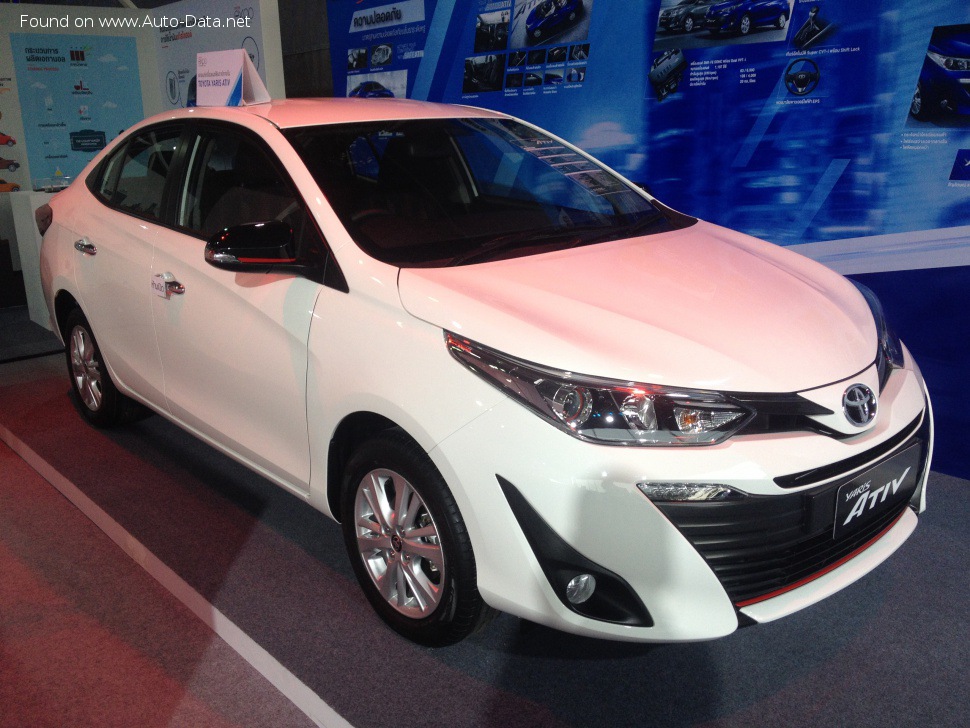
The Toyota Yaris III, produced between 2011 and 2014, represents the third generation of Toyota’s globally successful supermini. While not initially a major seller in the United States – the Yaris was discontinued in the US after 2020 – it was a crucial model for Toyota in Europe and other international markets. Positioned as a practical and fuel-efficient hatchback, the Yaris III aimed to provide affordable transportation with a focus on reliability and ease of use. This article details the 1.33 Dual VVT-i version equipped with the Multidrive S continuously variable transmission, a popular configuration in many regions.
Toyota Yaris III: An Overview
The Yaris III marked a significant step forward in terms of design and technology compared to its predecessors. It offered a more spacious interior, improved safety features, and a range of efficient engines. The 1.33 Dual VVT-i model, producing 99 horsepower, was a mainstay of the lineup, appealing to buyers seeking a balance between performance and economy. The Multidrive S transmission, Toyota’s branded CVT, provided smooth and seamless gear changes, enhancing the driving experience and contributing to lower fuel consumption.
Engine & Performance
The heart of the Yaris III 1.33 Dual VVT-i is the 1NR-FE 1.329-liter (81.1 cubic inch) inline-four cylinder gasoline engine. This engine utilizes Toyota’s Dual VVT-i (Variable Valve Timing-intelligent) technology, optimizing valve timing for both intake and exhaust to improve efficiency and power delivery across the rev range. It produces a maximum power output of 99 horsepower at 6000 rpm and 125 Nm (92.2 lb-ft) of torque at 4000 rpm. While not a performance-oriented engine, it provides adequate power for everyday driving. The engine’s power-to-liter ratio is 74.5 hp/l.
Paired with the Multidrive S transmission, the Yaris III 1.33 achieves a combined fuel consumption of 5.1 liters per 100 kilometers (46.1 US mpg or 55.4 UK mpg). Acceleration from 0 to 100 km/h (0-62 mph) takes 12.6 seconds, with a top speed of 175 km/h (108.74 mph). The weight-to-power ratio is 10.3 kg/Hp, and the weight-to-torque ratio is 8.1 kg/Nm, indicating a relatively efficient powertrain.
Design & Features
The Yaris III features a distinctive hatchback body style, offering five seats and five doors. Its design prioritized practicality and interior space. The exterior styling was modern for its time, with a focus on aerodynamic efficiency. Inside, the Yaris III offered a functional and well-appointed cabin, although material quality was generally focused on durability rather than luxury.
Safety features were improved in the Yaris III compared to earlier generations. Standard equipment included ABS (Anti-lock Braking System) and multiple airbags. The vehicle’s kerb weight of 1015 kg (2237.69 lbs) contributed to its relatively nimble handling. The trunk (boot) space is 286 liters (10.1 cubic feet), providing sufficient room for everyday luggage. The Yaris III also offered a maximum roof load of 50 kg (110.23 lbs) and a permitted trailer load of up to 900 kg (1984.16 lbs) with brakes.
Technical Specifications
| Brand | Toyota |
| Model | Yaris |
| Generation | Yaris III |
| Type (Engine) | 1.33 Dual VVT-i (99 Hp) Multidrive S |
| Start of production | 2011 |
| End of production | 2014 |
| Powertrain Architecture | Internal Combustion engine |
| Body type | Hatchback |
| Seats | 5 |
| Doors | 5 |
| Fuel consumption (urban) | 6.2 l/100 km (37.9 US mpg, 45.6 UK mpg, 16.1 km/l) |
| Fuel consumption (extra urban) | 4.5 l/100 km (52.3 US mpg, 62.8 UK mpg, 22.2 km/l) |
| Fuel consumption (combined) | 5.1 l/100 km (46.1 US mpg, 55.4 UK mpg, 19.6 km/l) |
| CO2 emissions | 118 g/km |
| Fuel Type | Petrol (Gasoline) |
| Acceleration 0 – 100 km/h | 12.6 sec |
| Acceleration 0 – 62 mph | 12.6 sec |
| Acceleration 0 – 60 mph | 12 sec |
| Maximum speed | 175 km/h (108.74 mph) |
| Emission standard | Euro 5 |
| Weight-to-power ratio | 10.3 kg/Hp |
| Weight-to-torque ratio | 8.1 kg/Nm |
| Power | 99 Hp @ 6000 rpm |
| Power per litre | 74.5 Hp/l |
| Torque | 125 Nm @ 4000 rpm (92.2 lb.-ft. @ 4000 rpm) |
| Engine layout | Front, Transverse |
| Engine Model/Code | 1NR-FE |
| Engine displacement | 1329 cm3 (81.1 cu. in.) |
| Number of cylinders | 4 |
| Engine configuration | Inline |
| Cylinder Bore | 72.5 mm (2.85 in.) |
| Piston Stroke | 80.5 mm (3.17 in.) |
| Compression ratio | 11.5:1 |
| Number of valves per cylinder | 4 |
| Fuel injection system | Multi-port manifold injection |
| Engine aspiration | Naturally aspirated engine |
| Valvetrain | DOHC |
| Engine oil capacity | 3.4 l (3.59 US qt | 2.99 UK qt) |
| Coolant | 4.8 l (5.07 US qt | 4.22 UK qt) |
| Kerb Weight | 1015 kg (2237.69 lbs.) |
| Max. weight | 1480 kg (3262.84 lbs.) |
| Max load | 465 kg (1025.15 lbs.) |
| Trunk (boot) space – minimum | 286 l (10.1 cu. ft.) |
| Fuel tank capacity | 42 l (11.1 US gal | 9.24 UK gal) |
| Max. roof load | 50 kg (110.23 lbs.) |
| Permitted trailer load with brakes (12%) | 900 kg (1984.16 lbs.) |
| Permitted trailer load without brakes | 465 kg (1025.15 lbs.) |
| Permitted towbar download | 50 kg (110.23 lbs.) |
| Length | 3885 mm (152.95 in.) |
| Width | 1695 mm (66.73 in.) |
| Height | 1510 mm (59.45 in.) |
| Wheelbase | 2510 mm (98.82 in.) |
| Front track | 1460 mm (57.48 in.) |
| Rear (Back) track | 1445 mm (56.89 in.) |
| Minimum turning circle (turning diameter) | 9.4 m (30.84 ft.) |
| Drivetrain Architecture | Front wheel drive |
| Number of gears and type of gearbox | automatic transmission Multidrive S |
| Front suspension | Independent type McPherson |
| Rear suspension | Torsion |
| Front brakes | Ventilated discs |
| Rear brakes | Drum |
| Assisting systems | ABS (Anti-lock braking system) |
| Steering type | Steering rack and pinion |
| Tires size | 185/60 R15 |
| Wheel rims size | 15 |
The Toyota Yaris III 1.33 Dual VVT-i Multidrive S offered a compelling package for buyers seeking a reliable, fuel-efficient, and practical supermini. While not a performance car, its strengths lay in its everyday usability and low running costs, making it a popular choice in its target markets.