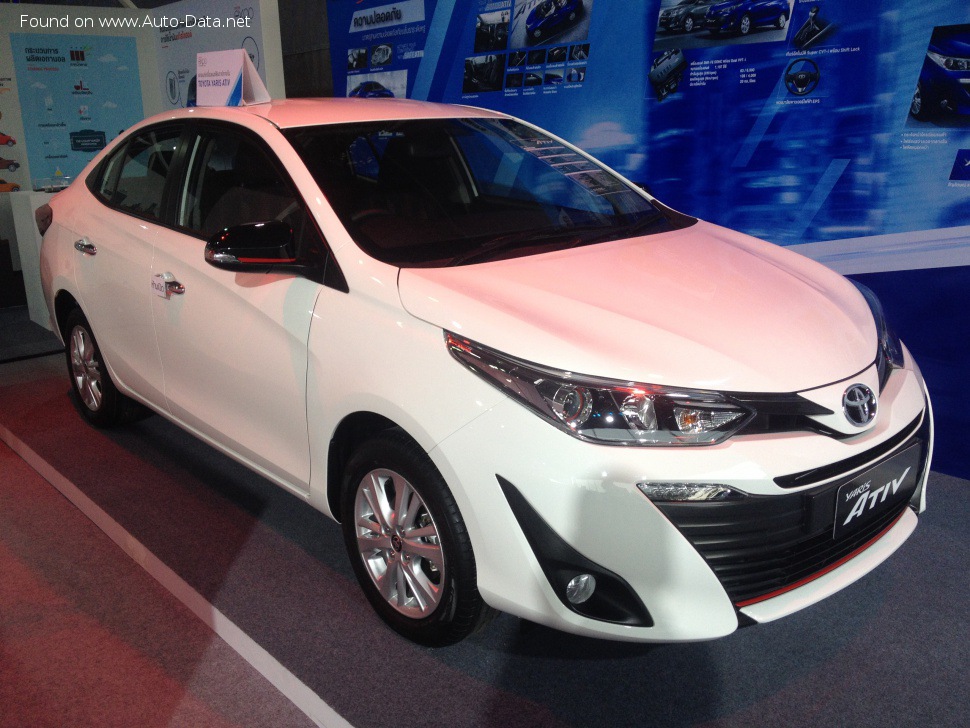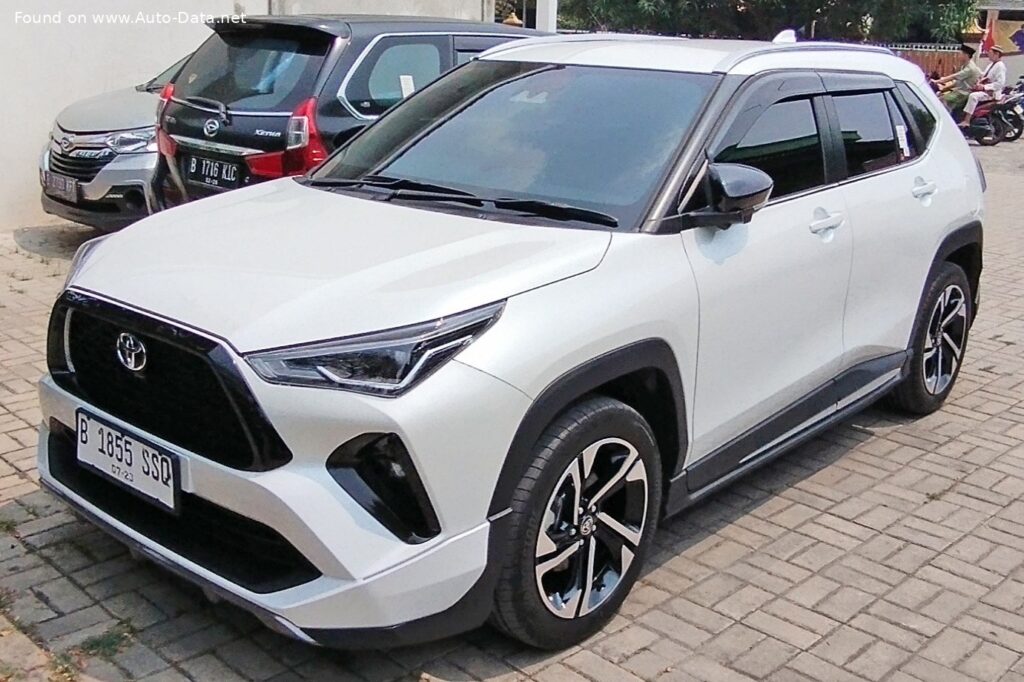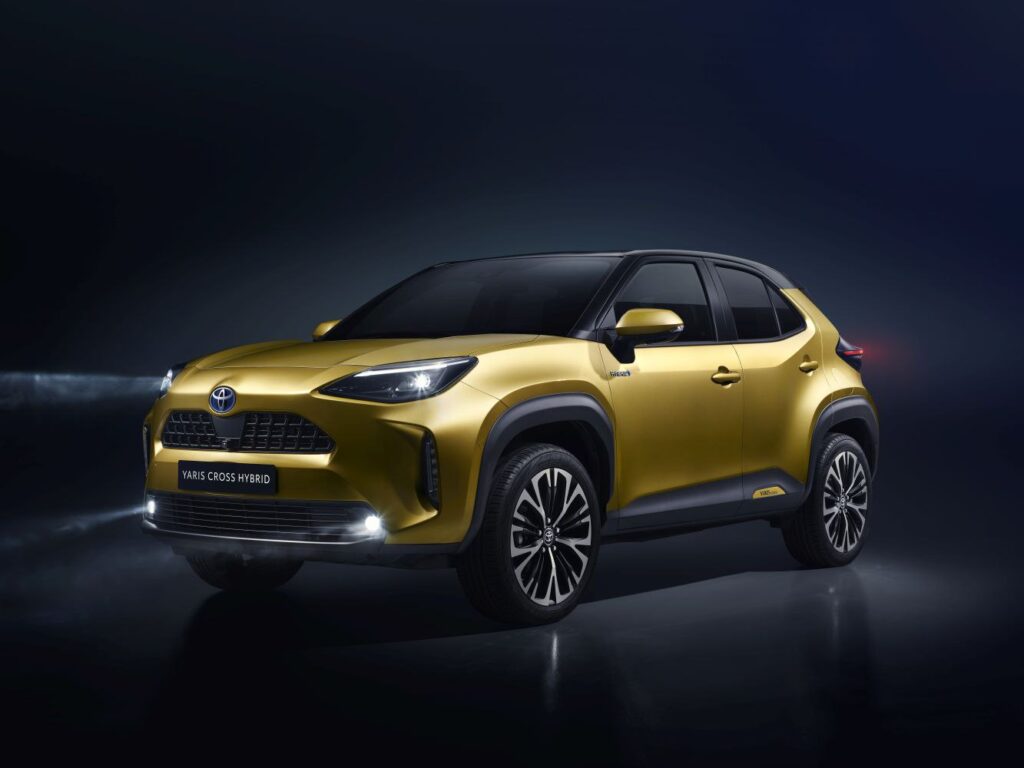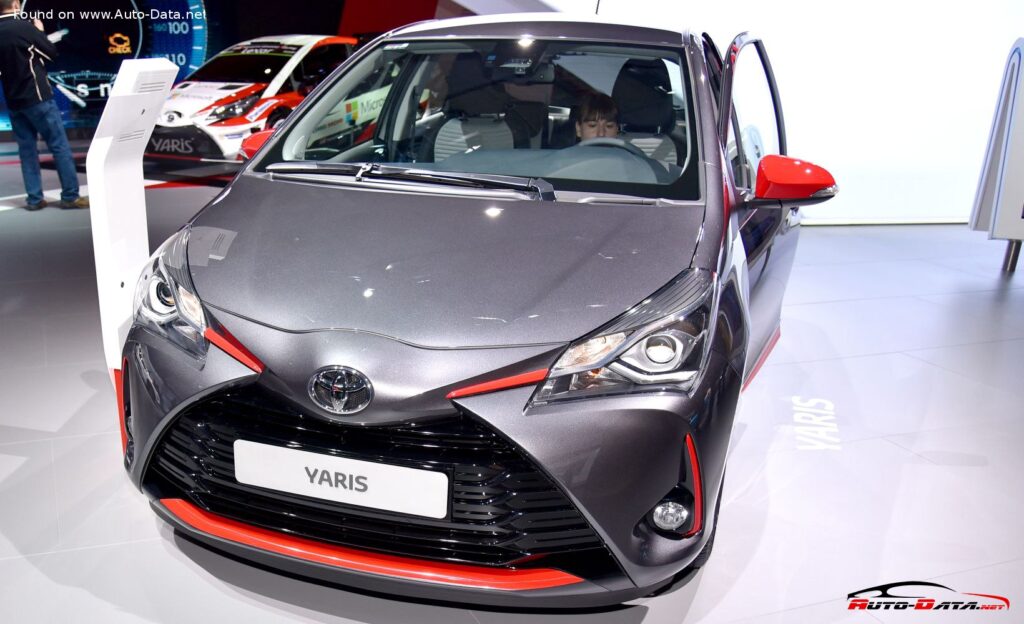
The Toyota Yaris III, particularly the facelifted version introduced in 2017, represents Toyota’s continued commitment to the subcompact hatchback segment. While the Yaris nameplate has a longer history, the third generation, launched in 2011 and refreshed in 2017, aimed to offer a more sophisticated and refined experience than its predecessors. This iteration of the Yaris was primarily marketed in Europe and other global markets, serving as a crucial entry point into the Toyota brand for many buyers. The 1.0 VVT-i model, producing 69 horsepower, was a popular choice for its fuel efficiency and suitability for urban driving. It competed with vehicles like the Volkswagen Polo, Ford Fiesta, and Renault Clio, offering a blend of practicality, reliability, and affordability.
Toyota Yaris III (Facelift 2017) 1.0 VVT-i: An Overview
The 2017 facelift brought subtle but noticeable changes to the Yaris III, including revised front-end styling, updated interior materials, and enhanced safety features. The 1.0 VVT-i engine remained a core component of the lineup, appealing to drivers prioritizing economy over outright performance. This model was available with both 3-door and 5-door body styles, catering to different lifestyle needs. The Yaris III, in general, was designed to be a versatile and user-friendly vehicle, well-suited for navigating crowded city streets and providing comfortable transportation for small families or individuals.
Engine & Performance
The heart of the Toyota Yaris III 1.0 VVT-i is a 998cc, three-cylinder 1KR-FE engine. This naturally aspirated engine produces 69 horsepower and 95 Nm (70.07 lb.-ft.) of torque at 4300 rpm. While not a powerhouse, the engine is characterized by its responsiveness and efficiency. The variable valve timing – intelligent (VVT-i) system optimizes engine performance across a wide range of driving conditions. Power is delivered to the front wheels via a five-speed manual transmission. Acceleration from 0 to 100 km/h (0-62 mph) takes 15.3 seconds, and 0 to 60 mph is achieved in approximately 14.5 seconds. The Yaris 1.0 VVT-i has a top speed of 155 km/h (96.31 mph). The engine’s small displacement and efficient design contribute to excellent fuel economy figures: 5.2 l/100 km (45.2 US mpg) in urban settings, 3.8 l/100 km (61.9 US mpg) on the open road, and a combined consumption of 4.3 l/100 km (54.7 US mpg). CO2 emissions are rated at 99 g/km, meeting Euro 6 emission standards.
Design & Features
The Toyota Yaris III is a front-engine, front-wheel-drive hatchback available in both 3-door and 5-door configurations. Its compact dimensions – 3945 mm (155.31 in.) in length, 1695 mm (66.73 in.) in width, and 1510 mm (59.45 in.) in height – make it easy to maneuver in tight spaces. The 2017 facelift brought a more assertive front grille, redesigned headlights, and a refreshed bumper. Inside, the Yaris offers seating for five passengers. The interior design prioritizes functionality and practicality, with a focus on user-friendly controls and ample storage spaces. Safety features included ABS (Anti-lock Braking System) as standard. The Yaris III aimed to provide a comfortable and safe driving experience, with features like electric power steering and a McPherson strut front suspension contributing to its handling characteristics. The interior materials were updated in the facelifted model to enhance the perceived quality and comfort.
Technical Specifications
| Brand | Toyota |
| Model | Yaris |
| Generation | Yaris III (facelift 2017) |
| Type (Engine) | 1.0 VVT-i (69 Hp) |
| Start of production | 2017 |
| End of production | 2018 |
| Powertrain Architecture | Internal Combustion engine |
| Body type | Hatchback |
| Seats | 5 |
| Doors | 3/5 |
| Fuel consumption (urban) | 5.2 l/100 km (45.2 US mpg) |
| Fuel consumption (extra urban) | 3.8 l/100 km (61.9 US mpg) |
| Fuel consumption (combined) | 4.3 l/100 km (54.7 US mpg) |
| CO2 emissions | 99 g/km |
| Fuel Type | Petrol (Gasoline) |
| Acceleration 0 – 100 km/h | 15.3 sec |
| Acceleration 0 – 62 mph | 15.3 sec |
| Acceleration 0 – 60 mph | 14.5 sec |
| Maximum speed | 155 km/h (96.31 mph) |
| Emission standard | Euro 6 |
| Power | 69 Hp |
| Power per litre | 69.1 Hp/l |
| Torque | 95 Nm @ 4300 rpm (70.07 lb.-ft. @ 4300 rpm) |
| Engine layout | Front, Transverse |
| Engine Model/Code | 1KR-FE |
| Engine displacement | 998 cm3 (60.9 cu. in.) |
| Number of cylinders | 3 |
| Engine configuration | Inline |
| Number of valves per cylinder | 4 |
| Fuel injection system | Multi-port manifold injection |
| Engine aspiration | Naturally aspirated engine |
| Valvetrain | DOHC |
| Engine oil capacity | 3.1 l (3.28 US qt | 2.73 UK qt) |
| Coolant capacity | 4.7 l (4.97 US qt | 4.14 UK qt) |
| Length | 3945 mm (155.31 in.) |
| Width | 1695 mm (66.73 in.) |
| Height | 1510 mm (59.45 in.) |
| Drivetrain Architecture | ICE drives front wheels |
| Drive wheel | Front wheel drive |
| Number of gears | 5 gears, manual transmission |
| Front suspension | Independent, McPherson with coil spring and anti-roll bar |
| Front brakes | Ventilated discs |
| Steering type | Steering rack and pinion |
| Power steering | Electric |
The Toyota Yaris III 1.0 VVT-i (facelift 2017) remains a popular choice in the used car market, particularly for those seeking a reliable, economical, and easy-to-drive city car. Its blend of practicality, efficiency, and Toyota’s reputation for durability make it a compelling option in the subcompact hatchback segment.