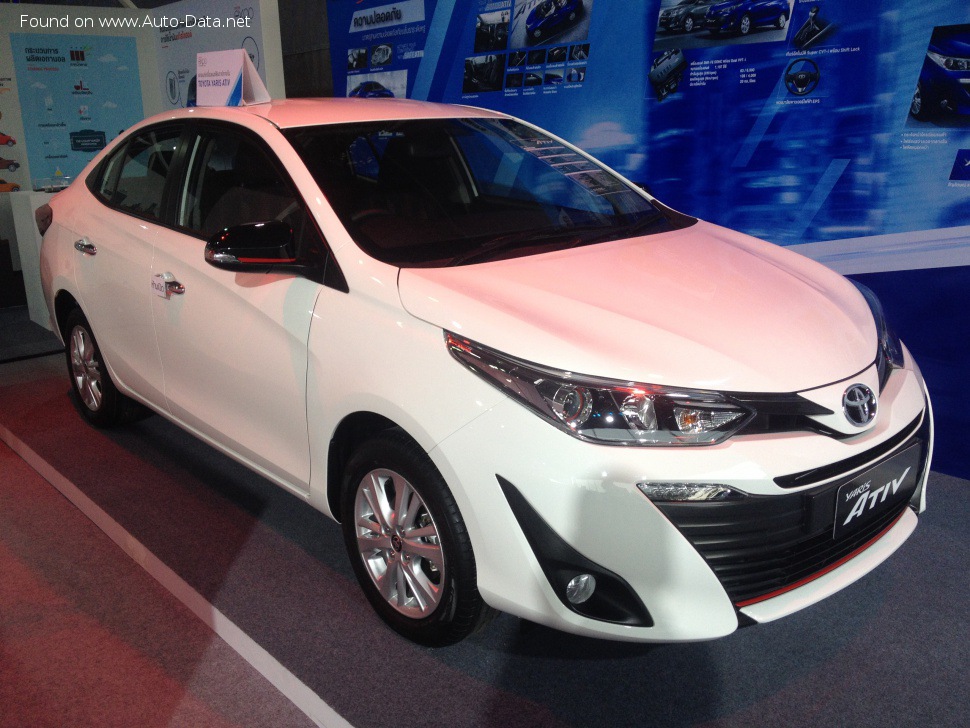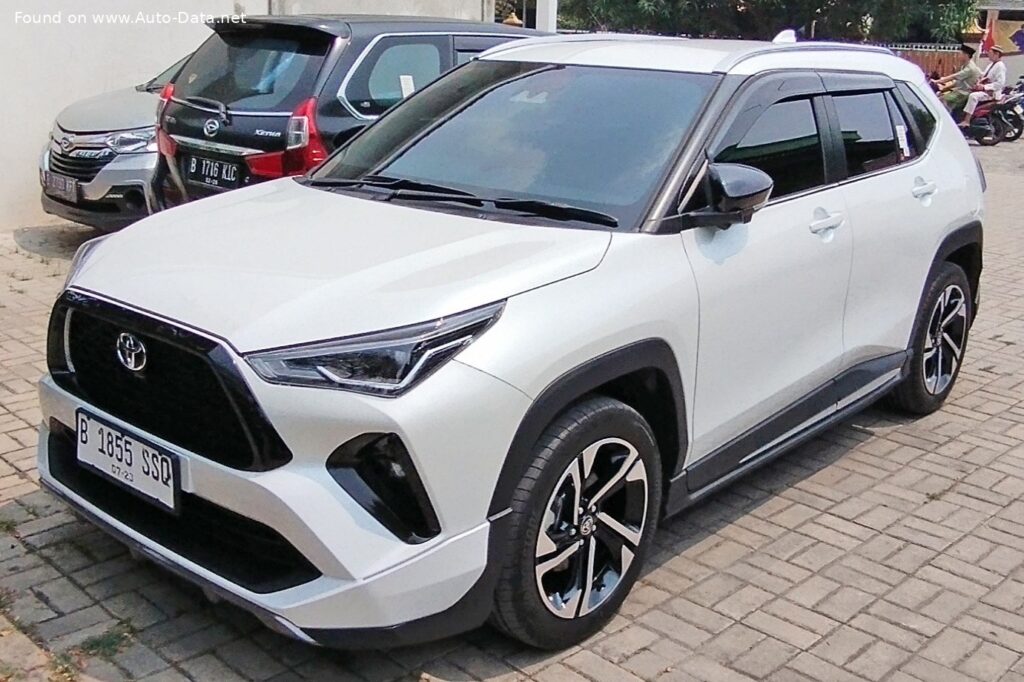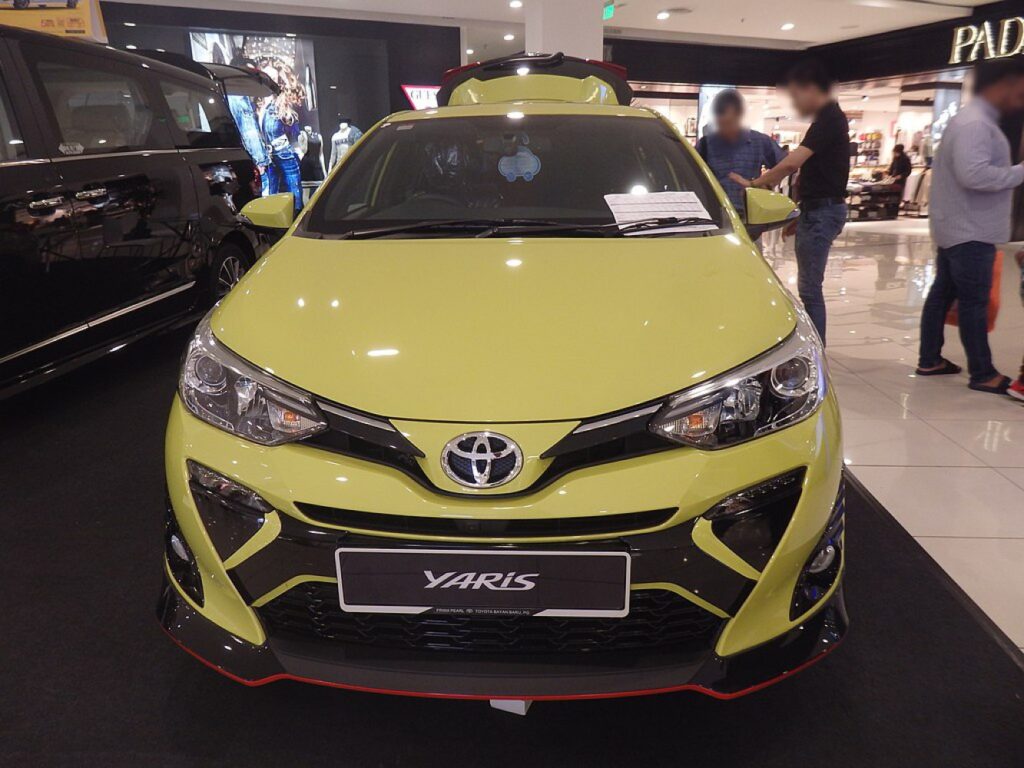
The Toyota Yaris (XP150, facelift 2017) 1.5, producing 107 horsepower, was a key variant within the third generation of the Yaris subcompact hatchback. Introduced in 2018 and continuing through 2020, this model represented a mid-cycle refresh of the XP150 platform, originally launched in 2013. The 1.5L engine option positioned itself as a step up from the base 1.3L models, offering a balance between fuel efficiency and performance for buyers seeking a more capable daily driver. It served as a bridge between the entry-level trims and the more specialized, performance-oriented variants available in some markets.
Powertrain & Engine Architecture
The heart of the Yaris 1.5 was the 2NR-FE engine, a 1.496-liter (91.29 cubic inches) inline-four cylinder gasoline engine. This engine featured a double overhead camshaft (DOHC) valvetrain with four valves per cylinder, contributing to its relatively efficient operation. The 2NR-FE utilized multi-port fuel injection, a common system for its time, delivering fuel directly into the intake ports. The engine’s bore and stroke measured 72.5 mm (2.85 inches) and 90.6 mm (3.57 inches) respectively, resulting in a compression ratio of 11.5:1. This higher compression ratio aided in extracting more power from the relatively small displacement. The engine was transversely mounted at the front of the vehicle, driving the front wheels.
While a manual transmission was available, this article focuses on the automatic transmission variant. The Yaris 1.5 typically employed a four-speed automatic transmission. This transmission, while providing convenience, was a relatively older design compared to the continuously variable transmissions (CVTs) becoming increasingly common in the segment. The four-speed automatic was chosen for its robustness and cost-effectiveness, but it did impact fuel economy and acceleration compared to the manual option.
Engine Specifications
Key engine specifications included a maximum power output of 107 hp at 6000 rpm and a peak torque of 140 Nm (103.26 lb-ft) at 4200 rpm. The engine oil capacity was 3.4 liters (3.59 US quarts / 2.99 UK quarts), and the cooling system required 5.4 liters (5.71 US quarts / 4.75 UK quarts) of coolant. The 2NR-FE engine also incorporated a particulate filter to reduce emissions, aligning with increasingly stringent environmental regulations.
Driving Characteristics
The Yaris 1.5 with the four-speed automatic offered a comfortable, if not particularly exhilarating, driving experience. Acceleration was adequate for city driving and highway merging, but the automatic transmission’s limited number of gears meant the engine often operated at higher RPMs during acceleration, impacting fuel economy and creating noticeable engine noise. The gear ratios were tuned for everyday usability rather than outright performance. Compared to the five-speed manual version, the automatic resulted in slightly slower 0-60 mph times and reduced fuel efficiency. The automatic transmission did offer smoother shifts than some competitors, but lacked the responsiveness of more modern transmissions.
The weight-to-power ratio of approximately 9.9 kg/hp (101.4 hp/tonne) and a weight-to-torque ratio of 7.5 kg/Nm (132.7 Nm/tonne) reflected the car’s modest performance capabilities. The Yaris 1.5 automatic was best suited for drivers prioritizing ease of use and fuel economy over sporty handling or rapid acceleration.
Equipment & Trim Levels
The Yaris 1.5 automatic was typically offered in mid-range trim levels. Standard equipment generally included air conditioning, power windows, power door locks, and a basic audio system with USB connectivity. Higher trim levels added features such as alloy wheels, a touchscreen infotainment system, a rearview camera, and automatic climate control. Interior upholstery was typically cloth, with options for upgraded materials in higher trims. Safety features included multiple airbags, anti-lock brakes (ABS), and electronic stability control (ESC). Optional extras often included a sunroof, navigation system, and advanced driver-assistance systems (ADAS) like lane departure warning and automatic emergency braking, depending on the market.
Chassis & Braking
The Yaris 1.5 utilized a McPherson strut independent suspension in the front and a torsion beam suspension in the rear. This suspension setup provided a reasonable balance between ride comfort and handling. The torsion beam rear suspension was a cost-effective solution, but it didn’t offer the same level of sophistication as a fully independent rear suspension. Braking systems varied depending on the trim level and market. Lower trims typically featured drum brakes in the rear, while higher trims were equipped with disc brakes all around. Front brakes were typically ventilated discs. Stabilizer bars were included both front and rear to reduce body roll during cornering. Tire sizes ranged from 185/60 R15 to 195/50 R16, depending on the wheel size.
Market Reception & Comparison
The Toyota Yaris 1.5 automatic was generally well-received by critics as a practical and reliable subcompact hatchback. It was praised for its fuel efficiency (5.9 l/100 km, 39.9 US mpg, 47.9 UK mpg) and Toyota’s reputation for dependability. However, the four-speed automatic transmission was often criticized for being outdated and less efficient than newer transmissions. Compared to the manual transmission version, the automatic offered less engaging driving experience and slightly lower fuel economy. Compared to competitors like the Honda Fit and Nissan Versa, the Yaris 1.5 automatic offered a similar level of practicality and reliability, but often at a slightly higher price point. The Yaris’s smaller size and nimble handling were also considered advantages in urban environments.
Technical Specifications
| Body Type | Hatchback, 5 Doors, 5 Seats |
| Fuel Economy (Combined) | 5.9 l/100 km (39.9 US mpg, 47.9 UK mpg, 16.9 km/l) |
| CO2 Emissions | 136 g/km |
| Maximum Speed | 180 km/h (111.85 mph) |
| Weight-to-Power Ratio | 9.9 kg/Hp |
| Weight-to-Torque Ratio | 7.5 kg/Nm |
| Power | 107 Hp @ 6000 rpm |
| Torque | 140 Nm @ 4200 rpm (103.26 lb.-ft. @ 4200 rpm) |
| Maximum Engine Speed | 6200 rpm |
| Engine Layout | Front, Transverse |
| Engine Model/Code | 2NR-FE |
| Engine Displacement | 1496 cm3 (91.29 cu. in.) |
| Number of Cylinders | 4 |
| Engine Configuration | Inline |
| Cylinder Bore | 72.5 mm (2.85 in.) |
| Piston Stroke | 90.6 mm (3.57 in.) |
| Compression Ratio | 11.5:1 |
| Number of Valves per Cylinder | 4 |
| Fuel Injection System | Multi-port manifold injection |
| Engine Oil Capacity | 3.4 l (3.59 US qt | 2.99 UK qt) |
| Coolant Capacity | 5.4 l (5.71 US qt | 4.75 UK qt) |
| Kerb Weight | 1055-1110 kg (2325.88 – 2447.13 lbs.) |
| Max. Weight | 1550 kg (3417.17 lbs.) |
| Trunk (Boot) Space (Minimum) | 310 l (10.95 cu. ft.) |
| Fuel Tank Capacity | 42 l (11.1 US gal | 9.24 UK gal) |
| Length | 4145 mm (163.19 in.) |
| Width | 1730 mm (68.11 in.) |
| Wheelbase | 2550 mm (100.39 in.) |
| Transmission | 4-speed Automatic |
Legacy
The 2NR-FE engine, in general, has proven to be a reliable and durable powerplant. The Yaris 1.5 automatic, while not a performance standout, has maintained a good reputation for long-term dependability. On the used car market, these models are often sought after by buyers looking for an affordable, fuel-efficient, and reliable subcompact hatchback. The four-speed automatic transmission may require more frequent servicing than newer transmissions, but it is generally considered robust. The Yaris 1.5 automatic remains a viable option for those seeking a practical and economical city car, particularly in regions where fuel costs are high and reliability is a priority.