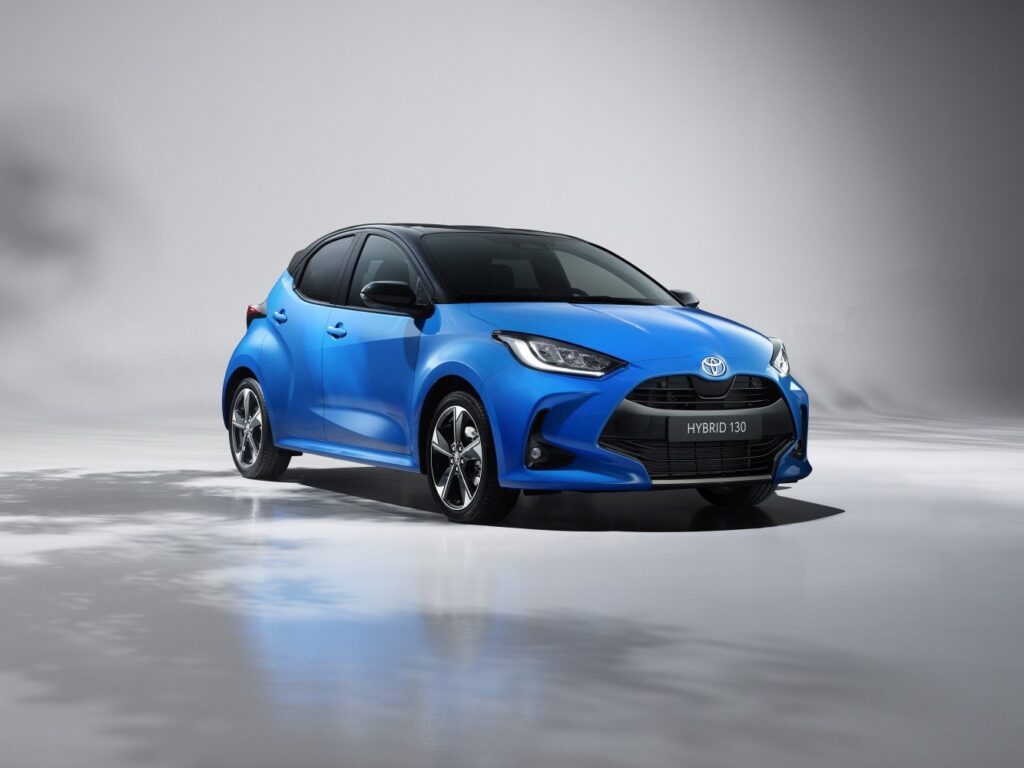
The Toyota Yaris (XP210) 1.5 Hybrid, produced from 2023 to February 2024, represents the fourth generation of Toyota’s globally recognized supermini. This particular variant, equipped with a 1.5-liter engine and a combined system output of 130 horsepower, utilizes Toyota’s Hybrid Synergy Drive system with an e-CVT transmission. It served as a mid-range offering within the XP210 lineup, positioned above the base model and below any potential higher-performance trims. The XP210 Yaris was a significant model for Toyota, built upon the GA-B platform – a derivative of the Toyota New Global Architecture (TNGA) – emphasizing improved safety, driving dynamics, and fuel efficiency.
Powertrain & Engine Architecture
The heart of the Yaris 1.5 Hybrid is the M15A-FXE engine, a 1.490-liter (90.93 cubic inches) inline-3 cylinder gasoline engine. This engine produces 92 horsepower at 5500 rpm and 120 Nm (88.51 lb-ft) of torque between 3600-4800 rpm, boasting a high compression ratio of 14:1. It employs a combination of direct injection and multi-port manifold injection for optimized combustion. The engine also features Toyota’s VVT-iE (Variable Valve Timing – intelligent Electric motor) and VVT-i systems, enhancing efficiency and responsiveness.
Crucially, this is not a conventional engine operating in isolation. It’s integrated into Toyota’s Full Hybrid Electric Vehicle (FHEV) system. An 80 hp electric motor, producing 141 Nm (104 lb-ft) of torque, is integrated directly into the e-CVT transmission. This allows for electric-only driving at lower speeds and assists the gasoline engine during acceleration. The combined system output is 130 hp and 185 Nm (136.45 lb-ft) of torque. The e-CVT, unlike a traditional automatic, doesn’t have fixed gear ratios. Instead, it utilizes a planetary gearset to seamlessly blend the power from the engine and electric motor, optimizing for efficiency and smooth acceleration. The lithium-ion battery, located under the rear seats, provides the energy storage for the electric motor.
Fuel Injection and Valvetrain
The M15A-FXE engine utilizes a sophisticated fuel injection system combining the benefits of both direct injection and multi-port injection. Direct injection delivers fuel directly into the combustion chamber, improving efficiency and reducing emissions. Multi-port injection supplements this, particularly during cold starts and high-load conditions. The engine’s valvetrain features a Dual Overhead Camshaft (DOHC) configuration with four valves per cylinder, further contributing to its performance and efficiency.
Driving Characteristics
The Yaris 1.5 Hybrid e-CVT delivers a driving experience focused on efficiency and smoothness rather than outright performance. Acceleration from 0-100 km/h (0-62 mph) takes approximately 9.2 seconds, while 0-60 mph is achieved in around 8.7 seconds. The e-CVT transmission provides seamless acceleration, eliminating the gear shift shock often associated with traditional automatics. However, it can sometimes feel less responsive than a conventional automatic or manual transmission, particularly during sudden acceleration requests. The electric motor provides instant torque, which helps to mitigate this somewhat.
Compared to a hypothetical manual transmission version of the 1.5L engine (which was not offered in most markets), the e-CVT prioritizes fuel economy over driver engagement. The e-CVT keeps the engine operating within its most efficient range, maximizing fuel savings. Compared to other trims in the Yaris XP210 lineup (if higher-performance options were available), this hybrid variant would likely offer less raw power but significantly better fuel economy.
Equipment & Trim Levels
The Yaris 1.5 Hybrid typically came standard with a respectable level of equipment. Standard features generally included air conditioning, a touchscreen infotainment system with smartphone integration (Apple CarPlay and Android Auto), Toyota Safety Sense (a suite of active safety features including pre-collision system, lane departure alert, and adaptive cruise control), and power windows and mirrors. Interior upholstery was typically cloth, with options for upgraded materials available. Dashboard configuration was modern and functional, prioritizing ease of use. Optional extras could include features like a rear-view camera, parking sensors, automatic climate control, and upgraded audio systems.
Chassis & Braking
The Yaris 1.5 Hybrid utilizes a McPherson strut independent suspension at the front and a torsion beam suspension at the rear. This setup provides a good balance between ride comfort and handling. The torsion beam rear suspension is a cost-effective solution that minimizes weight and complexity. The braking system consists of ventilated discs at the front and discs at the rear. ABS (Anti-lock Braking System) is standard, enhancing safety during emergency braking. The electric power steering provides light and precise steering feel. The vehicle’s kerb weight ranges from 1175-1180 kg (2590.43 – 2601.45 lbs), contributing to its relatively nimble handling.
Market Reception & Comparison
The Toyota Yaris 1.5 Hybrid was generally well-received by automotive critics. It was praised for its excellent fuel economy (4.2-5.1 l/100 km, 56-46.1 US mpg), low CO2 emissions (96-116 g/km), and comfortable ride. Critics noted the e-CVT transmission’s smoothness but also pointed out its occasional lack of responsiveness. Compared to other trims in the Yaris lineup, the hybrid variant offered a compelling value proposition for buyers prioritizing fuel efficiency and environmental friendliness. Its reliability was expected to be high, consistent with Toyota’s reputation for building durable vehicles.
In terms of fuel economy, the 1.5 Hybrid significantly outperformed non-hybrid Yaris models. Reliability was also expected to be superior due to the reduced strain on the gasoline engine thanks to the electric motor assistance. However, the hybrid system added complexity, potentially leading to higher repair costs in the long run.
Technical Specifications
| Brand | Toyota |
| Model | Yaris |
| Generation | Yaris (XP210) |
| Type (Engine) | 1.5 (130 Hp) Hybrid e-CVT |
| Start of production | 2023 |
| End of production | February, 2024 |
| Powertrain Architecture | FHEV (Full Hybrid Electric Vehicle) |
| Body type | Hatchback |
| Seats | 5 |
| Doors | 5 |
| Combined fuel consumption (WLTP) | 4.2-5.1 l/100 km (56 – 46.1 US mpg) |
| CO2 emissions (WLTP) | 96-116 g/km |
| Fuel Type | Petrol (Gasoline) |
| Acceleration 0 – 100 km/h | 9.2 sec |
| Acceleration 0 – 62 mph | 9.2 sec |
| Acceleration 0 – 60 mph | 8.7 sec |
| Maximum speed | 175 km/h (108.74 mph) |
| Emission standard | Euro 6 AP |
| Battery technology | Lithium-ion (Li-Ion) |
| Battery location | Under the rear seats |
| Electric motor power | 80 Hp |
| Electric motor Torque | 141 Nm (104 lb.-ft.) |
| System power | 130 Hp |
| System torque | 185 Nm (136.45 lb.-ft.) |
| Power | 92 Hp @ 5500 rpm |
| Torque | 120 Nm @ 3600-4800 rpm (88.51 lb.-ft. @ 3600-4800 rpm) |
| Engine layout | Front, Transverse |
| Engine Model/Code | M15A-FXE |
| Engine displacement | 1490 cm3 (90.93 cu. in.) |
| Number of cylinders | 3 |
| Engine configuration | Inline |
| Cylinder Bore | 80.5 mm (3.17 in.) |
| Piston Stroke | 97.6 mm (3.84 in.) |
| Compression ratio | 14:1 |
| Engine oil capacity | 3.6 l (3.8 US qt | 3.17 UK qt) |
| Coolant | 5 l (5.28 US qt | 4.4 UK qt) |
| Kerb Weight | 1175-1180 kg (2590.43 – 2601.45 lbs.) |
| Max. weight | 1615 kg (3560.47 lbs.) |
| Trunk (boot) space – minimum | 286 l (10.1 cu. ft.) |
| Trunk (boot) space – maximum | 947 l (33.44 cu. ft.) |
| Fuel tank capacity | 36 l (9.51 US gal | 7.92 UK gal) |
| Drive wheel | Front wheel drive |
| Number of gears and type of gearbox | automatic transmission e-CVT |
Legacy
The Toyota Yaris 1.5 Hybrid (XP210) is expected to maintain a strong reputation for reliability in the used car market. Toyota’s hybrid technology has proven to be durable over time, and the M15A-FXE engine is known for its longevity. However, potential buyers should be aware of the added complexity of the hybrid system, which could lead to higher repair costs if issues arise. The vehicle’s fuel efficiency and low emissions will continue to make it an attractive option for environmentally conscious buyers. As a representative of Toyota’s commitment to hybrid technology, the XP210 Yaris 1.5 Hybrid holds a significant place in the evolution of the modern supermini.