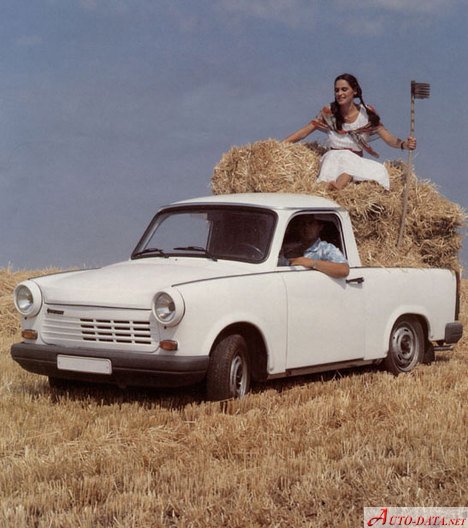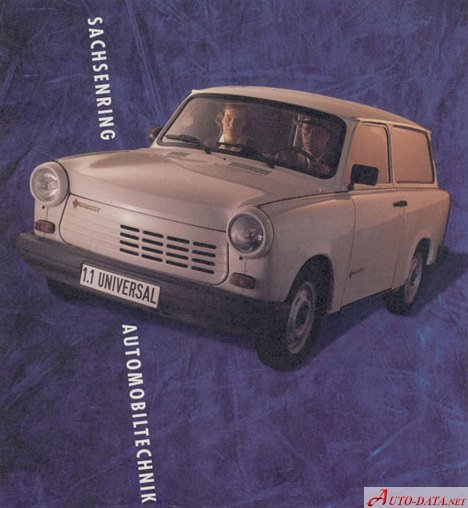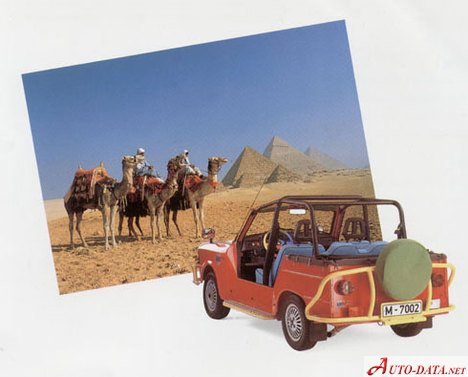
The Trabant 1.1 Tramp 1.1 (41 hp) was a variant of the Trabant 601, produced between 1990 and 1991. It represented a late-era iteration of the iconic East German automobile, specifically the open-top “Tramp” cabriolet version. This model occupied the entry-level position within the limited Trabant range available during its final years of production, offering a relatively affordable and distinctive motoring experience. The 1.1 Tramp was built on the 601 chassis, utilizing the same core design principles that had defined the Trabant for decades, but with a slightly larger engine displacement than earlier models.
Powertrain & Engine Architecture
The Trabant 1.1 Tramp was powered by a 1.1-liter (1043 cm3 or 63.65 cu. in.) inline four-cylinder two-stroke engine. This engine, designated as a modified version of the original 601 powerplant, produced 41 horsepower at 5300 rpm and 74 Nm (54.58 lb-ft) of torque. The engine featured a 9.5:1 compression ratio and utilized a carburetor fuel injection system – a relatively archaic technology by the early 1990s. The two-stroke design necessitated a separate oil reservoir for lubrication, which drivers needed to regularly check and replenish. The engine was transversely mounted at the front of the vehicle.
Unlike many contemporary vehicles, the Trabant 1.1 did not employ a conventional transmission. Instead, it utilized a four-speed manual gearbox with synchromesh only on the top three gears. The clutch operation was notoriously heavy, and the gearshift required a deliberate and somewhat forceful action. The Tramp variant did *not* offer an automatic transmission option; all were equipped with the standard manual gearbox. The engine’s power delivery was characterized by a narrow powerband, requiring frequent gear changes to maintain momentum. The relatively low horsepower output and the two-stroke engine’s inherent limitations meant that acceleration was slow, and sustained high-speed cruising was not a strong suit.
Engine Details
- Engine Code: Modified 601 engine
- Fuel System: Carburetor
- Valvetrain: 2 valves per cylinder
- Aspiration: Naturally Aspirated
Driving Characteristics
The Trabant 1.1 Tramp offered a unique driving experience, largely dictated by its unconventional powertrain. Acceleration from 0 to 100 km/h (0 to 62 mph) took approximately 22 seconds, and 0 to 60 mph was achieved in around 20.9 seconds. The top speed was limited to 125 km/h (77.67 mph). The car’s light weight (680 kg or 1499.14 lbs kerb weight) helped to mitigate the effects of the low horsepower, but overtaking maneuvers required careful planning. The two-stroke engine produced a distinctive, buzzing sound, and the exhaust emitted a noticeable oil smell. Handling was adequate for city driving, but the car’s high center of gravity and relatively narrow track width made it prone to body roll in corners. The Tramp’s open-top configuration enhanced the driving experience, but also increased wind noise and reduced structural rigidity.
Equipment & Trim Levels
The Trabant 1.1 Tramp was a fairly basic vehicle, even by the standards of the early 1990s. Standard equipment included cloth upholstery, simple steel wheels with hubcaps, and basic instrumentation. The interior was spartan, with minimal sound insulation and limited creature comforts. The dashboard was constructed from hard plastic and featured a speedometer, fuel gauge, and warning lights. The Tramp’s defining feature was its manually operated folding soft top, which provided open-air motoring. Optional extras were limited, but could include upgraded upholstery, a radio, and a heated rear window. The Tramp trim level was generally considered the most aesthetically appealing of the Trabant range, due to its convertible body style.
Chassis & Braking
The Trabant 1.1 Tramp utilized a relatively simple chassis design. The front suspension consisted of independent McPherson struts with coil springs and an anti-roll bar. The rear suspension employed a trailing arm setup with coil springs. Braking was provided by disc brakes at the front and drum brakes at the rear. The braking system was adequate for normal driving conditions, but lacked the stopping power of more modern vehicles. The tires were typically 145/80 SR13, mounted on 4Jx13H-45 steel wheels. The car’s light weight helped to compensate for the relatively basic braking system.
Market Reception & Comparison
The Trabant 1.1 Tramp was primarily sold in Eastern European markets, particularly in East Germany before and shortly after reunification. It was not widely exported to Western Europe or North America. Critics generally acknowledged the Trabant’s affordability and distinctive design, but also highlighted its technological shortcomings. Compared to other Trabant variants, such as the standard 601 sedan, the Tramp offered a more enjoyable driving experience thanks to its open-top configuration. However, it was less practical for everyday use. Compared to Western European cars of the same era, the Trabant 1.1 Tramp was significantly less refined, less powerful, and less safe. Its fuel economy was reasonable for its time, but its two-stroke engine required frequent maintenance and oil replenishment. Reliability was generally acceptable, but the car’s age and construction quality meant that breakdowns were not uncommon.
Technical Specifications
| Body Type | Cabriolet |
| Seats | 4 |
| Engine Type | Petrol (Gasoline) |
| Acceleration 0-100 km/h | 22 sec |
| Acceleration 0-62 mph | 22 sec |
| Acceleration 0-60 mph | 20.9 sec |
| Maximum Speed | 125 km/h (77.67 mph) |
| Weight-to-Power Ratio | 16.6 kg/Hp |
| Power | 41 Hp @ 5300 rpm |
| Torque | 74 Nm (54.58 lb.-ft.) |
| Engine Displacement | 1043 cm3 (63.65 cu. in.) |
| Number of Cylinders | 4 |
| Engine Configuration | Inline |
| Cylinder Bore | 75 mm (2.95 in.) |
| Piston Stroke | 59 mm (2.32 in.) |
| Compression Ratio | 9.5:1 |
| Fuel Injection System | Carburetor |
| Kerb Weight | 680 kg (1499.14 lbs.) |
| Max. Weight | 1085 kg (2392.02 lbs.) |
| Trunk (boot) Space | 415 l (14.66 cu. ft.) |
| Fuel Tank Capacity | 28 l (7.4 US gal | 6.16 UK gal) |
| Length | 3521 mm (138.62 in.) |
| Width | 1528 mm (60.16 in.) |
| Height | 1420 mm (55.91 in.) |
| Wheelbase | 2020 mm (79.53 in.) |
Legacy
The Trabant 1.1 Tramp represents the final chapter in the Trabant story. While the car was technologically outdated even at the time of its production, it remains a beloved symbol of East Germany and a testament to the ingenuity of its engineers. Today, the Trabant 1.1 Tramp is a sought-after classic car, particularly among collectors and enthusiasts. Its simple construction and readily available parts make it relatively easy to maintain, although finding qualified mechanics can be a challenge. The two-stroke engine requires regular attention, but its unique character and sound continue to appeal to many. The Tramp’s open-top configuration adds to its desirability, making it a fun and distinctive vehicle to own and drive. The car’s value in the used car market has been steadily increasing in recent years, reflecting its growing popularity as a nostalgic icon.