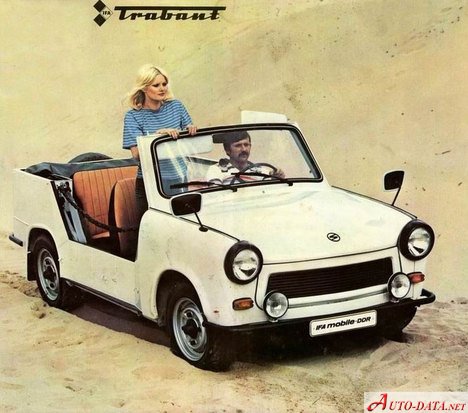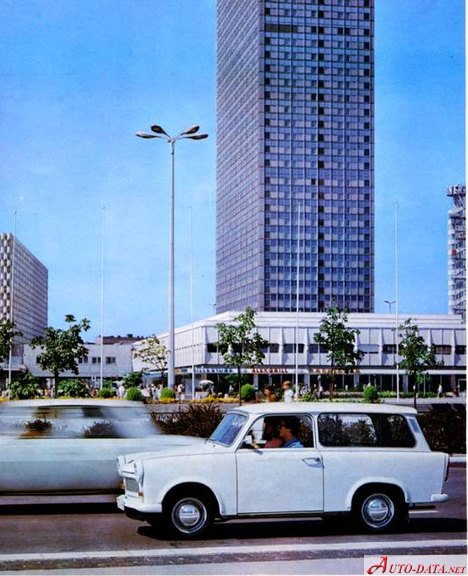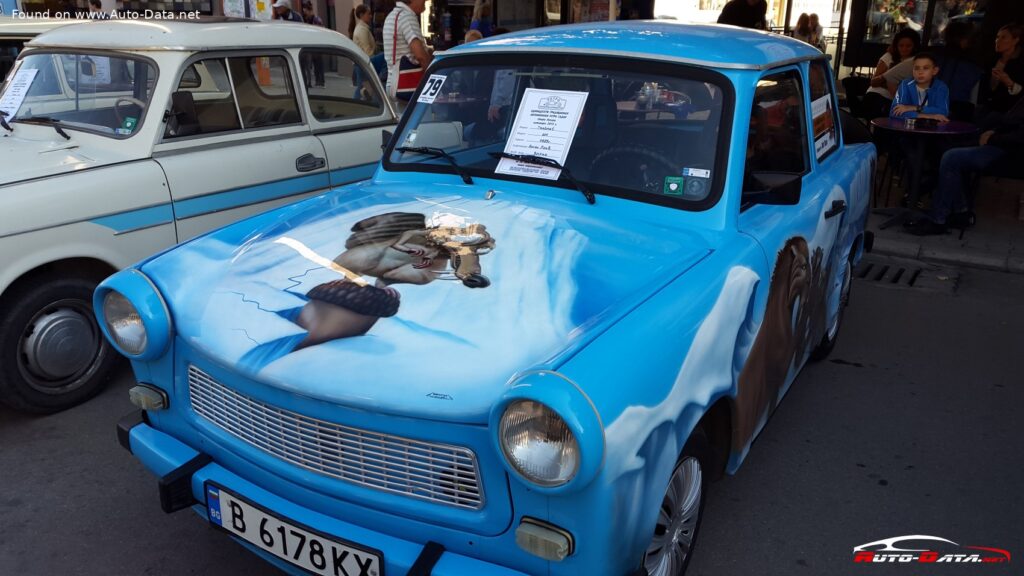
The Trabant P 601 0.6, producing 26 horsepower, was the quintessential entry-level model of the iconic East German automobile. Produced from 1970 to 1990, it represented the most accessible and widely produced variant of the P 601 series, which itself was a continuation of the Trabant 600 lineage. Built by VEB Automobilwerke Zwickau, the P 601 0.6 served as the primary personal transportation for many families in the German Democratic Republic (GDR) and other Eastern Bloc countries. It was positioned as the base model, offering basic transportation at an affordable price, and was distinguished by its smaller engine compared to the later 1.1-liter variants.
Powertrain & Engine Architecture
The heart of the Trabant P 601 0.6 was its 594 cc (36.25 cu. in.) two-stroke, inline two-cylinder engine. Designated as the Type 601, this engine was a significant evolution of the earlier Wartburg and Trabant engines. Unlike conventional four-stroke engines, the two-stroke design relied on a mixture of gasoline and oil for lubrication, resulting in a characteristic smoky exhaust. The engine featured a carburetor fuel injection system, a relatively simple design chosen for its reliability and ease of maintenance. The valvetrain consisted of ports in the cylinder walls controlled by the piston’s movement, eliminating the need for traditional valves and camshafts.
The engine was transversely mounted at the front of the vehicle, driving the front wheels. While a four-speed manual transmission was standard, the focus of this article is the 0.6L variant. The transmission was a fully synchronized unit, a notable improvement over earlier Trabant models. The engine’s relatively low compression ratio of 7.6:1 contributed to its ability to run on the lower-octane fuel readily available in Eastern Europe. The engine produced 26 hp at 4200 rpm and 53 Nm (39.09 lb-ft) of torque. The power-to-weight ratio was 23.7 kg/hp, or approximately 42.3 hp per tonne.
Engine Codes and Variations
While the core engine design remained consistent throughout the P 601 0.6’s production run, minor variations existed. These were primarily related to carburetor adjustments and ignition timing, aimed at improving emissions or fuel efficiency. However, the fundamental engine code remained largely unchanged.
Driving Characteristics
The Trabant P 601 0.6 offered modest performance, reflecting its low horsepower output. Acceleration was slow, and reaching its top speed of 100 km/h (62.14 mph) required a long stretch of road. The four-speed manual transmission was geared to maximize fuel economy and provide reasonable usability in urban environments. The engine’s torque curve was relatively flat, providing adequate pulling power at lower speeds, but it lacked the responsiveness of higher-output engines. Compared to later P 601 variants with the 1.1-liter engine, the 0.6L model felt significantly underpowered, particularly when carrying passengers or cargo. Hill climbs were often undertaken at a reduced speed, and overtaking required careful planning. The driving experience was characterized by the distinctive two-stroke engine sound and vibration.
Equipment & Trim Levels
The P 601 0.6 was deliberately spartan in its equipment levels, reflecting its position as the entry-level model. Standard features included basic cloth upholstery, a simple dashboard with minimal instrumentation (speedometer, fuel gauge, and warning lights), and manually operated windows and door locks. The exterior featured unpainted Duroplast body panels, a composite material made from cotton waste and phenolic resins, which contributed to the car’s lightweight construction. Optional extras were limited but could include a radio, a heated rear window, and upgraded upholstery. Interior color schemes were typically limited to shades of gray or beige. The steering wheel was a simple, two-spoke design made of plastic.
Chassis & Braking
The Trabant P 601 0.6 utilized a relatively simple chassis design. It featured an independent front suspension with trailing arms and coil springs, and a rigid rear axle with semi-elliptic leaf springs. The steering was of the worm-and-roller type, providing basic control but lacking precision. Braking was provided by drum brakes on all four wheels. The braking system was known to be somewhat underpowered, particularly in wet conditions. Tire size was 145/80 SR13, mounted on 4JX13H-45 steel wheels. The car’s lightweight construction (615 kg / 1355.84 lbs kerb weight) helped to mitigate the limitations of the braking system.
Market Reception & Comparison
The Trabant P 601 0.6 was not subject to extensive critical review in the Western automotive press, due to its limited availability outside the Eastern Bloc. However, within the GDR and other socialist countries, it was widely accepted as a practical and affordable means of transportation. Its low price and relatively simple construction made it accessible to a broad segment of the population. Compared to the later 1.1-liter P 601 variants, the 0.6L model offered lower fuel consumption but significantly reduced performance. The 1.1-liter models were favored by those who required more power for highway driving or carrying heavier loads. Reliability was generally good, owing to the engine’s simple design, but the two-stroke engine required regular oil mixing and was prone to wear if not properly maintained. The Duroplast body panels were durable but susceptible to cracking or damage in accidents.
Technical Specifications
| Body Type | Sedan, 2 Doors, 4 Seats |
| Engine Displacement | 0.6 l / 594 cm3 / 36.25 cu. in. |
| Number of Cylinders | 2, Inline |
| Power | 26 Hp @ 4200 rpm |
| Torque | 53 Nm / 39.09 lb.-ft. |
| Fuel Type | Mixture of two stroke engine |
| Transmission | 4 gears, manual transmission |
| Kerb Weight | 615 kg / 1355.84 lbs. |
| Max. Weight | 1000 kg / 2204.62 lbs. |
| Maximum Speed | 100 km/h / 62.14 mph |
| Fuel Tank Capacity | 26 l / 6.87 US gal | 5.72 UK gal |
| Length | 3510 mm / 138.19 in. |
| Width | 1510 mm / 59.45 in. |
| Height | 1440 mm / 56.69 in. |
| Wheelbase | 2020 mm / 79.53 in. |
| Tires Size | 145/80 SR13 |
Legacy
The Trabant P 601 0.6, while technologically outdated by Western standards, holds a significant place in automotive history as a symbol of the Eastern Bloc. Its simple design and robust construction ensured its longevity, and many examples remain in operation today, primarily as collectors’ items or nostalgic vehicles. The two-stroke engine requires regular maintenance, including oil mixing and occasional piston/ring replacement, but spare parts are still relatively accessible. The P 601 0.6 has gained a cult following among enthusiasts who appreciate its quirky charm and historical significance. In the used car market, prices for well-maintained examples have been steadily increasing, reflecting the growing interest in classic Eastern European automobiles. The car’s enduring appeal lies in its simplicity, affordability, and its representation of a bygone era.