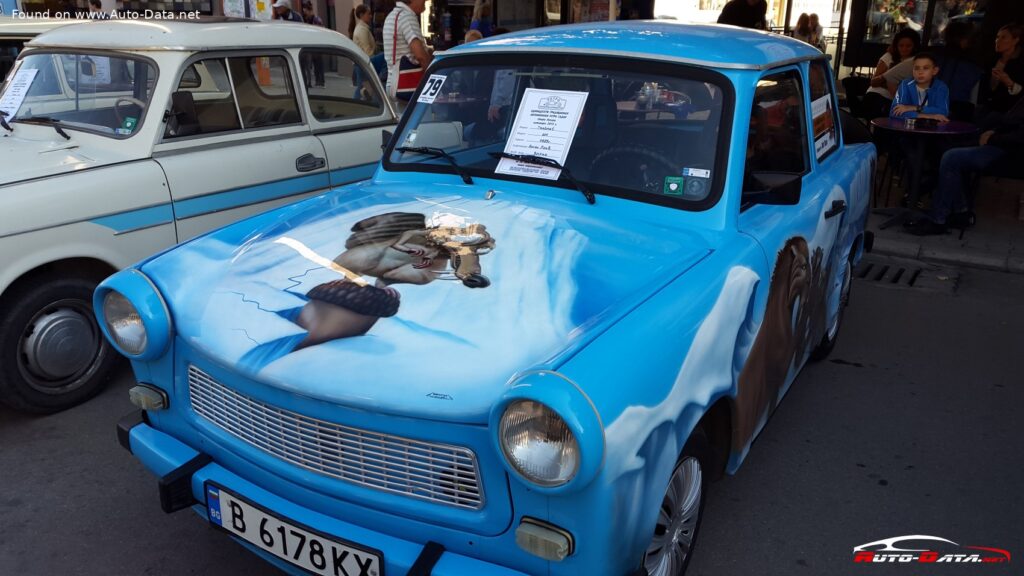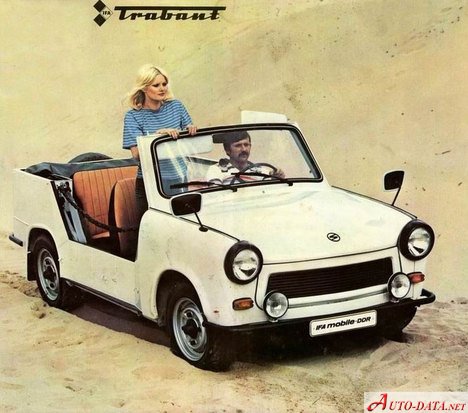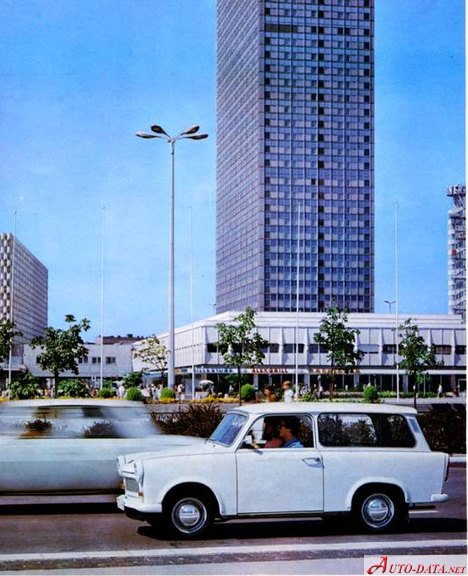
The Trabant P 601 Universal 0.6, a variant of the iconic East German automobile, was produced from 1978 to 1990. As the station wagon (estate) version of the P 601, it represented a practical and affordable transportation option for families within the Eastern Bloc. The “Universal” designation signified its increased cargo capacity compared to the standard P 601 sedan. This particular 0.6-liter, 26 horsepower model occupied the entry-level position in the P 601 lineup, prioritizing affordability and fuel efficiency over outright performance. It was built on the P 601 platform, a continuation of the earlier P 600 series, and utilized a unique construction method featuring a plastic body molded onto a steel frame.
Powertrain & Engine Architecture
The Trabant P 601 Universal 0.6 was powered by a 594 cc (36.25 cu. in.) two-stroke, inline two-cylinder engine. This engine, designated as a variant within the broader Trabant engine family, produced 26 horsepower at 4200 rpm and 53 Nm (39.09 lb-ft) of torque. The engine’s two-stroke design necessitated a fuel-oil mixture, typically a ratio of 1:33, which was added to the fuel tank. This mixture lubricated the engine’s internal components. The engine featured a carburetor fuel injection system, a relatively simple and cost-effective solution for the time. The valvetrain consisted of port timing, utilizing the piston movement to control intake and exhaust.
The P 601 Universal 0.6 was equipped with a four-speed manual transmission. This transmission was designed to maximize the limited power output of the engine, with gear ratios optimized for acceleration and hill climbing. The drivetrain was front-wheel drive, a configuration common for economy cars of the era. The engine was transversely mounted, contributing to the vehicle’s compact footprint.
Engine Codes and Variations
While the core engine design remained consistent throughout the P 601 production run, minor variations existed. These variations primarily concerned carburetor adjustments and ignition timing, aimed at meeting evolving emissions standards or improving reliability. The 0.6-liter engine was the base offering, with larger 1.1-liter variants available for those seeking increased performance. The 0.6L engine was specifically targeted at buyers who prioritized economy and low running costs.
Driving Characteristics
The driving experience in a Trabant P 601 Universal 0.6 was characterized by its modest performance. Acceleration was slow, and the engine required frequent gear changes to maintain momentum, especially when climbing hills or carrying a full load. The top speed was approximately 100 km/h (62.14 mph). The two-stroke engine produced a distinctive, buzzing sound and exhibited a noticeable power band. The four-speed manual transmission, while simple, required precise operation to avoid stalling. The car’s light weight (650 kg / 1433 lbs) helped to mitigate the effects of the low horsepower output, making it relatively nimble in urban environments. Compared to the 1.1-liter versions, the 0.6L felt significantly slower, particularly when fully loaded. However, the 0.6L offered superior fuel economy.
Equipment & Trim Levels
The Trabant P 601 Universal 0.6 was sparsely equipped, reflecting its position as an entry-level vehicle. Standard features included basic cloth upholstery, a simple dashboard with minimal instrumentation (speedometer, fuel gauge), and manually operated windows and door locks. The interior was functional rather than luxurious. The steering wheel was typically made of plastic. Heating was available, but air conditioning was not an option. Optional extras were limited, but could include a radio and upgraded seat covers. The Universal body style offered significantly more cargo space than the sedan, with a minimum of 450 liters (15.89 cu. ft.) and a maximum of 1400 liters (49.44 cu. ft.) with the rear seats folded down.
Chassis & Braking
The Trabant P 601 Universal 0.6 featured a relatively simple chassis design. The front suspension consisted of independent trailing arms with coil springs and telescopic shock absorbers. The rear suspension utilized a rigid axle with leaf springs. The steering was of the rack and pinion type, providing reasonable precision. The braking system consisted of drum brakes on all four wheels. The drum brakes were adequate for the car’s weight and performance, but lacked the stopping power of disc brakes. Tire size was 145/80 SR13. The car’s light weight contributed to its relatively stable handling, but the suspension was prone to body roll in corners.
Market Reception & Comparison
The Trabant P 601 Universal 0.6 was primarily sold within the Eastern Bloc countries, where it was a popular choice for families and individuals seeking affordable transportation. It was also exported to some Western European countries, primarily as a niche vehicle for enthusiasts. Critics generally acknowledged the car’s affordability and practicality, but also noted its limited performance and basic features. Compared to Western European cars of the same era, the Trabant P 601 Universal 0.6 was significantly less refined. However, it offered a level of affordability that was unmatched by its competitors. The 0.6-liter engine provided better fuel economy than the larger 1.1-liter engine, making it a popular choice for those who prioritized running costs. Reliability was generally good, although the two-stroke engine required regular maintenance and careful operation.
Technical Specifications
| Body type | Station wagon (estate) |
| Engine displacement | 594 cm3 (36.25 cu. in.) |
| Number of cylinders | 2, Inline |
| Power | 26 Hp @ 4200 rpm |
| Torque | 53 Nm (39.09 lb.-ft.) |
| Fuel type | Mixture of two-stroke engine oil and gasoline |
| Transmission | 4-speed manual |
| Drive wheels | Front wheel drive |
| Kerb weight | 650 kg (1433 lbs) |
| Maximum weight | 1040 kg (2292.81 lbs) |
| Fuel tank capacity | 26 l (6.87 US gal | 5.72 UK gal) |
| Length | 3560 mm (140.16 in) |
| Width | 1510 mm (59.45 in) |
| Height | 1437 mm (56.57 in) |
| Wheelbase | 2020 mm (79.53 in) |
| Trunk (boot) space (min/max) | 450 – 1400 l (15.89 – 49.44 cu. ft.) |
Legacy
The Trabant P 601 Universal 0.6, and the Trabant line as a whole, holds a unique place in automotive history. It represents a bygone era of automotive engineering and a distinct political and social context. While the car is no longer in production, it remains a popular classic among enthusiasts. The 0.6-liter engine, while not known for its performance, proved to be relatively durable and reliable with proper maintenance. Today, Trabants are sought after by collectors and hobbyists, and are often seen at classic car shows. The availability of spare parts is limited, but a dedicated community of enthusiasts continues to support the preservation of these iconic vehicles. The P 601 Universal 0.6, in particular, is valued for its practicality and spaciousness, making it a desirable variant for those seeking a unique and affordable classic car.