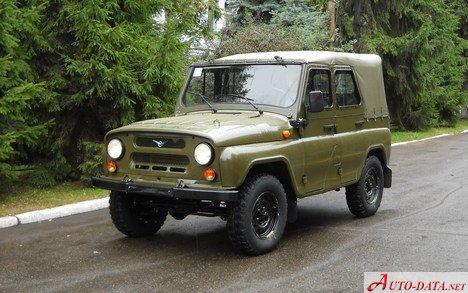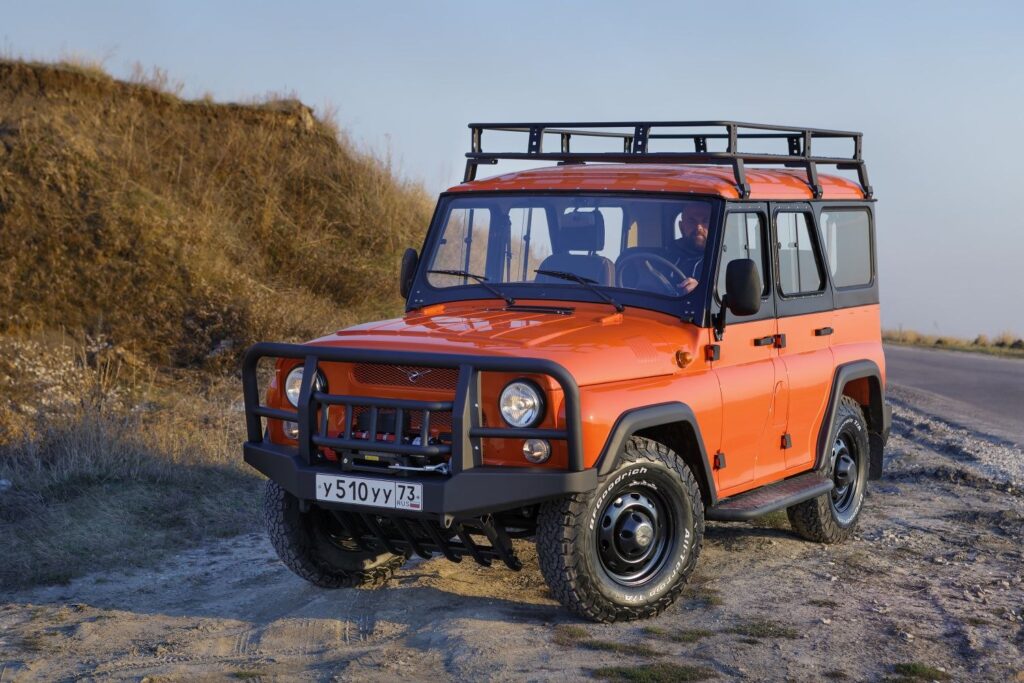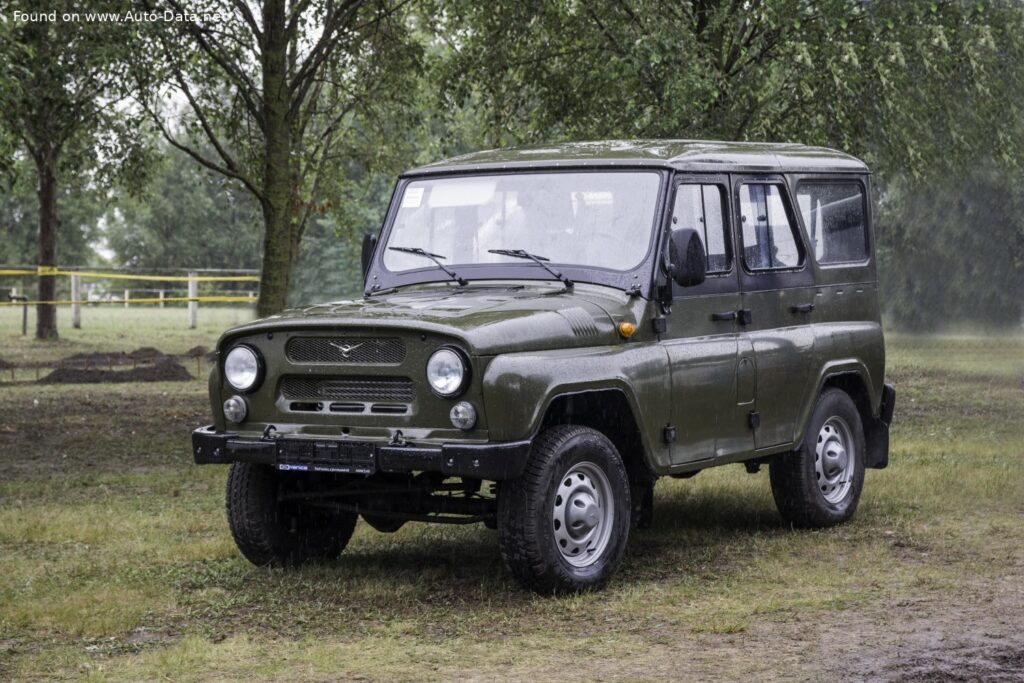
The UAZ Hunter (model 315195) is a utility vehicle produced by the Russian manufacturer UAZ (Ulyanovsky Avtomobilny Zavod). Introduced in 2003, it represents a significant evolution of the UAZ-469, a vehicle originally designed for military use in the 1950s. While not officially sold in the United States, the Hunter is a popular choice in Russia and other parts of Eastern Europe, Central Asia, and South America, prized for its ruggedness, off-road capability, and affordability. It fills a niche similar to the Suzuki Jimny or older Land Rover Defenders – a no-frills, highly capable 4×4 designed for challenging terrain and practical applications. The 2.4 D variant, equipped with a diesel engine producing 86 horsepower, is a common configuration.
UAZ Hunter: A Legacy of Rugged Utility
The UAZ Hunter is more than just a vehicle; it’s a symbol of Soviet and post-Soviet engineering. It evolved from a lineage of utilitarian 4x4s designed to meet the demands of the Soviet military and the agricultural sector. The original UAZ-469, nicknamed the “Bobik,” was renowned for its simplicity and durability. The Hunter retained many of these characteristics while incorporating improvements in comfort, safety, and refinement. It’s a vehicle built for work, adventure, and enduring harsh conditions. The Hunter’s design prioritizes functionality over aesthetics, resulting in a vehicle that is instantly recognizable and undeniably robust.
Engine & Performance
The UAZ Hunter 315195 2.4 D is powered by a 2.4-liter inline-four cylinder diesel engine. This engine produces 86 horsepower at 4000 rpm and 183 Nm (134.97 lb.-ft.) of torque at 1800 rpm. While not a powerhouse in terms of raw output, the engine’s torque delivery is well-suited to off-road driving, providing ample low-end grunt for navigating difficult terrain. The engine utilizes a precombustion chamber injection system, a relatively simple and robust technology common in diesel engines of this era. The longitudinal engine layout contributes to the vehicle’s balanced weight distribution. The Hunter’s weight-to-power ratio is 20.6 kg/Hp, and its weight-to-torque ratio is 9.7 kg/Nm. Power per liter is rated at 35.6 Hp/l. The vehicle is equipped with a five-speed manual transmission and a part-time four-wheel-drive system, allowing the driver to switch between two-wheel drive for on-road efficiency and four-wheel drive for enhanced traction off-road. Maximum speed is limited to 120 km/h (74.56 mph).
Design & Features
The UAZ Hunter is a five-door, seven-seat off-road vehicle with a body-on-frame construction. This traditional design contributes to its exceptional durability and off-road capability. The body is relatively simple and boxy, prioritizing practicality and ease of repair. The interior is spartan, reflecting the vehicle’s utilitarian purpose. Features are basic, focusing on functionality rather than luxury. The Hunter boasts a substantial cargo capacity, ranging from 1130 liters (39.91 cu. ft.) with the rear seats up to 2564 liters (90.55 cu. ft.) with the seats folded down. The vehicle’s high ground clearance and robust suspension system allow it to tackle challenging terrain with ease. Safety features are limited by the vehicle’s age and intended market, but the inclusion of ABS (Anti-lock Braking System) is a notable addition. The Hunter’s design emphasizes durability and repairability, making it a popular choice in regions where access to modern automotive repair facilities is limited.
Technical Specifications
| Brand | UAZ |
| Model | Hunter |
| Generation | Hunter (315195) |
| Type (Engine) | 2.4 D (86 Hp) |
| Start of production | 2003 |
| Powertrain Architecture | Internal Combustion engine |
| Body type | Off-road vehicle |
| Seats | 7 |
| Doors | 5 |
| Fuel Type | Diesel |
| Maximum speed | 120 km/h (74.56 mph) |
| Weight-to-power ratio | 20.6 kg/Hp |
| Weight-to-torque ratio | 9.7 kg/Nm |
| Power | 86 Hp @ 4000 rpm |
| Power per litre | 35.6 Hp/l |
| Torque | 183 Nm @ 1800 rpm (134.97 lb.-ft. @ 1800 rpm) |
| Engine layout | Front, Longitudinal |
| Engine displacement | 2417 cm3 (147.49 cu. in.) |
| Number of cylinders | 4 |
| Engine configuration | Inline |
| Cylinder Bore | 90 mm (3.54 in.) |
| Piston Stroke | 95 mm (3.74 in.) |
| Compression ratio | 19.5:1 |
| Number of valves per cylinder | 2 |
| Fuel injection system | Precombustion chamber injection |
| Engine aspiration | Naturally aspirated engine |
| Kerb Weight | 1770 kg (3902.18 lbs.) |
| Max. weight | 2520 kg (5555.65 lbs.) |
| Max load | 750 kg (1653.47 lbs.) |
| Trunk (boot) space – minimum | 1130 l (39.91 cu. ft.) |
| Trunk (boot) space – maximum | 2564 l (90.55 cu. ft.) |
| Fuel tank capacity | 70 l (18.49 US gal | 15.4 UK gal) |
| Length | 4100 mm (161.42 in.) |
| Width | 2010 mm (79.13 in.) |
| Height | 2025 mm (79.72 in.) |
| Wheelbase | 2380 mm (93.7 in.) |
| Front track | 1445 mm (56.89 in.) |
| Rear (Back) track | 1445 mm (56.89 in.) |
| Drive wheel | All wheel drive (4×4) |
| Number of gears and type of gearbox | 5 gears, manual transmission |
| Front suspension | Coil spring |
| Rear suspension | Leaf spring |
| Front brakes | Disc |
| Rear brakes | Drum |
| Assisting systems | ABS (Anti-lock braking system) |
| Tires size | 225/75 R16 |
| Wheel rims size | 6.5J x 16 |
The UAZ Hunter, particularly the 2.4 D variant, remains a popular choice for those seeking a rugged, reliable, and affordable off-road vehicle. Its simple design, durable construction, and readily available parts make it a practical option in regions where demanding conditions and limited infrastructure prevail. While it may lack the refinement and features of more modern SUVs, the Hunter’s enduring appeal lies in its unwavering commitment to functionality and its ability to conquer even the most challenging terrain.