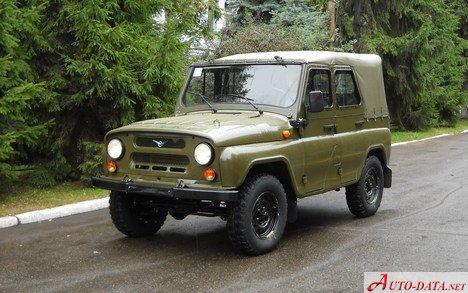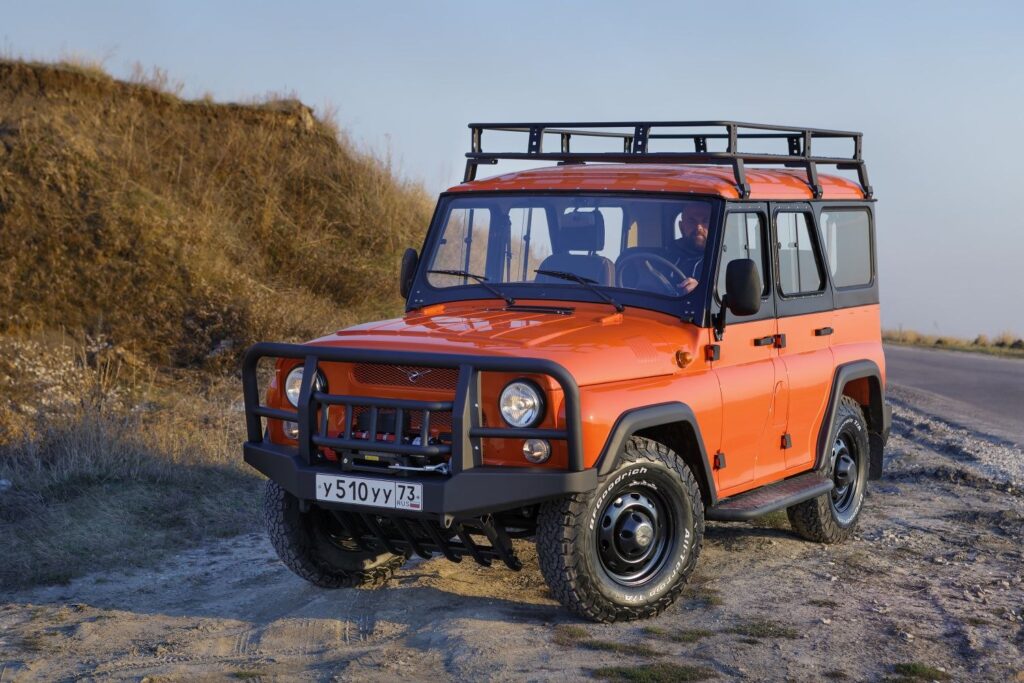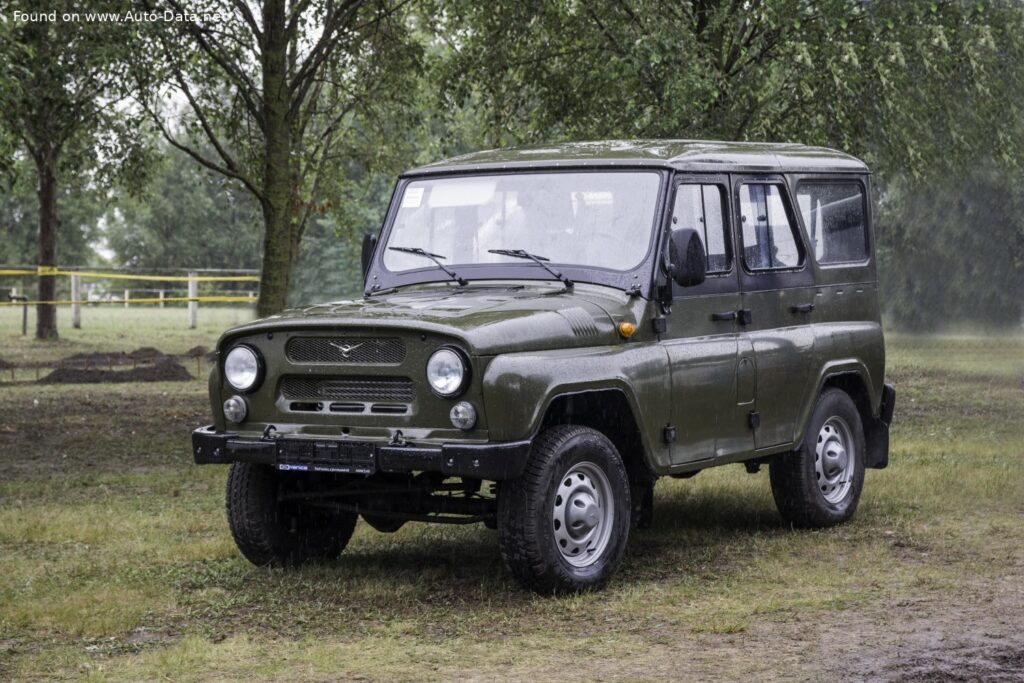
The UAZ Hunter (model 315195) is a four-wheel drive off-road vehicle produced by the Russian automaker UAZ. Introduced in 2018, it represents a significant modernization of the long-running UAZ-469 lineage, a vehicle originally designed for military use. While not officially sold in the United States, the Hunter is a popular choice in Russia and other Eastern European and Central Asian markets, prized for its ruggedness, simplicity, and affordability. It fills a niche similar to the Suzuki Jimny or older generations of Land Rover Defenders – a utilitarian, capable vehicle focused on off-road performance rather than luxury or refinement.
UAZ Hunter: A Modern Take on a Classic Formula
The UAZ Hunter maintains the core design principles of its predecessors, offering a body-on-frame construction and a robust drivetrain. However, the 315195 model incorporates modern features such as improved safety equipment, updated engines, and a more comfortable interior compared to earlier UAZ models. It’s designed to tackle challenging terrain and harsh conditions, making it a workhorse for rural areas and a favorite among off-road enthusiasts.
Engine & Performance
The UAZ Hunter 315195 is typically powered by the ZMZ 40906, a 2.7-liter inline-four cylinder gasoline engine. This engine produces 135 horsepower at 4,600 rpm and 217 Nm (160.05 lb-ft) of torque at 3,900 rpm. While not a powerhouse, the engine provides adequate performance for its intended purpose, delivering a power-to-weight ratio of 13 kg/Hp. The engine features a multi-port fuel injection system and a double overhead camshaft (DOHC) valvetrain. The engine’s displacement of 2693 cm3 (164.34 cu. in.) and a compression ratio of 9.1:1 contribute to its durability and reliability. The Hunter achieves a maximum speed of 130 km/h (80.78 mph). Fuel economy is understandably modest, rated at 13.2 l/100 km (17.8 US mpg) in extra-urban driving. The drivetrain is a traditional part-time four-wheel drive system, with the rear wheels driven permanently and the front wheels engaged via an electrically or mechanically operated clutch when needed. A 5-speed manual transmission is standard.
Design & Features
The UAZ Hunter retains the iconic boxy shape characteristic of UAZ vehicles. It’s a five-door, five-seater off-road vehicle with a steel body mounted on a ladder frame chassis. This construction provides exceptional strength and durability, essential for off-road use. The vehicle’s high ground clearance of 210 mm (8.27 in) and impressive approach (50°), departure (39°), and ramp-over (36°) angles allow it to navigate challenging obstacles. Wading depth is rated at 500 mm (19.69 in).
Inside, the Hunter offers a functional, if spartan, interior. While not luxurious, the cabin has been updated with more modern seating and dashboard designs compared to older UAZ models. Safety features include an Anti-lock Braking System (ABS), a significant improvement over earlier iterations. The trunk space is remarkably versatile, ranging from a minimum of 930 liters (32.84 cu. ft.) to a maximum of 1830 liters (64.63 cu. ft.) with the rear seats folded down. The Hunter is also capable of towing trailers, with a maximum braked trailer load of 1500 kg (3306.93 lbs) and an unbraked trailer load of 750 kg (1653.47 lbs).
Technical Specifications
| Brand | UAZ |
| Model | Hunter |
| Generation | Hunter (315195) |
| Type (Engine) | 2.7 (135 Hp) 4×4 |
| Start of production | 2018 |
| Powertrain Architecture | Internal Combustion engine |
| Body type | Off-road vehicle |
| Seats | 5 |
| Doors | 5 |
| Fuel consumption (extra urban) | 13.2 l/100 km (17.8 US mpg, 21.4 UK mpg, 7.6 km/l) |
| Fuel Type | Petrol (Gasoline) |
| Maximum speed | 130 km/h (80.78 mph) |
| Emission standard | Euro 5 |
| Weight-to-power ratio | 13 kg/Hp, 76.7 Hp/tonne |
| Weight-to-torque ratio | 8.1 kg/Nm, 123.3 Nm/tonne |
| Power | 135 Hp @ 4600 rpm |
| Power per litre | 50.1 Hp/l |
| Torque | 217 Nm @ 3900 rpm (160.05 lb.-ft. @ 3900 rpm) |
| Engine layout | Front, Longitudinal |
| Engine Model/Code | ZMZ 40906 |
| Engine displacement | 2693 cm3 (164.34 cu. in.) |
| Number of cylinders | 4 |
| Engine configuration | Inline |
| Cylinder Bore | 95.5 mm (3.76 in.) |
| Piston Stroke | 94 mm (3.7 in.) |
| Compression ratio | 9.1:1 |
| Number of valves per cylinder | 4 |
| Fuel injection system | Multi-port manifold injection |
| Engine aspiration | Naturally aspirated engine |
| Valvetrain | DOHC |
| Engine oil capacity | 7 l (7.4 US qt | 6.16 UK qt) |
| Coolant | 12.5 l (13.21 US qt | 11 UK qt) |
| Kerb Weight | 1760 kg (3880.14 lbs.) |
| Max. weight | 2495 kg (5500.53 lbs.) |
| Max load | 735 kg (1620.4 lbs.) |
| Trunk (boot) space – minimum | 930 l (32.84 cu. ft.) |
| Trunk (boot) space – maximum | 1830 l (64.63 cu. ft.) |
| Fuel tank capacity | 70 l (18.49 US gal | 15.4 UK gal) |
| Permitted trailer load with brakes (12%) | 1500 kg (3306.93 lbs.) |
| Permitted trailer load without brakes | 750 kg (1653.47 lbs.) |
| Length | 4050 mm (159.45 in.) |
| Width | 1775 mm (69.88 in.) |
| Height | 1950 mm (76.77 in.) |
| Wheelbase | 2380 mm (93.7 in.) |
| Front track | 1465 mm (57.68 in.) |
| Rear (Back) track | 1465 mm (57.68 in.) |
| Ride height (ground clearance) | 210 mm (8.27 in.) |
| Minimum turning circle (turning diameter) | 13 m (42.65 ft.) |
| Approach angle | 50° |
| Departure angle | 39° |
| Ramp-over (brakeover) angle | 36° |
| Climb angle | 31° |
| Wading depth | 500 mm (19.69 in.) |
| Drivetrain Architecture | All wheel drive (4×4). ICE drives rear wheels, front wheels engaged via clutch. |
| Drive wheel | All wheel drive (4×4) |
| Number of gears and type of gearbox | 5 gears, manual transmission |
| Front suspension | Coil spring, Rigid axle suspension, Transverse stabilizer |
| Rear suspension | Rigid axle suspension, Leaf spring |
| Front brakes | Ventilated discs |
| Rear brakes | Drum |
| Assisting systems | ABS (Anti-lock braking system) |
| Steering type | Cone worm with recirculation balls |
| Power steering | Hydraulic Steering |
| Tires size | 225/75 R16 |
| Wheel rims size | 6.5J x 16 |
The UAZ Hunter, while not a technologically advanced vehicle, continues to serve a vital role in regions where durability, off-road capability, and affordability are paramount. It represents a continuation of a long and storied tradition of Russian off-road vehicles, adapted for the demands of the 21st century.