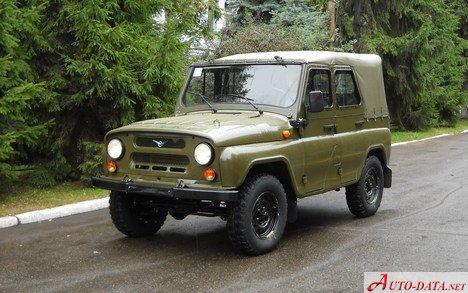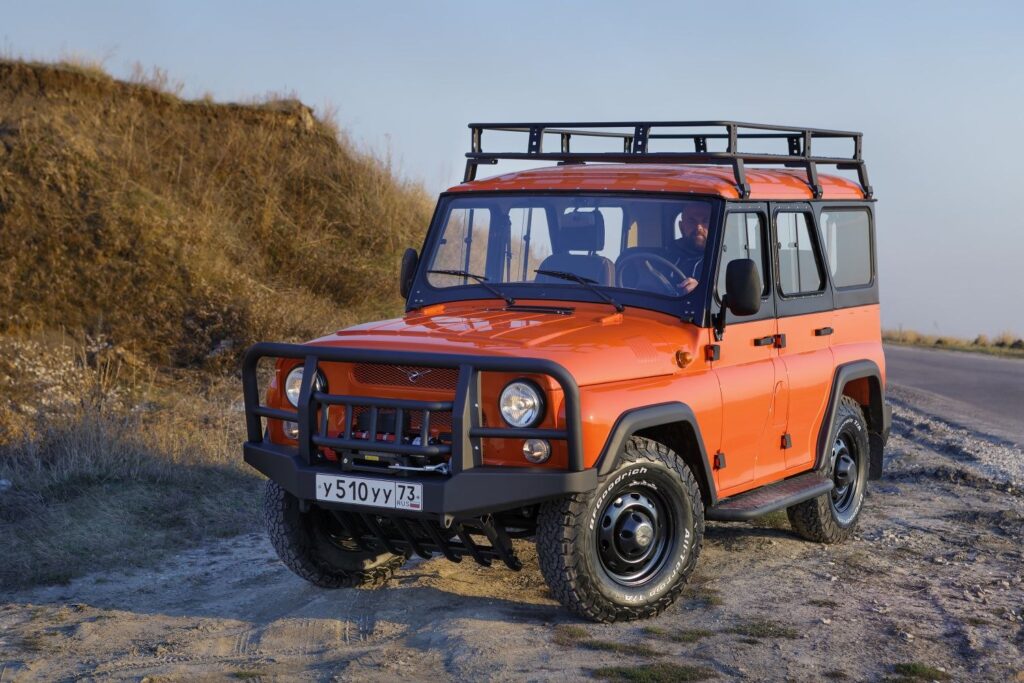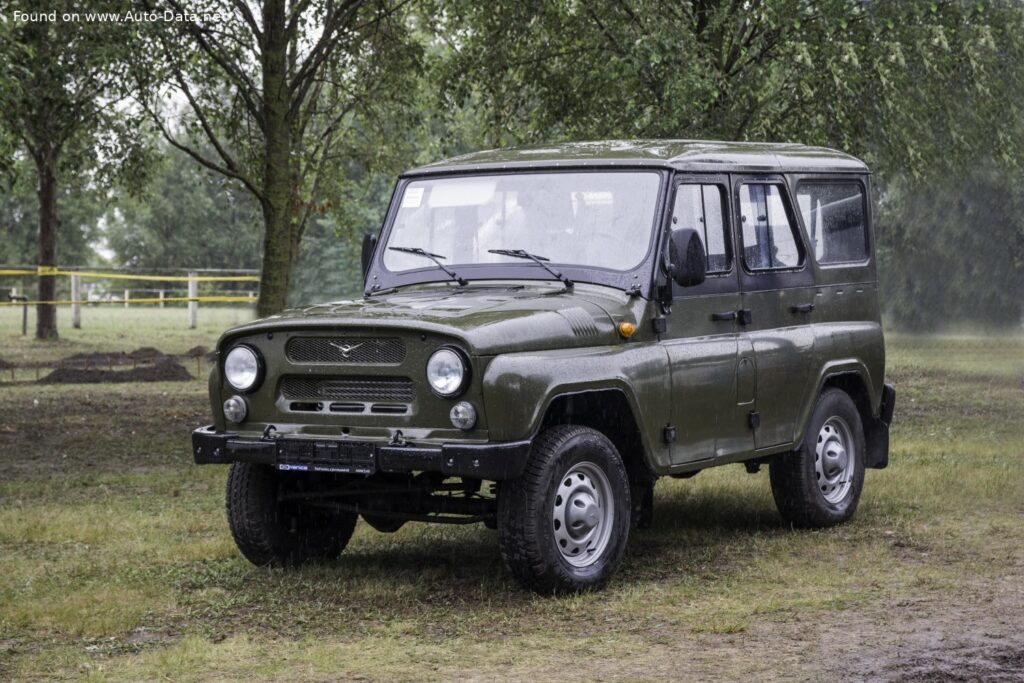
The UAZ Hunter (model 315195) is a four-wheel drive off-road vehicle produced by the Russian manufacturer UAZ. Introduced in 2003, it represents a significant evolution of the long-running UAZ-469 lineage, a vehicle originally designed for military use. While not officially sold in the United States, the Hunter is a popular vehicle in Russia and other parts of Eastern Europe, known for its ruggedness, simplicity, and affordability. It fills a niche similar to the Suzuki Jimny or older Land Rover Defenders – a utilitarian, capable off-roader intended for challenging terrain and practical applications. The 2.7 i 16V variant, producing 128 horsepower, is a common configuration.
UAZ Hunter: A Legacy of Russian Off-Road Capability
The UAZ Hunter is deeply rooted in Soviet-era automotive engineering. Its predecessor, the UAZ-469, was developed in the 1950s as a direct response to a need for a versatile, all-terrain vehicle for the Soviet military. The Hunter retains many of the core design principles of the 469, including a body-on-frame construction and a robust drivetrain. However, the 315195 incorporates modern components and refinements, such as improved engines, updated interiors, and enhanced safety features (though still relatively basic by Western standards). The Hunter’s continued production speaks to its enduring appeal in regions where practicality and durability are prioritized over luxury and refinement.
Engine & Performance
The UAZ Hunter 2.7 i 16V is powered by the ZMZ-409.10, a 2.7-liter inline four-cylinder gasoline engine. This engine produces 128 horsepower at 4400 rpm and 218 Nm (160.79 lb.-ft.) of torque at 2500 rpm. While not a powerhouse, the engine provides adequate performance for its intended purpose. The power-to-weight ratio is 13.8 kg/Hp, or 72.3 Hp/tonne, and the torque-to-weight ratio is 8.1 kg/Nm, or 123.2 Nm/tonne. The engine features a multi-port fuel injection system and a double overhead camshaft (DOHC) valvetrain. It’s a naturally aspirated engine, meaning it doesn’t utilize a turbocharger or supercharger. The engine is mounted longitudinally in the front of the vehicle. The Hunter achieves a maximum speed of 130 km/h (80.78 mph). The 5-speed manual transmission delivers power to all four wheels, making it a true all-terrain vehicle.
Design & Features
The UAZ Hunter maintains a distinctly utilitarian aesthetic, reflecting its origins as a military-inspired vehicle. It’s a five-door, seven-seat off-road vehicle with a body-on-frame construction, providing exceptional durability and off-road capability. The design is boxy and functional, prioritizing practicality over aerodynamic efficiency. The interior is spartan but functional, with durable materials designed to withstand harsh conditions. Key features include a spacious cabin, a large cargo area (minimum 1130 liters / 39.91 cu. ft., maximum 2564 liters / 90.55 cu. ft. with the rear seats folded), and a robust four-wheel drive system with a low-range transfer case. While not equipped with advanced driver-assistance systems common in modern vehicles, the Hunter does feature an Anti-lock Braking System (ABS) as a standard safety feature. The vehicle’s high ground clearance and short wheelbase contribute to its exceptional off-road prowess. It rides on 225/75 R16 tires mounted on 6.5J x 16 inch wheel rims.
Technical Specifications
| Brand | UAZ |
| Model | Hunter |
| Generation | Hunter (315195) |
| Type (Engine) | 2.7 i 16V (128 Hp) |
| Start of production | 2003 |
| Powertrain Architecture | Internal Combustion engine |
| Body type | Off-road vehicle |
| Seats | 7 |
| Doors | 5 |
| Fuel Type | Petrol (Gasoline) |
| Maximum speed | 130 km/h (80.78 mph) |
| Weight-to-power ratio | 13.8 kg/Hp |
| Weight-to-torque ratio | 8.1 kg/Nm |
| Power | 128 Hp @ 4400 rpm |
| Power per litre | 47.5 Hp/l |
| Torque | 218 Nm @ 2500 rpm (160.79 lb.-ft. @ 2500 rpm) |
| Engine layout | Front, Longitudinal |
| Engine Model/Code | ZMZ-409.10 |
| Engine displacement | 2693 cm3 (164.34 cu. in.) |
| Number of cylinders | 4 |
| Engine configuration | Inline |
| Cylinder Bore | 95.5 mm (3.76 in.) |
| Piston Stroke | 94 mm (3.7 in.) |
| Compression ratio | 9:1 |
| Number of valves per cylinder | 4 |
| Fuel injection system | Multi-port manifold injection |
| Engine aspiration | Naturally aspirated engine |
| Valvetrain | DOHC |
| Engine oil capacity | 7 l (7.4 US qt | 6.16 UK qt) |
| Kerb Weight | 1770 kg (3902.18 lbs.) |
| Max. weight | 2520 kg (5555.65 lbs.) |
| Max load | 750 kg (1653.47 lbs.) |
| Trunk (boot) space – minimum | 1130 l (39.91 cu. ft.) |
| Trunk (boot) space – maximum | 2564 l (90.55 cu. ft.) |
| Fuel tank capacity | 70 l (18.49 US gal | 15.4 UK gal) |
| Length | 4100 mm (161.42 in.) |
| Width | 2010 mm (79.13 in.) |
| Height | 2025 mm (79.72 in.) |
| Wheelbase | 2380 mm (93.7 in.) |
| Front track | 1445 mm (56.89 in.) |
| Rear (Back) track | 1445 mm (56.89 in.) |
| Drive wheel | All wheel drive (4×4) |
| Number of gears and type of gearbox | 5 gears, manual transmission |
| Front suspension | Coil spring |
| Rear suspension | Leaf spring |
| Front brakes | Disc |
| Rear brakes | Drum |
| Assisting systems | ABS (Anti-lock braking system) |
| Tires size | 225/75 R16 |
| Wheel rims size | 6.5J x 16 |
In conclusion, the UAZ Hunter 315195 2.7 i 16V is a robust and capable off-road vehicle that embodies a legacy of Russian automotive engineering. While lacking the refinement of modern SUVs, its simplicity, durability, and affordability have made it a popular choice in regions where off-road capability is paramount.