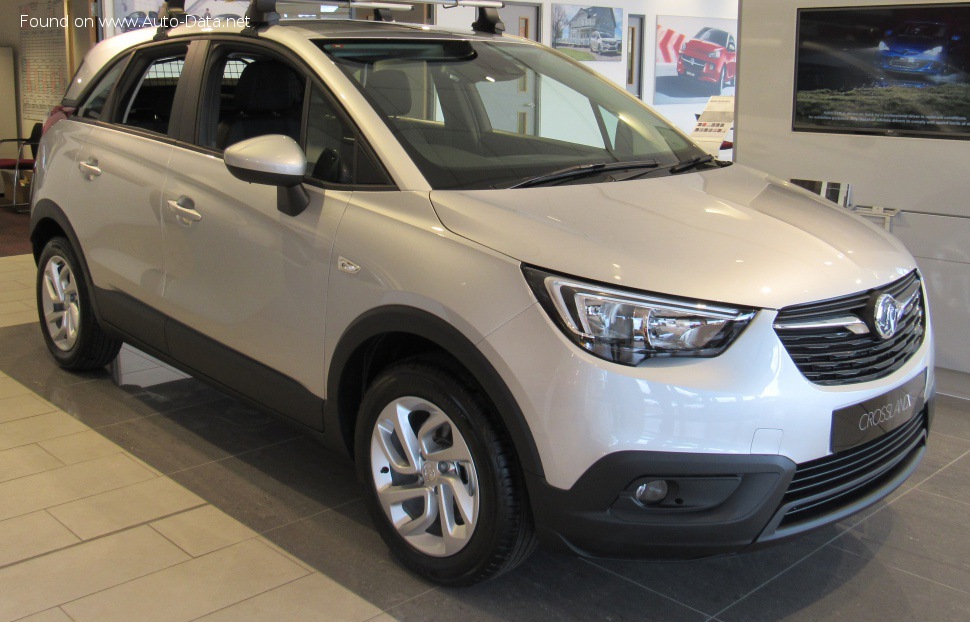
The Vauxhall Crossland Facelift (2020) 1.2 Turbo (130 Hp) Automatic: An In-Depth Look
The Vauxhall Crossland, a compact crossover SUV, received a significant refresh in October 2020, dropping the “X” from its name and adopting a more assertive design language. This facelifted model, particularly the 1.2 Turbo (130 Hp) Automatic variant, represents Vauxhall’s continued commitment to the highly competitive European and UK B-segment SUV market. As a brand primarily focused on the United Kingdom, Vauxhall operates as a sister marque to Opel, sharing platforms and powertrains across many of its models. The Crossland, therefore, is a rebadged version of the Opel Crossland, tailored for the British market.
Positioned as a practical and versatile family vehicle, the 2020 Vauxhall Crossland facelift aimed to enhance its visual appeal, refine its driving dynamics, and integrate updated technology, all while retaining its core strengths of spaciousness and efficiency. This particular iteration, equipped with a potent yet economical 1.2-liter turbocharged gasoline engine and a smooth automatic transmission, offered a compelling package for urban commuters and small families seeking a blend of SUV practicality and hatchback maneuverability.
Powertrain and Performance: Driving the Vauxhall Crossland Facelift (2020)
At the heart of this specific Vauxhall Crossland variant lies a sophisticated 1.2-liter (1199 cm3 or 73.17 cu. in.) F12XHT inline three-cylinder engine. This powerplant benefits from a turbocharger and intercooler, ensuring robust performance despite its relatively small displacement. The engine utilizes a DOHC (Double Overhead Camshaft) valvetrain with four valves per cylinder and a multi-port manifold injection system, optimized for efficiency and power delivery. It generates a respectable 130 horsepower at 5500 revolutions per minute (rpm), making it one of the more powerful options in the Crossland lineup.
More significantly, the engine produces a healthy 169.64 lb.-ft. (230 Nm) of torque, which is available from a low 1750 rpm. This broad torque band is crucial for a vehicle of this type, providing excellent responsiveness in city driving and ample power for highway cruising without constant downshifting. The power is efficiently managed by a 6-speed automatic transmission, which directs power to the front wheels. This front-wheel-drive architecture is typical for compact crossovers, prioritizing fuel economy and ease of use.
In terms of outright performance, the Vauxhall Crossland 1.2 Turbo (130 Hp) Automatic is capable of accelerating from 0 to 60 miles per hour in a competitive 9.9 seconds. Its maximum speed is rated at 123.03 mph (198 km/h), which is more than adequate for European highway speeds. Beyond raw numbers, the engine’s character is notable for its smooth operation for a three-cylinder unit, a testament to modern engineering and balance shaft technology. Furthermore, the powertrain is designed to meet stringent Euro 6d emission standards, incorporating a Start & Stop System and a particulate filter to minimize its environmental footprint. Its combined fuel consumption, according to WLTP standards, ranges from 38.6 to 37.9 US miles per gallon (6.1-6.2 liters per 100 km), with CO2 emissions between 137-139 g/km, underscoring its efficiency credentials.
Design and Features: The Practicality of the Crossland
The Distinctive Design of the Vauxhall Crossland
The 2020 facelift brought a significant visual overhaul to the Vauxhall Crossland, most notably with the introduction of the brand’s new ‘Vizor’ front fascia. This design element, first seen on the Mokka, integrates the grille, headlights, and the Vauxhall Griffin badge into a single, sleek module, giving the Crossland a more modern, cohesive, and assertive appearance. The body type remains a compact SUV with five doors and seating for five occupants, emphasizing its family-friendly nature. Its dimensions are well-suited for both urban environments and longer journeys: a length of 165.83 inches (4212 mm), a width of 69.49 inches (1765 mm, or 77.8 inches / 1976 mm including mirrors), and a height of 63.19 inches (1605 mm). The wheelbase measures 102.52 inches (2604 mm), contributing to a stable ride and comfortable interior.
Inside, the Crossland maintains a focus on practicality and user-friendliness. While specific infotainment details are not provided in the technical data, a 2020 model in this segment would typically feature a touchscreen infotainment system with smartphone integration (Apple CarPlay and Android Auto), Bluetooth connectivity, and potentially built-in navigation depending on the trim level. The five-seat configuration offers comfortable seating, and the rear seats often feature a sliding and reclining function, enhancing versatility for either passenger comfort or increased cargo space.
Storage capacity is a key strength of the Crossland. The trunk (boot) offers a minimum of 14.48 cubic feet (410 liters) of space, which can expand significantly to 44.32 cubic feet (1255 liters) with the rear seats folded down, making it highly adaptable for various cargo needs. The vehicle also boasts a fuel tank capacity of 11.89 US gallons (45 liters), providing a decent range between fill-ups given its efficient engine.
Chassis and Safety Features
The Crossland’s chassis setup is designed for comfort and predictable handling. It features an independent McPherson strut front suspension with coil springs and an anti-roll bar, providing good stability and ride quality. The rear suspension utilizes a dependent spring suspension, a common and cost-effective solution for compact vehicles, balancing ride comfort with cargo capacity. Braking performance is handled by ventilated discs at the front (283 mm) and solid discs at the rear (249 mm), complemented by an Anti-lock Braking System (ABS) for enhanced safety during emergency stops. The steering system is an electric power-assisted rack and pinion setup, offering light and precise control, particularly beneficial for parking and maneuvering in tight spaces. The minimum turning circle is 36.78 feet (11.21 m), further aiding urban agility. The vehicle can be fitted with 195/60 R16 or 215/50 R17 tires on 16 or 17-inch wheel rims, influencing both aesthetics and ride characteristics.
Technical Specifications: Vauxhall Crossland (facelift 2020) 1.2 Turbo (130 Hp) Automatic
| Category | Specification | Value |
|---|---|---|
| General Information | ||
| Brand | Vauxhall | |
| Model | Crossland | |
| Generation | Crossland (facelift 2020) | |
| Engine Type | 1.2 Turbo (130 Hp) Automatic | |
| Start of Production | October, 2020 | |
| Powertrain Architecture | Internal Combustion Engine | |
| Body Type | SUV | |
| Seats | 5 | |
| Doors | 5 | |
| Performance Specifications | ||
| Combined Fuel Consumption (WLTP) | 6.1-6.2 l/100 km (38.6 – 37.9 US mpg) | |
| CO2 Emissions (WLTP) | 137-139 g/km | |
| Fuel Type | Petrol (Gasoline) | |
| Acceleration 0 – 60 mph | 9.9 sec | |
| Maximum Speed | 123.03 mph (198 km/h) | |
| Emission Standard | Euro 6d | |
| Engine Specifications | ||
| Power | 130 Hp @ 5500 rpm | |
| Power per liter | 108.4 Hp/l | |
| Torque | 169.64 lb.-ft. (230 Nm) @ 1750 rpm | |
| Engine Layout | Front, Transverse | |
| Engine Model/Code | F12XHT | |
| Engine Displacement | 1199 cm3 (73.17 cu. in.) | |
| Number of Cylinders | 3 | Inline |
| Number of Valves per Cylinder | 4 | |
| Fuel Injection System | Multi-port manifold injection | |
| Engine Aspiration | Turbocharger, Intercooler | |
| Valvetrain | DOHC | |
| Engine Oil Capacity | 3.7 US qt (3.5 l) | |
| Engine Oil Specification | Not specified | |
| Coolant Capacity | 6.02 US qt (5.7 l) | |
| Engine Systems | Start & Stop System, Particulate filter | |
| Space, Volume and Weights | ||
| Max. Weight (Gross Vehicle Weight) | 4045.48 lbs. (1835 kg) | |
| Trunk (Boot) Space – minimum | 14.48 cu. ft. (410 l) | |
| Trunk (Boot) Space – maximum | 44.32 cu. ft. (1255 l) | |
| Fuel Tank Capacity | 11.89 US gal (45 l) | |
| Permitted Trailer Load with Brakes (12%) | 1851.88 lbs. (840 kg) | |
| Permitted Trailer Load without Brakes | 1322.77 lbs. (600 kg) | |
| Dimensions | ||
| Length | 165.83 in. (4212 mm) | |
| Width | 69.49 in. (1765 mm) | |
| Width including mirrors | 77.8 in. (1976 mm) | |
| Height | 63.19 in. (1605 mm) | |
| Wheelbase | 102.52 in. (2604 mm) | |
| Front Overhang | 35.28 in. (896 mm) | |
| Rear Overhang | 28.03 in. (712 mm) | |
| Drag Coefficient (Cd) | 0.31 | |
| Minimum Turning Circle (Turning Diameter) | 36.78 ft. (11.21 m) | |
| Drivetrain, Brakes and Suspension Specifications | ||
| Drivetrain Architecture | The Internal combustion engine (ICE) drives the front wheels of the vehicle. | |
| Drive Wheel | Front wheel drive | |
| Number of Gears and Type of Gearbox | 6 gears, automatic transmission | |
| Front Suspension | Independent, type McPherson with coil spring and anti-roll bar | |
| Rear Suspension | Dependent spring suspension | |
| Front Brakes | Ventilated discs, 283 mm | |
| Rear Brakes | Disc, 249 mm | |
| Assisting Systems | ABS (Anti-lock braking system) | |
| Steering Type | Steering rack and pinion | |
| Power Steering | Electric Steering | |
| Tires Size | 195/60 R16; 215/50 R17 | |
| Wheel Rims Size | 16; 17 | |
Legacy and Market Impact: The Vauxhall Crossland’s Role
The Vauxhall Crossland, particularly after its 2020 facelift, holds a significant position within the crowded European and UK compact SUV segment. It competes directly with popular models such as the Nissan Juke, Renault Captur, Ford Puma, Volkswagen T-Cross, and its platform sibling, the Peugeot 2008. In a market increasingly favoring crossovers over traditional hatchbacks, the Crossland provided Vauxhall with a crucial offering for customers seeking elevated driving positions, versatile interiors, and a rugged aesthetic without the larger footprint or higher running costs of a full-size SUV.
Its market impact is rooted in its appeal to practical-minded buyers. The Crossland has cultivated a reputation for being a sensible, no-nonsense vehicle that delivers on its promises of space, comfort, and efficiency. The 1.2-liter Turbo engine, with its 130 horsepower and automatic transmission, was particularly well-regarded for striking an excellent balance between lively performance and economical operation, making it suitable for both urban commutes and longer family trips. The addition of the ‘Vizor’ front end in the facelift was a strategic move to align the Crossland with Vauxhall’s evolving design language, injecting a much-needed dose of contemporary style and helping it stand out in a visually competitive segment.
For Vauxhall, the Crossland (and its Opel counterpart) was instrumental in capturing a share of the burgeoning compact SUV market, transitioning from a previous generation of more conventional MPVs (multi-purpose vehicles) like the Meriva. It symbolized the brand’s adaptation to changing consumer preferences, offering a vehicle that combined the practicality of an MPV with the fashionable appeal of an SUV. While not designed as a performance icon, its consistent sales performance and positive reception for its practicality and value solidified its place as a reliable and important model in Vauxhall’s lineup, contributing to the brand’s overall market presence and demonstrating its ability to deliver competitive products in key segments.