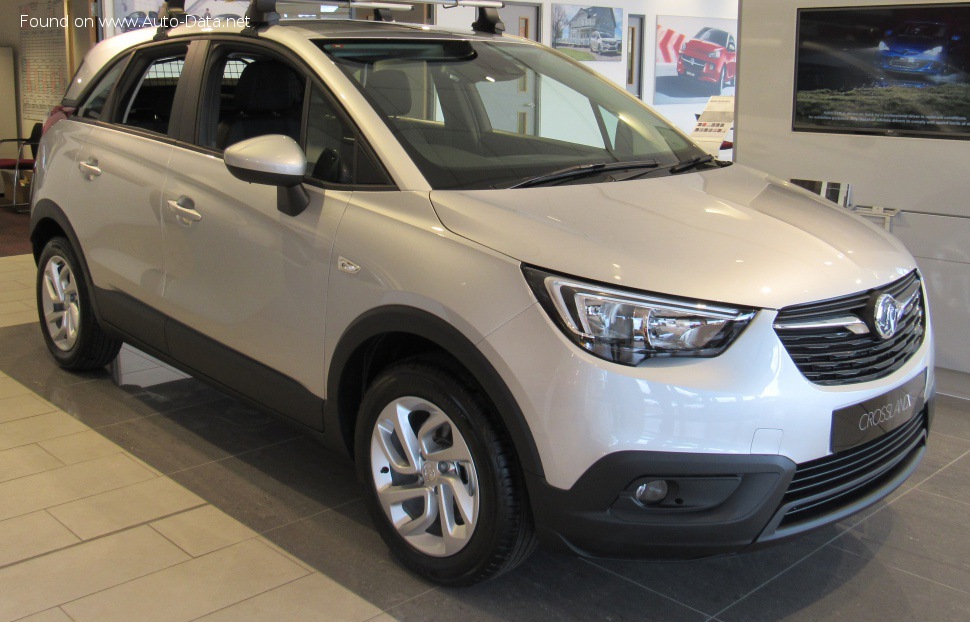
The Vauxhall Crossland (facelift 2020) 1.5 Turbo D (120 Hp) Automatic: A European Compact SUV
The Vauxhall Crossland, specifically the facelifted 2020 model equipped with the 1.5 Turbo D (120 Hp) Automatic powertrain, represents a significant offering in the highly competitive subcompact SUV segment within the European market. As a brand primarily focused on the United Kingdom, Vauxhall operates as the British arm of Opel, which itself is part of the multinational automotive giant Stellantis (formerly PSA Group). This particular iteration of the Crossland, introduced in October 2020, brought a refreshed design and updated technology to a vehicle already known for its practicality and efficiency. Unlike many vehicles reviewed for an American audience, the Vauxhall Crossland was not sold in the United States, instead serving as a crucial model in Vauxhall’s European lineup, targeting consumers seeking a versatile, economical, and family-friendly crossover.
The 2020 facelift aimed to align the Crossland more closely with Vauxhall’s contemporary design language, notably introducing the ‘Vizor’ front fascia that would become a signature element across the brand’s portfolio. Positioned as a B-segment SUV, the Crossland competes with other compact crossovers, offering a compelling blend of elevated driving position, flexible interior space, and robust fuel economy, particularly in its diesel variants like the 1.5 Turbo D. This model emphasizes practicality and ease of use, making it a popular choice for urban families and those seeking a compact vehicle with SUV aesthetics and functionality without the bulk of larger SUVs.
Engine & Performance: The Efficient 1.5 Turbo D Powertrain
At the heart of the Vauxhall Crossland (facelift 2020) 1.5 Turbo D Automatic lies a sophisticated and efficient 1.5-liter turbocharged diesel engine. This inline four-cylinder unit, designated as F15DTH, delivers a respectable 120 horsepower at 3750 revolutions per minute (rpm), making it a capable performer for its class. The engine’s true strength, however, lies in its torque output: a robust 250 Newton-meters (184.39 lb.-ft.) available from a low 1750 rpm. This ample low-end torque is characteristic of modern diesel engines, providing strong acceleration from a standstill and effortless cruising, particularly beneficial in varied driving conditions common across Europe.
Power is seamlessly delivered to the front wheels via a smooth-shifting 6-speed automatic transmission, enhancing driving comfort and efficiency. While not built for outright speed, the Crossland 1.5 Turbo D achieves a 0 to 60 mph acceleration in a respectable 11.1 seconds, with a maximum speed of 113.71 mph. These figures are well-suited for its intended purpose as a practical family vehicle, offering sufficient performance for daily commutes and longer journeys alike.
Fuel efficiency is a major highlight of this powertrain, reflecting the European market’s emphasis on economical motoring. The combined fuel consumption, measured under the stringent WLTP (Worldwide Harmonized Light Vehicles Test Procedure) cycle, ranges from 4.9 to 5.1 liters per 100 kilometers, which translates to an impressive 48 to 46.1 US miles per gallon. This exceptional fuel economy is complemented by low CO2 emissions, rated between 130 and 133 grams per kilometer, placing it firmly within the Euro 6d emission standard. To achieve these figures, the engine incorporates advanced technologies such as a common rail direct fuel injection system, a turbocharger with an intercooler, a DOHC (Double Overhead Camshaft) valvetrain, a Start & Stop system to reduce idling emissions, and a particulate filter, crucial for modern diesel compliance. The engine displacement is 1499 cubic centimeters (91.47 cubic inches), with an oil capacity of 4 liters (4.23 US quarts), further underscoring its compact yet potent design.
Design & Features of the Vauxhall Crossland
The Vauxhall Crossland (facelift 2020) retains its core identity as a practical and versatile 5-door, 5-seat SUV, but with a refreshed aesthetic that brought it in line with Vauxhall’s evolving design philosophy. The most noticeable change was the adoption of the ‘Vizor’ front end, a distinctive black panel integrating the grille and headlights, giving the Crossland a bolder and more modern appearance. Its overall dimensions – a length of 165.83 inches, a width of 69.49 inches (77.8 inches including mirrors), and a height of 63.19 inches – make it a truly compact SUV, ideal for navigating tight urban streets while offering a commanding view of the road. The wheelbase measures 102.52 inches, contributing to a stable ride and generous interior space for its class.
Inside, the Crossland prioritizes ergonomics and functionality. While specific interior features are not detailed in the raw data, as a modern vehicle, it would typically include a range of connectivity options, infotainment systems, and comfort features expected in the segment. The SUV body type inherently provides a flexible interior, evidenced by its trunk (boot) space, which offers a minimum of 14.48 cubic feet (410 liters) with the rear seats up, expandable to a substantial 44.32 cubic feet (1255 liters) when the rear seats are folded down. This adaptability makes it highly suitable for families, shopping, or transporting larger items.
Safety and driving dynamics are also addressed. The Crossland features an independent McPherson strut front suspension with coil springs and an anti-roll bar, paired with a dependent spring rear suspension, designed to provide a comfortable yet composed ride. Braking is handled by ventilated discs at the front (266 mm) and solid discs at the rear (249 mm), complemented by an Anti-lock Braking System (ABS) for enhanced stopping power and control. The vehicle benefits from electric power steering (rack and pinion type), ensuring light and responsive handling, especially at lower speeds. Standard tire sizes range from 195/60 R16 to 215/50 R17, mounted on 16-inch or 17-inch wheel rims, contributing to both aesthetics and handling. The drag coefficient (Cd) of 0.31 is commendable for an SUV, aiding in fuel efficiency and reducing wind noise.
Technical Specifications
| Category | Specification | Value |
|---|---|---|
| Brand | Vauxhall | |
| Model | Crossland | |
| Generation | Crossland (facelift 2020) | |
| Type (Engine) | 1.5 Turbo D (120 Hp) Automatic | |
| Start of Production | October, 2020 | |
| Powertrain Architecture | Internal Combustion engine | |
| Body type | SUV | |
| Seats | 5 | |
| Doors | 5 | |
| Performance Specs | ||
| Combined Fuel Consumption (WLTP) | 4.9-5.1 l/100 km (48 – 46.1 US mpg) | |
| CO2 Emissions (WLTP) | 130-133 g/km | |
| Fuel Type | Diesel | |
| Acceleration 0 – 60 mph | 11.1 sec | |
| Maximum Speed | 183 km/h (113.71 mph) | |
| Emission Standard | Euro 6d | |
| Engine Specs | ||
| Power | 120 Hp @ 3750 rpm | |
| Power per liter | 80.1 Hp/l | |
| Torque | 250 Nm (184.39 lb.-ft.) @ 1750 rpm | |
| Engine Layout | Front, Transverse | |
| Engine Model/Code | F15DTH | |
| Engine Displacement | 1499 cm3 (1.5 liters / 91.47 cu. in.) | |
| Number of Cylinders | 4 | |
| Engine Configuration | Inline | |
| Number of Valves per Cylinder | 4 | |
| Fuel Injection System | Diesel Commonrail | |
| Engine Aspiration | Turbocharger, Intercooler | |
| Valvetrain | DOHC | |
| Engine Oil Capacity | 4 l (4.23 US qt) | |
| Engine Systems | Start & Stop System, Particulate filter | |
| Space, Volume and Weights | ||
| Max. Weight | 1855 kg (4089.57 lbs) | |
| Trunk (boot) Space – minimum | 410 l (14.48 cu. ft.) | |
| Trunk (boot) Space – maximum | 1255 l (44.32 cu. ft.) | |
| Fuel Tank Capacity | 45 l (11.89 US gal) | |
| AdBlue Tank | 14.8 l (3.91 US gal) | |
| Permitted Trailer Load with brakes (12%) | 870 kg (1918.02 lbs) | |
| Permitted Trailer Load without brakes | 650 kg (1433 lbs) | |
| Dimensions | ||
| Length | 4212 mm (165.83 in) | |
| Width | 1765 mm (69.49 in) | |
| Width including mirrors | 1976 mm (77.8 in) | |
| Height | 1605 mm (63.19 in) | |
| Wheelbase | 2604 mm (102.52 in) | |
| Front Overhang | 896 mm (35.28 in) | |
| Rear Overhang | 712 mm (28.03 in) | |
| Drag Coefficient (Cd) | 0.31 | |
| Minimum Turning Circle (turning diameter) | 11.21 m (36.78 ft) | |
| Drivetrain, Brakes and Suspension Specs | ||
| Drivetrain Architecture | Internal combustion engine (ICE) drives the front wheels. | |
| Drive Wheel | Front-wheel drive | |
| Number of gears and type of gearbox | 6 gears, automatic transmission | |
| Front Suspension | Independent, McPherson with coil spring and anti-roll bar | |
| Rear Suspension | Dependent spring suspension | |
| Front Brakes | Ventilated discs, 266 mm | |
| Rear Brakes | Disc, 249 mm | |
| Assisting Systems | ABS (Anti-lock braking system) | |
| Steering Type | Steering rack and pinion | |
| Power Steering | Electric Steering | |
| Tires Size | 195/60 R16; 215/50 R17 | |
| Wheel Rims Size | 16; 17 | |
Legacy & Market Impact of the Vauxhall Crossland
The Vauxhall Crossland, particularly in its facelifted 2020 form, carved out a significant niche in the highly competitive European B-segment SUV market. Its reputation is built on a foundation of practicality, fuel efficiency, and a compact footprint that makes it well-suited for both urban driving and longer journeys. For Vauxhall, a brand with deep roots in the UK and a strong association with the British consumer, the Crossland was a vital component of its strategy to capture a share of the booming crossover market. It offered a more traditional, comfort-oriented alternative to its sportier sibling, the Mokka, appealing to a slightly different demographic focused on space and utility.
In its primary markets, the Crossland faced stiff competition from a plethora of established and popular models. Key rivals included the Nissan Juke, Renault Captur, Ford Puma, Peugeot 2008 (with which it shares some underlying PSA Group architecture), Skoda Kamiq, and Volkswagen T-Cross. Against these competitors, the Crossland distinguished itself with its efficient diesel powertrains, competitive pricing, and the strong brand loyalty Vauxhall enjoys in the UK. The 1.5 Turbo D variant was particularly effective in appealing to fleet buyers and private customers who prioritized low running costs and reduced emissions, especially in countries where diesel incentives remained relevant.
Historically, the Crossland represents Vauxhall’s commitment to offering a diverse SUV lineup, adapting to consumer preferences shifting away from traditional hatchbacks and sedans. Its development under the PSA Group (before becoming Stellantis) allowed it to benefit from shared platforms and technologies, ensuring modern engineering and cost efficiencies. The 2020 facelift was crucial in maintaining its relevance, introducing a refreshed design that aligned with the brand’s new visual identity and integrating updated features to keep pace with rapidly evolving automotive technology and consumer expectations. While not a trailblazer in terms of radical innovation, the Vauxhall Crossland has been a steadfast and reliable performer, embodying the qualities of a sensible, well-rounded, and economical compact SUV for its European audience. Its success underscores the enduring demand for practical and efficient vehicles in a market where space, economy, and everyday usability are paramount.