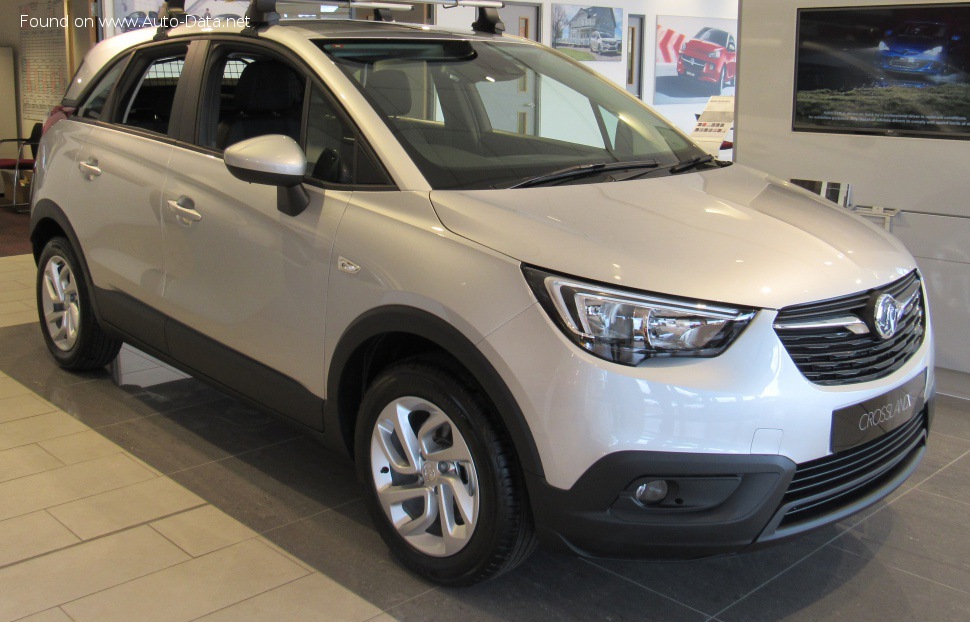
The Vauxhall Crossland X 1.2 Turbo (110 Hp): A Comprehensive Overview
The Vauxhall Crossland X 1.2 Turbo (110 Hp) represents a significant offering in the highly competitive
European B-segment compact crossover SUV market. Launched in June 2019 and produced until October 2020, this
iteration of the Crossland X was a key model in Vauxhall’s strategy to capture a larger share of the burgeoning
SUV segment. Positioned as a practical, family-friendly vehicle, it emphasized versatility, efficiency, and
urban maneuverability. As a rebadged version of the Opel Crossland X, it shared its underpinnings with other
PSA Group (now Stellantis) vehicles, showcasing a blend of French engineering with British branding tailored
for the United Kingdom market. While not sold in the United States, its design philosophy and technical
specifications reflect global trends in automotive development, particularly the move towards compact,
turbocharged engines and elevated driving positions.
Engine and Performance: The Heart of the Vauxhall Crossland X 1.2 Turbo (110 Hp)
Under the hood, the Vauxhall Crossland X 1.2 Turbo (110 Hp) featured a modern and efficient powertrain
designed to deliver a balance of performance and fuel economy. The engine, identified by codes D12XHL or
EB2ADT, was a 1.2-liter (1199 cm3 or 73.17 cu. in.) inline three-cylinder unit. This compact
engine benefited from advanced technologies, including a turbocharger and intercooler, which allowed it to
produce a respectable 110 horsepower at 5500 rpm. Its power per liter stood at 91.7 Hp/l, an impressive figure
for a non-performance-oriented engine of its size.
Crucially for a compact SUV, the engine also delivered substantial torque, peaking at 151.2 lb.-ft. (205 Nm)
at a low 1500 rpm. This early availability of torque was instrumental in providing responsive acceleration and
effortless driving, particularly in urban environments and during highway cruising, reducing the need for
frequent gear changes. The engine’s architecture included a DOHC (Double Overhead Camshaft) valvetrain with
VVT (Variable Valve Timing) and a direct injection fuel system, all contributing to optimized combustion and
efficiency.
Power was sent to the front wheels via a precise 6-speed manual transmission, a common choice in the European
market for its engagement and efficiency. This drivetrain configuration allowed the Crossland X to achieve a
0-60 mph acceleration time of 10.2 seconds and a top speed of 116.2 mph (187 km/h), making it adequately
capable for daily driving and longer journeys.
Environmental considerations were also a priority, with the vehicle adhering to the stringent Euro 6d emission
standard. It incorporated a Start & Stop System to minimize fuel consumption and emissions during idle, and a
particulate filter to further reduce harmful exhaust outputs. The combined fuel consumption, measured under
the WLTP cycle, ranged from 39.2 to 37.3 US mpg (6-6.3 l/100 km), with CO2 emissions around 108 g/km. These
figures underscored its efficiency credentials, making it an economical choice for consumers.
Design and Features: Practicality Meets Modernity
The Vauxhall Crossland X adopted the popular SUV body type, characterized by its elevated ride height,
robust styling cues, and practical five-door, five-seat configuration. With a length of 165.83 inches (4212
mm), a width of 69.49 inches (1765 mm), and a height of 63.19 inches (1605 mm), it struck a balance between
compact dimensions for city driving and sufficient interior space for passengers and cargo. The wheelbase of
102.52 inches (2604 mm) contributed to a stable ride and maximized interior room within its footprint.
Design-wise, the Crossland X featured Vauxhall’s contemporary styling language, including a distinctive front
grille and lighting signature. Its relatively high seating position offered improved visibility, a key appeal
of SUVs. The interior was designed with practicality in mind, offering a versatile cabin. The trunk space
ranged from a generous 14.48 cubic feet (410 liters) with all seats in place, expanding to an impressive 44.32
cubic feet (1255 liters) when the rear seats were folded, allowing for significant cargo flexibility. This
adaptability made it suitable for diverse needs, from daily commutes to family trips.
The vehicle’s chassis and suspension setup were engineered for comfort and predictable handling. It featured an
independent McPherson strut front suspension with coil springs and an anti-roll bar, a common and effective
design for front-wheel-drive vehicles, providing good ride quality and stability. The rear utilized a
dependent spring suspension, a cost-effective and space-efficient solution for this segment. Braking was
handled by disc brakes on both the front and rear axles, complemented by an Anti-lock Braking System (ABS) for
enhanced safety during emergency stops. Steering was managed by an electric power steering system with a rack
and pinion setup, offering light and precise control, particularly beneficial for maneuvering in tight urban
spaces, as evidenced by its minimum turning circle of 36.78 feet (11.21 m).
The Crossland X was available with tire sizes ranging from 195/60 R16 to 215/50 R17, mounted on 16-inch or
17-inch wheel rims, offering a choice between comfort and slightly sportier aesthetics. Its drag coefficient
(Cd) of 0.31 was competitive for an SUV of its size, contributing to its fuel efficiency and reduced wind
noise at higher speeds.
Technical Specifications: Vauxhall Crossland X 1.2 Turbo (110 Hp)
| Category | Specification |
|---|---|
| General Information | |
| Brand | Vauxhall |
| Model | Crossland |
| Generation | Crossland X |
| Engine Type | 1.2 Turbo (110 Hp) |
| Production Start | June, 2019 |
| Production End | October, 2020 |
| Powertrain Architecture | Internal Combustion Engine |
| Body Type | SUV |
| Seats | 5 |
| Doors | 5 |
| Performance Specs | |
| Combined Fuel Consumption (WLTP) | 39.2 – 37.3 US mpg (6-6.3 l/100 km) |
| CO2 Emissions (NEDC, WLTP equivalent) | 108 g/km |
| Fuel Type | Petrol (Gasoline) |
| Acceleration 0 – 60 mph | 10.2 sec |
| Maximum Speed | 116.2 mph (187 km/h) |
| Emission Standard | Euro 6d |
| Engine Specs | |
| Power | 110 Hp @ 5500 rpm |
| Power per liter | 91.7 Hp/l |
| Torque | 151.2 lb.-ft. (205 Nm) @ 1500 rpm |
| Engine Layout | Front, Transverse |
| Engine Model/Code | D12XHL, EB2ADT |
| Engine Displacement | 1.2 liters (1199 cm3, 73.17 cu. in.) |
| Number of Cylinders | 3 |
| Engine Configuration | Inline |
| Number of Valves per Cylinder | 4 |
| Fuel Injection System | Direct Injection |
| Engine Aspiration | Turbocharger, Intercooler |
| Valvetrain | DOHC, VVT |
| Engine Oil Capacity | 3.7 US qt (3.5 l) |
| Coolant Capacity | 6.02 US qt (5.7 l) |
| Engine Systems | |
| Start & Stop System | Yes |
| Particulate Filter | Yes |
| Space, Volume and Weights | |
| Max. Weight (Gross Vehicle Weight) | 3902.18 lbs. (1770 kg) |
| Trunk (Boot) Space – Minimum | 14.48 cu. ft. (410 l) |
| Trunk (Boot) Space – Maximum | 44.32 cu. ft. (1255 l) |
| Fuel Tank Capacity | 11.89 US gal (45 l) |
| Permitted Trailer Load with Brakes (12%) | 1851.88 lbs. (840 kg) |
| Permitted Trailer Load without Brakes | 1322.77 lbs. (600 kg) |
| Dimensions | |
| Length | 165.83 in. (4212 mm) |
| Width | 69.49 in. (1765 mm) |
| Width Including Mirrors | 77.8 in. (1976 mm) |
| Height | 63.19 in. (1605 mm) |
| Wheelbase | 102.52 in. (2604 mm) |
| Front Overhang | 35.28 in. (896 mm) |
| Rear Overhang | 28.03 in. (712 mm) |
| Drag Coefficient (Cd) | 0.31 |
| Minimum Turning Circle (Turning Diameter) | 36.78 ft. (11.21 m) |
| Drivetrain, Brakes and Suspension Specs | |
| Drivetrain Architecture | Front-wheel drive (Internal Combustion Engine drives front wheels) |
| Drive Wheel | Front Wheel Drive |
| Number of Gears and Type of Gearbox | 6 gears, Manual Transmission |
| Front Suspension | Independent, type McPherson with coil spring and anti-roll bar |
| Rear Suspension | Dependent spring suspension |
| Front Brakes | Disc |
| Rear Brakes | Disc |
| Assisting Systems | ABS (Anti-lock braking system) |
| Steering Type | Steering rack and pinion |
| Power Steering | Electric Steering |
| Tires Size | 195/60 R16; 215/50 R17 |
| Wheel Rims Size | 16; 17 inches |
Legacy and Market Impact: The Crossland X in the European Landscape
The Vauxhall Crossland X 1.2 Turbo (110 Hp) played a crucial role in Vauxhall’s product portfolio during
its production run. As a key entrant in the B-segment SUV category, it directly competed with a host of
popular European and Asian models. Its main rivals included the platform-sharing Peugeot 2008 and Citroën C3
Aircross, as well as other segment stalwarts like the Renault Captur, Nissan Juke, Ford Puma, Skoda Kamiq,
Hyundai Kona, and Kia Stonic. In this crowded market, the Crossland X carved out its niche by offering a
compelling blend of practicality, efficiency, and a relatively accessible price point, attributes highly
valued by European consumers, particularly families and urban dwellers.
Its reputation was largely built on its ease of use, comfortable ride, and the versatility of its interior
space. The elevated driving position, characteristic of SUVs, provided a commanding view of the road, while the
compact exterior dimensions made it agile in city traffic and easy to park. The efficient 1.2-liter
turbocharged engine, coupled with the 6-speed manual transmission, contributed to low running costs, a
significant factor in markets with high fuel prices and vehicle taxation based on emissions.
The Crossland X’s introduction was part of a broader strategic shift for Vauxhall (and Opel), moving away from
traditional hatchbacks and sedans towards the more popular crossover and SUV segments. It marked a new era of
platform sharing within the PSA Group, allowing Vauxhall to benefit from proven chassis and powertrain
technologies. This collaboration helped optimize development costs and accelerate time-to-market for new
models, ensuring Vauxhall remained competitive.
While its production as the “Crossland X” ended in October 2020, the model continued its journey simply as the
“Vauxhall Crossland,” dropping the “X” suffix as part of a brand refresh. This evolution underscored the
model’s enduring relevance and its successful integration into Vauxhall’s core lineup. The Crossland,
including this 1.2 Turbo (110 Hp) variant, cemented Vauxhall’s presence in the lucrative small SUV segment,
appealing to a demographic seeking a practical, modern, and economical vehicle for diverse lifestyles. Its
legacy is one of smart engineering and market responsiveness, adapting to consumer demands for versatile and
efficient urban-friendly crossovers.