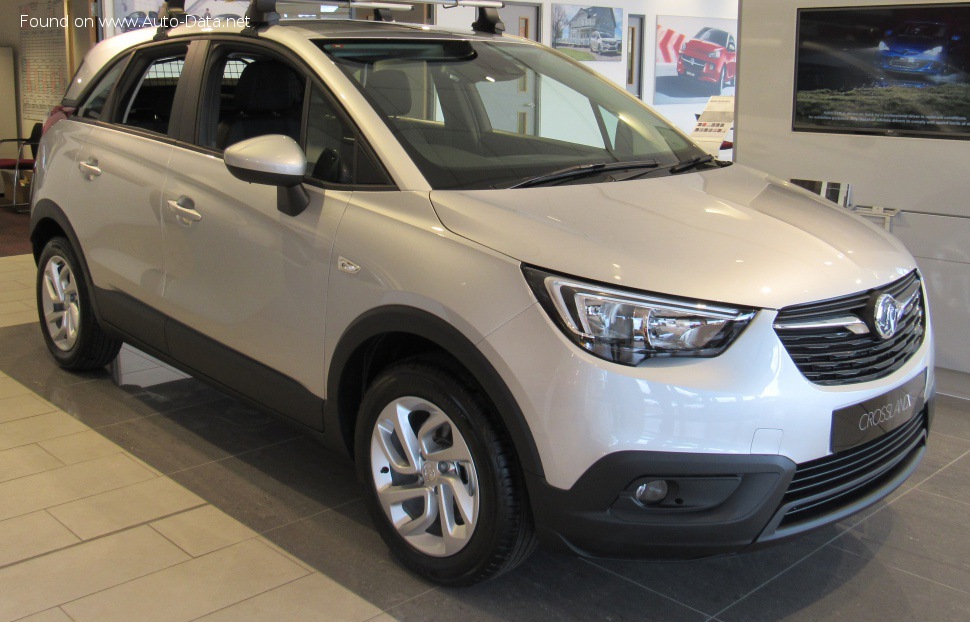
Vauxhall Crossland X 1.2 Turbo (130 Hp): A European Compact Crossover
The Vauxhall Crossland X, a compact crossover SUV, emerged onto the European automotive scene in 2017 as a crucial model in Vauxhall’s repositioning within the highly competitive B-segment SUV market. This specific variant, the Vauxhall Crossland X 1.2 Turbo (130 Hp), represented a compelling blend of practicality, efficiency, and a spirited driving experience for its class. Jointly developed by Opel (Vauxhall’s sister brand) and PSA Group (now Stellantis), the Crossland X replaced the Meriva MPV, signaling a strategic shift towards the booming SUV segment. Positioned below the larger Grandland X, it aimed to attract families and urban dwellers seeking a versatile vehicle with a raised driving position and flexible interior space, all wrapped in a contemporary design. While Vauxhall is a British brand, the Crossland X was primarily designed and manufactured for the European market, where it competed fiercely against a growing array of subcompact crossovers. Its production run for this specific configuration spanned from June 2017 to May 2018, marking it as an early iteration of a significant model for the brand.
Engine and Performance: The Vauxhall Crossland X 1.2 Turbo (130 Hp) Powertrain
At the heart of the 2017-2018 Vauxhall Crossland X 1.2 Turbo (130 Hp) was a sophisticated, small-displacement gasoline engine designed for an optimal balance between power and fuel economy. This particular model featured a 1.2-liter (1199 cm3 or 73.17 cu. in.) inline three-cylinder engine, designated with the internal code B12XHT. Despite its compact size, the engine was engineered with modern technologies to deliver impressive output for its class. It utilized a turbocharger and intercooler system, significantly boosting its performance capabilities beyond what a naturally aspirated engine of similar displacement could achieve. Direct fuel injection further enhanced combustion efficiency and responsiveness, ensuring precise fuel delivery and a clean burn.
The engine produced a robust 130 horsepower at 5500 revolutions per minute (rpm), translating to a power-per-liter rating of 108.4 horsepower per liter, an excellent figure for a non-performance oriented vehicle. More critically for everyday driving, the engine delivered a healthy 169.64 lb-ft of torque, available at a low 1750 rpm. This broad and accessible torque band ensured brisk acceleration and confident overtaking maneuvers, making the Crossland X feel more capable than its displacement might suggest, especially in urban environments and on winding roads. The front, transverse engine layout contributed to efficient packaging and front-wheel-drive dynamics.
Power was delivered to the front wheels via a precise six-speed manual transmission, offering drivers an engaging and controlled driving experience. This powertrain architecture, combined with the vehicle’s relatively light weight, contributed to respectable performance figures. The Crossland X 1.2 Turbo could reach a maximum speed of 128 mph (206 km/h). Fuel efficiency was a key selling point in the European market, with combined consumption rated at an impressive 46.1 US mpg (5.1 l/100 km). Urban driving yielded 39.9 US mpg (5.9 l/100 km), while extra-urban cycles achieved an even more remarkable 50 US mpg (4.7 l/100 km). CO2 emissions were kept low at 116 g/km, allowing the vehicle to meet stringent Euro 6 emission standards, a crucial factor for European buyers concerned with environmental impact and taxation.
Design and Features of the Vauxhall Crossland X
The Vauxhall Crossland X adopted the popular SUV body type, characterized by its elevated stance and rugged styling cues, though it retained a relatively compact footprint suitable for urban navigation. Measuring 165.83 inches (4212 mm) in length, 69.49 inches (1765 mm) in width (77.8 inches or 1976 mm including mirrors), and 63.19 inches (1605 mm) in height, the Crossland X was designed to be maneuverable in tight city spaces while still offering a commanding view of the road. Its wheelbase of 102.52 inches (2604 mm) contributed to a stable ride and maximized interior volume for its class. A minimum turning circle of 36.78 feet (11.21 m) further underscored its urban agility, making parking and tight turns effortless.
Inside, the Crossland X was configured to seat five occupants comfortably across two rows, with five doors providing easy access. Practicality was a cornerstone of its design, evident in its flexible cargo space. The trunk offered a minimum volume of 14.48 cubic feet (410 liters), which could be expanded significantly to a maximum of 44.32 cubic feet (1255 liters) by folding down the rear seats. This adaptability made it suitable for diverse needs, from daily commutes to weekend getaways requiring more luggage capacity. The fuel tank capacity stood at 11.89 US gallons (45 liters), providing a decent range for its segment.
Standard features for the Crossland X included a suite of safety and driver-assist systems, notably an Anti-lock Braking System (ABS) for enhanced stopping control in emergency situations. The vehicle employed ventilated discs for the front brakes and solid disc brakes for the rear, ensuring reliable and consistent braking performance. Steering was managed by a rack and pinion system with electric power steering, providing light and precise control, particularly beneficial at lower speeds and during parking maneuvers. The vehicle rode on 17-inch wheel rims, shod with 215/50 R17 tires, contributing to both its visual presence and handling characteristics, offering a good balance of comfort and grip.
Technical Specifications: Vauxhall Crossland X 1.2 Turbo (130 Hp)
| Category | Specification | Value |
|---|---|---|
General Information |
||
| Brand | Vauxhall | |
| Model | Crossland | |
| Generation | Crossland X | |
| Type (Engine) | 1.2 Turbo (130 Hp) | |
| Start of Production | June, 2017 | |
| End of Production | May, 2018 | |
| Powertrain Architecture | Internal Combustion engine | |
| Body Type | SUV | |
| Seats | 5 | |
| Doors | 5 | |
Performance Specifications |
||
| Fuel Consumption (Urban) | 39.9 US mpg (5.9 l/100 km) | |
| Fuel Consumption (Extra Urban) | 50 US mpg (4.7 l/100 km) | |
| Fuel Consumption (Combined) | 46.1 US mpg (5.1 l/100 km) | |
| CO2 Emissions | 116 g/km | |
| Fuel Type | Petrol (Gasoline) | |
| Maximum Speed | 128 mph (206 km/h) | |
| Emission Standard | Euro 6 | |
Engine Specifications |
||
| Power | 130 Hp @ 5500 rpm | |
| Power per Liter | 108.4 Hp/l | |
| Torque | 169.64 lb.-ft. @ 1750 rpm (230 Nm) | |
| Engine Layout | Front, Transverse | |
| Engine Model/Code | B12XHT | |
| Engine Displacement | 73.17 cu. in. (1199 cm3) | |
| Number of Cylinders | 3 | |
| Engine Configuration | Inline | |
| Number of Valves per Cylinder | 4 | |
| Fuel Injection System | Direct injection | |
| Engine Aspiration | Turbocharger, Intercooler | |
| Engine Oil Capacity | 3.7 US qt (3.5 l) | |
| Coolant Capacity | 6.02 US qt (5.7 l) | |
Space, Volume and Weights |
||
| Trunk (boot) Space – Minimum | 14.48 cu. ft. (410 l) | |
| Trunk (boot) Space – Maximum | 44.32 cu. ft. (1255 l) | |
| Fuel Tank Capacity | 11.89 US gal (45 l) | |
Dimensions |
||
| Length | 165.83 in. (4212 mm) | |
| Width | 69.49 in. (1765 mm) | |
| Width Including Mirrors | 77.8 in. (1976 mm) | |
| Height | 63.19 in. (1605 mm) | |
| Wheelbase | 102.52 in. (2604 mm) | |
| Minimum Turning Circle (Turning Diameter) | 36.78 ft. (11.21 m) | |
Drivetrain, Brakes and Suspension Specs |
||
| Drivetrain Architecture | The Internal combustion engine (ICE) drives the front wheels of the vehicle. | |
| Drive Wheel | Front wheel drive | |
| Number of Gears and Type of Gearbox | 6 gears, manual transmission | |
| Front Brakes | Ventilated discs | |
| Rear Brakes | Disc | |
| Assisting Systems | ABS (Anti-lock braking system) | |
| Steering Type | Steering rack and pinion | |
| Power Steering | Electric Steering | |
| Tires Size | 215/50 R17 | |
| Wheel Rims Size | 17 inches | |
Legacy and Market Impact of the Vauxhall Crossland X
The Vauxhall Crossland X, and its Opel counterpart, entered the market at a pivotal time for both brands and the automotive industry at large. With the declining popularity of traditional MPVs, Vauxhall (and Opel) needed a strong contender in the burgeoning subcompact crossover SUV segment. The Crossland X was instrumental in filling this void, replacing the Meriva and signaling a clear strategic shift towards SUVs, which were rapidly becoming the preferred choice for European families and urban buyers.
In its primary markets, particularly the UK and continental Europe, the Crossland X faced stiff competition from a diverse array of established and new entrants. Key rivals included the Nissan Juke, Renault Captur, Peugeot 2008 (with which it shared its platform and many mechanical components after the PSA acquisition of Opel/Vauxhall), Citroën C3 Aircross, and Volkswagen T-Roc. The Crossland X distinguished itself with its focus on practicality, interior flexibility, and a relatively straightforward, user-friendly approach, contrasting with some rivals’ more avant-garde styling or sportier pretensions.
The 1.2 Turbo (130 Hp) variant, in particular, was a well-received powertrain option, offering a compelling blend of performance and efficiency that resonated with European consumers. Its strong torque delivery at low RPMs made it well-suited for both city driving and longer journeys, while its adherence to Euro 6 emission standards and competitive fuel economy figures were significant advantages in a market increasingly conscious of environmental impact and taxation. The manual transmission option also appealed to drivers who preferred a more engaging and controlled driving experience.
While not sold in