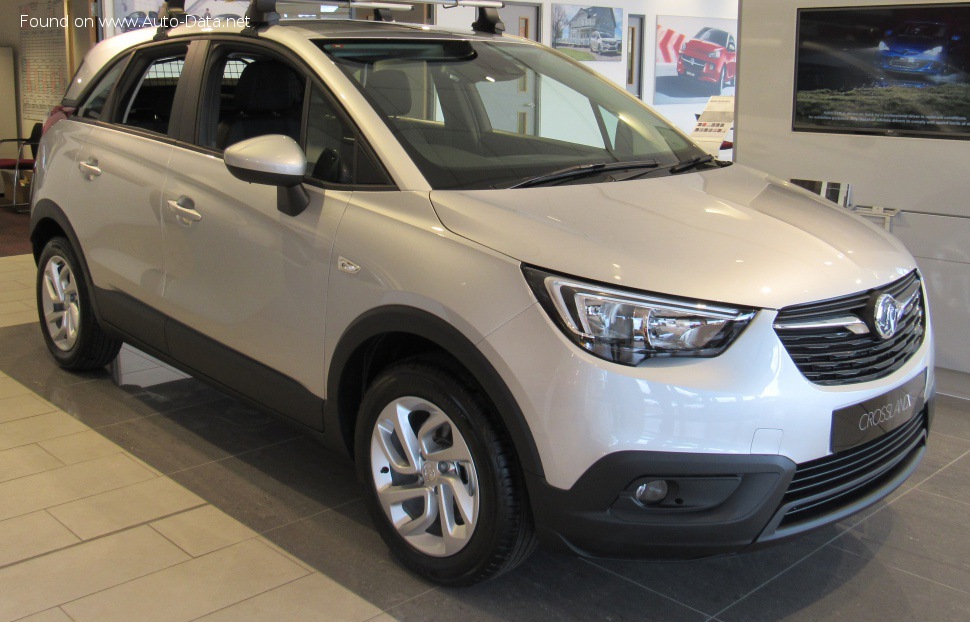
Introduction to the Vauxhall Crossland X 1.2 Turbo (130 Hp)
The Vauxhall Crossland X 1.2 Turbo (130 Hp) represents a significant offering in the highly competitive subcompact crossover SUV segment, primarily targeting the European market. Launched in June 2018 as part of the first-generation Crossland X lineup, this particular variant quickly established itself as a practical and efficient choice for families and urban dwellers. Vauxhall, a British automotive brand, operates as a subsidiary of Opel, which itself became part of Groupe PSA (now Stellantis) shortly before the Crossland X’s introduction. This vehicle, therefore, shares its underpinnings with other PSA models, reflecting a strategic shift towards common platforms and powertrains for enhanced efficiency and cost-effectiveness.
Positioned as a versatile five-door, five-seat SUV, the Crossland X was designed to appeal to buyers seeking the elevated driving position and rugged aesthetics of an SUV, combined with the compact dimensions and fuel economy of a smaller hatchback. Its production for this specific 130 HP variant ran through October 2019, showcasing its role as a key player in Vauxhall’s efforts to expand its SUV portfolio and cater to the burgeoning demand for crossovers across the continent. While not offered in the United States, its design, engineering, and market positioning provide an insightful look into the European automotive landscape and the trends that often influence global vehicle development.
Engine and Performance of the Vauxhall Crossland X
At the heart of the Vauxhall Crossland X 1.2 Turbo (130 Hp) lies a sophisticated 1.2-liter, three-cylinder turbocharged gasoline engine, an increasingly common and highly efficient powertrain solution in modern European vehicles. This engine, internally designated D12XHT, is engineered for a blend of spirited performance and impressive fuel economy, a critical balance for the European market’s stringent emissions regulations and high fuel prices. It delivers a robust 130 horsepower at 5500 revolutions per minute (rpm), making it one of the more powerful options within the Crossland X range at the time.
Torque delivery is equally compelling, with 169.64 lb.-ft. available from a low 1750 rpm. This broad torque band ensures responsive acceleration from a standstill and strong in-gear flexibility, crucial for both urban commuting and highway cruising. The engine’s architecture includes a front, transverse layout, an inline-three configuration, and four valves per cylinder, managed by a Double Overhead Camshaft (DOHC) system with Variable Valve Timing (VVT). Fuel is delivered via a direct injection system, further optimizing combustion efficiency, while a turbocharger and intercooler work in tandem to boost power output without significantly increasing displacement.
Performance figures for the Crossland X 1.2 Turbo (130 Hp) are competitive within its class. It accelerates from 0 to 60 mph in a respectable 9.3 seconds and can reach a maximum speed of 124.9 mph. Power is sent to the front wheels through a precise 6-speed manual transmission, offering engaging driver control and contributing to the vehicle’s overall efficiency. Complementing its performance, the engine incorporates a Start & Stop System to reduce fuel consumption and emissions in city traffic, along with a particulate filter to meet the strict Euro 6d emission standard, highlighting Vauxhall’s commitment to environmental responsibility.
Fuel efficiency is a strong suit for this powertrain, with a combined WLTP fuel consumption rating ranging from 37.3 to 39.9 US miles per gallon. This efficiency, combined with a 11.89 US gallon fuel tank, provides a practical driving range for daily use. The engine’s design, including its relatively low 3.5-quart oil capacity and 6.02-quart coolant capacity, further underscores its modern, compact, and efficient engineering.
Design and Features of the Crossland X
The Vauxhall Crossland X, with its SUV body type, was designed to blend practicality with contemporary styling. Measuring 165.83 inches in length, 69.49 inches in width (77.8 inches including mirrors), and 63.19 inches in height, it presents a compact yet commanding presence on the road. Its dimensions make it highly maneuverable in tight urban environments, while a generous 102.52-inch wheelbase contributes to a stable ride and optimized interior space. The design language features typical SUV cues such as robust wheel arches, an elevated ride height, and a distinctive front grille, aligning with the preferences of the European crossover market.
Inside, the Crossland X prioritizes functionality and comfort for its five occupants. The cabin layout is intuitive, with controls ergonomically placed for ease of use. A key selling point is its versatile cargo capacity: a minimum trunk space of 14.48 cubic feet expands significantly to 44.32 cubic feet with the rear seats folded down, offering ample room for groceries, luggage, or larger items. This flexibility is a hallmark of modern subcompact SUVs, catering to diverse lifestyle needs.
Standard features for a vehicle of its era and segment typically include power steering (electric for ease of maneuvering), air conditioning, and a basic infotainment system. Safety is addressed with a comprehensive Anti-lock Braking System (ABS), and given its production period, it likely included multiple airbags and electronic stability control as standard or optional equipment in its primary markets, though specific details beyond ABS are not provided in the raw data. The vehicle rides on either 195/60 R16 or 215/50 R17 tires, paired with 16-inch or 17-inch wheel rims, providing a balance of comfort and grip. The front suspension employs an independent McPherson strut setup with coil springs and an anti-roll bar, while the rear features a dependent spring suspension, a common and cost-effective solution for front-wheel-drive compact vehicles. Braking is handled by disc brakes on both the front and rear axles.
With a drag coefficient (Cd) of 0.31, the Crossland X exhibits respectable aerodynamic efficiency for an SUV, contributing to its fuel economy. Its minimum turning circle of 36.78 feet further emphasizes its urban agility, allowing for easy navigation in congested areas and tight parking spots. The maximum permissible weight for the vehicle is 3946.27 lbs., and it has a respectable towing capacity of 1851.88 lbs. with brakes, or 1366.87 lbs. without, adding to its utility.
Technical Specifications for the Vauxhall Crossland X 1.2 Turbo (130 Hp)
| Category | Specification |
|---|---|
| Brand | Vauxhall |
| Model | Crossland |
| Generation | Crossland X |
| Engine Type | 1.2 Turbo (130 Hp) |
| Production Start | June, 2018 |
| Production End | October, 2019 |
| Powertrain Architecture | Internal Combustion Engine |
| Body Type | SUV |
| Seats | 5 |
| Doors | 5 |
| Performance Specifications | |
| Combined Fuel Consumption (WLTP) | 37.3 – 39.9 US mpg (5.9-6.3 l/100 km) |
| CO2 Emissions (NEDC, WLTP equivalent) | 108 g/km |
| Fuel Type | Petrol (Gasoline) |
| Acceleration 0 – 60 mph | 9.3 sec |
| Maximum Speed | 124.9 mph (201 km/h) |
| Emission Standard | Euro 6d |
| Engine Specifications | |
| Power | 130 Hp @ 5500 rpm |
| Power per liter | 108.4 Hp/l |
| Torque | 169.64 lb.-ft. @ 1750 rpm (230 Nm) |
| Engine Layout | Front, Transverse |
| Engine Model/Code | D12XHT |
| Engine Displacement | 73.17 cu. in. (1199 cm3) |
| Number of Cylinders | 3 |
| Engine Configuration | Inline |
| Number of Valves per Cylinder | 4 |
| Fuel Injection System | Direct injection |
| Engine Aspiration | Turbocharger, Intercooler |
| Valvetrain | DOHC, VVT |
| Engine Oil Capacity | 3.7 US qt (3.5 l) |
| Coolant Capacity | 6.02 US qt (5.7 l) |
| Engine Systems | Start & Stop System, Particulate filter |
| Space, Volume and Weights | |
| Max. Weight | 3946.27 lbs. (1790 kg) |
| Trunk (boot) Space – Minimum | 14.48 cu. ft. (410 l) |
| Trunk (boot) Space – Maximum | 44.32 cu. ft. (1255 l) |
| Fuel Tank Capacity | 11.89 US gal (45 l) |
| Permitted Trailer Load with Brakes (12%) | 1851.88 lbs. (840 kg) |
| Permitted Trailer Load without Brakes | 1366.87 lbs. (620 kg) |
| Dimensions | |
| Length | 165.83 in. (4212 mm) |
| Width | 69.49 in. (1765 mm) |
| Width including Mirrors | 77.8 in. (1976 mm) |
| Height | 63.19 in. (1605 mm) |
| Wheelbase | 102.52 in. (2604 mm) |
| Front Overhang | 35.28 in. (896 mm) |
| Rear Overhang | 28.03 in. (712 mm) |
| Drag Coefficient (Cd) | 0.31 |
| Minimum Turning Circle (Turning Diameter) | 36.78 ft. (11.21 m) |
| Drivetrain, Brakes and Suspension Specifications | |
| Drivetrain Architecture | Front-wheel drive (ICE drives front wheels) |
| Drive Wheel | Front-wheel drive |
| Number of Gears and Type of Gearbox | 6 gears, manual transmission |
| Front Suspension | Independent, McPherson with coil spring and anti-roll bar |
| Rear Suspension | Dependent spring suspension |
| Front Brakes | Disc |
| Rear Brakes | Disc |
| Assisting Systems | ABS (Anti-lock braking system) |
| Steering Type | Steering rack and pinion |
| Power Steering | Electric Steering |
| Tires Size | 195/60 R16; 215/50 R17 |
| Wheel Rims Size | 16; 17 |
Legacy and Market Impact
The Vauxhall Crossland X 1.2 Turbo (130 Hp), despite its relatively short production run for this specific variant, played a crucial role in Vauxhall’s strategy to capture a larger share of the booming European subcompact SUV market. Its introduction in 2018 marked a new chapter for Vauxhall/Opel under Groupe PSA ownership, leveraging shared platforms and powertrains to deliver a competitive product. The Crossland X was designed to be a practical, family-oriented crossover, emphasizing space, versatility, and fuel efficiency over outright sporty performance, a characteristic that resonated well with its target demographic.
In its primary European markets, the Crossland X found itself in a crowded segment, competing against a formidable array of rivals. Key competitors included the Nissan Juke, Renault Captur, Hyundai Kona, Ford Puma, Skoda Kamiq, and its platform-mate, the Peugeot 2008, as well as the Citroën C3 Aircross. Against these rivals, the Crossland X carved out its niche by offering a compelling blend of traditional Vauxhall reliability (perceived, though now underpinned by PSA engineering), a comfortable ride, and a highly configurable interior. Its robust 1.2-liter turbocharged engine with 130 HP provided a strong balance of power and economy, often outperforming naturally aspirated competitors and offering a smoother driving experience than some smaller-displacement turbo engines.
The Crossland X’s market impact was largely positive, contributing to Vauxhall’s renewed focus on SUVs and crossovers. It helped solidify the brand’s presence in a segment that continues to grow, attracting buyers who might otherwise have opted for traditional hatchbacks or MPVs. Its adoption of PSA’s efficient gasoline engine technology and commitment to Euro 6d emission standards also underscored a forward-thinking approach to environmental regulations.
While its tenure was relatively brief before the model received updates and ultimately dropped the “X” suffix to become simply the Crossland, this 1.2 Turbo (130 Hp) variant is remembered as a capable and practical entry in the early life cycle of the Crossland X. It demonstrated the benefits of modular platform sharing and efficient powertrain development within a large automotive group, allowing Vauxhall to offer a modern, competitive vehicle that met the evolving demands of the European consumer. Its legacy is one of adaptability and strategic market positioning, showcasing how a brand can successfully navigate a highly competitive landscape by focusing on efficiency, practicality, and contemporary design.