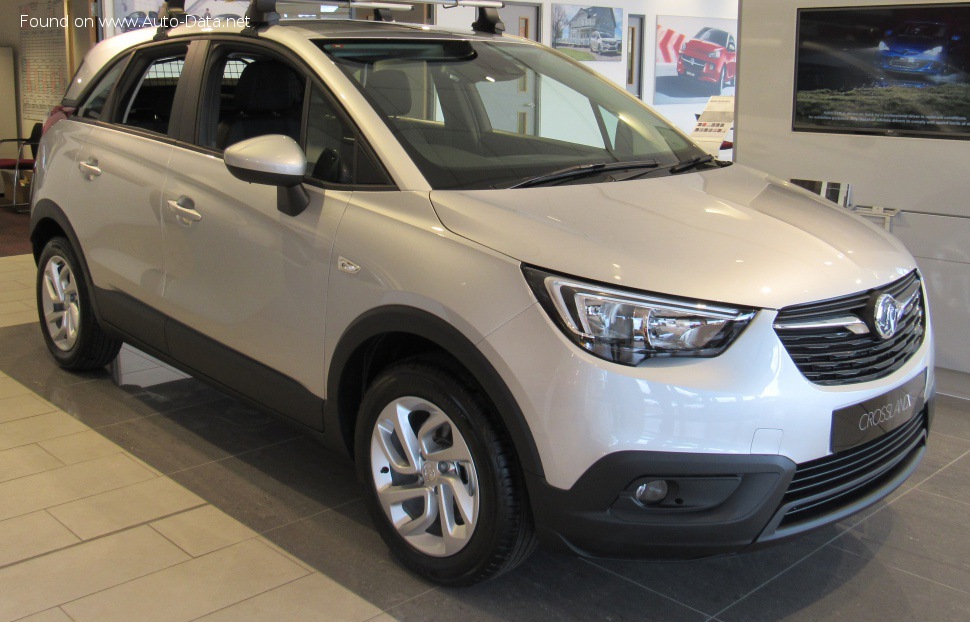
Introduction to the Vauxhall Crossland X 1.6 (120 Hp)
The Vauxhall Crossland X, a prominent contender in the burgeoning European subcompact crossover segment, made its debut in 2017 as part of Vauxhall’s strategy to expand its SUV/crossover lineup. This model, specifically the Vauxhall Crossland X 1.6 (120 Hp) variant, was a key offering during its production run from June 2017 to June 2018. Designed primarily for the European market, where it competed fiercely with rivals like the Nissan Juke, Renault Captur, and its platform-mate, the Peugeot 2008, the Crossland X aimed to blend the practicality of an MPV with the rugged aesthetics of an SUV.
Positioned below the larger Grandland X in Vauxhall’s portfolio, the Crossland X replaced the Meriva, signaling a clear shift in consumer preference from traditional multi-purpose vehicles to more lifestyle-oriented crossovers. This particular 1.6-liter diesel iteration, generating 120 horsepower, was engineered to deliver a compelling balance of fuel efficiency, low emissions, and adequate performance for urban commuting and longer journeys across the continent. While Vauxhall models are not typically sold in the United States, understanding the Crossland X provides insight into the diverse automotive landscape and specific market demands in Europe, where compact, economical, and versatile vehicles are highly valued.
Engine and Performance: The Robust 1.6-Liter Diesel in the Vauxhall Crossland X 1.6 (120 Hp)
At the heart of this particular Crossland X variant lies a sophisticated 1.6-liter (1560 cm3 or 95.2 cu. in.) inline four-cylinder diesel engine, designated with the code B16DTH. This powerplant is a testament to the engineering focus on efficiency and torque delivery, characteristic of European diesel engines. Equipped with a turbocharger and an intercooler, the engine benefits from forced induction, which significantly boosts its output and responsiveness.
The engine produces a respectable 120 horsepower at 3750 rpm, providing ample power for the Crossland X’s intended use. More notably, it generates a substantial 221.27 lb.-ft. of torque at a low 1750 rpm. This high torque figure at low engine speeds is a hallmark of modern diesel engines, contributing to brisk acceleration from a standstill and strong mid-range pulling power, which is particularly useful for overtaking or navigating hilly terrain. The powertrain architecture features an internal combustion engine driving the front wheels, aligning with the vehicle’s economical and practical design philosophy.
Power is channeled through a precise 6-speed manual transmission, offering drivers direct control over the vehicle’s performance and contributing to its impressive fuel economy. This combination allows the Crossland X 1.6 (120 Hp) to achieve a top speed of 116.2 mph (187 km/h). Fuel efficiency is a standout characteristic, with a combined rating of 58.8 US mpg (4 liters per 100 km). Urban driving yields 50 US mpg (4.7 l/100 km), while extra-urban conditions push efficiency to an outstanding 65.3 US mpg (3.6 l/100 km). These figures, coupled with CO2 emissions of just 105 g/km and compliance with Euro 6 emission standards, underscore the vehicle’s commitment to environmental responsibility for its era. The engine also incorporates a particulate filter, a standard feature for modern diesels to reduce harmful emissions.
Design and Features: Practicality Meets Modern Styling
The Vauxhall Crossland X adopted the popular SUV body type, a strategic move to capitalize on the market’s shift towards crossovers. It features a five-door configuration and seating for five occupants, emphasizing its role as a versatile family vehicle. Its design language, while distinctively Vauxhall, also incorporated elements from its PSA Group (now Stellantis) stablemates, reflecting its shared platform with models like the Citroën C3 Aircross. The exterior styling is characterized by a slightly elevated ride height, robust cladding, and a confident stance, giving it the desired SUV-like appeal without compromising urban maneuverability.
In terms of dimensions, the Crossland X is compact yet spacious. It measures 165.83 inches (4212 mm) in length, 69.49 inches (1765 mm) in width (77.8 inches or 1976 mm including mirrors), and 63.19 inches (1605 mm) in height. The wheelbase of 102.52 inches (2604 mm) contributes to a stable ride and maximizes interior volume. A minimum turning circle of 36.78 feet (11.21 meters) ensures excellent agility in tight city environments.
Inside, the Crossland X offers a practical and comfortable cabin. Cargo capacity is a significant strong point for its segment, with a minimum trunk space of 14.48 cu. ft. (410 liters) that expands to a generous 44.32 cu. ft. (1255 liters) with the rear seats folded down, making it highly adaptable for various hauling needs. The fuel tank capacity is 11.89 US gallons (45 liters), providing a substantial range given its exceptional fuel economy.
Safety and driving dynamics are addressed with a comprehensive set of features. The vehicle is equipped with ventilated disc brakes at the front and disc brakes at the rear, complemented by an Anti-lock Braking System (ABS) for enhanced stopping power and control. Steering is managed by an electric power-assisted rack and pinion system, offering light and responsive handling. The Crossland X rides on 215/50 R17 tires mounted on 17-inch wheel rims, providing a good balance of comfort and grip.
Technical Specifications
| Category | Specification |
|---|---|
| General Information | |
| Brand | Vauxhall |
| Model | Crossland |
| Generation | Crossland X |
| Engine Type | 1.6 (120 Hp) |
| Production Start | June, 2017 |
| Production End | June, 2018 |
| Powertrain Architecture | Internal Combustion engine |
| Body Type | SUV |
| Seats | 5 |
| Doors | 5 |
| Performance Specs | |
| Fuel Consumption (Urban) | 50 US mpg (4.7 l/100 km) |
| Fuel Consumption (Extra Urban) | 65.3 US mpg (3.6 l/100 km) |
| Fuel Consumption (Combined) | 58.8 US mpg (4 l/100 km) |
| CO2 Emissions | 105 g/km |
| Fuel Type | Diesel |
| Maximum Speed | 116.2 mph (187 km/h) |
| Emission Standard | Euro 6 |
| Engine Specs | |
| Power | 120 Hp @ 3750 rpm |
| Power per liter | 76.9 Hp/l |
| Torque | 221.27 lb.-ft. @ 1750 rpm (300 Nm) |
| Engine Layout | Front, Transverse |
| Engine Model/Code | B16DTH |
| Engine Displacement | 1.6 liters (1560 cm3 / 95.2 cu. in.) |
| Number of Cylinders | 4 |
| Engine Configuration | Inline |
| Number of Valves per Cylinder | 4 |
| Fuel Injection System | Diesel Commonrail |
| Engine Aspiration | Turbocharger, Intercooler |
| Engine Oil Capacity | 4.02 US qt (3.8 l) |
| Coolant Capacity | 5.6 US qt (5.3 l) |
| Engine Systems | Particulate filter |
| Space, Volume and Weights | |
| Trunk (Boot) Space – Minimum | 14.48 cu. ft. (410 l) |
| Trunk (Boot) Space – Maximum | 44.32 cu. ft. (1255 l) |
| Fuel Tank Capacity | 11.89 US gal (45 l) |
| Dimensions | |
| Length | 165.83 in (4212 mm) |
| Width | 69.49 in (1765 mm) |
| Width Including Mirrors | 77.8 in (1976 mm) |
| Height | 63.19 in (1605 mm) |
| Wheelbase | 102.52 in (2604 mm) |
| Minimum Turning Circle | 36.78 ft (11.21 m) |
| Drivetrain, Brakes and Suspension Specs | |
| Drivetrain Architecture | Front-wheel drive (Internal Combustion engine drives front wheels) |
| Drive Wheel | Front wheel drive |
| Number of Gears and Type of Gearbox | 6 gears, manual transmission |
| Front Brakes | Ventilated discs |
| Rear Brakes | Disc |
| Assisting Systems | ABS (Anti-lock braking system) |
| Steering Type | Steering rack and pinion |
| Power Steering | Electric Steering |
| Tires Size | 215/50 R17 |
| Wheel Rims Size | 17 inches |
Legacy and Market Impact
The Vauxhall Crossland X, particularly the efficient 1.6-liter diesel variant, carved out a significant niche in the highly competitive European subcompact crossover market. Its introduction was a crucial move for Vauxhall (and its continental counterpart, Opel) as it navigated the changing automotive landscape following its acquisition by PSA Group. The Crossland X was a direct replacement for the Meriva MPV, signaling a strategic shift away from the declining MPV segment towards the booming crossover market. This move allowed Vauxhall to offer a more stylish and perceived ‘rugged’ alternative while retaining the practicality and family-friendly attributes that made the Meriva popular.
In its primary markets, the Crossland X competed against a strong lineup of established and new entrants. Key rivals included the Nissan Juke, Renault Captur, Peugeot 2008 (with which it shared its platform), Citroën C3 Aircross, and various offerings from Ford, Volkswagen, and Hyundai. The Vauxhall Crossland X 1.6 (120 Hp) distinguished itself through its strong emphasis on fuel economy, a characteristic highly valued by European consumers facing higher fuel prices and stricter emissions regulations. The robust torque from its diesel engine, combined with a comfortable ride and versatile interior space, made it an attractive option for families and individuals seeking a practical daily driver.
Its reputation was built on reliability, low running costs, and a sensible approach to design. While it might not have been the most overtly sporty or luxurious option in its class, its blend of efficiency, practicality, and modern features resonated well with its target audience. The Crossland X played a vital role in Vauxhall’s efforts to modernize its brand image and adapt to evolving consumer tastes. Its success helped solidify Vauxhall’s position in the lucrative crossover segment and demonstrated the effectiveness of platform sharing within the PSA Group, leading to cost efficiencies and a broader product portfolio.
The Crossland X eventually dropped the “X” suffix to become simply the Crossland in 2020, receiving a facelift and further refinements. However, the initial generation, particularly models like the 1.6 (120 Hp) diesel, remains significant for its contribution to defining Vauxhall’s modern identity and its strategic importance in transitioning the brand’s offerings to meet contemporary market demands for compact, efficient, and versatile vehicles.