
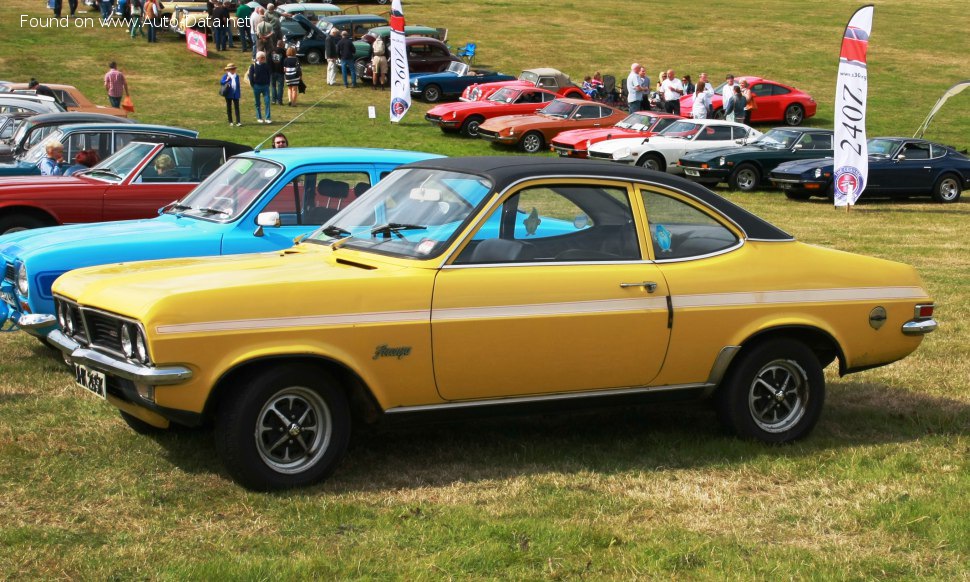
The Vauxhall Firenza Coupe 1300 (54 Hp): A British Sporting Coupe of the Early 1970s
The Vauxhall Firenza Coupe 1300 (54 Hp) represents a distinctive chapter in British automotive history, emerging from Vauxhall Motors, the UK-based subsidiary of General Motors (GM). Introduced in 1972, the Firenza Coupe was Vauxhall’s answer to the burgeoning demand for stylish, accessible two-door coupes, a segment popularized by vehicles like the Ford Capri. While the Firenza range encompassed various engine options and trim levels, the 1300 (54 Hp) variant served as the entry point, offering an appealing blend of sporty aesthetics and economical motoring for its time. It positioned itself as a more dynamic and visually engaging alternative to the standard Vauxhall Viva, upon which its underpinnings were largely based, aiming to capture the hearts of drivers seeking a touch of flair without breaking the bank. Produced until 1975, this generation of the Firenza Coupe, particularly with its 1.3-liter engine, embodied the spirit of early 1970s European automotive design and engineering principles.
Engine and Performance of the Vauxhall Firenza Coupe
Under the hood of the Vauxhall Firenza Coupe 1300 (54 Hp) lay a straightforward yet dependable powertrain architecture. The vehicle was equipped with an internal combustion engine, specifically a 1.3-liter (1300 cc) unit. This engine, characteristic of many British cars of the era, was a naturally aspirated petrol (gasoline) engine, designed for reliability and ease of maintenance rather than outright performance. It delivered a modest 54 horsepower, a figure that, while seemingly low by modern standards, was perfectly adequate for daily driving and light touring in the early 1970s.
The engine’s power delivery was linear and predictable, typical of a naturally aspirated setup. It was paired with a drivetrain architecture that sent power to the rear wheels, a common configuration for vehicles of this period and one often favored by enthusiasts for its predictable handling characteristics. This rear-wheel-drive setup, combined with the Firenza’s relatively light weight, offered a degree of driving engagement that was appreciated by its target audience. The engine oil capacity was 2.8 liters (2.96 US quarts), indicating a compact and efficient design for its time. While not a performance powerhouse, the 1300 (54 Hp) engine provided a robust and economical means of transport, embodying the practical yet stylish ethos of the Firenza Coupe. Its simplicity also contributed to its longevity and ease of repair, factors that were highly valued by car owners in the 1970s.
Design and Features
The design of the Vauxhall Firenza Coupe was a significant part of its appeal. As a two-door coupe, it exuded a sportier and more elegant presence than its sedan counterparts. The body type featured flowing lines and a distinctive profile, often characterized by what became known as “coke bottle” styling cues prevalent in the late 1960s and early 1970s. This design language emphasized a muscular rear fender line that tapered towards the rear, giving the car a sense of motion even when stationary.
The Firenza Coupe was designed to accommodate five occupants, though the rear seats, typical of a coupe of its size, were more suited for occasional use or for children. The interior, while not luxurious, was functional and driver-focused, with instrumentation that provided essential information clearly. For a vehicle produced between 1972 and 1975, safety features were rudimentary compared to contemporary standards but included essentials like seatbelts. The focus was primarily on aesthetic appeal and driving dynamics. The exterior boasted chrome accents and stylistic touches that enhanced its sporty image, differentiating it from the more utilitarian family cars of the era. Its compact dimensions made it nimble in urban environments, while its distinctive styling helped it stand out on the road, making it a desirable choice for those who valued form as much as function.
Technical Specifications
| Category | Specification |
|---|---|
| General Information | |
| Brand | Vauxhall |
| Model | Firenza Coupe |
| Generation | Firenza Coupe |
| Type (Engine) | 1300 (54 Hp) |
| Start of Production | 1972 year |
| End of Production | 1975 year |
| Powertrain Architecture | Internal Combustion engine |
| Body Type | Coupe |
| Seats | 5 |
| Doors | 2 |
| Performance Specs | |
| Fuel Type | Petrol (Gasoline) |
| Power | 54 Hp |
| Engine Aspiration | Naturally aspirated engine |
| Engine Oil Capacity | 2.8 l (2.96 US qt | 2.46 UK qt) |
| Drivetrain, Brakes and Suspension Specs | |
| Drivetrain Architecture | The Internal combustion engine (ICE) drives the rear wheels of the vehicle. |
| Drive Wheel | Rear wheel drive |
Legacy and Market Impact
The Vauxhall Firenza Coupe, particularly the 1300 (54 Hp) variant, carved out a significant niche in the British and European automotive markets during its production run. In an era dominated by practical family sedans and the rise of more accessible sporting cars, the Firenza offered a compelling alternative. Its primary competitors included the highly popular Ford Capri, the more traditional MG B GT, and other European coupes from manufacturers like Opel (Vauxhall’s GM stablemate), such as the Manta. While the 1300 version wasn’t a direct rival in terms of raw power to some of its more potent competitors, it offered a stylish and affordable entry into the coupe segment.
The Firenza’s reputation was built on its attractive styling, robust mechanicals, and the traditional rear-wheel-drive dynamics that appealed to a segment of drivers seeking a more engaging experience. It was often seen as a “poor man’s sports car” or a stylish daily driver for those who wanted something more distinctive than a standard sedan. Its simplicity of design and widespread availability of parts, thanks to its shared architecture with the Viva, contributed to its reputation for ease of maintenance and reliability.
While the 1300 model provided the accessible entry point, the Firenza lineage would later culminate in the legendary “Droopsnoot” HP Firenza, a high-performance homologation special that showcased the platform’s ultimate potential and secured the Firenza’s place in rally and racing history. However, it was the more common variants like the 1300 that truly broadened its appeal and ensured its presence on British roads.
Today, the Vauxhall Firenza Coupe, especially the early models like the 1300, is appreciated by classic car enthusiasts, particularly in the UK. Its distinctive styling, historical significance as a product of GM’s British arm, and its role in the evolution of accessible sporting coupes ensure its continued relevance. It stands as a testament to an era when design flair and driving engagement were increasingly prioritized, even in the more modest segments of the automotive market. The Vauxhall Firenza Coupe 1300 (54 Hp), therefore, holds a cherished place as a charming and historically significant classic, representing a unique blend of British engineering and early 1970s automotive panache.
