
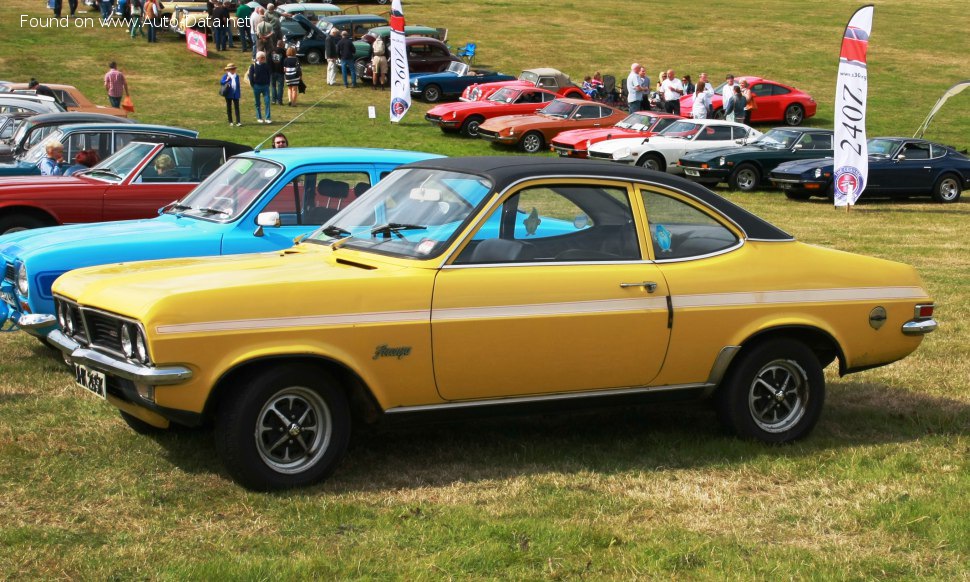
Vauxhall Firenza Coupe 1800 (78 Hp)
Introduction to the Vauxhall Firenza Coupe
The Vauxhall Firenza Coupe represents a distinctive chapter in British automotive history, emerging during a period of significant change and competition in the European market. Launched in 1972, this particular variant, the Firenza Coupe 1800 (78 Hp), was part of Vauxhall’s effort to inject a dose of sporting appeal into its lineup, building upon the foundations laid by the Viva HC platform. As a product of General Motors’ British subsidiary, Vauxhall, the Firenza Coupe was primarily aimed at the European market, particularly the United Kingdom, where it competed in the burgeoning compact performance coupe segment. It offered a blend of stylish design, conventional mechanicals, and an accessible price point for buyers seeking a more engaging driving experience than a standard sedan.
Positioned as a sporty two-door, five-seat coupe, the Firenza was designed to capture the spirit of its era, appealing to a demographic that valued both practicality and a sense of flair. While never officially sold in the United States, the Firenza Coupe shares a lineage with other GM products of the time, embodying the global design and engineering trends of the early 1970s. Its production run was relatively brief, spanning from 1972 to 1973 for this specific 1800cc model, making it a noteworthy, albeit less common, classic on today’s roads.
Engine and Performance: The Heart of the Vauxhall Firenza Coupe
Powering the Vauxhall Firenza Coupe 1800 was a naturally aspirated internal combustion engine, a workhorse typical of British cars of its generation. This 1.8-liter (1800cc) gasoline engine delivered a modest but adequate 78 horsepower (Hp), a figure that, while not groundbreaking, was respectable for a compact coupe in the early 1970s. The engine’s design emphasized reliability and ease of maintenance, characteristic of Vauxhall’s engineering philosophy.
The powertrain architecture was a traditional rear-wheel-drive setup, a configuration highly favored by enthusiasts for its balanced handling characteristics and direct power delivery. In this arrangement, the internal combustion engine drives the rear wheels of the vehicle, providing a classic driving feel that contrasts with the front-wheel-drive dominance of later eras. This made the Firenza Coupe a predictable and engaging car to drive, especially on winding roads where its handling could be appreciated. The naturally aspirated induction meant a linear power delivery, without the sudden surge associated with turbocharging, offering a smooth and accessible performance envelope for everyday driving and spirited weekend excursions. Fluid capacities for the engine included an engine oil capacity of 4.6 liters (approximately 4.86 US quarts) and a coolant capacity of 8 liters (approximately 8.45 US quarts), indicating a robust cooling system for its time.
Design and Features of the Firenza Coupe
The design of the Vauxhall Firenza Coupe was a key selling point, featuring a distinctive two-door coupe body that exuded a sporty yet elegant aesthetic. Its lines were clean and uncluttered, typical of early 1970s styling, with a purposeful stance that hinted at its dynamic intentions. The coupe body offered seating for five, making it a practical choice for families or groups who desired a more stylish alternative to a conventional sedan. The two-door configuration emphasized its sporty character, while the relatively generous interior space for its class made it a comfortable cruiser.
Key features for the era included comfortable seating, a functional dashboard layout, and a focus on driver ergonomics. While specific luxury amenities might have been optional, the standard Firenza Coupe aimed to provide a pleasant driving environment. Safety features, by modern standards, were rudimentary, primarily consisting of seat belts and a robust body structure. However, for the early 1970s, the car met prevailing safety standards and offered a secure cabin. The exterior styling was characterized by its fastback-like roofline, integrated headlights, and a distinctive grille that helped it stand out from its more sedate stablemates. This model predated the more radical “Droop Snoot” Firenza HP, but it shared the underlying design philosophy of offering a visually appealing and relatively affordable sports coupe.
Technical Specifications
Below is a detailed table of the Vauxhall Firenza Coupe 1800 (78 Hp) specifications:
| Category | Specification |
|---|---|
| General Information | |
| Brand | Vauxhall |
| Model | Firenza Coupe |
| Generation | Firenza Coupe |
| Type (Engine) | 1800 (78 Hp) |
| Start of Production | 1972 year |
| End of Production | 1973 year |
| Powertrain Architecture | Internal Combustion Engine |
| Body Type | Coupe |
| Seats | 5 |
| Doors | 2 |
| Performance Specs | |
| Fuel Type | Petrol (Gasoline) |
| Power | 78 Hp |
| Engine Aspiration | Naturally aspirated engine |
| Engine Oil Capacity | 4.6 liters (4.86 US quarts) |
| Coolant Capacity | 8 liters (8.45 US quarts) |
| Drivetrain, Brakes and Suspension Specs | |
| Drivetrain Architecture | The Internal Combustion Engine (ICE) drives the rear wheels of the vehicle. |
| Drive Wheel | Rear-wheel drive |
Legacy and Market Impact
The Vauxhall Firenza Coupe 1800, though produced for a relatively short period, holds a significant place in Vauxhall’s history and the broader British automotive landscape. It was part of a wave of European coupes that aimed to democratize sporty motoring, offering style and performance without the exorbitant costs of specialized sports cars. Its primary competitors in the UK and European markets included models like the Ford Capri, a perennial favorite, as well as offerings from British Leyland such as the Triumph Dolomite Sprint, and other European coupes from manufacturers like Opel (Vauxhall’s sister brand within GM Europe) and Fiat.
While the 1800 (78 Hp) model was a solid performer for its class, the Firenza nameplate gained legendary status with the later, much more powerful Firenza HP “Droop Snoot” homologation special. This extreme variant, designed for racing, featured a distinctive aerodynamic nose and a potent 2.3-liter slant-four engine. The existence of the “Droop Snoot” cast a halo over the entire Firenza range, associating it with serious performance and motorsport pedigree, even for the more pedestrian models like the 1800 Coupe. This association helped to elevate the Firenza’s reputation beyond its initial specifications.
Today, the Vauxhall Firenza Coupe 1800 (78 Hp) is recognized as a classic car, appreciated by enthusiasts for its period styling, rear-wheel-drive dynamics, and its connection to a significant era of British automotive manufacturing. It represents a time when European manufacturers were experimenting with distinct coupe models to cater to a growing demand for personal, expressive vehicles. While not as universally recognized as some of its contemporaries, the Firenza Coupe remains a cherished piece of automotive heritage, embodying the spirit of accessible performance and distinctive design from the early 1970s. Its relatively low production numbers and unique styling make it a sought-after classic for collectors interested in the less common, yet historically significant, vehicles of the era.
