
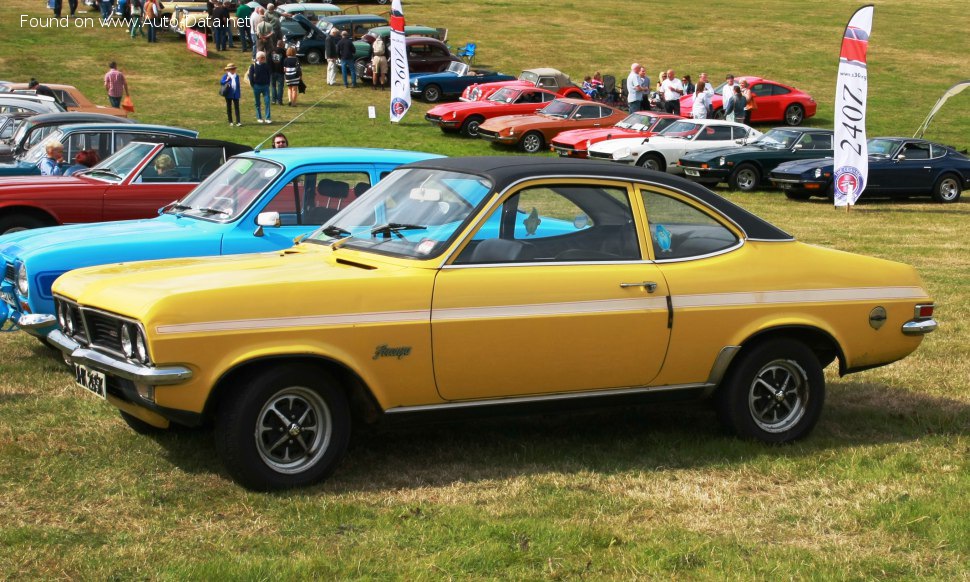
The Vauxhall Firenza Coupe 2300 (132 Hp): A British Performance Icon of the 1970s
The Vauxhall Firenza Coupe 2300 (132 Hp) represents a distinctive chapter in British automotive history, embodying Vauxhall’s ambition to compete in the burgeoning performance coupe segment of the 1970s. Produced for a brief but impactful period between 1974 and 1975, this particular iteration of the Firenza Coupe was a refined and potent offering from the Luton-based manufacturer. While Vauxhall, a subsidiary of General Motors, primarily catered to the United Kingdom and other Commonwealth markets and was not officially sold in the United States, its vehicles often shared design philosophies and engineering principles with its American counterparts, albeit tailored for European tastes and road conditions. The Firenza Coupe was positioned as a stylish and engaging two-door, five-seat vehicle, designed to appeal to buyers seeking a blend of practicality, sporty aesthetics, and respectable performance for its era. It stood as a testament to British automotive design and engineering during a period of significant change and challenge for the industry.
Engineering and Performance of the Vauxhall Firenza Coupe 2300 (132 Hp)
At the heart of the Vauxhall Firenza Coupe 2300 (132 Hp) was a robust and well-regarded powertrain architecture. The vehicle utilized a traditional internal combustion engine configuration, driving the rear wheels, a layout favored by enthusiasts for its balanced handling characteristics and direct feel. This rear-wheel-drive setup, coupled with a naturally aspirated engine, provided a driving experience that was both engaging and predictable, a common hallmark of performance cars of the period.
The engine itself was a 2.3-liter unit, delivering a respectable 132 horsepower. For the mid-1970s, this power output placed the Firenza Coupe firmly in the upper echelons of affordable performance coupes in the UK market. The engine’s naturally aspirated design meant a linear power delivery, without the sudden surge associated with turbocharging, which was still a nascent technology for road cars. This made the Firenza a smooth and tractable performer, capable of comfortable cruising as well as spirited driving on winding roads. The engine required 4.8 liters (approximately 5.07 US quarts) of oil, indicative of its robust construction, and its cooling system held 8 liters (8.45 US quarts) of coolant, ensuring thermal stability under various driving conditions. The combination of a potent engine and a classic rear-wheel-drive layout cemented the Firenza Coupe’s reputation as a driver’s car, capable of delivering genuine excitement and a tangible connection to the road.
Design and Features
The Vauxhall Firenza Coupe’s design was a product of its time, characterized by a sleek, two-door coupe body style that exuded a sense of sportiness and dynamism. Its lines were clean and purposeful, with a relatively long hood and a fastback-like rear profile that gave it an aerodynamic appearance. While the provided data specifies “Firenza Coupe” as the generation, it’s important to note that the 1974-1975 model year Firenzas, particularly the 2300 variant, were part of a lineage that evolved from earlier Viva-based models. This particular generation often featured a more aggressive stance and styling cues designed to differentiate it from its more pedestrian siblings.
Inside, the Firenza Coupe offered seating for five, a generous capacity for a two-door vehicle of its class. The interior would have featured period-appropriate materials and ergonomics, focusing on driver engagement while providing reasonable comfort for passengers. Given its performance orientation, the cabin likely included a comprehensive instrument cluster with gauges for critical engine parameters, along with supportive seating designed to hold occupants in place during spirited driving. While specific luxury features by modern standards were sparse, the Firenza’s appeal lay in its driving dynamics and sporting character rather than an abundance of electronic conveniences. Safety features, typical of the era, would have included seatbelts and a robust body structure, designed to meet the prevailing safety standards of the European market. The overall design language of the Firenza Coupe was one of understated performance, appealing to a segment of buyers who appreciated a car that looked as good as it performed on the road.
Technical Specifications: Vauxhall Firenza Coupe 2300 (132 Hp)
| Category | Specification |
|---|---|
| Brand | Vauxhall |
| Model | Firenza Coupe |
| Generation | Firenza Coupe |
| Type (Engine) | 2300 (132 Hp) |
| Start of Production | 1974 year |
| End of Production | 1975 year |
| Powertrain Architecture | Internal Combustion engine |
| Body Type | Coupe |
| Seats | 5 |
| Doors | 2 |
| Fuel Type | Petrol (Gasoline) |
| Power | 132 Hp |
| Engine Aspiration | Naturally aspirated engine |
| Engine Oil Capacity | 4.8 l (5.07 US qt | 4.22 UK qt) |
| Coolant Capacity | 8 l (8.45 US qt | 7.04 UK qt) |
| Drivetrain Architecture | The Internal combustion engine (ICE) drives the rear wheels of the vehicle. |
| Drive Wheel | Rear wheel drive |
Legacy and Market Impact
The Vauxhall Firenza Coupe 2300 (132 Hp), though produced for a relatively short period, carved out a significant niche in the British automotive landscape. Its reputation was built on a foundation of accessible performance and distinctive styling. In its primary market, the United Kingdom, it faced stiff competition from rivals such as the ubiquitous Ford Capri, which offered a broad range of engines and trim levels, and the more upscale Triumph Dolomite Sprint, known for its advanced 16-valve engine. Despite this formidable competition, the Firenza managed to attract a loyal following, particularly among enthusiasts who appreciated its robust engineering and engaging driving dynamics.
The Firenza’s historical significance is perhaps best exemplified by its high-performance derivative, the Firenza HP, affectionately known as the “Droop Snoot.” While the 2300 (132 Hp) model detailed here was a strong performer in its own right, the “Droop Snoot” took the Firenza’s sporting credentials to another level with its distinctive aerodynamic nose, upgraded suspension, and a more powerful variant of the 2.3-liter engine. This special model, though limited in production, significantly bolstered the Firenza’s image and demonstrated Vauxhall’s capability to produce serious performance machinery. The success of the Firenza HP in motorsport, particularly in saloon car racing, further cemented the Firenza’s legacy as a true performance car.
Today, the Vauxhall Firenza Coupe, especially in its more potent 2300 (132 Hp) and “Droop Snoot” forms, is a cherished classic car. It represents a bygone era of British motoring, characterized by straightforward mechanicals, driver involvement, and unique styling. Collectors and enthusiasts seek out these models for their historical value, their distinctive character, and the pure, unadulterated driving experience they offer. The Firenza’s impact extended beyond just sales figures; it contributed to Vauxhall’s sporting image and showcased the brand’s engineering prowess, leaving an indelible mark on the memory of those who experienced it during its production run and for generations of classic car aficionados since. Its enduring appeal underscores its status as a notable piece of automotive heritage from the 1970s.
