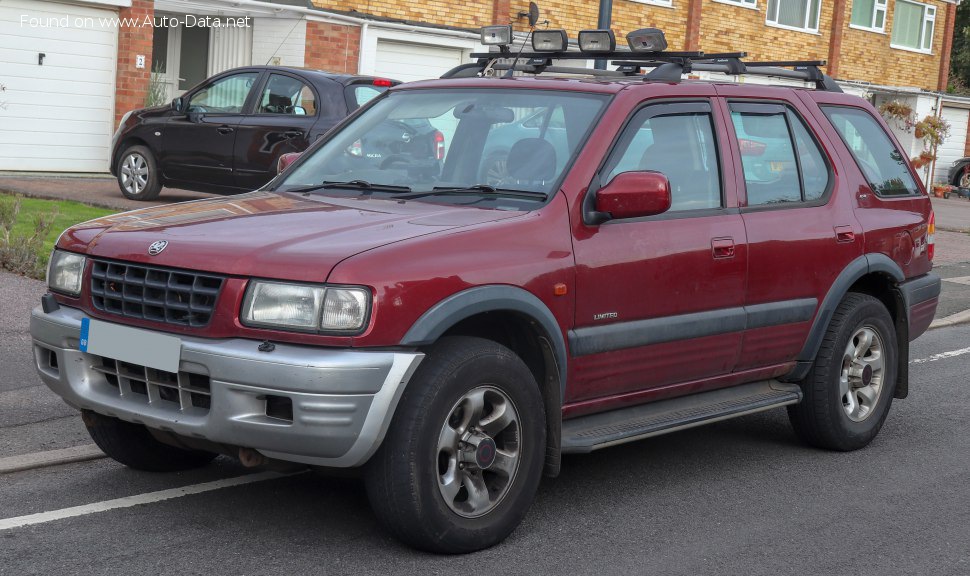
The Vauxhall Frontera 2.2i (136 Hp): A British Take on a Global SUV
The Vauxhall Frontera, specifically the 2.2i (136 Hp) variant produced between 1995 and 1998, represents a significant chapter in the history of the sport utility vehicle (SUV) in the United Kingdom and Europe. As a rebadged version of the Opel Frontera (sold in mainland Europe), which itself was based on the Isuzu Rodeo and MU (Mysterious Utility) from Japan, the Vauxhall Frontera offered a rugged, body-on-frame SUV experience to a burgeoning market segment. This particular model falls into the first generation of the Frontera, appearing as part of a mid-cycle refresh that introduced updated powertrains and interior refinements. Positioned as a versatile five-door, five-seat SUV, it aimed to blend family practicality with genuine off-road capability, appealing to buyers looking for a robust alternative to traditional sedans and wagons.
Engineering and Performance of the Vauxhall Frontera 2.2i
At the heart of the 1995-1998 Vauxhall Frontera 2.2i lies a naturally aspirated 2.2-liter (2198 cm³) inline-four gasoline engine, designated with the X22XE code. This powerplant, featuring a Double Overhead Camshaft (DOHC) valvetrain and multi-port manifold injection, was engineered to deliver a balance of power and efficiency for its era. It produced a respectable 136 horsepower at 5200 rpm, providing adequate motivation for the vehicle’s substantial curb weight of nearly 4,000 pounds (1803 kg). Torque output was rated at 148.99 lb.-ft. (202 Nm) available at a relatively low 2600 rpm, which was beneficial for both on-road acceleration and off-road traction.
Power was delivered to all four wheels via a robust 5-speed manual transmission, a common setup for SUVs of this vintage, emphasizing driver engagement and control, particularly in challenging terrain. The all-wheel-drive (4×4) system, likely a part-time setup, allowed drivers to engage four-wheel drive when conditions demanded, reinforcing its utility vehicle credentials. Performance figures for the Frontera 2.2i were in line with its class, with a 0-60 mph acceleration time of 12.9 seconds and a top speed of 100.04 mph (161 km/h). While not blisteringly fast, these figures were sufficient for highway cruising and daily driving. Fuel economy, however, reflected the vehicle’s size and older engine technology, with a combined rating of approximately 23.5 US mpg (10 l/100 km).
Design and Features
The Vauxhall Frontera 2.2i presented a classic SUV silhouette, characterized by its upright stance, five-door body style, and generous ground clearance. Its design was functional and purposeful, prioritizing utility and ruggedness over sleek aesthetics. The five-door configuration provided easy access for both front and rear passengers, making it a viable family vehicle. Inside, the cabin offered seating for five occupants, with a focus on durability and practicality. While not luxurious by modern standards, the interior was well-suited to the demands of a vehicle often used for both daily commuting and recreational activities.
Practicality was a strong suit for the Frontera. It boasted a substantial cargo capacity, ranging from 19.07 cubic feet (540 liters) with the rear seats in place to an impressive 60.74 cubic feet (1720 liters) when folded down, making it highly versatile for carrying luggage, sports equipment, or work tools. Safety features for the period included a standard Anti-lock Braking System (ABS), a crucial advancement for improving stopping performance, especially on slippery surfaces. The vehicle was equipped with ventilated disc brakes on both the front and rear axles, providing consistent braking power. Its hydraulic power steering, utilizing a worm-reduction unit, offered a direct and reassuring feel, essential for maneuvering a vehicle of its size and type. The 235/70 R16 tires mounted on 7J x 16-inch wheels further underscored its capability, providing a good balance of on-road comfort and off-road grip.
Technical Specifications: Vauxhall Frontera 2.2i (136 Hp) (1995-1998)
| Category | Specification |
|---|---|
| General Information | |
| Brand | Vauxhall |
| Model | Frontera |
| Generation | Frontera (First Generation, Facelift) |
| Type (Engine) | 2.2i (136 Hp) |
| Production Start | 1995 |
| Production End | 1998 |
| Powertrain Architecture | Internal Combustion Engine |
| Body Type | SUV |
| Seats | 5 |
| Doors | 5 |
| Performance Specifications | |
| Fuel Consumption (City) | 15 l/100 km (15.7 US mpg) |
| Fuel Consumption (Highway) | 9.4 l/100 km (25 US mpg) |
| Fuel Consumption (Combined) | 10 l/100 km (23.5 US mpg) |
| Fuel Type | Petrol (Gasoline) |
| Acceleration 0-60 mph | 12.9 seconds |
| Maximum Speed | 100.04 mph (161 km/h) |
| Weight-to-Power Ratio | 13.3 kg/Hp (75.4 Hp/tonne) |
| Weight-to-Torque Ratio | 8.9 kg/Nm (112 Nm/tonne) |
| Engine Specifications | |
| Power | 136 Hp @ 5200 rpm |
| Power per Liter | 61.9 Hp/l |
| Torque | 148.99 lb.-ft. (202 Nm) @ 2600 rpm |
| Engine Layout | Front, Longitudinal |
| Engine Model/Code | X22XE |
| Engine Displacement | 2.2 liters (2198 cm³ / 134.13 cu. in.) |
| Number of Cylinders | 4 |
| Engine Configuration | Inline |
| Cylinder Bore | 3.39 inches (86 mm) |
| Piston Stroke | 3.72 inches (94.6 mm) |
| Compression Ratio | 10.5:1 |
| Valves per Cylinder | 4 |
| Fuel Injection System | Multi-port manifold injection |
| Engine Aspiration | Naturally Aspirated |
| Valvetrain | DOHC |
| Engine Oil Capacity | 5 liters (5.28 US qt) |
| Coolant Capacity | 8.3 liters (8.77 US qt) |
| Space, Volume, and Weights | |
| Curb Weight | 3974.93 lbs. (1803 kg) |
| Maximum Weight (GVWR) | 5533.6 lbs. (2510 kg) |
| Maximum Load Capacity | 1558.67 lbs. (707 kg) |
| Trunk Space (Minimum) | 19.07 cu. ft. (540 l) |
| Trunk Space (Maximum) | 60.74 cu. ft. (1720 l) |
| Fuel Tank Capacity | 21.13 US gallons (80 l) |
| Dimensions | |
| Length | 184.72 inches (4692 mm) |
| Width | 69.45 inches (1764 mm) |
| Height | 69.02 inches (1753 mm) |
| Wheelbase | 108.66 inches (2760 mm) |
| Front Track | 57.28 inches (1455 mm) |
| Rear Track | 57.48 inches (1460 mm) |
| Drivetrain, Brakes, and Suspension | |
| Drive Wheel | All-wheel drive (4×4) |
| Gearbox | 5-speed Manual Transmission |
| Front Brakes | Ventilated Discs |
| Rear Brakes | Ventilated Discs |
| Assisting Systems | ABS (Anti-lock braking system) |
| Steering Type | Worm-reduction unit |
| Power Steering | Hydraulic Steering |
| Tires Size | 235/70 R16 |
| Wheel Rims Size | 7J x 16 |
Legacy and Market Impact of the Vauxhall Frontera
The Vauxhall Frontera played a crucial role in the expansion of the SUV market in the UK during the 1990s. While not typically sold in the United States under the Vauxhall badge, its underlying platform, the Isuzu Rodeo, was a familiar sight on American roads. In its primary European market, the Frontera offered a more rugged, utilitarian alternative to emerging car-based “soft-roaders” like the Toyota RAV4 and Honda CR-V, while being more accessible than premium off-roaders such as the Land Rover Discovery or Range Rover.
Its competitors in the European market included vehicles like the Nissan Terrano II (also sold as Ford Maverick), Mitsubishi Shogun Sport, and later, the Land Rover Freelander. The Frontera carved out a niche for itself as a robust, no-nonsense SUV that could handle both daily commuting and light to moderate off-road excursions. Its shared heritage with Isuzu provided a foundation of proven reliability, a significant selling point for buyers seeking durability. The 2.2i engine, introduced during its mid-production refresh, offered a more refined and somewhat more powerful option than earlier engines, contributing to its appeal.
Although the Frontera eventually ceased production in 2004, replaced by more modern, car-based SUVs, its legacy as an early and influential mainstream SUV in the UK and Europe remains. It helped popularize the SUV segment, making the concept of a versatile, high-riding vehicle accessible to a broader audience. The 1995-1998 Vauxhall Frontera 2.2i (136 Hp) stands as a testament to an era when SUVs were still largely defined by their rugged, body-on-frame construction and genuine capability, rather than purely urban-oriented styling. It represents a significant step in the evolution of the utility vehicle from specialized workhorse to a widely accepted family and adventure transport.