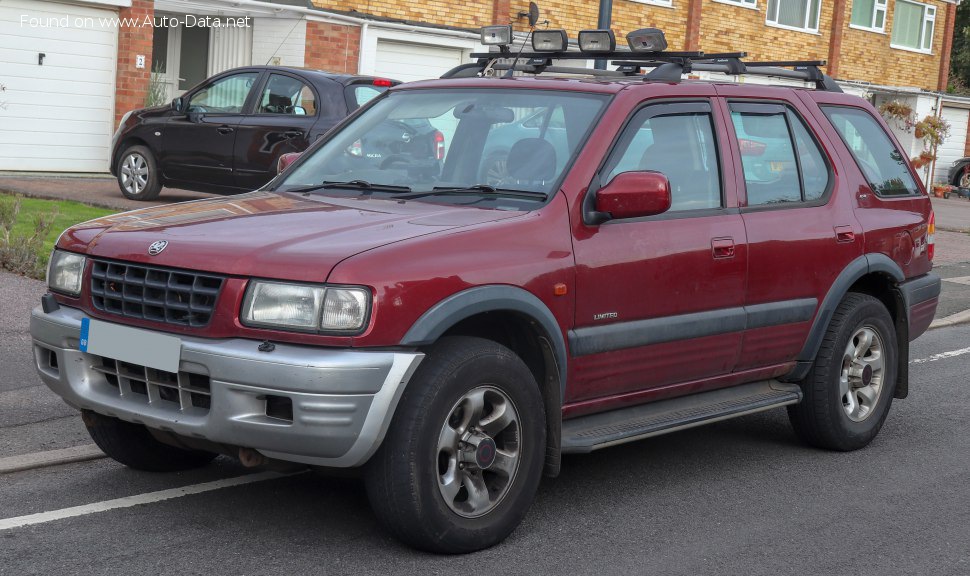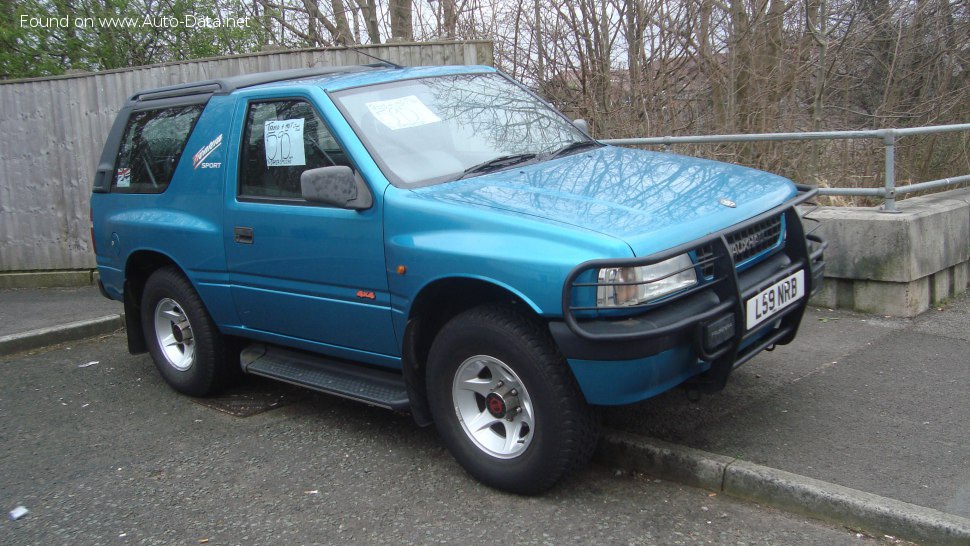
Vauxhall Frontera Sport 2.5 TDS (115 Hp)
The Vauxhall Frontera Sport 2.5 TDS (115 Hp) represents a significant entry by General Motors’ British marque, Vauxhall, into the burgeoning sport utility vehicle (SUV) segment during the mid-to-late 1990s. Produced between 1996 and 1998, this particular iteration of the Frontera was the short-wheelbase, three-door variant, known for its more agile handling and sportier appeal compared to its five-door sibling. While the Vauxhall brand was primarily sold in the United Kingdom, its Opel-badged counterpart, the Opel Frontera, was widely available across mainland Europe. Both were rebadged versions of the Isuzu MU (Mysterious Utility) or Isuzu Amigo in some markets, showcasing GM’s global platform strategy. The Frontera Sport carved out a niche as an affordable, rugged, and capable off-road vehicle, bridging the gap between utilitarian 4x4s and the emerging wave of more car-like SUVs.
During its production run, the Vauxhall Frontera Sport 2.5 TDS was positioned as a versatile leisure vehicle, offering a blend of on-road comfort and genuine off-road prowess. Its compact dimensions and robust construction made it popular among buyers seeking a vehicle for active lifestyles, capable of tackling varied terrains while still being manageable in urban environments. The 2.5 TDS variant, specifically, highlighted the strong European preference for diesel powertrains in utility vehicles, providing ample torque for towing and off-roading, coupled with respectable fuel efficiency for its class. This model played a crucial role in Vauxhall’s portfolio, offering a direct competitor to other popular compact SUVs of the era.
Engine and Performance of the Vauxhall Frontera Sport
At the heart of the Vauxhall Frontera Sport 2.5 TDS was a robust 2.5-liter (2499 cm³) inline-four turbodiesel engine, identified by the VM41B engine code. This powerplant was a common choice for European SUVs and light commercial vehicles of the time, renowned for its durability and strong low-end torque delivery. Equipped with a turbocharger and a Diesel Commonrail fuel injection system, the engine produced 115 horsepower at 3600 rpm. More critically for an SUV designed for utility and off-road excursions, it delivered a substantial 287 Nm (211.68 lb-ft) of torque at a low 1800 rpm. This ample torque at low engine speeds was instrumental in providing the pulling power needed for challenging terrains and towing applications, a key selling point for its target audience.
Power was sent to all four wheels via a durable 5-speed manual transmission, offering the driver direct control over the vehicle’s power delivery. The all-wheel-drive (4×4) system, combined with the engine’s torque, ensured capable traction in various conditions, from muddy trails to snowy roads. In terms of outright performance, the Frontera Sport 2.5 TDS was not designed for speed, but rather for purposeful utility. It accelerated from 0 to 60 mph in 15.2 seconds and achieved a maximum speed of 96.31 mph. While these figures might seem modest by modern standards, they were competitive for a diesel-powered SUV of its era, prioritizing ruggedness over rapid acceleration.
Fuel economy was a notable aspect for a vehicle of its size and capability, with a combined consumption rating of 10.4 liters per 100 km, which translates to approximately 22.6 US mpg. This efficiency, combined with a generous 80-liter (21.13 US gallon) fuel tank, provided a respectable cruising range, making it suitable for longer journeys and extended off-road adventures without frequent stops for refueling. The engine’s high compression ratio of 22.5:1, typical for a diesel, contributed to its efficient combustion and torque characteristics.
Design and Features
The Vauxhall Frontera Sport was characterized by its distinctive three-door SUV body style, emphasizing its more dynamic and recreational positioning within the Frontera lineup. Measuring 165.04 inches in length, 70.08 inches in width, and 67.76 inches in height, with a compact 91.73-inch wheelbase, the Sport model was designed for greater maneuverability, particularly off-road, where its shorter overhangs and tighter turning radius were advantageous. The exterior styling was rugged and purposeful, reflecting its go-anywhere attitude, with prominent wheel arches accommodating substantial 235/70 R16 tires on 7J x 16-inch wheel rims.
Inside, the Frontera Sport offered seating for five occupants. Despite its compact exterior, the interior was practical, with a minimum trunk (boot) space of 10.59 cubic feet, which could expand significantly to 40.97 cubic feet with the rear seats folded down, making it highly adaptable for carrying cargo, sports equipment, or camping gear. The kerb weight of the vehicle stood at 4030.05 lbs (1828 kg), indicating a solid, body-on-frame construction that contributed to its robust feel and durability.
Chassis and suspension components were engineered to handle demanding conditions. The front suspension featured an independent torsion bar setup with double wishbones, providing a good balance of on-road comfort and off-road articulation. The rear utilized a dependent spring suspension, a common and durable design for SUVs of this era, offering strength and load-carrying capability. Braking was handled by ventilated discs on both the front and rear axles, providing effective stopping power, especially crucial for a vehicle of its weight and intended use. An Anti-lock Braking System (ABS) was included as an assisting system, enhancing safety by preventing wheel lock-up during hard braking. The hydraulic power steering, utilizing a worm-reduction unit, offered reliable and predictable control, which was beneficial for both highway cruising and precise maneuvering on challenging trails.
Technical Specifications
| Feature | Specification |
|---|---|
| Brand | Vauxhall |
| Model | Frontera Sport |
| Type (Engine) | 2.5 TDS (115 Hp) |
| Production Start | 1996 |
| Production End | 1998 |
| Powertrain Architecture | Internal Combustion Engine |
| Body Type | SUV |
| Doors | 3 |
| Seats | 5 |
| Fuel Type | Diesel |
| Fuel Consumption (Combined) | 10.4 l/100 km (22.6 US mpg) |
| Acceleration 0-60 mph | 15.2 seconds |
| Maximum Speed | 96.31 mph (155 km/h) |
| Power | 115 Hp @ 3600 rpm |
| Power per liter | 46 Hp/l |
| Torque | 287 Nm (211.68 lb-ft) @ 1800 rpm |
| Engine Layout | Front, Longitudinal |
| Engine Model/Code | VM41B |
| Engine Displacement | 2499 cm³ (152.5 cu. in.) |
| Number of Cylinders | 4 |
| Engine Configuration | Inline |
| Cylinder Bore | 92 mm (3.62 in.) |
| Piston Stroke | 94 mm (3.7 in.) |
| Compression Ratio | 22.5:1 |
| Valves per Cylinder | 2 |
| Fuel Injection System | Diesel Commonrail |
| Engine Aspiration | Turbocharger |
| Engine Oil Capacity | 6.3 l (6.66 US qt) |
| Coolant Capacity | 8.8 l (9.3 US qt) |
| Kerb Weight | 1828 kg (4030.05 lbs) |
| Maximum Weight (GVWR) | 2510 kg (5533.6 lbs) |
| Max Load | 682 kg (1503.55 lbs) |
| Trunk (Boot) Space (Min) | 300 l (10.59 cu. ft.) |
| Trunk (Boot) Space (Max) | 1160 l (40.97 cu. ft.) |
| Fuel Tank Capacity | 80 l (21.13 US gal) |
| Length | 4192 mm (165.04 in.) |
| Width | 1780 mm (70.08 in.) |
| Height | 1721 mm (67.76 in.) |
| Wheelbase | 2330 mm (91.73 in.) |
| Front Track | 1455 mm (57.28 in.) |
| Rear Track | 1460 mm (57.48 in.) |
| Drive Wheel | All-wheel drive (4×4) |
| Gearbox Type | 5-speed manual transmission |
| Front Suspension | Independent torsion bar, double wishbone |
| Rear Suspension | Dependent spring suspension |
| Front Brakes | Ventilated discs |
| Rear Brakes | Ventilated discs |
| Assisting Systems | ABS (Anti-lock braking system) |
| Steering Type | Worm-reduction unit |
| Power Steering | Hydraulic Steering |
| Tire Size | 235/70 R16 |
| Wheel Rims Size | 7J x 16 |
Legacy and Market Impact
The Vauxhall Frontera Sport 2.5 TDS, along with its Opel counterpart, left a notable mark on the European SUV landscape of the late 1990s. Its reputation was built on a foundation of rugged dependability, affordability, and genuine off-road capability, making it a popular choice for buyers who needed a practical workhorse or an accessible vehicle for outdoor pursuits. It stood out in a market that was beginning to see an influx of more car-like, unibody SUVs, by offering a traditional body-on-frame construction that appealed to those seeking durability and serious off-road prowess.
In its primary markets, the Frontera Sport competed against a diverse range of vehicles. Direct rivals included other compact, traditional 4x4s like the Suzuki Vitara and the Nissan Terrano II. It also faced competition from emerging soft-roaders and compact SUVs such as the first-generation Land Rover Freelander, Toyota RAV4, and Honda CR-V. While the Freelander offered a more premium experience and the Japanese competitors leaned towards car-like refinement, the Frontera Sport maintained its identity as a more utilitarian and value-oriented option, particularly appealing to those who prioritized robust construction and diesel efficiency.
Historically, the Frontera was significant for Vauxhall (and Opel) as it represented their dedicated foray into the rapidly expanding SUV segment, a category that would eventually dominate global automotive sales. By leveraging its partnership with Isuzu, GM was able to quickly introduce a competitive product without extensive in-house development, demonstrating a pragmatic approach to market entry. The Frontera’s success, particularly the diesel variants like the 2.5 TDS, helped normalize the presence of SUVs on European roads, paving the way for future generations of utility vehicles from the brand. Despite being discontinued in 2004, its legacy endures as a testament to the era when SUVs were transitioning from niche, specialized vehicles to mainstream family and leisure transportation, proving that robust engineering and practical features held strong appeal for a significant portion of the market. Its blend of power, torque, and off-road readiness made the Vauxhall Frontera Sport 2.5 TDS a respected and memorable vehicle in its class.