The Vauxhall Grandland II: A Hybrid Evolution for the European Market
The Vauxhall Grandland II 1.2 Turbo (145 Hp) Mild Hybrid e-DCT represents the second generation of Vauxhall’s popular compact crossover SUV, poised for its market debut in June 2025. Positioned as a key offering in the highly competitive European C-segment SUV market, the Grandland II continues Vauxhall’s commitment to modern design, practicality, and increasingly, electrified powertrains. This iteration marks a significant step forward by integrating a sophisticated mild-hybrid electric vehicle (MHEV) system with a compact yet potent turbocharged gasoline engine, paired with an efficient e-DCT automatic transmission. While Vauxhall, a British marque, is primarily a European brand and not sold in the United States, its engineering and market strategy reflect global trends in automotive development, particularly the drive towards greater efficiency and reduced emissions.
Engine and Performance: A Balanced Mild-Hybrid Powertrain
At the heart of the Grandland II 1.2 Turbo (145 Hp) Mild Hybrid e-DCT lies an advanced MHEV powertrain designed to deliver a compelling blend of performance and fuel efficiency. The internal combustion engine (ICE) is a 1.2-liter (1199 cm3), three-cylinder, inline gasoline unit, featuring direct injection, a turbocharger, and an intercooler. This engine is engineered with a DOHC (Double Overhead Camshaft) valvetrain and Variable Valve Timing (VVT), producing a respectable 136 horsepower at 5500 rpm and a robust 169.64 lb.-ft. of torque at a low 1750 rpm. This low-end torque is crucial for responsive acceleration and comfortable city driving.
The mild-hybrid system enhances this already capable engine. It incorporates a 48-volt lithium-ion battery and an electric motor integrated directly into the transmission. This synchronous electric motor contributes an additional 28 horsepower and 40.57 lb.-ft. of torque, bringing the combined system output to 145 horsepower. This setup allows the vehicle to operate in full electric mode for short distances, particularly at low speeds up to 18.02 mph, significantly reducing fuel consumption and emissions in urban environments. The mild-hybrid architecture, classified as a power-assist or battery-assisted hybrid, primarily aids the gasoline engine during acceleration and allows for extended engine-off periods during coasting or braking, facilitated by a standard Start & Stop System. Power is sent to the front wheels through a smooth 6-speed e-DCT (dual-clutch transmission), ensuring seamless gear changes and optimized power delivery.
Performance figures for the Grandland II are competitive within its segment. It boasts a top speed of 124.9 mph (201 km/h). More impressively, its WLTP combined fuel consumption stands at an estimated 42.8 US mpg (5.5 l/100 km), with CO2 emissions ranging from 123-124 g/km, meeting the stringent Euro 6d emission standard. These figures underscore Vauxhall’s focus on environmental responsibility and running costs, vital considerations for European consumers.
Design and Features: Modern SUV Aesthetics and Practicality
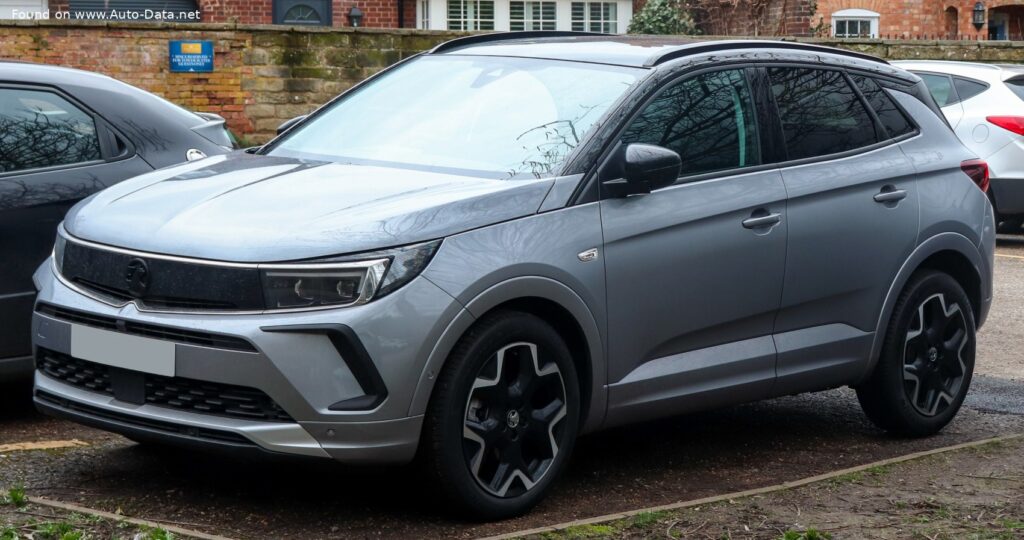
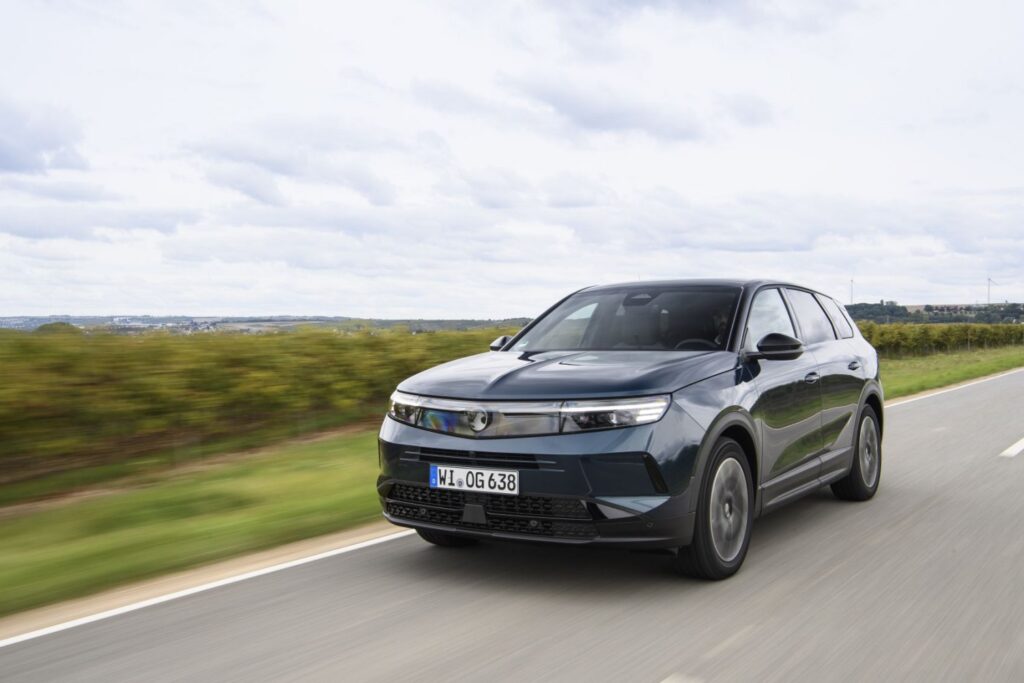
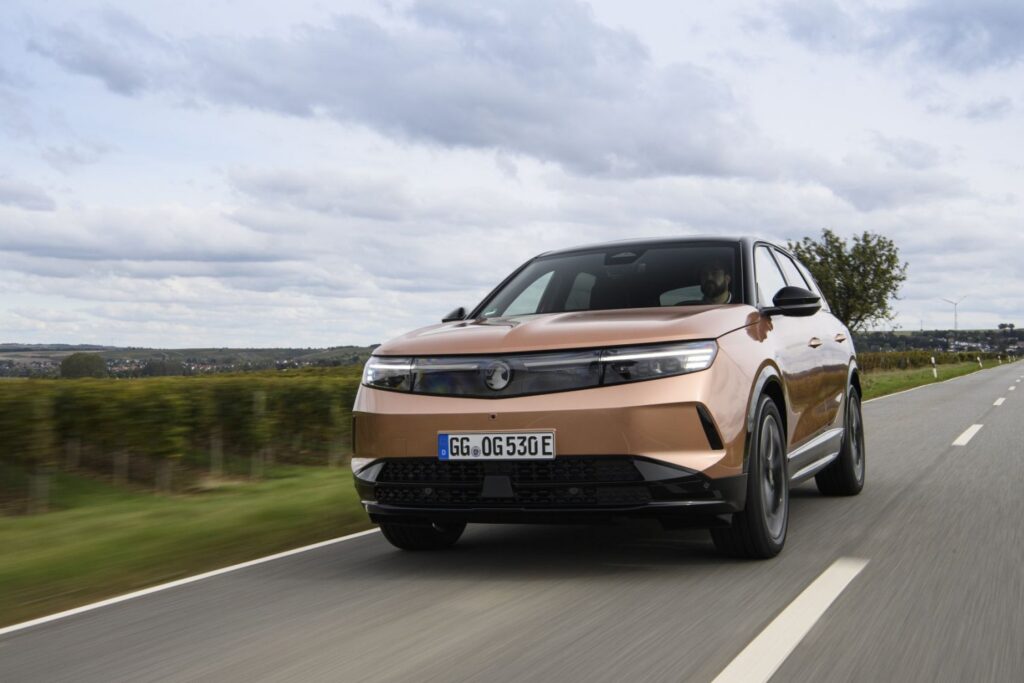
The Vauxhall Grandland II 1.2 Turbo (145 Hp) Mild Hybrid e-DCT sports a contemporary SUV body type, characterized by a bold and assertive design language. As a five-door, five-seat vehicle, it prioritizes passenger comfort and versatility. The exterior dimensions are substantial for a compact SUV, with a length of 183.07 inches (4650 mm), a width of 75 inches (1905 mm), and a height of 65.24 inches (1657 mm). A generous wheelbase of 109.61 inches (2784 mm) contributes to a stable ride and ample interior space.
Inside, the Grandland II is expected to offer a modern and ergonomic cabin. Given its 2025 release, it will undoubtedly feature advanced infotainment systems, digital instrument clusters, and a comprehensive suite of driver-assistance technologies. While specific details on interior features are not provided, Vauxhall typically equips its vehicles with comfortable seating, quality materials, and smart storage solutions. The SUV body style provides excellent practicality, with a minimum trunk space of 19.42 cubic feet (550 liters), expandable to a cavernous 58.09 cubic feet (1645 liters) with the rear seats folded, making it suitable for families and those requiring significant cargo capacity.
Safety is paramount in modern vehicle design. The Grandland II will come equipped with standard features such as ABS (Anti-lock Braking System) and is expected to offer a full complement of airbags and advanced driver-assistance systems (ADAS) to ensure occupant protection and accident prevention. The vehicle’s robust structure, combined with its kerb weight of 3527.4 lbs. (1600 kg) and a maximum permissible weight of 4673.8 lbs. (2120 kg), speaks to its solid build quality. The Grandland II also offers practical towing capabilities, with a permitted trailer load of 2425.08 lbs. (1100 kg) with brakes, enhancing its utility for leisure activities.
Technical Specifications
| Category | Specification |
|---|---|
| General Information | |
| Brand | Vauxhall |
| Model | Grandland |
| Generation | Grandland II |
| Type (Engine) | 1.2 Turbo (145 Hp) Mild Hybrid e-DCT |
| Start of Production | June, 2025 year |
| Powertrain Architecture | MHEV (Mild Hybrid Electric Vehicle) |
| Body Type | SUV |
| Seats | 5 |
| Doors | 5 |
| Performance Specs | |
| Combined Fuel Consumption (WLTP) | 5.5 l/100 km (42.8 US mpg) |
| CO2 Emissions (WLTP) | 123-124 g/km |
| Fuel Type | Petrol (Gasoline) |
| Maximum Speed | 201 km/h (124.9 mph) |
| Emission Standard | Euro 6d |
| Weight-to-Power Ratio | 11 kg/Hp, 90.6 Hp/tonne |
| Weight-to-Torque Ratio | 7 kg/Nm, 143.8 Nm/tonne |
| Electric Cars and Hybrids Specs | |
| Battery Voltage | 48 V |
| Battery Technology | Lithium-ion (Li-Ion) |
| Max Speed (Electric) | 29 km/h (18.02 mph) |
| Electric Motor Power | 28 Hp |
| Electric Motor Torque | 55 Nm (40.57 lb.-ft.) |
| Electric Motor Location | Integrated into the transmission |
| Electric Motor Type | Synchronous |
| System Power | 145 Hp |
| Internal Combustion Engine Specs | |
| Power | 136 Hp @ 5500 rpm |
| Power per Liter | 113.4 Hp/l |
| Torque | 230 Nm @ 1750 rpm (169.64 lb.-ft.) |
| Engine Layout | Front, Transverse |
| Engine Displacement | 1199 cm3 (1.2 L, 73.17 cu. in.) |
| Number of Cylinders | 3 |
| Engine Configuration | Inline |
| Cylinder Bore | 75 mm (2.95 in.) |
| Piston Stroke | 90.5 mm (3.56 in.) |
| Number of Valves per Cylinder | 4 |
| Fuel Injection System | Direct injection |
| Engine Aspiration | Turbocharger, Intercooler |
| Valvetrain | DOHC, VVT |
| Engine Oil Capacity | 3.5 l (3.7 US qt) |
| Engine Systems | Start & Stop System, Particulate filter |
| Space, Volume and Weights | |
| Kerb Weight | 1600 kg (3527.4 lbs.) |
| Max. Weight | 2120 kg (4673.8 lbs.) |
| Max Load | 520 kg (1146.4 lbs.) |
| Trunk (Boot) Space – Minimum | 550 l (19.42 cu. ft.) |
| Trunk (Boot) Space – Maximum | 1645 l (58.09 cu. ft.) |
| Fuel Tank Capacity | 55 l (14.53 US gal) |
| Max. Roof Load | 70 kg (154.32 lbs.) |
| Permitted Trailer Load with Brakes (12%) | 1100 kg (2425.08 lbs.) |
| Permitted Trailer Load without Brakes | 750 kg (1653.47 lbs.) |
| Permitted Towbar Download | 55 kg (121.25 lbs.) |
| Dimensions | |
| Length | 4650 mm (183.07 in.) |
| Width | 1905 mm (75 in.) |
| Width with Mirrors Folded | 1934 mm (76.14 in.) |
| Width Including Mirrors | 2108 mm (82.99 in.) |
| Height | 1657 mm (65.24 in.) |
| Wheelbase | 2784 mm (109.61 in.) |
| Front Overhang | 962 mm (37.87 in.) |
| Rear Overhang | 904 mm (35.59 in.) |
| Minimum Turning Circle (Turning Diameter) | 10.9 m (35.76 ft.) |
| Drivetrain, Brakes and Suspension Specs | |
| Drivetrain Architecture | ICE and electric motor drive front wheels; full electric or mixed mode operation. |
| Drive Wheel | Front wheel drive |
| Number of Gears and Type of Gearbox | 6 gears, automatic transmission e-DCT |
| Front Brakes | Ventilated discs, 304×28 mm |
| Rear Brakes | Ventilated discs, 290×12 mm |
| Assisting Systems | ABS (Anti-lock braking system) |
| Steering Type | Steering rack and pinion |
| Power Steering | Electric Steering |
| Tire Sizes | 225/60 R18; 225/55 R19 |
| Wheel Rims Size | 18; 19 |
Legacy and Market Impact in the European Landscape
The Vauxhall Grandland II, particularly in its 1.2 Turbo (145 Hp) Mild Hybrid e-DCT configuration, is set to play a crucial role in Vauxhall’s product strategy within the European market. Vauxhall, as part of the Stellantis group, leverages shared platforms and powertrains, allowing it to offer competitive technology and efficiency. The Grandland nameplate has already established itself as a practical and value-oriented option in the crowded compact SUV segment since its first generation, and the second generation builds upon this foundation with significant technological upgrades.
In Europe, the Grandland II will face stiff competition from a multitude of established players. Its rivals include models like the Nissan Qashqai, Hyundai Tucson, Kia Sportage, Ford Kuga (Escape in the US), Volkswagen Tiguan, and its platform siblings such as the Peugeot 3008 and Citroën C5 Aircross. To carve out its niche, the Grandland II will rely on its combination of modern design, enhanced fuel efficiency through its mild-hybrid system, a comfortable and spacious interior, and Vauxhall’s reputation for accessibility and practicality. The adoption of the MHEV system is particularly significant, as it allows Vauxhall to offer electrified options without the higher cost or range anxiety associated with full plug-in hybrids or battery-electric vehicles, making it an attractive proposition for a broader customer base looking for improved economy and lower emissions.
The Grandland II’s commitment to the Euro 6d emission standard underscores the regulatory pressures and consumer demand for cleaner vehicles in Europe. By integrating a 48-volt mild-hybrid system, Vauxhall demonstrates its forward-thinking approach to powertrain development, providing a stepping stone towards a fully electrified future. This strategy ensures that the Grandland remains relevant and competitive in a market increasingly driven by environmental consciousness and stringent emission targets. Its success will be measured not only by sales figures but also by its ability to reinforce Vauxhall’s image as a brand that delivers modern, efficient, and practical vehicles tailored to the evolving needs of the European automotive landscape.