The Vauxhall Grandland X 1.6 (120 Hp): A European Compact SUV
The Vauxhall Grandland X 1.6 (120 Hp) represents a significant entry into the highly competitive compact SUV segment within the European market. Launched in October 2017, this particular variant, identifiable by its 1.6-liter diesel engine producing 120 horsepower, was a key offering during the initial phase of the Grandland X’s production. Vauxhall, a British automobile manufacturer, operates as a subsidiary of Opel, which itself was part of General Motors until its acquisition by Groupe PSA (now Stellantis) in 2017. As such, the Grandland X is essentially a rebadged Opel Grandland X, tailored for the UK market, and was developed on PSA’s EMP2 platform, shared with vehicles like the Peugeot 3008 and Citroën C5 Aircross. This generation, the Grandland X, aimed to provide a practical, efficient, and stylish option for families and individuals seeking the versatility of an SUV combined with car-like driving dynamics. Its role in the European market was to bolster Vauxhall’s SUV lineup, offering a compelling alternative to established rivals with a focus on fuel economy and everyday usability.
Engine & Performance: The Heart of the Vauxhall Grandland X
Under the hood, the Vauxhall Grandland X 1.6 (120 Hp) featured a robust and efficient 1.6-liter (1560 cm3 or 95.2 cu. in.) inline four-cylinder turbodiesel engine, identified by the B16DTH engine code. This powertrain was engineered to deliver a balance of usable power and impressive fuel efficiency, a common characteristic of European-market diesels. The engine produced a peak power output of 120 horsepower at 3750 rpm, providing ample thrust for daily driving and highway cruising. More notably, it generated a substantial 221.27 lb.-ft. (300 Nm) of torque, available from a low 1750 rpm. This strong low-end torque was crucial for the Grandland X’s performance, enabling brisk acceleration from a standstill and confident overtaking maneuvers, particularly when carrying passengers or cargo.
The engine utilized a modern Diesel Commonrail fuel injection system, paired with a turbocharger and intercooler, to optimize combustion and maximize power delivery while adhering to stringent emission standards. This particular variant was rated to Euro 6 emission standards, with CO2 emissions of 111 g/km, reflecting its environmental consciousness for the time. Power was sent to the front wheels via a smooth-shifting 6-speed manual transmission, a popular choice in European markets for its engaging driving experience and efficiency. The drivetrain architecture was front-wheel drive, typical for many compact SUVs of this class, prioritizing practicality and cost-effectiveness over off-road prowess.
Performance figures for the Grandland X 1.6 (120 Hp) were respectable for its segment. It could achieve a maximum speed of 116.82 mph (188 km/h), making it perfectly capable for extended motorway journeys. Where this powertrain truly shone was in its fuel economy. The combined cycle fuel consumption was an impressive 54.7 US mpg (4.3 l/100 km), with urban figures reaching 48 US mpg (4.9 l/100 km) and extra-urban figures soaring to 60.3 US mpg (3.9 l/100 km). These figures underscored the diesel engine’s inherent efficiency, making the Grandland X an economical choice for long-distance drivers and those conscious of running costs. The engine oil capacity stood at 4.02 US quarts (3.8 liters), and it was equipped with a particulate filter, a standard feature for modern diesels to reduce harmful emissions.
Design & Features of the Grandland X
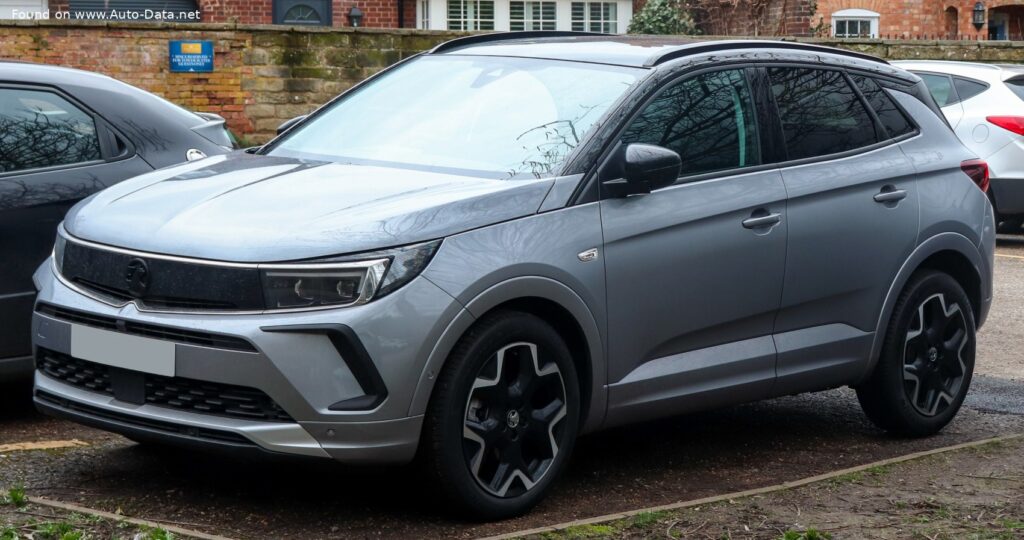
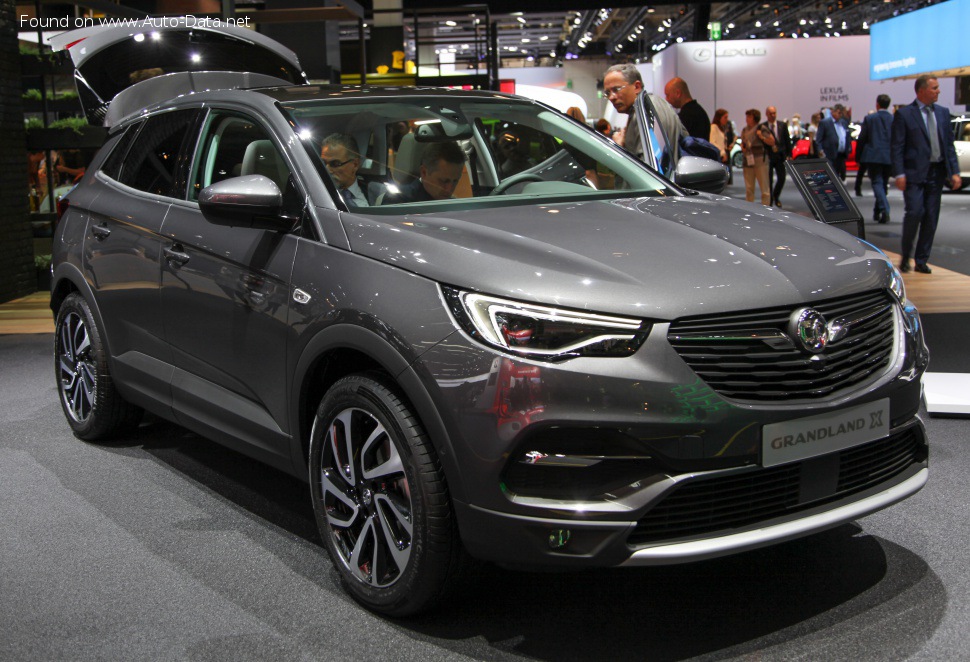
The Vauxhall Grandland X adopted a contemporary SUV design, characterized by its confident stance and clean lines. As a 5-door, 5-seat SUV, it offered a practical and spacious interior, catering to the needs of small families and active individuals. Its dimensions contributed to its commanding road presence while maintaining maneuverability for urban environments. The vehicle measured 176.26 inches (4477 mm) in length, 73.07 inches (1856 mm) in width (or 82.6 inches / 2098 mm including mirrors), and 63.35 inches (1609 mm) in height. A wheelbase of 105.31 inches (2675 mm) contributed to a stable ride and generous cabin space.
Inside, the Grandland X focused on ergonomics and comfort. While specific trim levels and interior materials are not detailed in the provided data, Vauxhall typically offered a range of modern conveniences and infotainment options for this segment. The emphasis was on a user-friendly cabin with intuitive controls. Practicality was a strong suit, evidenced by the generous trunk space. With the rear seats in place, the cargo volume was 18.15 cu. ft. (514 liters), expanding significantly to 58.34 cu. ft. (1652 liters) with the rear seats folded down, making it highly adaptable for various hauling needs. The fuel tank capacity was 14 US gallons (53 liters), providing an excellent driving range thanks to the diesel engine’s efficiency.
In terms of safety and driving dynamics, the Grandland X was equipped with essential modern features. Front brakes were ventilated discs, while the rear utilized solid discs, ensuring confident stopping power. An Anti-lock Braking System (ABS) was standard, enhancing safety during emergency braking. The steering system featured a rack and pinion setup with electric power steering, offering a light and responsive feel at low speeds for easy maneuvering and a more weighted feel at higher speeds for stability. The vehicle rode on 19-inch wheels, fitted with 235/50 R19 tires, which contributed to both its aesthetic appeal and handling characteristics.
Technical Specifications: Vauxhall Grandland X 1.6 (120 Hp)
| Specification | Value |
|---|---|
| Brand | Vauxhall |
| Model | Grandland |
| Generation | Grandland X |
| Engine Type | 1.6 (120 Hp) |
| Production Start | October, 2017 |
| Production End | April, 2018 |
| Powertrain Architecture | Internal Combustion Engine |
| Body Type | SUV |
| Seats | 5 |
| Doors | 5 |
| Fuel Consumption (Urban) | 4.9 l/100 km (48 US mpg) |
| Fuel Consumption (Extra Urban) | 3.9 l/100 km (60.3 US mpg) |
| Fuel Consumption (Combined) | 4.3 l/100 km (54.7 US mpg) |
| CO2 Emissions | 111 g/km |
| Fuel Type | Diesel |
| Maximum Speed | 188 km/h (116.82 mph) |
| Emission Standard | Euro 6 |
| Power | 120 Hp @ 3750 rpm |
| Power per Liter | 76.9 Hp/l |
| Torque | 300 Nm (221.27 lb.-ft.) @ 1750 rpm |
| Engine Layout | Front, Transverse |
| Engine Model/Code | B16DTH |
| Engine Displacement | 1560 cm3 (1.6 liters / 95.2 cu. in.) |
| Number of Cylinders | 4 |
| Engine Configuration | Inline |
| Valves per Cylinder | 4 |
| Fuel Injection System | Diesel Commonrail |
| Engine Aspiration | Turbocharger, Intercooler |
| Engine Oil Capacity | 3.8 liters (4.02 US qt) |
| Engine Oil Specification | Not specified (Login to see) |
| Engine Systems | Particulate filter |
| Trunk Space (Minimum) | 514 liters (18.15 cu. ft.) |
| Trunk Space (Maximum) | 1652 liters (58.34 cu. ft.) |
| Fuel Tank Capacity | 53 liters (14 US gal) |
| Length | 4477 mm (176.26 in.) |
| Width | 1856 mm (73.07 in.) |
| Width (incl. mirrors) | 2098 mm (82.6 in.) |
| Height | 1609 mm (63.35 in.) |
| Wheelbase | 2675 mm (105.31 in.) |
| Drivetrain Architecture | Internal combustion engine drives front wheels |
| Drive Wheel | Front Wheel Drive |
| Gearbox | 6 gears, manual transmission |
| Front Brakes | Ventilated discs |
| Rear Brakes | Disc |
| Assisting Systems | ABS (Anti-lock braking system) |
| Steering Type | Steering rack and pinion |
| Power Steering | Electric Steering |
| Tires Size | 235/50 R19 |
| Wheel Rims Size | 19 inches |
Legacy & Market Impact of the Vauxhall Grandland X
The Vauxhall Grandland X, particularly in its early 1.6 (120 Hp) diesel configuration, played a crucial role in Vauxhall’s strategy to capture a larger share of the booming European compact SUV market. As a rebadged Opel Grandland X, it benefited from the engineering prowess of the PSA Group, which acquired Opel/Vauxhall shortly before its launch. This platform sharing allowed for economies of scale and access to proven technologies, enabling Vauxhall to offer a competitive product relatively quickly.
In the United Kingdom, where Vauxhall holds significant brand recognition, the Grandland X faced stiff competition from established players like the Nissan Qashqai, Ford Kuga (known as Escape in the US), Kia Sportage, Hyundai Tucson, and its platform siblings, the Peugeot 3008 and Citroën C5 Aircross. Its main selling points were its practical design, comfortable ride, and, especially with the 1.6-liter diesel engine, its exceptional fuel economy. The strong torque of the diesel engine provided a relaxed driving experience, making it a popular choice for families and commuters who prioritized efficiency and long-distance comfort.
The specific production window for this 1.6 (120 Hp) diesel variant, from October 2017 to April 2018, indicates that it was likely an initial powertrain offering that was either updated or replaced by other engine options relatively quickly in the Grandland X’s lifecycle. Automakers frequently refine their engine lineups based on market demand, evolving emission standards, or the introduction of new, more efficient powerplants. Despite its short run, this particular engine demonstrated the Grandland X’s commitment to offering a highly fuel-efficient option in a segment increasingly scrutinizing vehicle emissions and running costs.
The Grandland X contributed to Vauxhall’s modern image, moving away from its more traditional sedan and hatchback offerings towards the popular SUV trend. Its adoption of the PSA EMP2 platform marked a significant shift in Vauxhall’s engineering lineage, signaling a new era for the brand under its new ownership. While not sold in the American market, the Vauxhall Grandland X 1.6 (120 Hp) stands as an example of a well-executed European compact SUV, balancing design, practicality, and particularly, diesel-powered efficiency to meet the demands of its primary market. Its legacy is tied to its role in Vauxhall’s revitalized product portfolio and its contribution to the brand’s presence in one of the most dynamic automotive segments.