The Vauxhall Insignia I Hatchback 1.8i ecoTEC (140 Hp): A European Mid-Size Contender
The Vauxhall Insignia I Hatchback 1.8i ecoTEC (140 Hp) represents a significant chapter in the history of General Motors’ European operations, particularly for the Vauxhall brand in the United Kingdom. Launched in 2008 as the successor to the long-running Vectra, the first-generation Insignia marked a bold departure from its predecessor’s utilitarian image, aiming for a more premium, stylish, and technologically advanced presence in the competitive European D-segment (mid-size car market). While the Vauxhall brand itself is primarily associated with the UK market—with its identical Opel counterpart sold across mainland Europe—the Insignia’s design and engineering were globally influenced, reflecting GM’s strategic vision for its international portfolio. This particular variant, the 1.8i ecoTEC, was positioned as a practical yet efficient option, blending a naturally aspirated gasoline engine with a capacious hatchback body style, appealing to both private buyers and fleet operators seeking a balanced blend of performance, economy, and everyday usability during its production run from 2008 to 2013.
Engine and Performance of the Vauxhall Insignia I Hatchback
At the heart of the Vauxhall Insignia I Hatchback 1.8i ecoTEC (140 Hp) lies a robust and proven 1.8-liter (1,796 cm3 or 109.6 cu. in.) inline four-cylinder gasoline engine, designated with the internal code A18XER. This powerplant is naturally aspirated, meaning it relies solely on atmospheric pressure to draw air into its cylinders, a common and reliable configuration for its era. It features a Double Overhead Camshaft (DOHC) design with Variable Valve Timing (VVT), a technology that optimizes valve lift and duration to improve both power delivery and fuel efficiency across the engine’s RPM range.
The engine generates a respectable 140 horsepower (Hp) at 6,300 revolutions per minute (rpm), making it a capable performer for daily driving and highway cruising. Torque output stands at 129.07 lb.-ft. (175 Nm), peaking at a relatively accessible 3,800 rpm. This provides a good amount of low-to-mid range pulling power, crucial for urban maneuverability and comfortable acceleration. Power is delivered to the front wheels via a slick-shifting 6-speed manual transmission, offering drivers a direct and engaging connection to the powertrain while also contributing to fuel efficiency on longer journeys.
In terms of outright performance, the Insignia 1.8i ecoTEC is no slouch for a family-oriented mid-size car. It can accelerate from 0 to 60 mph in a calculated 10.4 seconds (0-100 km/h in 10.9 seconds), and boasts a top speed of 128.62 mph (207 km/h). These figures demonstrate its adequacy for European highways, where sustained higher speeds are common. The “ecoTEC” designation underscores Vauxhall’s commitment to efficiency, and this is reflected in its fuel consumption ratings: a combined average of 30.2 US MPG (7.8 liters per 100 km), with urban consumption at 21.6 US MPG (10.9 l/100 km) and extra-urban (highway) at an impressive 39.2 US MPG (6 l/100 km). With CO2 emissions rated at 184 g/km, the vehicle met the Euro 5 emission standard, a key environmental benchmark during its production period. The engine’s architecture, being front, transverse-mounted, is a typical layout for front-wheel-drive vehicles, maximizing interior space and enhancing crash safety characteristics.
Design and Features of the Vauxhall Insignia I Hatchback
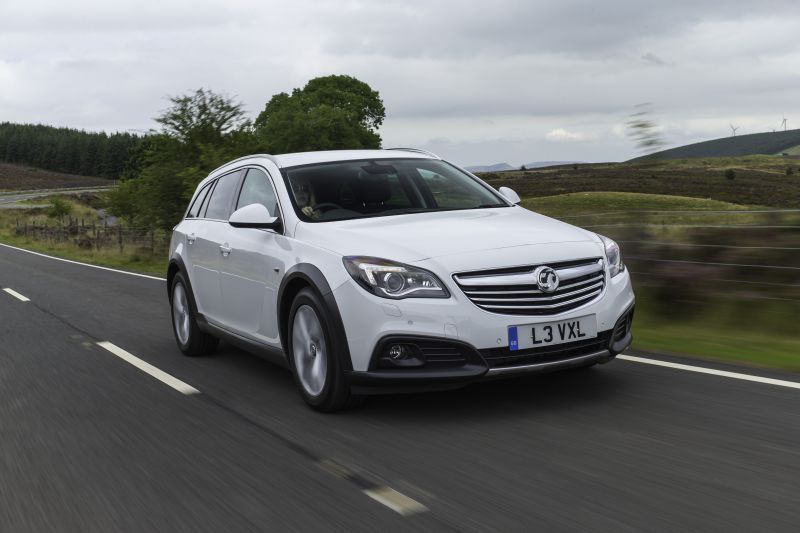
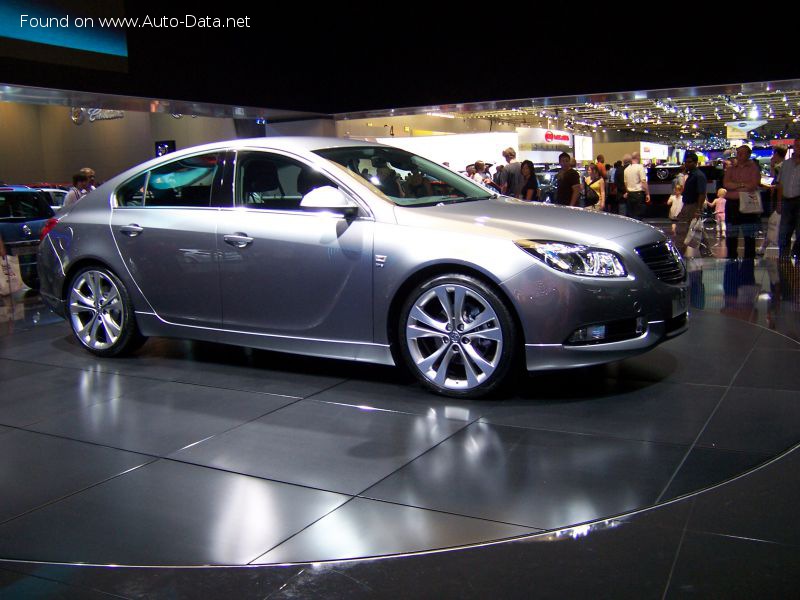
The first-generation Insignia ushered in a new design philosophy for Vauxhall/Opel, moving away from the conservative lines of the Vectra towards a more dynamic and sculpted aesthetic. The Vauxhall Insignia I Hatchback, in particular, masterfully blended the elegance of a sedan with the practicality of a wagon. Its flowing lines, prominent grille, and distinctive “blade” motif on the side panels gave it a strong road presence, often described as “sculptural artistry meets German precision.”
As a five-door hatchback, the Insignia offered exceptional versatility. Its exterior dimensions were generous for its class, measuring 190.16 inches (4830 mm) in length, 73.07 inches (1856 mm) in width (82.05 inches or 2084 mm including mirrors), and 58.98 inches (1498 mm) in height. The substantial 107.76-inch (2737 mm) wheelbase contributed to a stable ride and a spacious cabin for five occupants. A notable design achievement was its remarkably low drag coefficient (Cd) of 0.27, which not only contributed to its sleek appearance but also aided in fuel efficiency and reduced wind noise at higher speeds.
Inside, the Insignia aimed for an upscale feel, with an emphasis on ergonomic design and quality materials for its segment. The five-seat configuration provided ample room for adults, while the hatchback body offered immense cargo flexibility. Minimum trunk space started at a generous 18.36 cubic feet (520 liters), expanding to a cavernous 51.67 cubic feet (1463 liters) with the rear seats folded down. This made the Insignia I Hatchback a highly practical choice for families and those requiring significant cargo capacity. The fuel tank capacity of 18.49 US gallons (70 liters) ensured a long cruising range between fill-ups.
From a chassis and safety perspective, the Insignia was well-equipped for its time. It featured an independent suspension setup, utilizing McPherson struts with coil springs and an anti-roll bar at the front, and an independent multi-link suspension at the rear. This combination provided a comfortable ride while maintaining composed handling. Stopping power came from ventilated disc brakes at the front and solid discs at the rear, augmented by an Anti-lock Braking System (ABS) for enhanced control during emergency braking. Hydraulic power steering provided direct feedback to the driver, a characteristic many enthusiasts still appreciate. The vehicle rode on 215/60 R16 tires fitted to 16-inch wheel rims, a sensible choice balancing ride comfort and grip.
Technical Specifications for the Vauxhall Insignia I Hatchback 1.8i ecoTEC (140 Hp)
| Category | Specification |
|---|---|
| General Information | |
| Brand | Vauxhall |
| Model | Insignia |
| Generation | Insignia I Hatchback |
| Type (Engine) | 1.8i ecoTEC (140 Hp) |
| Start of Production | 2008 year |
| End of Production | 2013 year |
| Powertrain Architecture | Internal Combustion Engine |
| Body Type | Hatchback |
| Seats | 5 |
| Doors | 5 |
| Performance Specifications | |
| Fuel Consumption (Economy) – Urban | 10.9 l/100 km (21.6 US MPG) |
| Fuel Consumption (Economy) – Extra Urban | 6 l/100 km (39.2 US MPG) |
| Fuel Consumption (Economy) – Combined | 7.8 l/100 km (30.2 US MPG) |
| CO2 Emissions | 184 g/km |
| Fuel Type | Petrol (Gasoline) |
| Acceleration 0 – 60 mph | 10.4 sec |
| Acceleration 0 – 100 km/h | 10.9 sec |
| Maximum Speed | 128.62 mph (207 km/h) |
| Emission Standard | Euro 5 |
| Weight-to-Power Ratio | 10.2 kg/Hp (98 Hp/tonne) |
| Weight-to-Torque Ratio | 8.2 kg/Nm (122.5 Nm/tonne) |
| Engine Specifications | |
| Power | 140 Hp @ 6300 rpm |
| Power per Liter | 78 Hp/l |
| Torque | 129.07 lb.-ft. (175 Nm) @ 3800 rpm |
| Engine Layout | Front, Transverse |
| Engine Model/Code | A18XER |
| Engine Displacement | 1.8 liters (1796 cm3 / 109.6 cu. in.) |
| Number of Cylinders | 4 |
| Engine Configuration | Inline |
| Cylinder Bore | 3.17 in. (80.5 mm) |
| Piston Stroke | 3.47 in. (88.2 mm) |
| Compression Ratio | 10.5:1 |
| Number of Valves per Cylinder | 4 |
| Fuel Injection System | Multi-port manifold injection |
| Engine Aspiration | Naturally aspirated engine |
| Valvetrain | DOHC, VVT |
| Engine Oil Capacity | 4.5 l (4.76 US qt) |
| Coolant Capacity | 5.6 l (5.92 US qt) |
| Space, Volume, and Weights | |
| Kerb Weight | 3148.2 lbs. (1428 kg) |
| Max. Weight (Gross Vehicle Weight Rating) | 4497.43 lbs. (2040 kg) |
| Max Load | 1349.23 lbs. (612 kg) |
| Trunk (Boot) Space – Minimum | 18.36 cu. ft. (520 l) |
| Trunk (Boot) Space – Maximum | 51.67 cu. ft. (1463 l) |
| Fuel Tank Capacity | 18.49 US gal (70 l) |
| Permitted Trailer Load with Brakes (12%) | 3086.47 lbs. (1400 kg) |
| Permitted Trailer Load without Brakes | 1653.47 lbs. (750 kg) |
| Dimensions | |
| Length | 190.16 in. (4830 mm) |
| Width | 73.07 in. (1856 mm) |
| Width Including Mirrors | 82.05 in. (2084 mm) |
| Height | 58.98 in. (1498 mm) |
| Wheelbase | 107.76 in. (2737 mm) |
| Front Track | 62.4 in. (1585 mm) |
| Rear (Back) Track | 62.4 in. (1585 mm) |
| Front Overhang | 39.96 in. (1015 mm) |
| Rear Overhang | 42.44 in. (1078 mm) |
| Drag Coefficient (Cd) | 0.27 |
| Minimum Turning Circle (Turning Diameter) | 35.73 ft. (10.89 m) |
| Drivetrain, Brakes, and Suspension Specifications | |
| Drivetrain Architecture | Front-wheel drive; Internal Combustion Engine drives the front wheels. |
| Drive Wheel | Front-wheel drive |
| Number of Gears and Type of Gearbox | 6 gears, manual transmission |
| Front Suspension | Independent, type McPherson with coil spring and anti-roll bar |
| Rear Suspension | Independent multi-link suspension |
| Front Brakes | Ventilated discs |
| Rear Brakes | Disc |
| Assisting Systems | ABS (Anti-lock braking system) |
| Power Steering | Hydraulic Steering |
| Tires Size | 215/60 R16 |
| Wheel Rims Size | 16 inches |
Legacy and Market Impact of the Vauxhall Insignia I Hatchback
The Vauxhall Insignia I Hatchback 1.8i ecoTEC (140 Hp), and indeed the entire first-generation Insignia lineup, played a pivotal role in reshaping Vauxhall’s brand image and market standing in Europe. Replacing the Vectra, a car often perceived as a workhorse for fleet sales, the Insignia was tasked with elevating Vauxhall’s appeal to a broader, more design-conscious audience. It largely succeeded in this mission, garnering praise for its striking aesthetics, improved interior quality, and refined driving dynamics. The Insignia’s bold styling, which won the European Car of the Year award in 2009, was a clear signal of GM Europe’s ambition to compete head-on with premium offerings, not just its traditional mainstream rivals.
In the highly competitive European D-segment, the Insignia faced formidable competition from established players such as the Ford Mondeo, Volkswagen Passat, Skoda Superb, Peugeot 508, and Renault Laguna. The 1.8i ecoTEC variant, in particular, carved out a niche for itself by offering a sensible balance of performance and economy. It was a popular choice for company car fleets due to its reasonable running costs, practicality, and comfortable ride, while also attracting private buyers who appreciated its spacious interior and contemporary design without needing the higher performance or fuel consumption of larger engines.
The Insignia’s legacy is one of successful transformation. It demonstrated that Vauxhall could produce a car that was not only practical and reliable but also genuinely attractive and desirable. Its independent suspension setup, particularly the multi-link rear, provided a more sophisticated ride than many competitors, contributing to its reputation for comfort and stability. The hatchback body style, a European favorite, underscored its versatility, making it a strong contender for families and those needing flexible cargo solutions.
Ultimately, the first-generation Insignia laid the groundwork for future Vauxhall/Opel models, influencing subsequent designs and engineering priorities. It helped to re-establish the brand’s credibility in a segment where style and sophistication were becoming increasingly important. While it may not have been sold in the United States, its impact across the Atlantic was undeniable, securing its place as a significant and successful model in Vauxhall’s modern history. The Insignia continued its lineage with a second generation, further evolving the design and technology first introduced with this groundbreaking model.