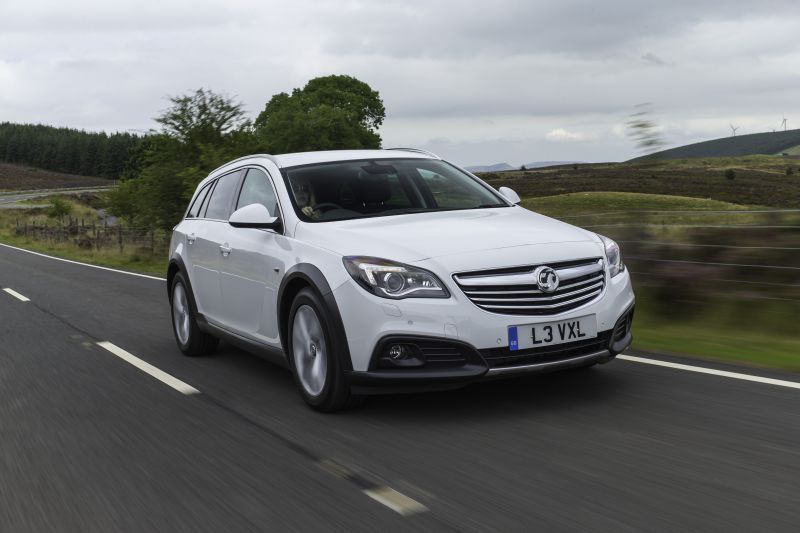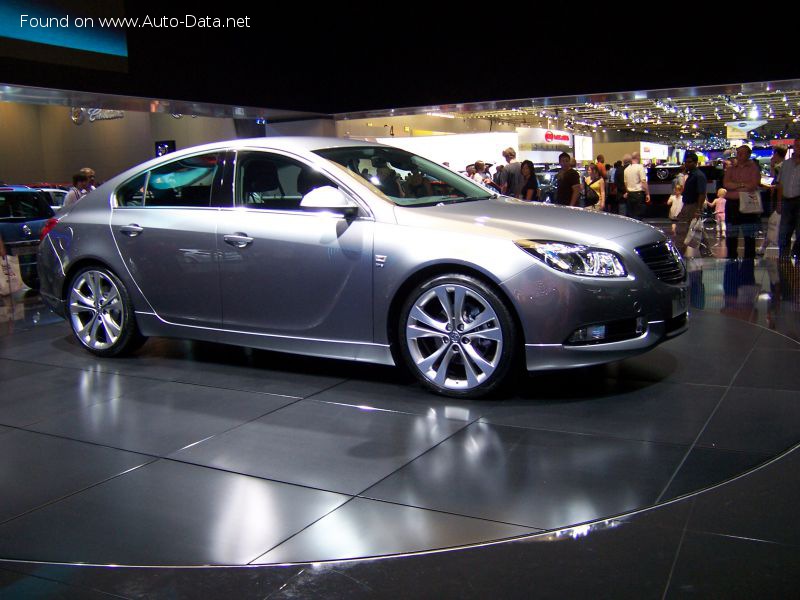
The Vauxhall Insignia I Hatchback 2.0i Turbo ecoTEC (220 Hp) AWD Automatic: A European Mid-Size Contender
The Vauxhall Insignia I Hatchback 2.0i Turbo ecoTEC (220 Hp) AWD Automatic represents a significant chapter in the history of Vauxhall, the British arm of what was then General Motors’ European operations (Opel). Launched in 2008 as a replacement for the long-running Vectra, the Insignia aimed to elevate Vauxhall’s presence in the highly competitive European D-segment (mid-size car category). This particular variant, produced between 2008 and 2013, stood out with its potent turbocharged gasoline engine, advanced all-wheel-drive system, and sophisticated automatic transmission, positioning it as a premium offering within the Insignia lineup. While the Insignia was never directly sold under the Vauxhall badge in the United States, its underlying Epsilon II platform served as the foundation for the contemporary Buick Regal, giving American audiences a glimpse into its engineering prowess. In its primary European market, the Vauxhall Insignia I Hatchback was lauded for its striking design, improved driving dynamics, and a strong emphasis on technology and refinement, moving away from the more utilitarian image of its predecessor.
Engine and Performance: Powering the Vauxhall Insignia I Hatchback
At the heart of this particular Vauxhall Insignia I Hatchback 2.0i Turbo ecoTEC (220 Hp) AWD Automatic model is a sophisticated 2.0-liter (1998 cm³ or 121.93 cu. in.) inline four-cylinder gasoline engine, designated with the internal code A20NHT. This powertrain was engineered with modern efficiencies and performance in mind, utilizing direct fuel injection and a twin-scroll turbocharger paired with an intercooler. The result is a robust output of 220 horsepower (Hp) delivered at 5300 revolutions per minute (rpm), boasting an impressive power-per-liter ratio of 110.1 Hp/l. Torque figures are equally compelling, with 258.15 lb.-ft. (350 Nm) available across a broad rev range from 2000 to 4000 rpm. This wide torque band ensures strong, responsive acceleration in various driving conditions, from city commuting to highway cruising.
Power is efficiently managed and distributed through a 6-speed automatic transmission, which works in conjunction with an advanced all-wheel-drive (AWD) system. This combination provides enhanced traction and stability, especially beneficial in adverse weather conditions or during spirited driving. Performance metrics for the 2.0i Turbo ecoTEC variant are impressive for a car of its segment and era. It can accelerate from 0 to 60 miles per hour (mph) in just 7.0 seconds (7.4 seconds for 0-100 km/h) and achieve a maximum speed of 146.64 mph (236 km/h).
Despite its performance capabilities, Vauxhall also emphasized the “ecoTEC” aspect, signifying efforts towards improved fuel economy and reduced emissions for its time. The engine meets the Euro 5 emission standard. Fuel consumption figures reflect a balance between power and efficiency: 16.4 US mpg (14.3 l/100 km) in urban cycles, 32.7 US mpg (7.2 l/100 km) in extra-urban driving, and a combined average of 24 US mpg (9.8 l/100 km). CO2 emissions are rated at 229 g/km. The engine’s DOHC valvetrain and a compression ratio of 9.3:1 further contribute to its refined operation and efficiency.
Design and Features: A Modern Aesthetic and Practicality
The Vauxhall Insignia I Hatchback marked a significant departure from the Vectra’s design philosophy, adopting a more dynamic and coupe-like silhouette. This specific model features a 5-door hatchback body style, blending the practicality of a wagon with the sleek lines of a sedan. With seating for five occupants, it was designed to appeal to families and business users alike who desired both style and functionality. The overall length of the vehicle measures 190.16 inches (4830 mm), with a width of 73.07 inches (1856 mm) (or 82.05 inches / 2084 mm including mirrors) and a height of 58.98 inches (1498 mm). Its wheelbase spans 107.76 inches (2737 mm), contributing to a stable ride and generous interior space.
Design details include a drag coefficient (Cd) of 0.27, indicative of its aerodynamic profile, which aids in both fuel efficiency and reduced wind noise at higher speeds. The car rides on 18-inch wheels fitted with 245/45 R18 tires, providing a substantial contact patch for grip and contributing to its confident stance.
Inside, the Insignia offered a well-appointed cabin for its segment. The hatchback body provides immense practicality, with a minimum trunk space of 18.36 cu. ft. (520 liters), expandable to a cavernous 51.67 cu. ft. (1463 liters) with the rear seats folded down. This flexibility made it a versatile choice for carrying luggage, groceries, or larger items. Standard safety and driving assistance features for the era included an Anti-lock Braking System (ABS) and hydraulic power steering, providing predictable handling and braking performance. The suspension setup comprises an independent McPherson strut system with coil springs and an anti-roll bar at the front, complemented by an independent multi-link suspension at the rear, a configuration chosen for its balance of ride comfort and handling precision. Braking is handled by ventilated discs at the front and solid discs at the rear.
Technical Specifications
| Category | Specification |
|---|---|
| General Information | |
| Brand | Vauxhall |
| Model | Insignia |
| Generation | Insignia I Hatchback |
| Type (Engine) | 2.0i Turbo ecoTEC (220 Hp) AWD Automatic |
| Production Start | 2008 |
| Production End | 2013 |
| Powertrain Architecture | Internal Combustion Engine |
| Body Type | Hatchback |
| Seats | 5 |
| Doors | 5 |
| Performance Specs | |
| Fuel Consumption (Urban) | 14.3 l/100 km (16.4 US mpg) |
| Fuel Consumption (Extra Urban) | 7.2 l/100 km (32.7 US mpg) |
| Fuel Consumption (Combined) | 9.8 l/100 km (24 US mpg) |
| CO2 Emissions | 229 g/km |
| Fuel Type | Petrol (Gasoline) |
| Acceleration 0-60 mph | 7.0 sec |
| Acceleration 0-100 km/h | 7.4 sec |
| Maximum Speed | 146.64 mph (236 km/h) |
| Emission Standard | Euro 5 |
| Weight-to-Power Ratio | 7.8 kg/Hp (128.7 Hp/tonne) |
| Weight-to-Torque Ratio | 4.9 kg/Nm (204.7 Nm/tonne) |
| Engine Specs | |
| Power | 220 Hp @ 5300 rpm |
| Power per Liter | 110.1 Hp/l |
| Torque | 258.15 lb.-ft. (350 Nm) @ 2000-4000 rpm |
| Engine Layout | Front, Transverse |
| Engine Model/Code | A20NHT |
| Engine Displacement | 1998 cm³ (121.93 cu. in.) |
| Number of Cylinders | 4 |
| Engine Configuration | Inline |
| Cylinder Bore | 3.39 in. (86 mm) |
| Piston Stroke | 3.39 in. (86 mm) |
| Compression Ratio | 9.3:1 |
| Valves per Cylinder | 4 |
| Fuel Injection System | Direct injection |
| Engine Aspiration | Twin-scroll turbo, Intercooler |
| Valvetrain | DOHC |
| Engine Oil Capacity | 6 l (6.34 US qt) |
| Coolant Capacity | 7.3 l (7.71 US qt) |
| Dimensions, Volume, and Weights | |
| Kerb Weight | 3769.9 lbs. (1710 kg) |
| Max. Weight | 5048.59 lbs. (2290 kg) |
| Max Load | 1278.68 lbs. (580 kg) |
| Trunk Space (Min) | 18.36 cu. ft. (520 l) |
| Trunk Space (Max) | 51.67 cu. ft. (1463 l) |
| Fuel Tank Capacity | 18.49 US gal (70 l) |
| Permitted Trailer Load (with brakes) | 3968.32 lbs. (1800 kg) |
| Permitted Trailer Load (without brakes) | 1653.47 lbs. (750 kg) |
| Length | 190.16 in. (4830 mm) |
| Width | 73.07 in. (1856 mm) |
| Width including mirrors | 82.05 in. (2084 mm) |
| Height | 58.98 in. (1498 mm) |
| Wheelbase | 107.76 in. (2737 mm) |
| Front Track | 62.4 in. (1585 mm) |
| Rear Track | 62.4 in. (1585 mm) |
| Front Overhang | 39.96 in. (1015 mm) |
| Rear Overhang | 42.44 in. (1078 mm) |
| Ride Height (Ground Clearance) | 6.3 in. (160 mm) |
| Drag Coefficient (Cd) | 0.27 |
| Minimum Turning Circle | 35.99 ft. (10.97 m) |
| Drivetrain, Brakes, and Suspension | |
| Drive Wheel | All-wheel drive (4×4) |
| Number of Gears | 6 |
| Type of Gearbox | Automatic transmission |
| Front Suspension | Independent, McPherson with coil spring and anti-roll bar |
| Rear Suspension | Independent multi-link suspension |
| Front Brakes | Ventilated discs |
| Rear Brakes | Disc |
| Assisting Systems | ABS (Anti-lock braking system) |
| Power Steering | Hydraulic Steering |
| Tires Size | 245/45 R18 |
| Wheel Rims Size | 18 inches |
Legacy and Market Impact of the Vauxhall Insignia I Hatchback
The Vauxhall Insignia I Hatchback 2.0i Turbo ecoTEC (220 Hp) AWD Automatic played a crucial role in redefining Vauxhall’s image in the UK and, by extension, Opel’s across mainland Europe. It arrived at a time when the mid-size sedan and hatchback segment was facing increasing pressure from SUVs, yet it managed to carve out a significant market share. Its sleek design, a departure from the more conservative Vectra, was widely praised and even earned it the European Car of the Year award in 2009. This recognition underscored its impact on the automotive landscape.
In its competitive landscape, the Insignia I faced formidable rivals such as the Ford Mondeo, Volkswagen Passat, Mazda 6, and Renault Laguna. The 2.0i Turbo ecoTEC AWD variant, in particular, allowed Vauxhall to compete with more premium offerings from brands like Audi (A4), BMW (3 Series), and Mercedes-Benz (C-Class) in terms of performance and technology, albeit at a more accessible price point. Its all-wheel-drive system and powerful engine offered a compelling package for those seeking dynamic driving characteristics combined with practical usability.
The Insignia’s impact extended beyond just sales figures. It showcased Vauxhall’s capability to produce a stylish, well-engineered, and technologically advanced vehicle. For Vauxhall, it was a halo car that demonstrated the brand’s new design direction and commitment to quality. While the Vauxhall badge primarily served the UK market, the Insignia was a global platform, sold as the Opel Insignia in Europe and Asia, and later rebadged as the Holden Insignia in Australia and the Buick Regal in North America. This global presence highlighted the robustness and adaptability of its underlying architecture.
Over its production run from 2008 to 2013, the Insignia I Hatchback, especially in its higher-performance trims like the 2.0i Turbo ecoTEC AWD, solidified its reputation as a sophisticated and capable mid-size car. It offered a blend of performance, practicality, and modern features that resonated with European consumers, cementing its place as a significant vehicle in Vauxhall’s modern history. Its legacy continues in subsequent generations, which have built upon the foundation of design innovation and engineering excellence established by the first Insignia.