The Vauxhall Insignia I Hatchback (facelift 2013): A European Mainstay
The
Vauxhall Insignia I Hatchback (facelift 2013) represents a significant refresh of Vauxhall’s flagship D-segment (mid-size) offering in the United Kingdom, mirroring its Opel Insignia counterpart across mainland Europe. Launched in 2013 and produced until 2017, this iteration aimed to solidify its position as a compelling choice for families and fleet buyers seeking a practical, comfortable, and well-equipped vehicle. As a key player in the competitive European market, the Insignia was designed to blend executive styling with everyday usability, offering a range of powertrains and body styles. The 2013 facelift brought a host of updates, enhancing its visual appeal, interior refinement, and technological features, ensuring it remained relevant against formidable rivals. This particular variant, equipped with the 1.8i ecoTEC engine delivering 140 horsepower, focused on providing a balance of sufficient performance and economical operation, a crucial factor for its target audience.
Engine and Performance: The 1.8i ecoTEC Powerplant
Under the hood of the
Vauxhall Insignia I Hatchback (facelift 2013) 1.8i ecoTEC model lies a naturally aspirated 1.8-liter (1796 cm³ or 109.6 cu. in.) inline four-cylinder engine, designated by the code A18XER. This powerplant, part of Vauxhall/Opel’s ecoTEC family, was engineered with a focus on efficiency and smooth power delivery, rather than outright blistering performance. It produces a respectable 140 horsepower at 6300 rpm, which, for a naturally aspirated unit of its size, is a commendable output, translating to a power-per-liter ratio of 78 hp/l.
Torque output stands at 175 Nm, or approximately 129.07 lb.-ft., available at 3800 rpm. This torque figure, delivered at a relatively accessible engine speed, provides adequate pulling power for daily driving and highway cruising. The engine features a DOHC (Double Overhead Camshaft) valvetrain with VVT (Variable Valve Timing), a technology designed to optimize valve lift and duration for improved combustion efficiency across the rev range, contributing to both power and fuel economy. Fuel is delivered via a multi-port manifold injection system.
Power is transmitted to the front wheels through a precise 6-speed manual transmission, offering the driver direct control over gear selection. This combination allows the Insignia 1.8i ecoTEC to accelerate from 0 to 60 mph in a calculated 10.9 seconds (0-100 km/h in 11.5 seconds), with a top speed of 126.76 mph (204 km/h). While not a performance leader, these figures are entirely adequate for a family hatchback in its segment, providing confident merging and overtaking capabilities.
In terms of fuel efficiency, the 1.8i ecoTEC engine demonstrates its “ecoTEC” branding. The combined fuel consumption is rated at 7 liters per 100 kilometers, which translates to an impressive 33.6 US mpg. Urban driving yields 9.8 l/100 km (24 US mpg), while extra-urban cruising significantly improves to 5.4 l/100 km (43.6 US mpg). CO2 emissions are pegged at 164 g/km, meeting the Euro 5 emission standard, reflecting its commitment to environmental responsibility for its era.
Design and Features: Practicality Meets Refinement
Exterior and Interior Styling
The
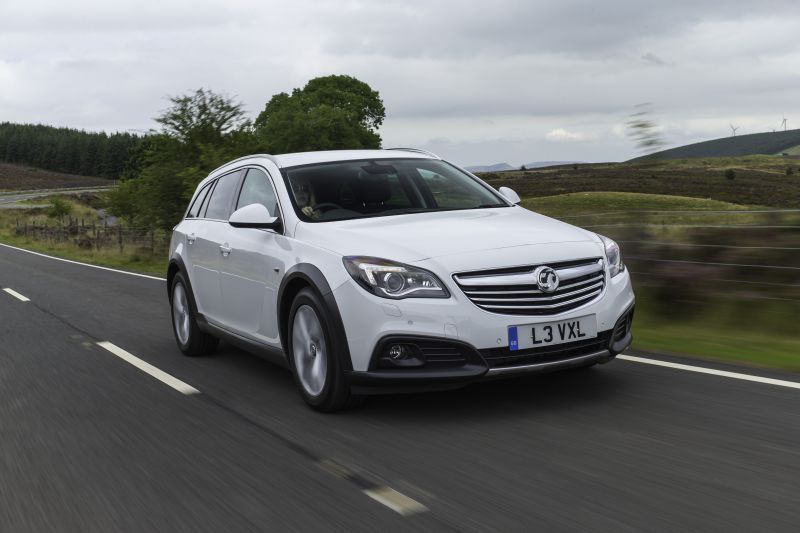
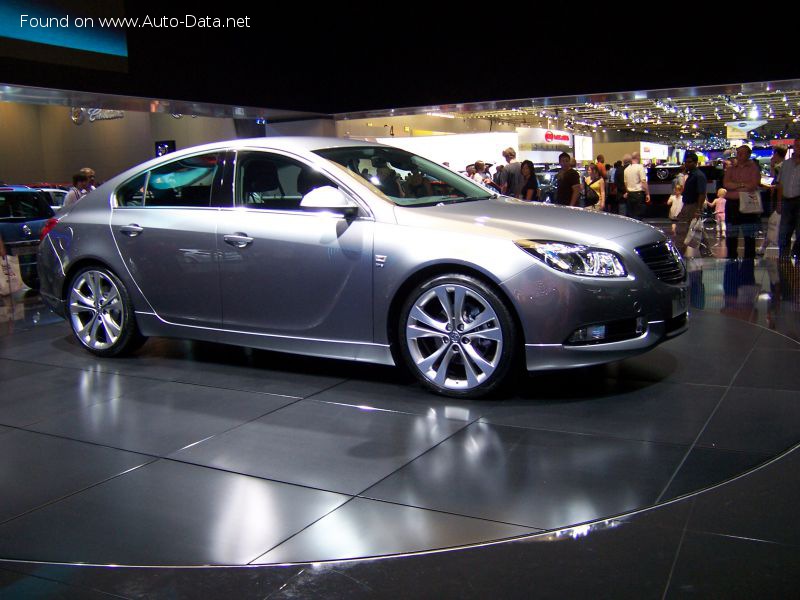
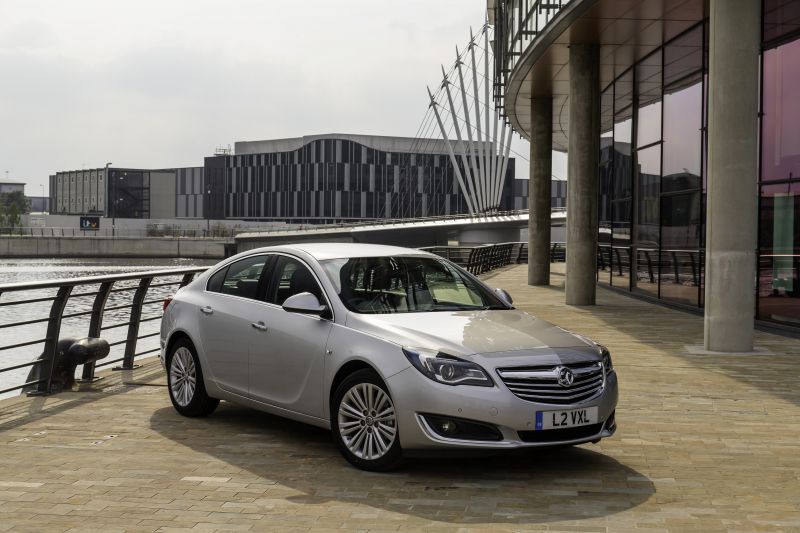
Vauxhall Insignia I Hatchback (facelift 2013) retained its elegant, coupé-like profile but introduced a series of subtle yet impactful design changes. The front fascia received a wider, lower grille, revised headlights with LED daytime running lights, and new fog lamp surrounds, giving it a more assertive and contemporary look. At the rear, new LED taillights and a restyled bumper contributed to a wider, more premium appearance. The hatchback body style, with its five doors and five seats, offered a sleek alternative to the traditional sedan, combining the practicality of a wagon with the aesthetics of a fastback.
Inside, the facelift brought significant improvements to material quality and ergonomics. The dashboard was redesigned with a cleaner layout, featuring fewer buttons and a more intuitive infotainment system. A new instrument cluster with a high-resolution display provided clearer information to the driver. The seats were ergonomically designed for long-distance comfort, a hallmark of European cruisers. With a length of 190.63 inches, a width of 73.07 inches (82.05 inches including mirrors), and a height of 58.98 inches, the Insignia commanded a substantial road presence, ensuring ample interior space. The wheelbase of 107.76 inches contributed to a stable ride.
Practicality and Safety
Practicality was a strong suit of the Insignia hatchback. The trunk space offered a generous 18.72 cubic feet (530 liters) with the rear seats up, expanding to a cavernous 51.91 cubic feet (1470 liters) when the 60/40 split-folding rear seats were lowered. This made it highly capable of handling luggage for family trips or large cargo. The fuel tank capacity of 18.49 US gallons (70 liters) provided an excellent cruising range.
Safety features for the 2013 Insignia included standard ABS (Anti-lock Braking System), ventilated discs at the front, and disc brakes at the rear, ensuring strong stopping power. The independent McPherson strut front suspension with coil springs and an anti-roll bar, combined with an independent multi-link rear suspension, provided a composed and comfortable ride, balancing handling prowess with passenger comfort. The vehicle rode on 215/60 R16 tires with 16-inch wheel rims.
Technical Specifications
| Vauxhall Insignia I Hatchback (facelift 2013) 1.8i ecoTEC (140 Hp) | |
|---|---|
| General Information | |
| Brand | Vauxhall |
| Model | Insignia |
| Generation | Insignia I Hatchback (facelift 2013) |
| Type (Engine) | 1.8i ecoTEC (140 Hp) |
| Start of production | 2013 year |
| End of production | 2017 year |
| Powertrain Architecture | Internal Combustion engine |
| Body type | Hatchback |
| Seats | 5 |
| Doors | 5 |
| Performance Specs | |
| Fuel consumption (economy) – urban | 9.8 l/100 km (24 US mpg) |
| Fuel consumption (economy) – extra urban | 5.4 l/100 km (43.6 US mpg) |
| Fuel consumption (economy) – combined | 7 l/100 km (33.6 US mpg) |
| CO2 emissions | 164 g/km |
| Fuel Type | Petrol (Gasoline) |
| Acceleration 0 – 60 mph | 10.9 sec |
| Acceleration 0 – 100 km/h | 11.5 sec |
| Maximum speed | 204 km/h (126.76 mph) |
| Emission standard | Euro 5 |
| Weight-to-power ratio | 10.8 kg/Hp (92.5 Hp/tonne) |
| Weight-to-torque ratio | 8.6 kg/Nm (115.7 Nm/tonne) |
| Engine Specs | |
| Power | 140 Hp @ 6300 rpm |
| Power per liter | 78 Hp/l |
| Torque | 175 Nm @ 3800 rpm (129.07 lb.-ft. @ 3800 rpm) |
| Engine layout | Front, Transverse |
| Engine Model/Code | A18XER |
| Engine displacement | 1796 cm³ (1.8 l / 109.6 cu. in.) |
| Number of cylinders | 4 |
| Engine configuration | Inline |
| Cylinder Bore | 80.5 mm (3.17 in.) |
| Piston Stroke | 88.2 mm (3.47 in.) |
| Number of valves per cylinder | 4 |
| Fuel injection system | Multi-port manifold injection |
| Engine aspiration | Naturally aspirated engine |
| Valvetrain | DOHC, VVT |
| Engine oil capacity | 4.5 l (4.76 US qt) |
| Coolant | 5.6 l (5.92 US qt) |
| Space, Volume and Weights | |
| Kerb Weight | 1513 kg (3335.59 lbs.) |
| Max. weight | 2040 kg (4497.43 lbs.) |
| Max load | 527 kg (1161.84 lbs.) |
| Trunk (boot) space – minimum | 530 l (18.72 cu. ft.) |
| Trunk (boot) space – maximum | 1470 l (51.91 cu. ft.) |
| Fuel tank capacity | 70 l (18.49 US gal) |
| Permitted trailer load with brakes (12%) | 1400 kg (3086.47 lbs.) |
| Permitted trailer load without brakes | 750 kg (1653.47 lbs.) |
| Dimensions | |
| Length | 4842 mm (190.63 in.) |
| Width | 1856 mm (73.07 in.) |
| Width including mirrors | 2084 mm (82.05 in.) |
| Height | 1498 mm (58.98 in.) |
| Wheelbase | 2737 mm (107.76 in.) |
| Front overhang | 1027 mm (40.43 in.) |
| Rear overhang | 1078 mm (42.44 in.) |
| Minimum turning circle (turning diameter) | 11.4 m (37.4 ft.) |
| Drivetrain, Brakes and Suspension Specs | |
| Drivetrain Architecture | The Internal combustion engine (ICE) drives the front wheels of the vehicle. |
| Drive wheel | Front wheel drive |
| Number of gears and type of gearbox | 6 gears, manual transmission |
| Front suspension | Independent, type McPherson with coil spring and anti-roll bar |
| Rear suspension | Independent multi-link suspension |
| Front brakes | Ventilated discs |
| Rear brakes | Disc |
| Assisting systems | ABS (Anti-lock braking system) |
| Tires size | 215/60 R16 |
| Wheel rims size | 16 |
Legacy and Market Impact: The Vauxhall Insignia’s Role
The
Vauxhall Insignia I Hatchback (facelift 2013), particularly in its 1.8i ecoTEC guise, played a crucial role in Vauxhall’s strategy for the competitive European D-segment. Positioned against strong contenders like the Ford Mondeo, Volkswagen Passat, Skoda Superb, and Mazda6, the Insignia aimed to offer a compelling blend of style, space, comfort, and value. While never officially sold in the United States, its Opel Insignia twin was briefly rebadged as the Buick Regal, giving American consumers a glimpse into this European design philosophy. However, the Vauxhall brand itself is specific to the UK, where it holds a strong heritage and loyal customer base.
The 2013 facelift was critical in maintaining the Insignia’s competitive edge. It addressed some of the earlier model’s criticisms regarding interior quality and infotainment, bringing it more in line with segment leaders. The 1.8i ecoTEC engine, while not the most powerful in the lineup, appealed to a segment of buyers prioritizing lower running costs and a smooth, predictable driving experience over outright speed. Its naturally aspirated nature also meant simpler maintenance compared to more complex turbocharged alternatives.
The Insignia’s reputation in the market was primarily built on its comfortable ride, spacious cabin, and substantial trunk volume, especially in the hatchback variant. It was a popular choice for company car fleets due to its competitive pricing, fuel efficiency, and perceived reliability. For families, the generous rear legroom and large cargo capacity made it a practical daily driver and a capable long-distance cruiser.
Despite its strengths, the Insignia faced stiff competition from rivals that often offered more premium interior finishes or more dynamic driving characteristics. However, its value proposition, particularly after the facelift, ensured it remained a significant player. The Insignia I generation ultimately paved the way for its successor, the Insignia B (known as the Insignia Grand Sport in some markets), which continued Vauxhall’s efforts to compete in the mid-size segment with a more refined and technologically advanced offering. The 2013 facelift 1.8i ecoTEC model stands as a testament to Vauxhall’s commitment to providing a well-rounded and practical vehicle for the European mainstream.