Vauxhall Insignia I Hatchback (facelift 2013) 2.0 CDTi BiTurbo ecoTEC (195 Hp) Automatic: An Expert Overview
The Vauxhall Insignia, a nameplate synonymous with accessible mid-size motoring in the United Kingdom and its European counterpart, the Opel Insignia, represents a significant player in the highly competitive D-segment. The model under scrutiny, the Vauxhall Insignia I Hatchback (facelift 2013) with the potent 2.0 CDTi BiTurbo ecoTEC (195 Hp) Automatic powertrain, was a key offering during its production run from 2013 to 2015. Positioned as a stylish, comfortable, and efficient option for families and fleet buyers across Europe, this particular iteration received a notable refresh, enhancing its appeal with updated styling, improved technology, and refined powertrains. While not sold under the Vauxhall badge in the United States, its General Motors lineage, shared with models like the Buick Regal, provides a familiar mechanical foundation, albeit tailored for distinct market preferences. This specific variant, with its advanced BiTurbo diesel engine and automatic transmission, aimed to deliver a compelling blend of performance, fuel economy, and practicality to the European consumer.
Engine and Performance: The 2.0 CDTi BiTurbo ecoTEC Heart
At the core of this Vauxhall Insignia variant lies a sophisticated 2.0-liter (1956 cm3 or 119.36 cu. in.) CDTi BiTurbo ecoTEC diesel engine, a testament to GM’s engineering prowess in diesel technology. This inline four-cylinder engine, designated A20DTR, was engineered for both robust power delivery and impressive fuel efficiency. Utilizing a common rail fuel injection system and a twin-turbocharger (BiTurbo) setup with an intercooler, it generated a substantial 195 horsepower at 4000 rpm. More critically for a diesel, it produced a formidable 295.02 lb.-ft. of torque, available across a broad and usable range from 1750 to 2500 rpm. This broad torque band was instrumental in providing strong, responsive acceleration and effortless cruising capability.
Power was seamlessly transferred to the front wheels via a 6-speed automatic transmission, chosen for its smooth shifts and contribution to driver comfort, particularly in urban environments. Performance figures for the Vauxhall Insignia I Hatchback (facelift 2013) were quite respectable for its class, with an acceleration time from 0 to 60 mph recorded at a brisk 8.4 seconds. The vehicle could reach a maximum speed of 142.29 mph, underscoring its Autobahn-ready credentials. Despite its performance, the ecoTEC designation highlighted its commitment to efficiency. The combined fuel economy was rated at 42 US mpg, a significant achievement for a car of its size and performance. It also met the Euro 5 emission standard, producing 149 g/km of CO2, reflecting its relatively clean operation for the era. The engine’s design, with DOHC valvetrain and 4 valves per cylinder, along with a particulate filter, showcased a modern approach to diesel powertrain development.
Design and Features: Practicality Meets Refinement
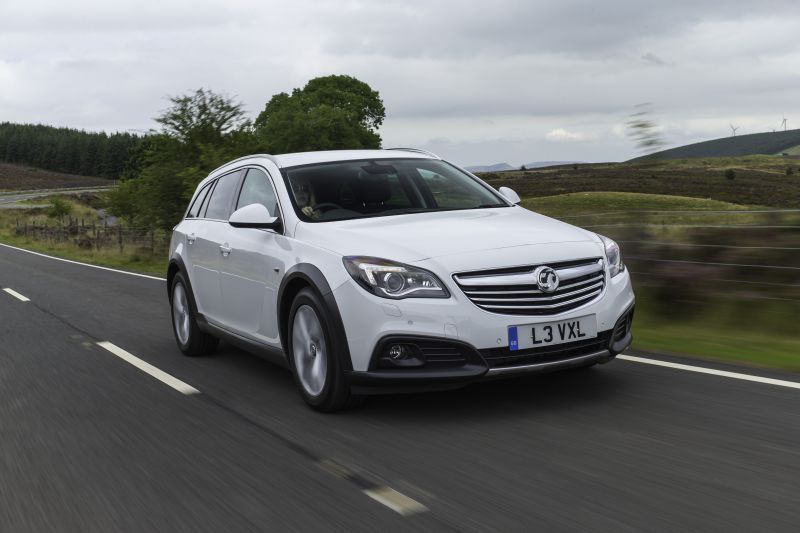
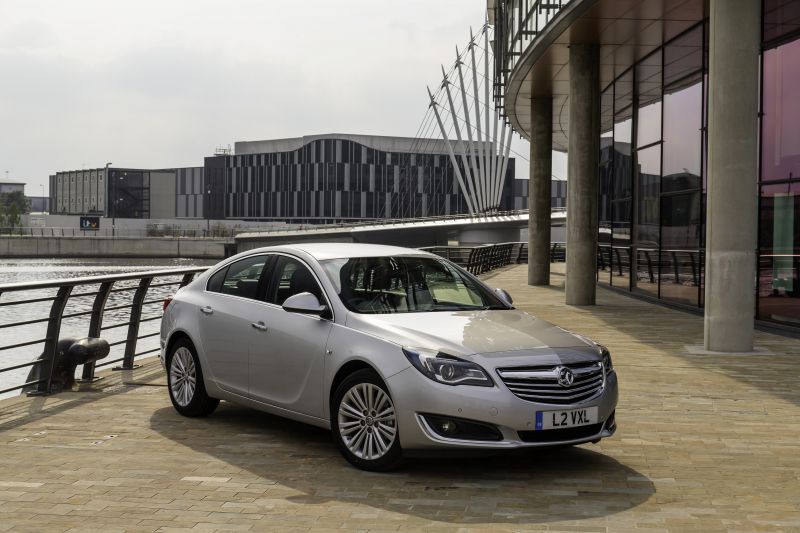
The 2013 facelift of the Vauxhall Insignia brought subtle yet impactful changes to its design, aiming to refresh its aesthetic and maintain its competitive edge. This particular model, a 5-door hatchback, offered a blend of sleek sedan-like styling with the added versatility of a large rear opening. With a length of 190.63 inches, a width of 73.07 inches (82.05 inches including mirrors), and a height of 58.98 inches, the Insignia was a substantial vehicle, providing ample interior space for five occupants. The 107.76-inch wheelbase contributed to a stable ride and generous legroom.
Practicality was a strong suit for the hatchback variant. The trunk (boot) space offered a minimum of 18.72 cu. ft., expanding to an impressive 51.91 cu. ft. with the rear seats folded down, making it highly adaptable for cargo needs, from family vacations to everyday errands. The vehicle’s kerb weight of 3750.06 lbs. (1701 kg) reflected its solid build, while a maximum load capacity of 1122.15 lbs. (509 kg) and a permitted trailer load with brakes of 3747.86 lbs. (1700 kg) further emphasized its utility.
Beyond its dimensions, the Insignia featured an independent McPherson front suspension and an independent multi-link rear suspension, a setup designed to provide a comfortable yet engaging driving experience. Braking was handled by ventilated discs at the front and disc brakes at the rear, complemented by an Anti-lock Braking System (ABS) for enhanced safety. Standard tire size was 215/60 R16 on 16-inch wheel rims, balancing ride comfort and grip. While specific interior features of the facelifted model are not detailed in the provided data, the refresh typically brought updated infotainment systems, higher quality materials, and new driver-assistance technologies, aligning with the evolving expectations of the mid-size segment in Europe.
Technical Specifications
| Category | Specification |
|---|---|
| General Information | |
| Brand | Vauxhall |
| Model | Insignia |
| Generation | Insignia I Hatchback (facelift 2013) |
| Engine Type | 2.0 CDTi BiTurbo ecoTEC (195 Hp) Automatic |
| Production Start | 2013 |
| Production End | 2015 |
| Powertrain Architecture | Internal Combustion engine |
| Body Type | Hatchback |
| Seats | 5 |
| Doors | 5 |
| Performance Specs | |
| Fuel Consumption (Urban) | 7.6 l/100 km (30.9 US mpg) |
| Fuel Consumption (Extra Urban) | 4.5 l/100 km (52.3 US mpg) |
| Fuel Consumption (Combined) | 5.6 l/100 km (42 US mpg) |
| CO2 Emissions | 149 g/km |
| Fuel Type | Diesel |
| Acceleration 0 – 60 mph | 8.4 sec |
| Maximum Speed | 142.29 mph (229 km/h) |
| Emission Standard | Euro 5 |
| Weight-to-Power Ratio | 8.7 kg/Hp, 114.6 Hp/tonne |
| Weight-to-Torque Ratio | 4.3 kg/Nm, 235.2 Nm/tonne |
| Engine Specs | |
| Power | 195 Hp @ 4000 rpm |
| Power per Liter | 99.7 Hp/l |
| Torque | 295.02 lb.-ft. @ 1750-2500 rpm (400 Nm) |
| Engine Layout | Front, Transverse |
| Engine Model/Code | A20DTR |
| Engine Displacement | 119.36 cu. in. (1956 cm3) |
| Number of Cylinders | 4 |
| Engine Configuration | Inline |
| Cylinder Bore | 3.27 in. (83 mm) |
| Piston Stroke | 3.56 in. (90.4 mm) |
| Valves per Cylinder | 4 |
| Fuel Injection System | Diesel Commonrail |
| Engine Aspiration | BiTurbo, Intercooler |
| Valvetrain | DOHC |
| Engine Oil Capacity | 4.76 US qt (4.5 l) |
| Coolant Capacity | 9.51 US qt (9 l) |
| Engine Systems | Particulate filter |
| Space, Volume and Weights | |
| Kerb Weight | 3750.06 lbs. (1701 kg) |
| Max. Weight (GVWR) | 4872.22 lbs. (2210 kg) |
| Max Load | 1122.15 lbs. (509 kg) |
| Trunk (Boot) Space – Minimum | 18.72 cu. ft. (530 l) |
| Trunk (Boot) Space – Maximum | 51.91 cu. ft. (1470 l) |
| Fuel Tank Capacity | 18.49 US gal (70 l) |
| Permitted Trailer Load with Brakes (12%) | 3747.86 lbs. (1700 kg) |
| Permitted Trailer Load without Brakes | 1653.47 lbs. (750 kg) |
| Dimensions | |
| Length | 190.63 in. (4842 mm) |
| Width | 73.07 in. (1856 mm) |
| Width Including Mirrors | 82.05 in. (2084 mm) |
| Height | 58.98 in. (1498 mm) |
| Wheelbase | 107.76 in. (2737 mm) |
| Front Overhang | 40.43 in. (1027 mm) |
| Rear Overhang | 42.44 in. (1078 mm) |
| Minimum Turning Circle (Turning Diameter) | 37.4 ft. (11.4 m) |
| Drivetrain, Brakes and Suspension Specs | |
| Drivetrain Architecture | Front-wheel drive, Internal Combustion engine |
| Drive Wheel | Front wheel drive |
| Number of Gears & Type of Gearbox | 6 gears, automatic transmission |
| Front Suspension | Independent, McPherson with coil spring and anti-roll bar |
| Rear Suspension | Independent multi-link suspension |
| Front Brakes | Ventilated discs |
| Rear Brakes | Disc |
| Assisting Systems | ABS (Anti-lock braking system) |
| Tires Size | 215/60 R16 |
| Wheel Rims Size | 16 inches |
Legacy and Market Impact of the Vauxhall Insignia I Hatchback (facelift 2013)
The Vauxhall Insignia, and its Opel counterpart, played a crucial role in the European D-segment, offering a compelling alternative to established players from Ford (Mondeo), Volkswagen (Passat), and even more premium offerings from BMW (3 Series) and Audi (A4). The 2013 facelift, in particular, was vital in keeping the first-generation Insignia competitive against newer rivals and evolving consumer expectations. Its combination of expressive design, a spacious and practical interior, and a strong emphasis on fuel efficiency – especially with advanced diesel powertrains like the 2.0 CDTi BiTurbo ecoTEC – made it a popular choice among both private buyers and large fleet operators.
In the UK, the Insignia was lauded for providing a significant amount of car for the money, often undercutting its direct competitors while still offering a refined driving experience and a comprehensive list of features. The 195 horsepower BiTurbo diesel engine was particularly well-received for its strong performance without a prohibitive penalty at the fuel pump, a critical factor in European markets where diesel powertrains traditionally held a strong share due to their economy and torque characteristics. Its ability to achieve 42 US mpg combined, coupled with a respectable 0-60 mph time, positioned it as a smart choice for long-distance commuters and families seeking a balance of power and parsimony.
The Insignia’s legacy is one of a solid, dependable, and often understated workhorse that provided a comfortable and capable driving experience. It helped Vauxhall (and Opel) maintain a significant presence in a segment that was increasingly under pressure from the rise of SUVs. While it might not have the same enthusiast following as some of its premium German rivals, its impact on the everyday motoring landscape in Europe was substantial. It demonstrated that mainstream brands could offer sophisticated engineering, advanced powertrains, and a high level of refinement, without necessarily carrying a premium badge. The Vauxhall Insignia I Hatchback (facelift 2013) with its BiTurbo diesel engine stands as a testament to this philosophy, delivering a well-rounded package that resonated with a broad spectrum of buyers looking for efficiency, performance, and practicality in a stylish package.