Introduction to the Vauxhall Insignia I Hatchback (facelift 2013)
The Vauxhall Insignia I Hatchback (facelift 2013) represents a significant iteration of Vauxhall’s flagship D-segment offering in the United Kingdom, mirroring its Opel Insignia counterpart across continental Europe. Launched in 2013, this refreshed model aimed to solidify its position in the highly competitive mid-size car market, succeeding the popular Vectra series. As a key player for General Motors’ European operations at the time, the Insignia was engineered to blend executive styling with practical functionality, targeting both family buyers and fleet operators.
The first-generation Insignia, originally introduced in 2008, marked a departure from its predecessor with a more upscale design language, advanced technology, and improved driving dynamics. The 2013 facelift brought a host of enhancements, ranging from exterior aesthetic tweaks to a thoroughly revised interior and updated powertrain options. Among these, the 2.0 CDTi BiTurbo ecoTEC (195 Hp) Start/Stop variant stood out as a performance-oriented yet remarkably efficient diesel option, showcasing Vauxhall’s commitment to combining robust power with environmental consciousness. This particular model, produced between 2013 and 2015, served as a compelling choice for drivers seeking a blend of spirited acceleration, long-distance comfort, and impressive fuel economy, all wrapped in a sophisticated hatchback body style. While the Vauxhall brand itself is specific to the UK, the underlying engineering and design were part of a broader global strategy by General Motors, demonstrating European automotive prowess with global appeal.
The Vauxhall Insignia I Hatchback (facelift 2013) Powertrain: Engineering for Efficiency and Performance
Engine and Performance
At the heart of this particular Vauxhall Insignia I Hatchback (facelift 2013) lies a sophisticated 2.0-liter CDTi BiTurbo ecoTEC diesel engine, designated with the internal code A20DTR. This inline four-cylinder unit, with an engine displacement of 1,956 cubic centimeters (119.36 cubic inches), was engineered to deliver a compelling balance of power and efficiency. Utilizing a BiTurbo setup, the engine benefits from sequential turbocharging, where a smaller turbocharger spools up quickly at lower RPMs to minimize turbo lag, followed by a larger turbocharger engaging at higher RPMs to provide sustained power delivery across the rev range. This advanced aspiration system, coupled with an intercooler, ensures optimal air density for combustion, contributing to its impressive output.
The engine generates a robust 195 horsepower at 4,000 revolutions per minute, translating to a specific output of 99.7 horsepower per liter. More significantly for a diesel, it produces a substantial 400 Newton-meters (295.02 lb.-ft.) of torque available across a broad band from 1,750 to 2,500 rpm. This ample torque is crucial for effortless acceleration and strong in-gear flexibility, making it well-suited for both urban driving and highway cruising. Power is delivered to the front wheels via a smooth-shifting 6-speed manual transmission, offering direct driver engagement. The vehicle’s powertrain architecture, with the engine mounted transversely at the front, optimizes interior space and contributes to predictable front-wheel-drive handling characteristics.
Performance figures underscore the engine’s capabilities: the Vauxhall Insignia I Hatchback (facelift 2013) can accelerate from 0 to 60 mph in a swift 8.3 seconds (0-100 km/h in 8.7 seconds) and reach a maximum speed of 142.29 mph (229 km/h). Despite its strong performance, efficiency remains a cornerstone of the ecoTEC philosophy. The vehicle boasts impressive fuel economy, achieving 40.6 US mpg (5.8 l/100 km) in urban conditions, an outstanding 57.4 US mpg (4.1 l/100 km) on the extra-urban cycle, and a combined average of 50 US mpg (4.7 l/100 km). These figures are significantly aided by the standard Start/Stop system, which automatically shuts off the engine when the vehicle is stationary, and a diesel particulate filter, ensuring compliance with Euro 5 emission standards with CO2 emissions of 125 g/km. The engine’s DOHC (Double Overhead Camshaft) valvetrain and common rail diesel fuel injection system further contribute to its refined operation and efficiency.
Design and Features of the Vauxhall Insignia I Hatchback (facelift 2013)
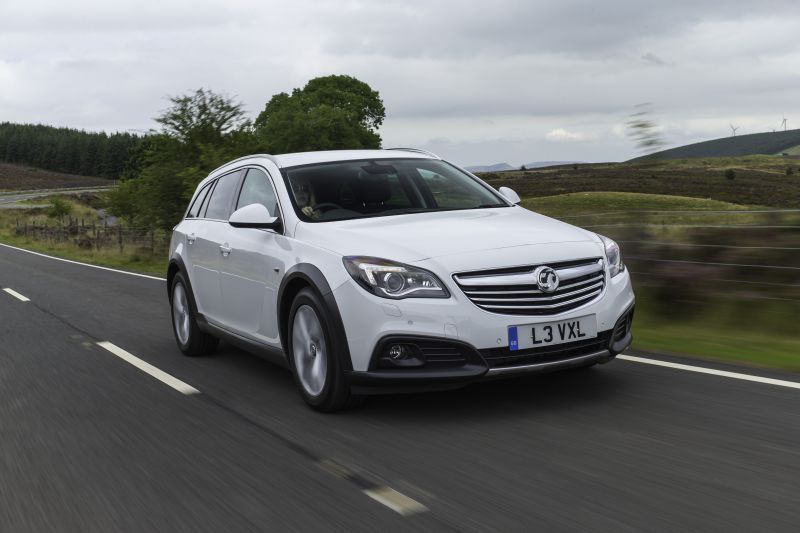
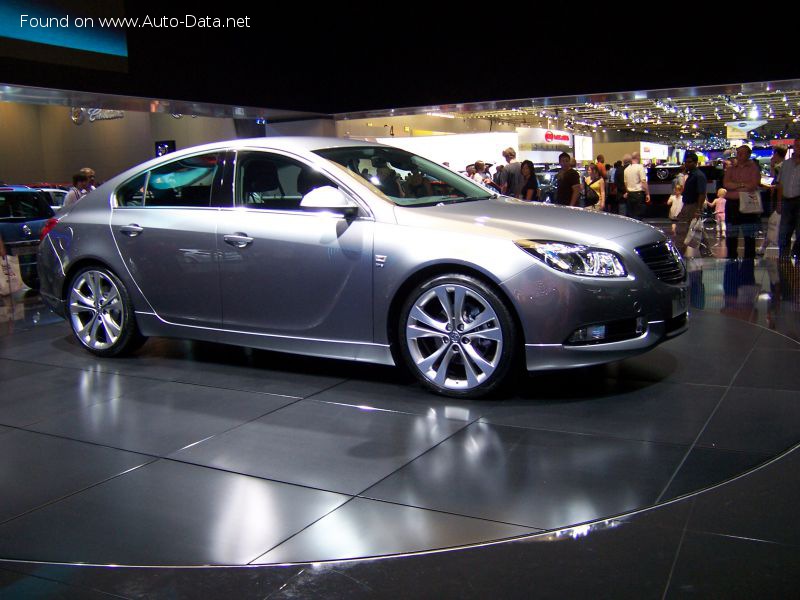
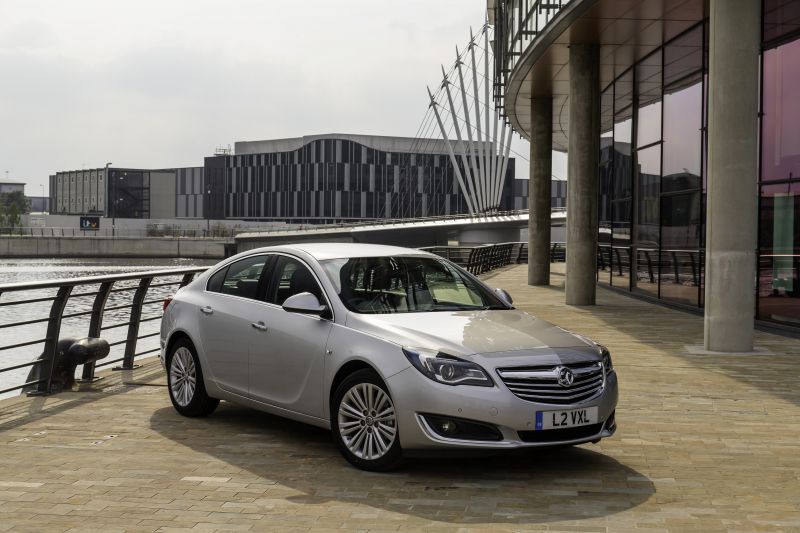
The 2013 facelift brought a refreshed aesthetic to the Vauxhall Insignia I Hatchback, enhancing its visual appeal and modernizing its presence on the road. The five-door hatchback body style, measuring 190.63 inches (4,842 mm) in length, 73.07 inches (1,856 mm) in width (82.05 inches or 2,084 mm including mirrors), and 58.98 inches (1,498 mm) in height, maintained its sleek, coupé-like profile. Key exterior revisions included a wider, lower grille, redesigned headlights with integrated LED daytime running lights, and a more pronounced chrome bar across the rear, connecting updated taillights that gave the car a broader, more sophisticated stance. These changes aimed to give the Insignia a more premium and contemporary look, reinforcing its executive aspirations.
Inside, the facelifted Insignia received a significant overhaul, focusing on improved ergonomics, higher quality materials, and enhanced connectivity. The dashboard was redesigned with a cleaner layout, featuring fewer buttons and a larger, more intuitive infotainment system. A new instrument cluster, often incorporating a configurable 8-inch high-resolution display, provided drivers with customizable information. Comfort was a priority, with supportive seating for five adults and a generous wheelbase of 107.76 inches (2,737 mm) contributing to ample legroom. Practicality was a strong suit of the hatchback, offering a substantial minimum trunk space of 18.72 cubic feet (530 liters), which could expand to an impressive 51.91 cubic feet (1,470 liters) with the rear seats folded, making it highly versatile for families and active lifestyles.
Standard features for a vehicle of its class in 2013 included a comprehensive suite of safety systems, with ABS (Anti-lock Braking System) as a fundamental component. While not explicitly detailed in the provided data, modern features like electronic stability control (ESC), traction control, and multiple airbags would have been standard or widely available options, reflecting the industry’s focus on passenger protection. The car rode on 225/55 R17 tires mounted on 17-inch wheel rims, providing a good balance of ride comfort and grip. The suspension setup featured an independent McPherson strut system with coil springs and an anti-roll bar at the front, paired with an independent multi-link suspension at the rear, designed to offer a composed and comfortable ride while maintaining agile handling. Braking was handled by ventilated discs at the front and solid discs at the rear, ensuring confident stopping power. Additional convenience features like the Start/Stop system and a particulate filter underscored its modern engineering and environmental consideration.
Technical Specifications: Vauxhall Insignia I Hatchback (facelift 2013) 2.0 CDTi BiTurbo ecoTEC (195 Hp) Start/Stop
| Category | Specification |
|---|---|
| General Information | |
| Brand | Vauxhall |
| Model | Insignia |
| Generation | Insignia I Hatchback (facelift 2013) |
| Type (Engine) | 2.0 CDTi BiTurbo ecoTEC (195 Hp) Start/Stop |
| Start of Production | 2013 year |
| End of Production | 2015 year |
| Powertrain Architecture | Internal Combustion engine |
| Body type | Hatchback |
| Seats | 5 |
| Doors | 5 |
| Performance Specs | |
| Fuel Consumption (economy) – urban | 5.8 l/100 km (40.6 US mpg) |
| Fuel Consumption (economy) – extra urban | 4.1 l/100 km (57.4 US mpg) |
| Fuel Consumption (economy) – combined | 4.7 l/100 km (50 US mpg) |
| CO2 emissions | 125 g/km |
| Fuel Type | Diesel |
| Acceleration 0 – 60 mph | 8.3 sec |
| Acceleration 0 – 100 km/h | 8.7 sec |
| Maximum speed | 229 km/h (142.29 mph) |
| Emission standard | Euro 5 |
| Weight-to-power ratio | 8.5 kg/Hp (117.2 Hp/tonne) |
| Weight-to-torque ratio | 4.2 kg/Nm (240.4 Nm/tonne) |
| Engine Specs | |
| Power | 195 Hp @ 4000 rpm |
| Power per liter | 99.7 Hp/l |
| Torque | 400 Nm (295.02 lb.-ft.) @ 1750-2500 rpm |
| Engine layout | Front, Transverse |
| Engine Model/Code | A20DTR |
| Engine displacement | 1956 cm3 (119.36 cu. in.) |
| Number of cylinders | 4 |
| Engine configuration | Inline |
| Cylinder Bore | 83 mm (3.27 in.) |
| Piston Stroke | 90.4 mm (3.56 in.) |
| Number of valves per cylinder | 4 |
| Fuel injection system | Diesel Commonrail |
| Engine aspiration | BiTurbo, Intercooler |
| Valvetrain | DOHC |
| Engine oil capacity | 4.5 l (4.76 US qt) |
| Coolant | 9 l (9.51 US qt) |
| Engine Systems | |
| Start & Stop System | Yes |
| Particulate filter | Yes |
| Space, Volume and Weights | |
| Kerb Weight | 1664 kg (3668.49 lbs.) |
| Max. weight | 2205 kg (4861.19 lbs.) |
| Max load | 541 kg (1192.7 lbs.) |
| Trunk (boot) space – minimum | 530 l (18.72 cu. ft.) |
| Trunk (boot) space – maximum | 1470 l (51.91 cu. ft.) |
| Fuel tank capacity | 70 l (18.49 US gal) |
| Permitted trailer load with brakes (12%) | 1700 kg (3747.86 lbs.) |
| Permitted trailer load without brakes | 750 kg (1653.47 lbs.) |
| Dimensions | |
| Length | 4842 mm (190.63 in.) |
| Width | 1856 mm (73.07 in.) |
| Width including mirrors | 2084 mm (82.05 in.) |
| Height | 1498 mm (58.98 in.) |
| Wheelbase | 2737 mm (107.76 in.) |
| Front overhang | 1027 mm (40.43 in.) |
| Rear overhang | 1078 mm (42.44 in.) |
| Minimum turning circle (turning diameter) | 11.4 m (37.4 ft.) |
| Drivetrain, Brakes and Suspension Specs | |
| Drivetrain Architecture | Front-wheel drive, Internal Combustion engine |
| Drive wheel | Front wheel drive |
| Number of gears and type of gearbox | 6 gears, manual transmission |
| Front suspension | Independent, type McPherson with coil spring and anti-roll bar |
| Rear suspension | Independent multi-link suspension |
| Front brakes | Ventilated discs |
| Rear brakes | Disc |
| Assisting systems | ABS (Anti-lock braking system) |
| Tires size | 225/55 R17 |
| Wheel rims size | 17 |
Legacy and Market Impact of the Vauxhall Insignia I Hatchback (facelift 2013)
The Vauxhall Insignia I Hatchback (facelift 2013), particularly in its 2.0 CDTi BiTurbo ecoTEC guise, carved out a significant niche in the European D-segment during its production run. As the spiritual successor to the long-running Vectra, the Insignia had the challenging task of elevating Vauxhall’s image in a segment increasingly dominated by premium badges and highly competitive mainstream offerings. The facelifted model successfully built upon the original Insignia’s foundation, reinforcing its reputation as a stylish, comfortable, and well-equipped family and executive car.
Its market impact was notable, especially in the United Kingdom, where Vauxhall holds a strong brand presence. The Insignia was frequently a top seller in its class, appealing to both private buyers seeking a practical yet refined vehicle and, crucially, to large fleet operators due to its competitive pricing, low running costs, and strong residual values. The 2.0 CDTi BiTurbo ecoTEC variant was particularly attractive, offering a blend of performance that could rival some entry-level premium sedans, coupled with the impressive fuel efficiency inherent to its diesel powertrain and ecoTEC features like the Start/Stop system. This made it a compelling proposition for high-mileage drivers who needed power without sacrificing economy.
Competitors in its primary European market were formidable, including segment stalwarts like the Ford Mondeo, Volkswagen Passat, and Skoda Superb, as well as challengers such as the Mazda6, Peugeot 508, and Toyota Avensis. Against these rivals, the Insignia distinguished itself with its distinctive styling, generous standard equipment, and a comfortable, compliant ride that excelled on long journeys. The BiTurbo diesel engine was a particular highlight, providing a performance edge that some competitors struggled to match within the same efficiency parameters.
The legacy of the Vauxhall Insignia I Hatchback (facelift 2013) is one of a successful evolution in a demanding segment. It helped to modernize Vauxhall’s brand perception, showcasing its ability to produce cars that were not only practical and reliable but also aesthetically pleasing and technologically advanced for their time. While it was eventually superseded by the second-generation Insignia (known as the Insignia Grand Sport/Sports Tourer), the first-generation facelifted model remains a testament to Vauxhall’s engineering capabilities and its understanding of the needs of the European mid-size car market. It played a vital role in carrying the torch for Vauxhall in a segment where quality, efficiency, and design are paramount.