Vauxhall Insignia I Hatchback (facelift 2013): An Overview
The Vauxhall Insignia I Hatchback (facelift 2013) represents a significant refresh of Vauxhall’s flagship mid-size to large family car, a model primarily targeted at the United Kingdom and broader European markets. Launched in 2013, this iteration of the Insignia built upon the success of the original model, which debuted in 2008 as a replacement for the long-running Vectra. The Insignia, known as the Opel Insignia in most other European countries and forming the basis for the Buick Regal in North America, aimed to offer a more premium experience, sophisticated design, and improved efficiency within its competitive segment.
This particular variant, the 2.0 CDTi ecoFlex (140 Hp) Start/Stop, highlights Vauxhall’s commitment to economical and environmentally conscious motoring. Positioned as a practical yet stylish five-door hatchback, it combined ample interior space with a focus on fuel efficiency and reduced CO2 emissions, making it an attractive option for both private buyers and corporate fleets in its primary markets. The facelift brought updated styling cues, enhanced interior quality, and refined powertrains, ensuring the Insignia remained a strong contender against rivals like the Ford Mondeo, Volkswagen Passat, and Skoda Superb.
Engine & Performance of the Vauxhall Insignia I Hatchback (facelift 2013)
At the heart of the Vauxhall Insignia I Hatchback (facelift 2013) 2.0 CDTi ecoFlex lies a robust and efficient 2.0-liter (119.36 cu. in.) inline-four diesel engine, designated with the internal code A20DTE. This powerplant is a testament to modern diesel engineering, featuring a DOHC (Double Overhead Camshaft) valvetrain with four valves per cylinder, a common rail direct fuel injection system, and a sophisticated turbocharger with an intercooler. These technologies work in concert to deliver a balance of power, torque, and exceptional fuel economy.
The engine generates a respectable 140 horsepower at 4000 rpm, which, while not designed for outright sports car performance, provides ample thrust for everyday driving and highway cruising. More importantly for a diesel, it produces a substantial 258.15 lb.-ft. (350 Nm) of torque, available across a broad rev range from 1750 to 2500 rpm. This high torque output ensures strong low-end pulling power, making the Insignia feel effortless in city traffic and capable of confident overtaking maneuvers on the open road. Power is sent to the front wheels via a smooth-shifting 6-speed manual transmission, offering a direct and engaging driving experience.
Performance figures for this ecoFlex model include an acceleration from 0 to 60 mph in approximately 10 seconds (0-100 km/h in 10.5 seconds) and a top speed of 126.76 mph (204 km/h). However, the true highlight of this powertrain is its efficiency. The ecoFlex designation signifies a suite of technologies aimed at minimizing fuel consumption and emissions. This includes a Start/Stop system, which automatically shuts off the engine when the vehicle is stationary and restarts it seamlessly when the driver intends to move, significantly reducing fuel waste and emissions in urban environments. Additionally, a particulate filter is integrated into the exhaust system to meet stringent Euro 5 emission standards, ensuring cleaner exhaust gases.
The fuel economy figures are particularly impressive for a car of its size: an estimated 52.3 US mpg (4.5 l/100 km) in urban driving, a remarkable 73.5 US mpg (3.2 l/100 km) on the extra-urban cycle, and a combined average of 63.6 US mpg (3.7 l/100 km). With CO2 emissions rated at just 98 g/km, this Insignia variant was a leader in its class for environmental performance, offering significant tax advantages and lower running costs in many European markets.
Design & Features of the Insignia I Hatchback
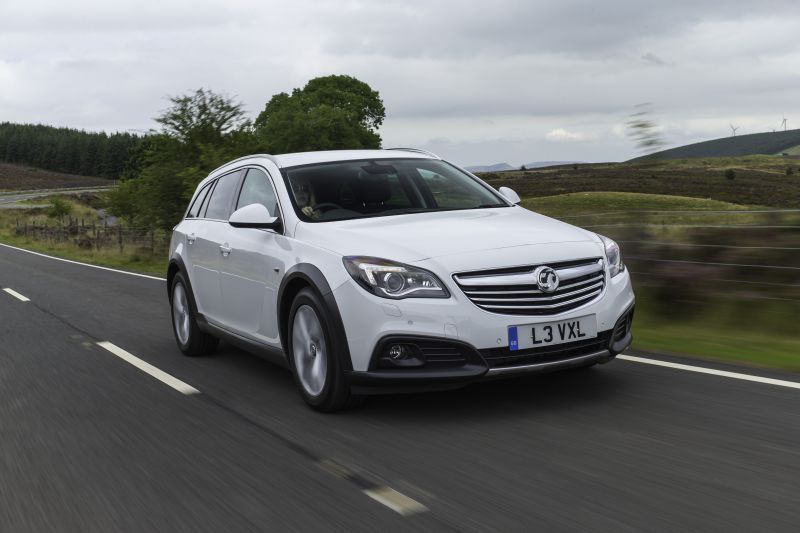
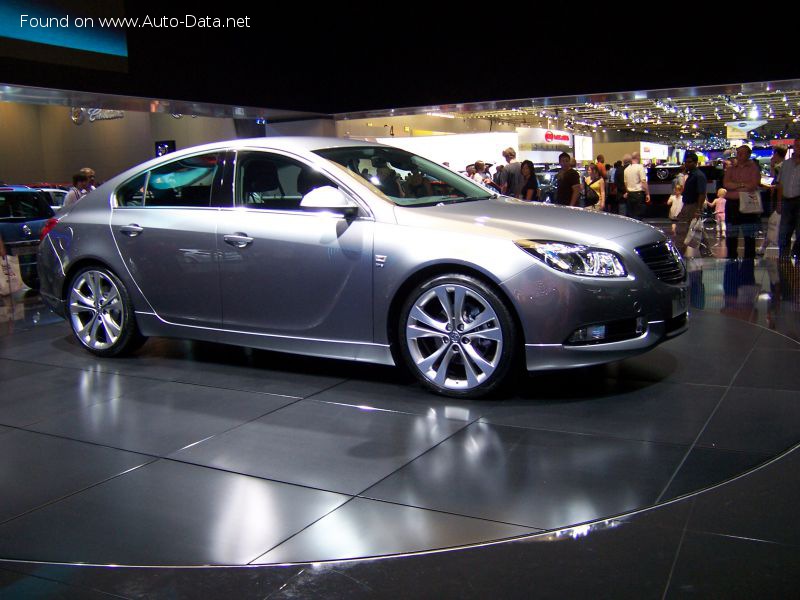
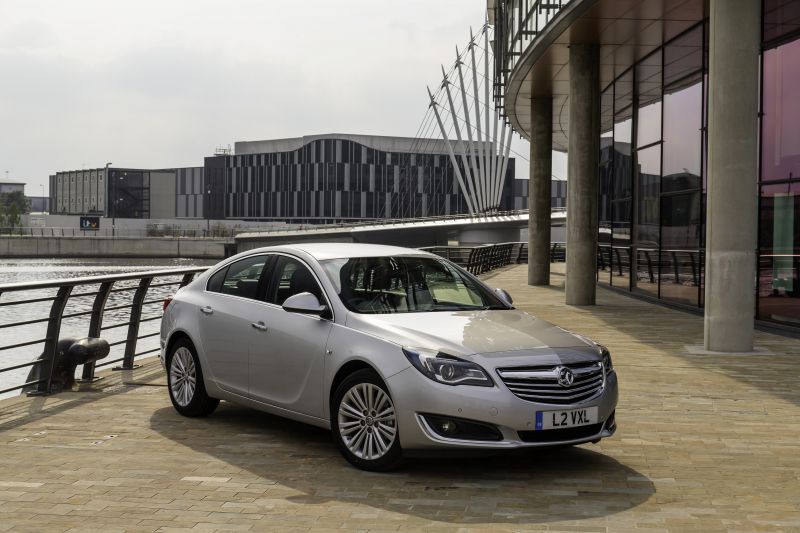
The 2013 facelift brought a more refined and contemporary aesthetic to the Insignia, aligning its design language with Vauxhall’s evolving brand identity. The Insignia I Hatchback retained its sleek, coupé-like profile despite being a practical five-door, five-seat vehicle. The updated front fascia featured a wider, lower grille, revised headlight designs often incorporating LED daytime running lights, and a more sculpted bumper, giving the car a broader and more assertive stance. At the rear, new LED taillight graphics and a redesigned tailgate contributed to a perception of higher quality and sophistication.
Inside, the facelift addressed earlier criticisms regarding the button-heavy center console. Vauxhall introduced a more streamlined dashboard layout, often featuring an updated infotainment system with a larger touchscreen display and fewer physical buttons. High-quality materials, soft-touch plastics, and improved trim options were utilized to elevate the cabin’s perceived luxury. The focus on ergonomics meant that controls were generally well-placed and intuitive to operate.
As a family-oriented vehicle, practicality was paramount. The hatchback body style offered exceptional versatility, boasting a minimum trunk space of 18.72 cu. ft. (530 liters) with the rear seats in place. Folding down the rear seats expanded this capacity significantly to a cavernous 51.91 cu. ft. (1470 liters), making it capable of hauling substantial cargo, from luggage for a family vacation to larger items for DIY projects. The spacious cabin provided comfortable seating for five adults, with generous legroom and headroom, particularly in the front.
Safety features were comprehensive for its era, including an Anti-lock Braking System (ABS) as standard, along with multiple airbags and electronic stability control (ESC), though specific advanced driver-assistance systems (ADAS) would depend on the trim level. The car rode on 215/60 R16 tires mounted on 16-inch wheel rims, providing a comfortable ride quality that was well-suited to long-distance travel. The suspension setup, featuring an independent McPherson strut system with coil springs and an anti-roll bar at the front and an independent multi-link suspension at the rear, contributed to stable handling and a composed ride.
Technical Specifications
| Category | Specification | Metric Value | US Equivalent |
|---|---|---|---|
| General Information | |||
| Brand | Vauxhall | ||
| Model | Insignia I Hatchback (facelift 2013) | ||
| Type (Engine) | 2.0 CDTi ecoFlex (140 Hp) Start/Stop | ||
| Start of Production | 2013 year | ||
| End of Production | 2015 year | ||
| Powertrain Architecture | Internal Combustion engine | ||
| Body type | Hatchback | ||
| Seats | 5 | ||
| Doors | 5 | ||
| Performance Specs | |||
| Fuel consumption (economy) – urban | 4.5 l/100 km | 52.3 US mpg | |
| Fuel consumption (economy) – extra urban | 3.2 l/100 km | 73.5 US mpg | |
| Fuel consumption (economy) – combined | 3.7 l/100 km | 63.6 US mpg | |
| CO2 emissions | 98 g/km | ||
| Fuel Type | Diesel | ||
| Acceleration 0 – 60 mph | 10 sec (calculated) | ||
| Acceleration 0 – 100 km/h | 10.5 sec | ||
| Maximum speed | 204 km/h | 126.76 mph | |
| Emission standard | Euro 5 | ||
| Weight-to-power ratio | 11.5 kg/Hp | 86.8 Hp/tonne | |
| Weight-to-torque ratio | 4.6 kg/Nm | 217 Nm/tonne | |
| Engine Specs | |||
| Power | 140 Hp @ 4000 rpm. | ||
| Power per liter | 71.6 Hp/l | ||
| Torque | 350 Nm @ 1750-2500 rpm. | 258.15 lb.-ft. @ 1750-2500 rpm. | |
| Engine layout | Front, Transverse | ||
| Engine Model/Code | A20DTE | ||
| Engine displacement | 1956 cm3 | 119.36 cu. in. | |
| Number of cylinders | 4 | ||
| Engine configuration | Inline | ||
| Cylinder Bore | 83 mm | 3.27 in. | |
| Piston Stroke | 90.4 mm | 3.56 in. | |
| Number of valves per cylinder | 4 | ||
| Fuel injection system | Diesel Commonrail | ||
| Engine aspiration | Turbocharger, Intercooler | ||
| Valvetrain | DOHC | ||
| Engine oil capacity | 4.5 l | 4.76 US qt | |
| Coolant | 9 l | 9.51 US qt | |
| Engine systems | Start & Stop System, Particulate filter | ||
| Space, Volume and Weights | |||
| Curb Weight | 1613 kg | 3556.06 lbs. | |
| Max. weight | 2160 kg | 4761.98 lbs. | |
| Max load | 547 kg | 1205.93 lbs. | |
| Trunk (boot) space – minimum | 530 l | 18.72 cu. ft. | |
| Trunk (boot) space – maximum | 1470 l | 51.91 cu. ft. | |
| Fuel tank capacity | 70 l | 18.49 US gal | |
| Permitted trailer load with brakes (12%) | 1700 kg | 3747.86 lbs. | |
| Permitted trailer load without brakes | 750 kg | 1653.47 lbs. | |
| Dimensions | |||
| Length | 4842 mm | 190.63 in. | |
| Width | 1856 mm | 73.07 in. | |
| Width including mirrors | 2084 mm | 82.05 in. | |
| Height | 1498 mm | 58.98 in. | |
| Wheelbase | 2737 mm | 107.76 in. | |
| Front overhang | 1027 mm | 40.43 in. | |
| Rear overhang | 1078 mm | 42.44 in. | |
| Minimum turning circle (turning diameter) | 11.4 m | 37.4 ft. | |
| Drivetrain, Brakes and Suspension Specs | |||
| Drivetrain Architecture | The Internal combustion engine (ICE) drives the front wheels of the vehicle. | ||
| Drive wheel | Front wheel drive | ||
| Number of gears and type of gearbox | 6 gears, manual transmission | ||
| Front suspension | Independent, type McPherson with coil spring and anti-roll bar | ||
| Rear suspension | Independent multi-link suspension | ||
| Front brakes | Ventilated discs | ||
| Rear brakes | Disc | ||
| Assisting systems | ABS (Anti-lock braking system) | ||
| Tires size | 215/60 R16 | ||
| Wheel rims size | 16 | ||
Legacy & Market Impact
The Vauxhall Insignia I Hatchback (facelift 2013) continued the model’s mission to provide a compelling, value-oriented option in the highly competitive European D-segment. While not directly sold in the United States under the Vauxhall badge, its Opel Insignia counterpart was rebadged and offered as the Buick Regal, demonstrating the platform’s global appeal and engineering versatility. In its native UK and European markets, the Insignia carved out a reputation as a comfortable, well-equipped, and practical large family car, particularly appealing to fleet buyers due to its strong efficiency and competitive pricing.
This 2.0 CDTi ecoFlex variant, with its emphasis on low emissions and high fuel economy, was particularly impactful during a period of increasing environmental awareness and stricter emissions regulations in Europe. Its sub-100 g/km CO2 rating was a significant selling point, offering reduced vehicle excise duty (road tax) and lower benefit-in-kind tax for company car drivers, making it an economically sound choice for businesses and individuals alike. This focus on efficiency allowed the Insignia to remain competitive against segment stalwarts like the Ford Mondeo, Volkswagen Passat, and even more premium offerings from brands like BMW and Audi, albeit at a different price point.
The Insignia’s legacy is one of a solid, dependable workhorse that offered a refined driving experience, particularly on long journeys. Its comfortable ride, quiet cabin (especially with the diesel engine), and generous trunk space made it a favorite for families and professionals who spent a lot of time on the road. The 2013 facelift helped to keep the design fresh and the technology up-to-date, ensuring it remained relevant until the introduction of the second-generation Insignia in 2017. While it may not have garnered the same enthusiast following as some performance-oriented rivals, the Vauxhall Insignia I Hatchback (facelift 2013) was a commercially successful and well-regarded vehicle that capably served the needs of its target market, embodying Vauxhall’s commitment to delivering practical, efficient, and stylish transportation.