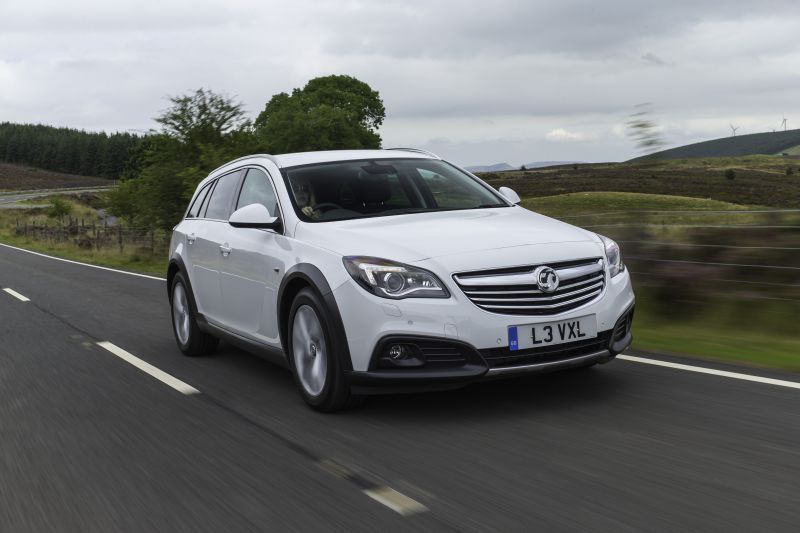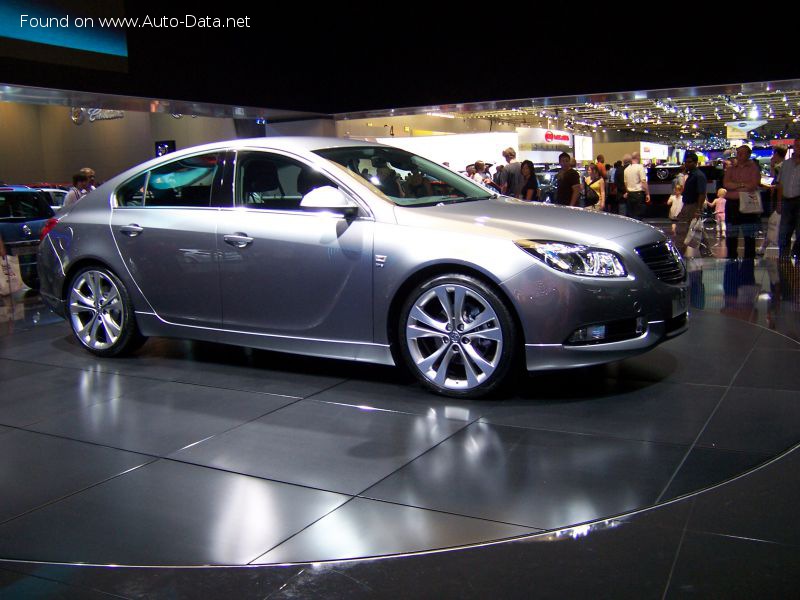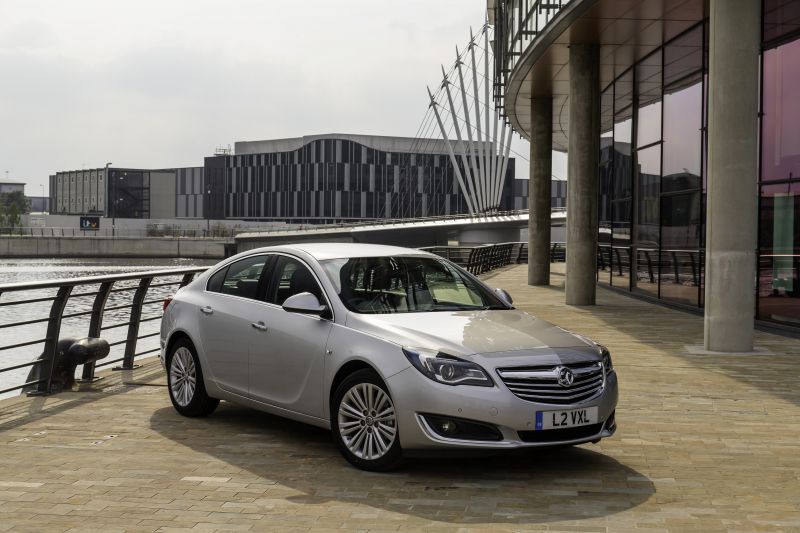
Vauxhall Insignia I Hatchback (facelift 2013)
The Vauxhall Insignia I Hatchback (facelift 2013) represents a significant mid-cycle refresh for Vauxhall’s contender in the highly competitive European D-segment, also known as the mid-size or large family car segment. Launched in 2008 as a replacement for the Vectra, the Insignia quickly established itself as a cornerstone of Vauxhall’s lineup in the United Kingdom, mirroring its Opel Insignia counterpart across continental Europe. The 2013 facelift aimed to keep the model fresh against rivals, introducing updated styling cues, enhanced technology, and refined powertrains. This particular variant, featuring the 2.0 CDTi ecoTEC (130 Hp) engine paired with an automatic transmission, epitomized the model’s focus on combining practical performance with fuel efficiency, catering to both private buyers and the crucial fleet market in its primary European territory.
The Insignia I Hatchback, during its production run from 2008 to 2017 (with this facelifted version spanning 2013-2015), was lauded for its striking design, generous interior space, and a strong emphasis on comfort. As a vehicle not officially sold in the United States, its relevance is primarily understood within the European automotive landscape, where it competed fiercely with established players. The facelifted model further cemented its reputation as a sophisticated and capable family car, offering a compelling blend of features, practicality, and cost-effective operation, particularly with its advanced diesel engine options.
Engine and Performance: The 2.0 CDTi ecoTEC Powertrain
At the heart of the Vauxhall Insignia I Hatchback (facelift 2013) 2.0 CDTi ecoTEC (130 Hp) variant lies a robust and efficient 2.0-liter (1956 cm3 or 119.36 cu. in.) inline four-cylinder diesel engine. Designated with the internal code A20DT, this powertrain was engineered to deliver a balanced blend of performance and economy, a critical factor in the European market. The engine produces a respectable 130 horsepower at 4000 rpm, which, while not segment-leading, was more than adequate for daily driving and long-distance cruising. More importantly for a diesel, it generates a substantial 221.27 lb.-ft. (300 Nm) of torque, available across a broad rev range from 1750 to 2500 rpm. This ample torque ensures strong pulling power, particularly beneficial for highway overtakes and when the vehicle is fully loaded or towing.
The engine’s architecture features a DOHC (Double Overhead Camshaft) valvetrain with four valves per cylinder, optimizing airflow and combustion efficiency. Fuel delivery is managed by a sophisticated Diesel Commonrail injection system, known for its precision and ability to reduce emissions. Further enhancing performance and efficiency is a turbocharger coupled with an intercooler, which boosts power output by forcing more air into the engine cylinders. This advanced setup, combined with a particulate filter, ensures compliance with the Euro 5 emission standard, a key environmental benchmark for vehicles of its era.
Power is transmitted to the front wheels via a smooth-shifting 6-speed automatic transmission. This automatic gearbox contributes to a relaxed driving experience, particularly in urban traffic, while also optimizing fuel consumption on longer journeys. The Insignia I Hatchback (facelift 2013) 2.0 CDTi ecoTEC (130 Hp) Automatic achieves a 0-60 mph acceleration time of 10.6 seconds, with a top speed of 126.14 mph (203 km/h). Its fuel economy figures are impressive for a vehicle of its size: 33.6 US mpg in urban conditions, an outstanding 54.7 US mpg on the extra-urban cycle, and a combined average of 44.4 US mpg. These figures underscore the ecoTEC philosophy, which prioritizes low running costs and reduced CO2 emissions (139 g/km), making it an attractive proposition for cost-conscious buyers.
Design and Features
The Vauxhall Insignia I Hatchback (facelift 2013) retained the original model’s distinctive and sleek “sculptural artistry meets German precision” design language, while incorporating subtle yet impactful updates. The facelift brought revised front and rear styling, including new headlights with LED daytime running lights, a wider grille, and updated taillights, giving the car a more contemporary and premium appearance. The hatchback body style offers a practical five-door configuration, making ingress and egress easy for passengers and providing versatile cargo access. With seating for five occupants, the Insignia was designed as a comfortable and spacious family vehicle.
Measuring 190.63 inches (4842 mm) in length, 73.07 inches (1856 mm) in width (82.05 inches or 2084 mm including mirrors), and 58.98 inches (1498 mm) in height, the Insignia possessed a substantial road presence. Its 107.76-inch (2737 mm) wheelbase contributed to a stable ride and generous interior room. Cargo capacity was a strong suit, with a minimum trunk space of 18.72 cubic feet (530 liters), expanding to an impressive 51.91 cubic feet (1470 liters) with the rear seats folded, making it highly practical for luggage, groceries, or larger items. The fuel tank capacity of 18.49 US gallons (70 liters) further enhanced its long-distance touring capabilities.
In terms of chassis and handling, the Insignia featured an independent McPherson strut front suspension with coil springs and an anti-roll bar, paired with an independent multi-link rear suspension. This setup provided a comfortable ride quality while maintaining competent handling characteristics. Braking duties were handled by ventilated discs at the front and disc brakes at the rear, augmented by an Anti-lock Braking System (ABS) for enhanced safety. The vehicle was fitted with 215/60 R16 tires on 16-inch wheel rims, providing a good balance of grip and ride comfort. With a kerb weight of 3556.06 lbs (1613 kg) and a maximum permissible weight of 4784.03 lbs (2170 kg), the Insignia was a robust and well-built vehicle, capable of towing up to 3527.4 lbs (1600 kg) with brakes.
Technical Specifications
| Category | Specification | US Equivalent |
|---|---|---|
| Brand | Vauxhall | |
| Model | Insignia | |
| Generation | Insignia I Hatchback (facelift 2013) | |
| Type (Engine) | 2.0 CDTi ecoTEC (130 Hp) Automatic | |
| Production Start | 2013 | |
| Production End | 2015 | |
| Powertrain Architecture | Internal Combustion engine | |
| Body Type | Hatchback | |
| Seats | 5 | |
| Doors | 5 | |
| Performance Specifications | ||
| Fuel Consumption (Urban) | 7 l/100 km | 33.6 US mpg |
| Fuel Consumption (Extra Urban) | 4.3 l/100 km | 54.7 US mpg |
| Fuel Consumption (Combined) | 5.3 l/100 km | 44.4 US mpg |
| CO2 Emissions | 139 g/km | |
| Fuel Type | Diesel | |
| Acceleration 0 – 60 mph | 10.6 sec | |
| Maximum Speed | 203 km/h | 126.14 mph |
| Emission Standard | Euro 5 | |
| Weight-to-Power Ratio | 12.4 kg/Hp | 80.6 Hp/tonne |
| Weight-to-Torque Ratio | 5.4 kg/Nm | 186 Nm/tonne |
| Engine Specifications | ||
| Power | 130 Hp @ 4000 rpm | |
| Power per Liter | 66.5 Hp/l | |
| Torque | 300 Nm @ 1750-2500 rpm | 221.27 lb.-ft. @ 1750-2500 rpm |
| Engine Layout | Front, Transverse | |
| Engine Model/Code | A20DT | |
| Engine Displacement | 1956 cm3 | 119.36 cu. in. |
| Number of Cylinders | 4 | |
| Engine Configuration | Inline | |
| Cylinder Bore | 83 mm | 3.27 in. |
| Piston Stroke | 90.4 mm | 3.56 in. |
| Valves per Cylinder | 4 | |
| Fuel Injection System | Diesel Commonrail | |
| Engine Aspiration | Turbocharger, Intercooler | |
| Valvetrain | DOHC | |
| Engine Oil Capacity | 4.5 l | 4.76 US qt |
| Coolant Capacity | 9 l | 9.51 US qt |
| Engine Systems | Particulate filter | |
| Space, Volume and Weights | ||
| Kerb Weight | 1613 kg | 3556.06 lbs. |
| Max. Weight | 2170 kg | 4784.03 lbs. |
| Max Load | 557 kg | 1227.97 lbs. |
| Trunk Space (Minimum) | 530 l | 18.72 cu. ft. |
| Trunk Space (Maximum) | 1470 l | 51.91 cu. ft. |
| Fuel Tank Capacity | 70 l | 18.49 US gal |
| Permitted Trailer Load (with brakes) | 1600 kg | 3527.4 lbs. |
| Permitted Trailer Load (without brakes) | 750 kg | 1653.47 lbs. |
| Dimensions | ||
| Length | 4842 mm | 190.63 in. |
| Width | 1856 mm | 73.07 in. |
| Width (including mirrors) | 2084 mm | 82.05 in. |
| Height | 1498 mm | 58.98 in. |
| Wheelbase | 2737 mm | 107.76 in. |
| Front Overhang | 1027 mm | 40.43 in. |
| Rear Overhang | 1078 mm | 42.44 in. |
| Minimum Turning Circle | 11.4 m | 37.4 ft. |
| Drivetrain, Brakes and Suspension | ||
| Drivetrain Architecture | Internal combustion engine drives front wheels. | |
| Drive Wheel | Front wheel drive | |
| Number of Gears | 6 | |
| Type of Gearbox | Automatic transmission | |
| Front Suspension | Independent, McPherson with coil spring and anti-roll bar | |
| Rear Suspension | Independent multi-link suspension | |
| Front Brakes | Ventilated discs | |
| Rear Brakes | Disc | |
| Assisting Systems | ABS (Anti-lock braking system) | |
| Tires Size | 215/60 R16 | |
| Wheel Rims Size | 16 | |
Legacy and Market Impact
The Vauxhall Insignia I Hatchback (facelift 2013) played a crucial role in Vauxhall’s strategy to maintain its strong foothold in the UK’s D-segment. In a market where brand loyalty and running costs are paramount, the Insignia offered a compelling package. It competed directly with formidable rivals such as the Ford Mondeo, Volkswagen Passat, Skoda Superb, and Mazda6, all of which offered varying strengths in performance, space, and refinement. The Insignia differentiated itself with its distinctive styling, particularly after the facelift, and its strong emphasis on value and efficiency.
The 2.0 CDTi ecoTEC engine, especially in its 130 horsepower guise, was particularly important for the fleet market, which accounts for a significant portion of new car sales in the UK. Its combination of robust diesel torque, respectable performance, and excellent fuel economy made it an attractive choice for company car drivers and businesses looking to manage their operational costs effectively. The automatic transmission further enhanced its appeal for those seeking a comfortable and less fatiguing driving experience, particularly for long commutes or frequent business travel.
The Insignia’s legacy is one of a solid, dependable family car that offered a stylish alternative to its more conservative German and Japanese rivals. While it might not have always been the most dynamically engaging car in its class, its strengths lay in its practicality, comfort, and sensible running costs. The facelifted model ensured its continued relevance during its production years, benefiting from updated technology, improved infotainment options (though not detailed in the provided data, these were common facelift upgrades), and continued refinement of its powertrains. It solidified Vauxhall’s reputation for producing well-rounded, mainstream vehicles that catered directly to the needs of the British and wider European consumer base, setting the stage for its successor and demonstrating the brand’s commitment to the D-segment.