The Vauxhall Insignia I Hatchback (facelift 2013): A European Mid-Size Contender
The Vauxhall Insignia I Hatchback, particularly its facelifted iteration from 2013, represents a significant chapter in the history of the European D-segment. As the flagship model for Vauxhall in the United Kingdom, it was essentially a rebadged version of the Opel Insignia, tailored for the British market. This generation, produced from 2008 to 2017, received a substantial refresh in 2013, bringing updated styling, improved interior ergonomics, and enhanced powertrain options. The specific variant under review, the 2.0 CDTi ecoTEC (163 Hp) Start/Stop, highlights the era’s focus on diesel efficiency and reduced emissions, a cornerstone of the European automotive landscape. Positioned as a direct competitor to established players like the Ford Mondeo and Volkswagen Passat, the Insignia aimed to offer a compelling blend of style, space, and economical performance for families and business fleets alike.
Evolution and Market Positioning of the Vauxhall Insignia
Launched initially in 2008, the Insignia replaced the long-running Vectra, signaling a more upscale and design-focused direction for Vauxhall. The 2013 facelift was crucial in maintaining its competitive edge, introducing a more refined front fascia with new headlights and grille, along with a revised rear end. Inside, the cabin received a much-needed overhaul, addressing criticisms of button clutter with a cleaner center console and an improved infotainment system. In its primary markets, the Vauxhall Insignia I Hatchback (facelift 2013) served as a practical yet sophisticated option for those seeking a spacious and fuel-efficient vehicle without venturing into premium brand territory. Its hatchback body style, a popular choice in Europe, offered excellent cargo versatility, making it suitable for a wide range of uses from daily commuting to long-distance family travel.
Engine & Performance: The 2.0 CDTi ecoTEC (163 Hp) Start/Stop
At the heart of this particular Insignia variant is the 2.0-liter CDTi ecoTEC diesel engine, designated with the internal code A20DTH. This inline four-cylinder unit, featuring a DOHC valvetrain and 16 valves, was engineered for a balance of robust power delivery and impressive fuel economy. With a displacement of 1956 cubic centimeters (approximately 119.36 cubic inches or 2.0 liters), it produced a respectable 163 horsepower at 4000 rpm. More importantly for a diesel, it delivered a substantial 258.15 lb.-ft. of torque, available across a broad rev range from 1750 to 2500 rpm. This low-end torque was instrumental in providing strong acceleration and effortless cruising, particularly beneficial for highway driving and towing. The engine’s layout was front-transverse, powering the front wheels through a precise 6-speed manual transmission.
The ecoTEC designation underscored Vauxhall’s commitment to efficiency, integrating advanced technologies such as a common rail direct fuel injection system, a turbocharger, and an intercooler to optimize combustion and power output. A key feature for mitigating fuel consumption and emissions in urban environments was the Start/Stop system. This technology automatically shuts off the engine when the vehicle is stationary and restarts it seamlessly when the driver depresses the clutch, significantly reducing idle time. Further enhancing its environmental credentials, the engine was equipped with a particulate filter and met the stringent Euro 5 emission standard of its time, boasting CO2 emissions of just 114 g/km.
Performance figures for the 2.0 CDTi ecoTEC were competitive for its segment. The car could accelerate from 0 to 60 mph in a swift 9 seconds, reaching a top speed of 136.08 mph. Fuel economy was a major selling point, with combined consumption rated at an excellent 54.7 US mpg (4.3 l/100 km). In extra-urban conditions, it could achieve an even more remarkable 63.6 US mpg (3.7 l/100 km), demonstrating its capability as a long-distance cruiser. The vehicle’s weight-to-power ratio stood at 10 kg/Hp, or 100.4 Hp per ton, contributing to its balanced performance characteristics.
Design & Features of the Vauxhall Insignia I Hatchback (facelift 2013)
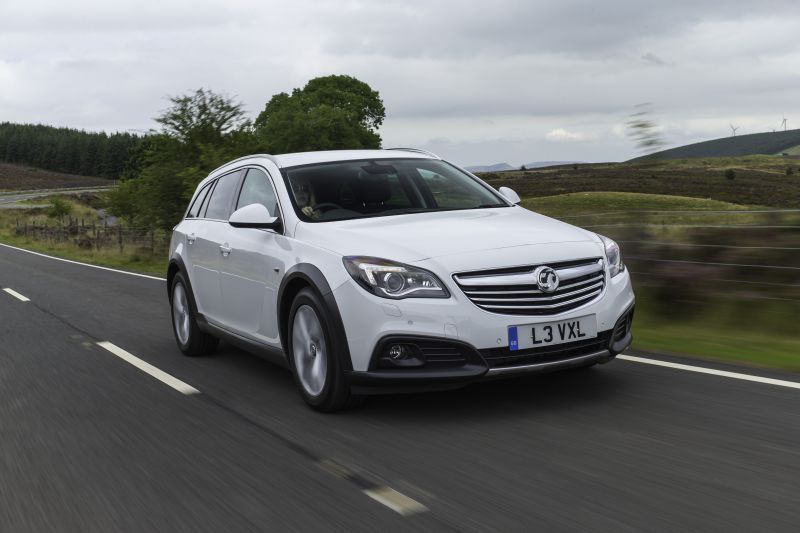
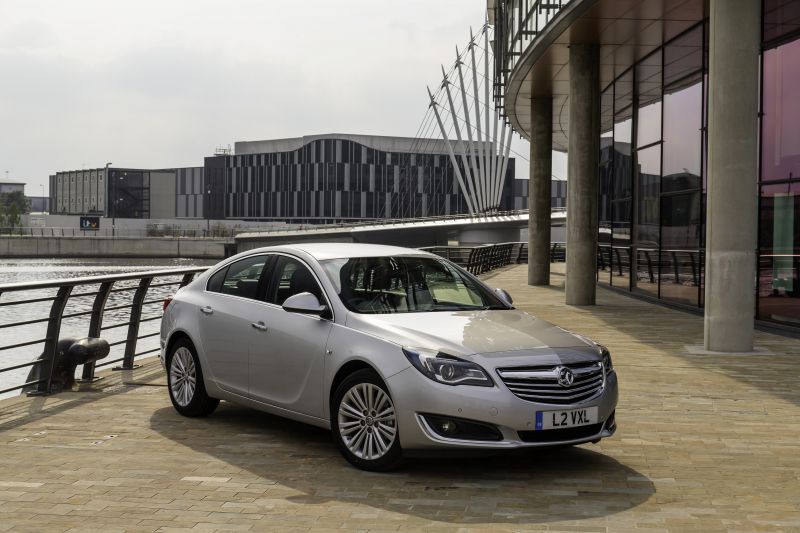
The 2013 facelift brought a more contemporary and premium feel to the Insignia’s design. The hatchback body style, with its five doors and seating for five occupants, offered a practical alternative to traditional sedans. Its sleek, coupe-like roofline distinguished it from many of its more conservative rivals, projecting a dynamic stance. The revised exterior featured a wider, lower grille, new headlamp clusters with integrated LED daytime running lights, and a subtly reshaped hood. At the rear, the taillights were redesigned, giving the car a more cohesive and modern appearance.
Inside, the facelift addressed previous ergonomic concerns. The dashboard was refined, featuring higher-quality materials and a significantly decluttered center console. A larger, more intuitive touchscreen infotainment system became a focal point, integrating navigation, audio, and vehicle settings. Storage was ample, and the hatchback configuration provided impressive versatility: a minimum trunk space of 18.72 cubic feet (530 liters) could expand to a cavernous 51.91 cubic feet (1470 liters) with the rear seats folded down, making it highly practical for hauling luggage or larger items. The generous 18.49 US gallon (70-liter) fuel tank capacity further emphasized its suitability for extended journeys.
From a chassis and safety perspective, the Insignia was well-equipped. It featured an independent front suspension with McPherson struts, coil springs, and an anti-roll bar, paired with an independent multi-link rear suspension. This setup provided a comfortable ride while maintaining good handling dynamics. Braking was handled by ventilated discs at the front and solid discs at the rear, augmented by an Anti-lock Braking System (ABS) for enhanced stopping power and control. The vehicle rode on 215/60 R16 tires fitted to 16-inch wheel rims, a common specification for balancing ride comfort and grip.
Technical Specifications
| Vauxhall Insignia I Hatchback (facelift 2013) 2.0 CDTi ecoTEC (163 Hp) Start/Stop | |
|---|---|
| General Information | |
| Brand | Vauxhall |
| Model | Insignia |
| Generation | Insignia I Hatchback (facelift 2013) |
| Type (Engine) | 2.0 CDTi ecoTEC (163 Hp) Start/Stop |
| Production Start | 2013 year |
| Production End | 2015 year |
| Powertrain Architecture | Internal Combustion engine |
| Body type | Hatchback |
| Seats | 5 |
| Doors | 5 |
| Performance Specs | |
| Fuel consumption (economy) – urban | 43.6 US mpg (5.4 l/100 km) |
| Fuel consumption (economy) – extra urban | 63.6 US mpg (3.7 l/100 km) |
| Fuel consumption (economy) – combined | 54.7 US mpg (4.3 l/100 km) |
| CO2 emissions | 114 g/km |
| Fuel Type | Diesel |
| Acceleration 0 – 60 mph | 9 sec |
| Maximum speed | 136.08 mph (219 km/h) |
| Emission standard | Euro 5 |
| Weight-to-power ratio | 10 kg/Hp, 100.4 Hp/tonne |
| Weight-to-torque ratio | 4.6 kg/Nm, 215.7 Nm/tonne |
| Engine Specs | |
| Power | 163 Hp @ 4000 rpm. |
| Power per liter | 83.3 Hp/l |
| Torque | 258.15 lb.-ft. (350 Nm) @ 1750-2500 rpm. |
| Engine layout | Front, Transverse |
| Engine Model/Code | A20DTH |
| Engine displacement | 2.0 l (1956 cm3, 119.36 cu. in.) |
| Number of cylinders | 4 |
| Engine configuration | Inline |
| Cylinder Bore | 3.27 in. (83 mm) |
| Piston Stroke | 3.56 in. (90.4 mm) |
| Number of valves per cylinder | 4 |
| Fuel injection system | Diesel Commonrail |
| Engine aspiration | Turbocharger, Intercooler |
| Valvetrain | DOHC |
| Engine oil capacity | 4.76 US qt (4.5 l) |
| Coolant | 9.51 US qt (9 l) |
| Engine systems | Start & Stop System, Particulate filter |
| Space, Volume and Weights | |
| Kerb Weight | 3578.1 lbs. (1623 kg) |
| Max. weight | 4728.92 lbs. (2145 kg) |
| Max load | 1150.81 lbs. (522 kg) |
| Trunk (boot) space – minimum | 18.72 cu. ft. (530 l) |
| Trunk (boot) space – maximum | 51.91 cu. ft. (1470 l) |
| Fuel tank capacity | 18.49 US gal (70 l) |
| Permitted trailer load with brakes (12%) | 3527.4 lbs. (1600 kg) |
| Permitted trailer load without brakes | 1653.47 lbs. (750 kg) |
| Dimensions | |
| Length | 190.63 in. (4842 mm) |
| Width | 73.07 in. (1856 mm) |
| Width including mirrors | 82.05 in. (2084 mm) |
| Height | 58.98 in. (1498 mm) |
| Wheelbase | 107.76 in. (2737 mm) |
| Front overhang | 40.43 in. (1027 mm) |
| Rear overhang | 42.44 in. (1078 mm) |
| Minimum turning circle (turning diameter) | 37.4 ft. (11.4 m) |
| Drivetrain, Brakes and Suspension Specs | |
| Drivetrain Architecture | Front wheel drive. Internal Combustion engine. |
| Drive wheel | Front wheel drive |
| Number of gears and type of gearbox | 6 gears, manual transmission |
| Front suspension | Independent, type McPherson with coil spring and anti-roll bar |
| Rear suspension | Independent multi-link suspension |
| Front brakes | Ventilated discs |
| Rear brakes | Disc |
| Assisting systems | ABS (Anti-lock braking system) |
| Tires size | 215/60 R16 |
| Wheel rims size | 16 |
Legacy & Market Impact of the Vauxhall Insignia I Hatchback (facelift 2013)
The Vauxhall Insignia I Hatchback (facelift 2013) played a vital role in Vauxhall’s product lineup, particularly in the competitive European D-segment. While never sold in the United States, its counterpart, the Opel Insignia, served as the basis for the Buick Regal in North America, showcasing the global platform sharing within General Motors at the time. This particular 2.0 CDTi ecoTEC variant cemented the Insignia’s reputation as a highly efficient and practical choice for the UK market, appealing to both private buyers and large fleet operators who prioritized low running costs and comfortable long-distance travel.
In its segment, the Insignia faced formidable competition from well-established models such as the Ford Mondeo (known as the Ford Fusion in North America), Volkswagen Passat, Skoda Superb, and Peugeot 508. The facelifted Insignia distinguished itself with its more aggressive styling, improved interior quality, and the continued strength of its diesel powertrains. The ecoTEC engines, with their Start/Stop technology and impressive fuel economy, were particularly attractive in an era where fuel prices and environmental concerns were increasingly prominent in European car buying decisions.
The Insignia’s legacy is one of a solid, dependable, and well-rounded mid-size car that offered significant value. It was praised for its comfortable ride, spacious cabin, and the practicality afforded by its large hatchback trunk. While perhaps not as dynamically engaging as some rivals, its strengths lay in its refinement, efficiency, and overall usability. The 2.0 CDTi ecoTEC (163 Hp) Start/Stop model, in particular, exemplified the best of European diesel technology of its time, providing a powerful yet economical driving experience that resonated strongly with its target audience. It helped Vauxhall maintain a significant presence in a fiercely contested segment, bridging the gap between mainstream and premium offerings before the brand’s eventual acquisition by PSA Group (now Stellantis) and a shift in its product strategy.