The Vauxhall Insignia I Saloon 2.0 CDTi ecoTEC (130 Hp) Automatic: A European Mainstay
The Vauxhall Insignia I Saloon, specifically the 2.0 CDTi ecoTEC (130 Hp) Automatic variant produced from 2008 to 2013, represents a pivotal model in Vauxhall’s modern history. Launched as the successor to the long-running Vectra, the Insignia marked a significant shift in design philosophy and market positioning for the British brand, which operates as Opel in mainland Europe. Positioned in the highly competitive D-segment (mid-size family car segment), the Insignia aimed to offer a more premium feel, sophisticated design, and advanced technology compared to its predecessor. While not sold under the Vauxhall badge in the United States, its platform served as the basis for the first-generation Buick Regal, providing an indirect connection to the North American market. This particular diesel-powered, automatic transmission sedan was a popular choice for both private buyers and fleet operators across the UK and other European markets, balancing performance with impressive fuel efficiency for its time.
Engineering and Performance of the Vauxhall Insignia I Saloon 2.0 CDTi ecoTEC (130 Hp) Automatic
At the heart of this specific Insignia model lies a robust 2.0-liter (119.36 cubic inches) CDTi ecoTEC diesel engine, designated with the internal code A20DT. This inline four-cylinder powerplant features a DOHC (Dual Overhead Camshaft) valvetrain with four valves per cylinder, a common-rail direct fuel injection system, and is augmented by a turbocharger and intercooler. This configuration allows the engine to produce a respectable 130 horsepower at 4000 rpm, delivering a power-to-liter ratio of 66.5 HP/L. More significantly for a diesel, it generates a substantial 221.27 lb.-ft. of torque, available across a broad and usable rev range from 1750 to 2500 rpm. This ample torque is crucial for effortless acceleration and strong pulling power, especially when carrying passengers or cargo.
Power is efficiently transmitted to the front wheels via a smooth-shifting 6-speed automatic transmission. This drivetrain architecture, combined with the engine’s characteristics, enables the Insignia to accelerate from 0 to 60 mph in a brisk 10 seconds, reaching a top speed of 126.76 mph. The “ecoTEC” designation signifies Vauxhall’s commitment to environmental efficiency, and this is reflected in the vehicle’s fuel consumption figures. The combined cycle fuel economy is rated at an impressive 35.1 US mpg, with extra-urban driving yielding up to 45.2 US mpg. Urban consumption stands at 25.6 US mpg. With CO2 emissions of 177 g/km, the vehicle complied with Euro 5 emission standards, making it a relatively clean option for its generation of diesel vehicles. The engine oil capacity is 4.76 US quarts, and the cooling system holds 9.51 US quarts of coolant, both indicative of a well-engineered and durable powertrain designed for longevity and consistent performance.
Design and Features: The First-Generation Insignia’s Aesthetic Appeal
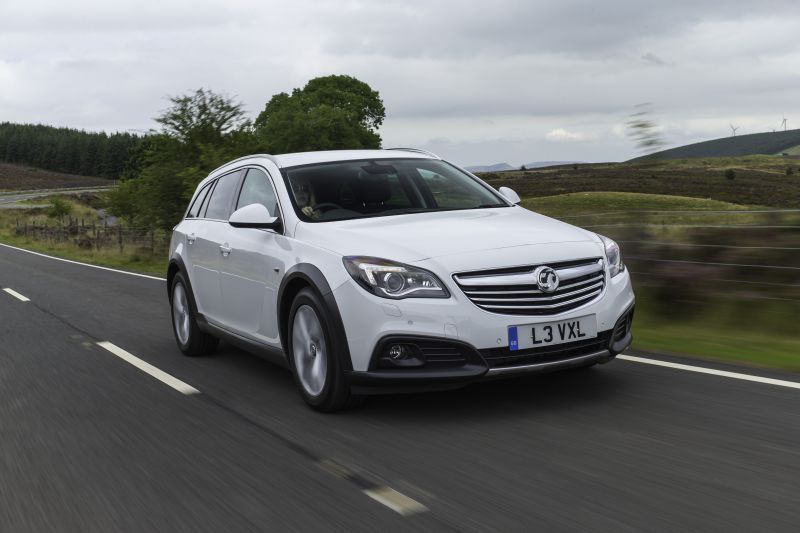
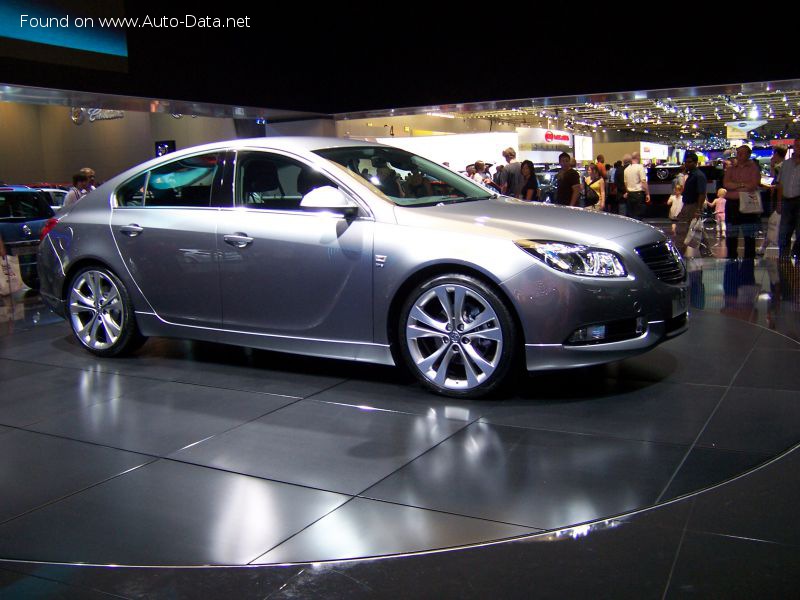
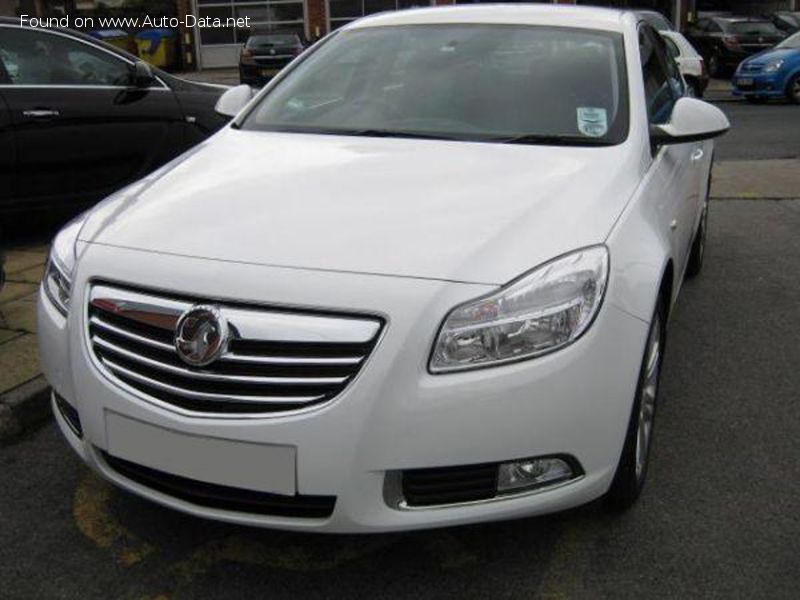
The Vauxhall Insignia I Saloon ushered in a new design language for the brand, moving away from the more conservative lines of its predecessor. Its sleek, four-door sedan body type exuded a dynamic and sophisticated presence, characterized by flowing lines and a coupe-like roofline. The vehicle’s aerodynamic efficiency was notable, boasting a drag coefficient (Cd) of just 0.27, which contributed to both its fuel economy and reduced wind noise at higher speeds. With a length of 190.16 inches and a width of 73.07 inches (82.05 inches including mirrors), the Insignia presented a substantial road presence, while its wheelbase of 107.76 inches ensured a stable and composed ride.
Inside, the Insignia offered a comfortable and well-appointed cabin designed to accommodate five occupants. The interior design mirrored the exterior’s modern aesthetic, with a focus on ergonomics and quality materials. Practicality was a key consideration, with a generous trunk capacity ranging from 17.3 cubic feet with all seats in place, expandable to a substantial 35.67 cubic feet with the rear seats folded down. This flexibility made it suitable for various needs, from daily commuting to family trips. Standard features for the era included power steering (hydraulic), ABS (Anti-lock Braking System), and a particulate filter for the diesel engine. The suspension setup featured an independent McPherson strut system with coil springs and an anti-roll bar at the front, complemented by an independent multi-link suspension at the rear. This combination provided a balanced ride, offering a good compromise between comfort and handling precision. Stopping power was provided by ventilated disc brakes at the front and solid discs at the rear, ensuring confident braking performance. The vehicle rode on 215/60 R16 tires fitted to 16-inch wheel rims, providing a comfortable ride and adequate grip.
Technical Specifications
| Category | Specification |
|---|---|
| Brand | Vauxhall |
| Model | Insignia I Saloon |
| Type (Engine) | 2.0 CDTi ecoTEC (130 Hp) Automatic |
| Production Years | 2008 – 2013 |
| Body Type | Sedan |
| Doors / Seats | 4 / 5 |
| Powertrain Architecture | Internal Combustion Engine, Front-Wheel Drive |
| Fuel Type | Diesel |
| Fuel Consumption (Urban) | 25.6 US mpg (9.2 L/100 km) |
| Fuel Consumption (Extra Urban) | 45.2 US mpg (5.2 L/100 km) |
| Fuel Consumption (Combined) | 35.1 US mpg (6.7 L/100 km) |
| CO2 Emissions | 177 g/km |
| Emission Standard | Euro 5 |
| Acceleration 0-60 mph | 10 seconds |
| Maximum Speed | 126.76 mph (204 km/h) |
| Power | 130 Hp @ 4000 rpm |
| Power per liter | 66.5 Hp/L |
| Torque | 221.27 lb.-ft. (300 Nm) @ 1750-2500 rpm |
| Engine Layout | Front, Transverse |
| Engine Model/Code | A20DT |
| Engine Displacement | 119.36 cu. in. (1956 cm3) |
| Number of Cylinders | 4, Inline |
| Cylinder Bore | 3.27 in. (83 mm) |
| Piston Stroke | 3.56 in. (90.4 mm) |
| Compression Ratio | 16.5:1 |
| Valves per Cylinder | 4 |
| Fuel Injection System | Diesel Commonrail |
| Engine Aspiration | Turbocharger, Intercooler |
| Valvetrain | DOHC |
| Engine Oil Capacity | 4.76 US qt (4.5 L) |
| Coolant Capacity | 9.51 US qt (9 L) |
| Kerb Weight | 3390.71 lbs. (1538 kg) |
| Max. Weight | 4750.96 lbs. (2155 kg) |
| Max Load | 1360.25 lbs. (617 kg) |
| Trunk Space (Min/Max) | 17.3 – 35.67 cu. ft. (490 – 1010 L) |
| Fuel Tank Capacity | 18.49 US gal (70 L) |
| Length | 190.16 in. (4830 mm) |
| Width | 73.07 in. (1856 mm) |
| Width (incl. mirrors) | 82.05 in. (2084 mm) |
| Height | 58.98 in. (1498 mm) |
| Wheelbase | 107.76 in. (2737 mm) |
| Front Track | 62.4 in. (1585 mm) |
| Rear Track | 62.4 in. (1585 mm) |
| Ride Height (Ground Clearance) | 6.3 in. (160 mm) |
| Drag Coefficient (Cd) | 0.27 |
| Minimum Turning Circle | 35.73 ft. (10.89 m) |
| Drive Wheel | Front Wheel Drive |
| Gearbox Type | 6-speed Automatic |
| Front Suspension | Independent, McPherson with coil spring and anti-roll bar |
| Rear Suspension | Independent multi-link suspension |
| Front Brakes | Ventilated discs |
| Rear Brakes | Disc |
| Assisting Systems | ABS (Anti-lock braking system) |
| Power Steering | Hydraulic Steering |
| Tires Size | 215/60 R16 |
| Wheel Rims Size | 16 inches |
Legacy and Market Impact of the Vauxhall Insignia I Saloon
The Vauxhall Insignia I Saloon 2.0 CDTi ecoTEC (130 Hp) Automatic carved out a significant niche in the European automotive landscape during its production run. It was instrumental in helping Vauxhall/Opel shed its somewhat conservative image, ushering in a new era of more dynamic and visually appealing vehicles. The Insignia’s striking design was widely praised, earning it the prestigious European Car of the Year award in 2009. This recognition significantly boosted its reputation and market acceptance.
In its primary markets, particularly the UK, the Insignia competed fiercely with established rivals such as the Ford Mondeo, Volkswagen Passat, and to some extent, even entry-level premium sedans like the BMW 3 Series and Audi A4. While it might not have matched the ultimate driving dynamics of a rear-wheel-drive BMW, the Insignia offered a compelling package of style, comfort, practicality, and value. The 2.0 CDTi ecoTEC variant, with its strong emphasis on fuel efficiency and lower emissions, was particularly attractive to fleet buyers, who often accounted for a large portion of D-segment sales in Europe. Its robust diesel engine, combined with the convenience of an automatic transmission, made it an ideal long-distance cruiser and a practical family car.
The Insignia’s impact extended beyond just sales figures. It showcased General Motors’ capability to design globally competitive vehicles, as evidenced by its adaptation into the Buick Regal for the North American market. This cross-continental platform sharing highlighted the underlying engineering prowess. The first-generation Insignia successfully repositioned Vauxhall as a brand capable of producing stylish, efficient, and well-equipped vehicles that could genuinely challenge the segment leaders. Its legacy is one of rejuvenation, a car that brought a fresh perspective to a segment often dominated by more traditional offerings, and a testament to modern European automotive design and engineering principles focused on efficiency and aesthetic appeal.