Vauxhall Insignia I Saloon 2.0 CDTi ecoTEC (160 Hp): A European Mid-Size Contender
The Vauxhall Insignia I Saloon 2.0 CDTi ecoTEC (160 Hp) represents a significant chapter in the European automotive landscape, serving as Vauxhall’s flagship mid-size (D-segment) family car in the United Kingdom, and its continental counterpart, the Opel Insignia, across mainland Europe. Launched in 2008 as the successor to the long-running Vectra, the Insignia marked a bold departure in design and engineering philosophy for General Motors’ European operations. This first-generation model, produced until 2013, aimed to elevate the brand’s perception, offering a more premium feel, enhanced technology, and greater efficiency to compete against established rivals. The specific 2.0 CDTi ecoTEC variant, with its 160 horsepower diesel engine, was particularly important for its blend of performance and fuel economy, catering to both private buyers and the crucial fleet market in Europe. While never officially sold in the United States under the Vauxhall badge, its underlying platform and design language did influence other GM products globally, showcasing the technological prowess developed for the European market.
Engineering and Performance of the Vauxhall Insignia I Saloon 2.0 CDTi ecoTEC (160 Hp)
Powertrain and Dynamics
At the heart of the Vauxhall Insignia I Saloon 2.0 CDTi ecoTEC (160 Hp) lies a robust 2.0-liter (119.36 cu. in.) A20DTH inline-four diesel engine. This unit, featuring a turbocharger and intercooler, along with a sophisticated Diesel Commonrail fuel injection system and DOHC valvetrain, was engineered to deliver a compelling balance of power and efficiency. It produced a respectable 160 horsepower at 4000 rpm, which was a strong output for a mainstream diesel sedan of its era. More impressively, the engine generated a substantial 258.15 lb.-ft. of torque, available across a broad rev range from 1750 to 2500 rpm. This ample torque made for effortless acceleration and strong in-gear flexibility, crucial for both urban driving and highway cruising.
Power was delivered to the front wheels via a precise 6-speed manual transmission, offering engaging control for the driver. This powertrain combination allowed the Insignia to accelerate from 0 to 60 mph in a brisk 8.5 seconds, with a top speed of 134.84 mph. Despite its performance capabilities, the “ecoTEC” designation underscored its commitment to fuel efficiency and reduced emissions. The Insignia 2.0 CDTi ecoTEC achieved an impressive combined fuel economy of 40.6 US mpg (5.8 l/100 km), with even better figures on the extra-urban cycle at 49 US mpg (4.8 l/100 km). With CO2 emissions rated at 154 g/km and meeting Euro 5 emission standards, equipped with a particulate filter, it was a responsible choice for its time, especially in markets with strict environmental regulations. The vehicle’s weight-to-power ratio stood at 9.6 kg/Hp, or 104 Hp/tonne, indicating a well-balanced and responsive driving experience for its class.
Design, Features, and Practicality
Exterior and Interior Aesthetics
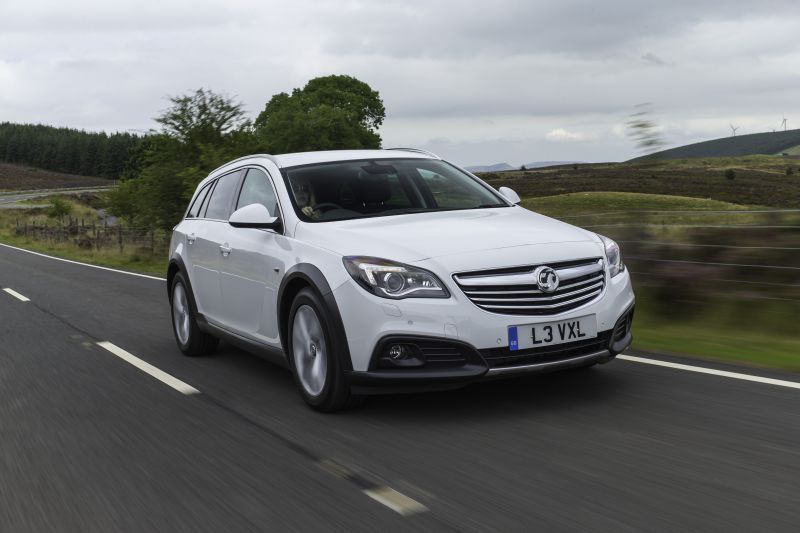
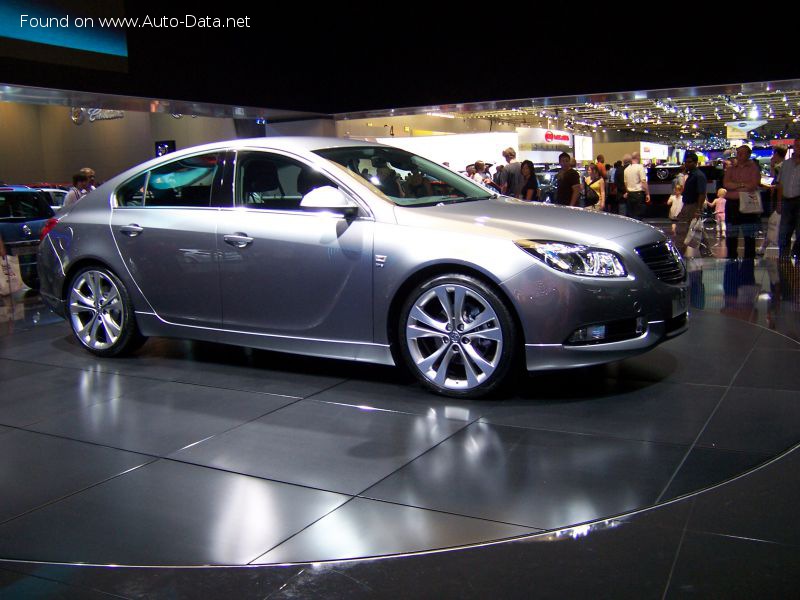
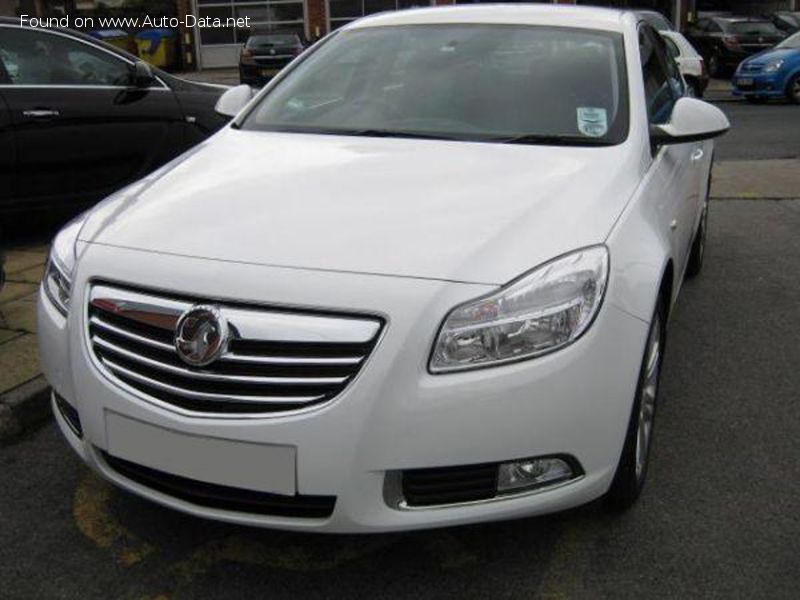
The first-generation Vauxhall Insignia broke away from the conservative styling of its predecessor, the Vectra, with a design language that Opel/Vauxhall termed “sculptural artistry meets German precision.” The sedan body type of the Vauxhall Insignia I Saloon featured sleek, flowing lines and a coupé-like roofline, giving it a dynamic and upscale appearance. Its dimensions – 190.16 inches in length, 73.07 inches in width (82.05 inches including mirrors), and 58.98 inches in height – contributed to a substantial road presence. The long 107.76-inch wheelbase provided excellent interior space and ride comfort, while a low drag coefficient of 0.27 enhanced fuel efficiency and reduced wind noise at higher speeds.
Inside, the Insignia offered a comfortable and well-appointed cabin designed for five occupants. The interior echoed the exterior’s modern aesthetic, with a focus on ergonomics and quality materials. Practicality was a strong suit, with a generous trunk capacity ranging from 17.3 cu. ft. (490 liters) with the rear seats up, expanding to a cavernous 35.67 cu. ft. (1010 liters) when the rear seats were folded down. This made it a highly versatile vehicle for families and business users alike.
Chassis and Safety Systems
The Insignia’s chassis was engineered for a refined ride and confident handling. It featured an independent McPherson strut front suspension with coil springs and an anti-roll bar, complemented by an independent multi-link rear suspension. This setup provided a sophisticated balance between ride comfort and dynamic stability. Stopping power came from ventilated disc brakes at the front and solid disc brakes at the rear, augmented by an Anti-lock Braking System (ABS) for enhanced safety during emergency braking. Hydraulic power steering offered precise feedback to the driver, contributing to a more engaging driving experience. The vehicle rode on 225/55 R17 tires mounted on 17-inch wheel rims, providing a good balance of grip and ride compliance. Safety was a paramount concern, and the Insignia achieved high ratings in European crash tests, reflecting its robust construction and comprehensive safety features for its time.
Technical Specifications
| Category | Specification | US Equivalent |
|---|---|---|
General Information |
||
| Brand | Vauxhall | |
| Model | Insignia | |
| Generation | Insignia I Saloon | |
| Type (Engine) | 2.0 CDTi ecoTEC (160 Hp) | |
| Start of production | 2008 year | |
| End of production | 2013 year | |
| Powertrain Architecture | Internal Combustion engine | |
| Body type | Sedan | |
| Seats | 5 | |
| Doors | 4 | |
Performance Specs |
||
| Fuel consumption (economy) – urban | 7.6 l/100 km | 30.9 US mpg |
| Fuel consumption (economy) – extra urban | 4.8 l/100 km | 49 US mpg |
| Fuel consumption (economy) – combined | 5.8 l/100 km | 40.6 US mpg |
| CO2 emissions | 154 g/km | |
| Fuel Type | Diesel | |
| Acceleration 0 – 60 mph | 8.5 sec | |
| Acceleration 0 – 100 km/h | 8.9 sec | |
| Maximum speed | 217 km/h | 134.84 mph |
| Emission standard | Euro 5 | |
| Weight-to-power ratio | 9.6 kg/Hp | 104 Hp/tonne |
| Weight-to-torque ratio | 4.4 kg/Nm | 227.6 Nm/tonne |
Engine Specs |
||
| Power | 160 Hp @ 4000 rpm | |
| Power per liter | 81.8 Hp/l | |
| Torque | 350 Nm @ 1750-2500 rpm | 258.15 lb.-ft. @ 1750-2500 rpm |
| Engine layout | Front, Transverse | |
| Engine Model/Code | A20DTH | |
| Engine displacement | 1956 cm3 | 2.0 liters / 119.36 cu. in. |
| Number of cylinders | 4 | |
| Engine configuration | Inline | |
| Cylinder Bore | 83 mm | 3.27 in. |
| Piston Stroke | 90.4 mm | 3.56 in. |
| Compression ratio | 18:1 | |
| Number of valves per cylinder | 4 | |
| Fuel injection system | Diesel Commonrail | |
| Engine aspiration | Turbocharger, Intercooler | |
| Valvetrain | DOHC | |
| Engine oil capacity | 4.5 l | 4.76 US qt |
| Engine oil specification | Not specified | |
| Coolant | 9 l | 9.51 US qt |
| Engine systems | Particulate filter | |
Space, Volume and Weights |
||
| Kerb Weight | 1538 kg | 3390.71 lbs. |
| Max. weight | 2130 kg | 4695.85 lbs. |
| Max load | 592 kg | 1305.14 lbs. |
| Trunk (boot) space – minimum | 490 l | 17.3 cu. ft. |
| Trunk (boot) space – maximum | 1010 l | 35.67 cu. ft. |
| Fuel tank capacity | 70 l | 18.49 US gal |
| Permitted trailer load with brakes (12%) | 1600 kg | 3527.4 lbs. |
| Permitted trailer load without brakes | 750 kg | 1653.47 lbs. |
Dimensions |
||
| Length | 4830 mm | 190.16 in. |
| Width | 1856 mm | 73.07 in. |
| Width including mirrors | 2084 mm | 82.05 in. |
| Height | 1498 mm | 58.98 in. |
| Wheelbase | 2737 mm | 107.76 in. |
| Front track | 1585 mm | 62.4 in. |
| Rear (Back) track | 1585 mm | 62.4 in. |
| Front overhang | 1015 mm | 39.96 in. |
| Rear overhang | 1078 mm | 42.44 in. |
| Ride height (ground clearance) | 160 mm | 6.3 in. |
| Drag coefficient (Cd) | 0.27 | |
| Minimum turning circle (turning diameter) | 10.97 m | 35.99 ft. |
Drivetrain, Brakes and Suspension Specs |
||
| Drivetrain Architecture | The Internal combustion engine (ICE) drives the front wheels of the vehicle. | |
| Drive wheel | Front wheel drive | |
| Number of gears and type of gearbox | 6 gears, manual transmission | |
| Front suspension | Independent, type McPherson with coil spring and anti-roll bar | |
| Rear suspension | Independent multi-link suspension | |
| Front brakes | Ventilated discs | |
| Rear brakes | Disc | |
| Assisting systems | ABS (Anti-lock braking system) | |
| Power steering | Hydraulic Steering | |
| Tires size | 225/55 R17 | |
| Wheel rims size | 17 | |
Legacy and Market Impact
The Vauxhall Insignia I Saloon 2.0 CDTi ecoTEC (160 Hp), along with its Opel counterpart, was a pivotal model for General Motors’ European operations. It spearheaded a significant push towards a more sophisticated and desirable image for the brand, moving away from the more utilitarian perceptions associated with previous models like the Vectra. Its contemporary design won numerous accolades, including the prestigious European Car of the Year award in 2009, a testament to its forward-thinking styling and engineering.
In its primary markets, particularly the UK and Germany, the Insignia faced fierce competition. Its main rivals included the perennial best-seller Ford Mondeo, the Volkswagen Passat, and to some extent, premium offerings like the BMW 3 Series and Audi A4, though the Insignia was positioned as a more mainstream, value-oriented option. The 2.0 CDTi ecoTEC variant was especially crucial for its appeal to company car fleets, where running costs, fuel efficiency, and low emissions (especially with Euro 5 compliance) were paramount considerations. Its strong torque and comfortable long-distance cruising ability made it an ideal choice for business travelers.
The Insignia’s impact extended beyond just sales figures; it redefined what buyers could expect from a Vauxhall or Opel. It introduced advanced features, improved interior quality, and a dynamic driving experience that helped shed the brand’s somewhat staid image. While not a direct competitor in the US market, the Insignia’s platform and design language were adapted for other global GM vehicles, such as the Buick Regal, demonstrating its foundational importance. The first-generation Insignia successfully laid the groundwork for future models, proving that Vauxhall/Opel could deliver a compelling, stylish, and efficient package capable of holding its own in one of the most competitive automotive segments in the world. Its legacy is one of ambition, design evolution, and a strong commitment to efficiency, particularly with the ecoTEC diesel powertrains.