The Vauxhall Insignia I Saloon 2.0 CDTi ecoTEC (160 Hp) Automatic: A European Mainstay
The
Vauxhall Insignia I Saloon 2.0 CDTi ecoTEC (160 Hp) Automatic
represents a significant chapter in the history of Vauxhall, the British arm of Opel, and by extension, General Motors’ global strategy for the mid-size sedan segment. Launched in 2008, the first-generation Insignia Saloon served as the direct successor to the long-running Vectra, marking a dramatic shift in design philosophy and technological ambition for the brand. This particular variant, equipped with the efficient 2.0-liter CDTi ecoTEC diesel engine and a smooth automatic transmission, was a cornerstone of its lineup, catering to the European market’s demand for a practical, comfortable, and fuel-efficient family and fleet vehicle.
While the Vauxhall brand itself is primarily recognized in the United Kingdom, its Opel counterpart (the Opel Insignia) was a widespread success across mainland Europe. The Insignia represented a bold move away from the conservative styling of its predecessor, introducing a more athletic and premium aesthetic that resonated with buyers. Its production ran from 2008 to 2013, during which it garnered numerous accolades, including the prestigious European Car of the Year award in 2009, cementing its reputation as a formidable competitor in its class. This article delves into the technical prowess, design philosophy, and market impact of this pivotal model.
Engine and Performance of the Vauxhall Insignia I Saloon 2.0 CDTi ecoTEC (160 Hp) Automatic
At the heart of the
Vauxhall Insignia I Saloon 2.0 CDTi ecoTEC (160 Hp) Automatic
lies a robust and efficient 2.0-liter (1956 cm3 or 119.36 cu. in.) inline-four cylinder diesel engine, internally designated as A20DTH. This powerplant was engineered with economy and durability in mind, featuring a sophisticated Diesel Commonrail fuel injection system, a turbocharger, and an intercooler to optimize combustion and boost power output. The engine’s DOHC (Double Overhead Camshaft) valvetrain with four valves per cylinder ensured efficient air intake and exhaust scavenging.
The engine produced a respectable 160 horsepower at 4000 rpm, translating to a power-per-liter ratio of 81.8 HP/l, a strong figure for a diesel engine of its era. More critically for a family sedan, it delivered a substantial 258.15 lb.-ft. of torque across a broad and accessible rev range, specifically from 1750 to 2500 rpm. This ample torque ensured strong in-gear acceleration and effortless cruising, even when fully loaded.
Mated to a smooth 6-speed automatic transmission, the power was efficiently delivered to the front wheels. This setup allowed the Insignia to accelerate from 0 to 60 mph in a brisk 8.6 seconds, with a top speed of 134.22 mph. These performance figures were competitive within the mid-size sedan segment, offering a blend of responsiveness and relaxed driving.
The “ecoTEC” designation underscored Vauxhall’s commitment to environmental responsibility. The 2.0 CDTi engine met stringent Euro 5 emission standards, aided by features such as a particulate filter. Fuel efficiency was a key selling point, with a combined fuel consumption rating of 35.1 US mpg (6.7 l/100 km). Even in urban driving, it achieved 25.6 US mpg, while extra-urban cruising could yield an impressive 45.2 US mpg. This balance of performance and economy made it an attractive option for both private buyers and corporate fleets across Europe.
Design and Features
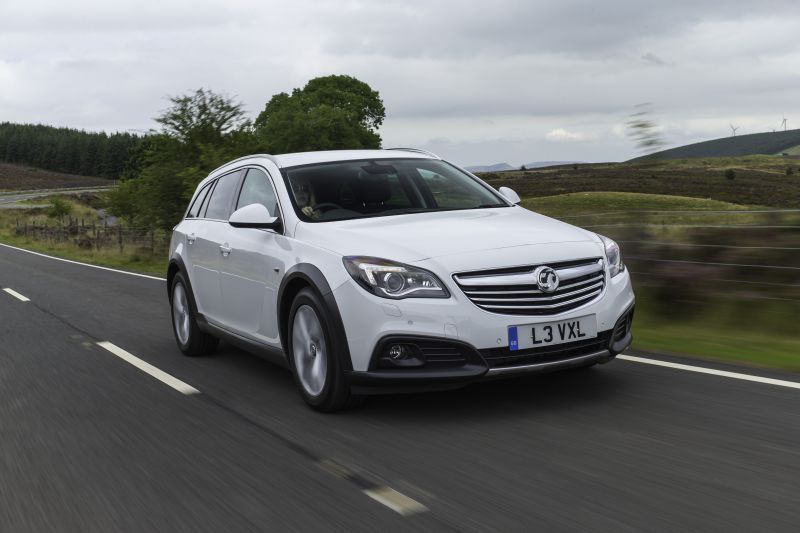
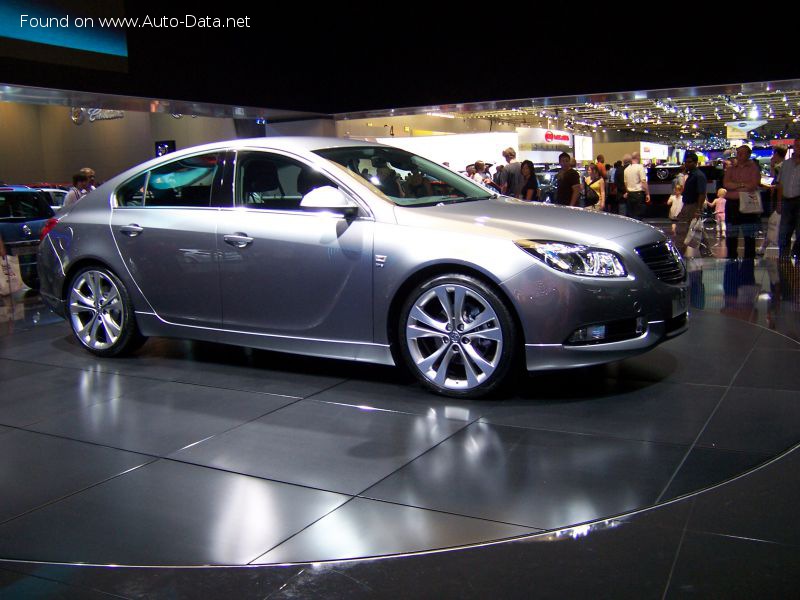
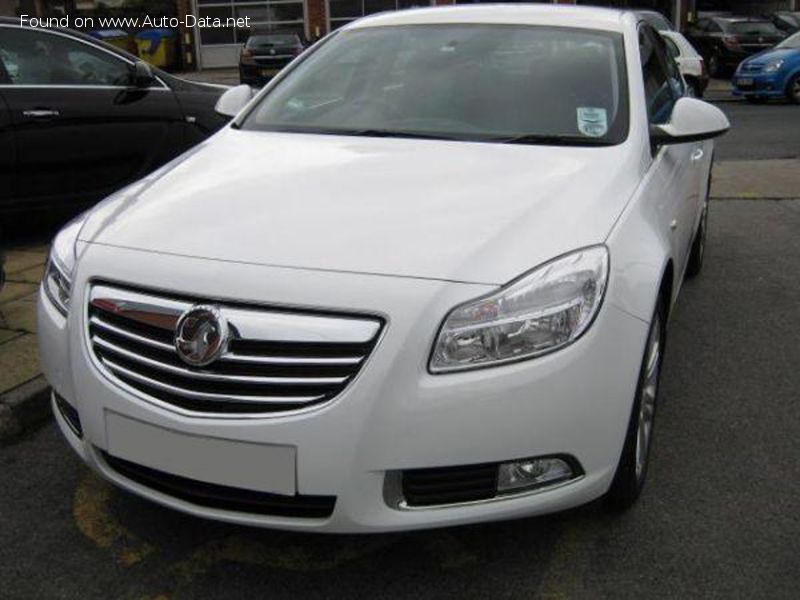
The Insignia I Saloon marked a radical departure from its predecessor’s design language, ushering in what Vauxhall/Opel termed “Sculptural Artistry meets German Precision.” The sedan’s exterior was characterized by sleek, flowing lines, a coupe-like roofline, and distinctive “blade” side sculpting that gave it a dynamic and upscale appearance. Its substantial dimensions, measuring 190.16 inches in length and 73.07 inches in width (82.05 inches including mirrors), contributed to a strong road presence. The drag coefficient of 0.27 was excellent for its class, contributing to both fuel efficiency and reduced wind noise.
Inside, the Insignia offered a spacious and well-appointed cabin designed for five occupants. The interior echoed the exterior’s modern aesthetic, with a driver-focused cockpit and high-quality materials for the segment. Standard features typically included air conditioning, power windows, and a comprehensive infotainment system, though specific trim levels offered advanced options like satellite navigation, automatic climate control, and premium audio. The focus was on ergonomics and intuitive controls, ensuring a comfortable and stress-free driving experience.
Practicality was a strong suit for the Insignia Saloon. The trunk offered a generous 17.3 cubic feet (490 liters) of cargo space, expandable to an impressive 35.67 cubic feet (1010 liters) with the rear seats folded, making it suitable for family trips or hauling larger items. The car also boasted a substantial fuel tank capacity of 18.49 US gallons (70 liters), allowing for extended driving ranges between fill-ups, particularly beneficial for the efficient diesel variant.
Safety features were comprehensive for its time, including standard Anti-lock Braking System (ABS), multiple airbags, and a robust body structure. The suspension system comprised an independent McPherson setup with coil springs and an anti-roll bar at the front, complemented by an independent multi-link suspension at the rear. This configuration provided a comfortable ride quality while maintaining composed handling. Stopping power was provided by ventilated discs at the front and solid discs at the rear, ensuring confident braking performance. Hydraulic power steering offered a traditional, communicative feel to the driver, while 225/55 R17 tires on 17-inch wheels provided a good balance of grip and ride comfort.
Technical Specifications
| Category | Specification |
|---|---|
| Brand | Vauxhall |
| Model | Insignia |
| Generation | Insignia I Saloon |
| Type (Engine) | 2.0 CDTi ecoTEC (160 Hp) Automatic |
| Production Start | 2008 |
| Production End | 2013 |
| Powertrain Architecture | Internal Combustion Engine |
| Body Type | Sedan |
| Seats | 5 |
| Doors | 4 |
| Performance Specs | |
| Fuel Consumption (Urban) | 25.6 US mpg (9.2 l/100 km) |
| Fuel Consumption (Extra Urban) | 45.2 US mpg (5.2 l/100 km) |
| Fuel Consumption (Combined) | 35.1 US mpg (6.7 l/100 km) |
| CO2 Emissions | 177 g/km |
| Fuel Type | Diesel |
| Acceleration 0 – 60 mph | 8.6 sec |
| Maximum Speed | 134.22 mph (216 km/h) |
| Emission Standard | Euro 5 |
| Weight-to-Power Ratio | 9.6 kg/Hp (104 Hp/tonne) |
| Weight-to-Torque Ratio | 4.4 kg/Nm (227.6 Nm/tonne) |
| Engine Specs | |
| Power | 160 Hp @ 4000 rpm |
| Power per Liter | 81.8 Hp/l |
| Torque | 258.15 lb.-ft. @ 1750-2500 rpm (350 Nm) |
| Engine Layout | Front, Transverse |
| Engine Model/Code | A20DTH |
| Engine Displacement | 119.36 cu. in. (1956 cm3) |
| Number of Cylinders | 4 |
| Engine Configuration | Inline |
| Cylinder Bore | 3.27 in. (83 mm) |
| Piston Stroke | 3.56 in. (90.4 mm) |
| Compression Ratio | 18:1 |
| Valves per Cylinder | 4 |
| Fuel Injection System | Diesel Commonrail |
| Engine Aspiration | Turbocharger, Intercooler |
| Valvetrain | DOHC |
| Engine Oil Capacity | 4.76 US qt (4.5 l) |
| Coolant Capacity | 9.51 US qt (9 l) |
| Engine Systems | Particulate filter |
| Space, Volume and Weights | |
| Kerb Weight | 3390.71 lbs. (1538 kg) |
| Max. Weight | 4750.96 lbs. (2155 kg) |
| Max Load | 1360.25 lbs. (617 kg) |
| Trunk (boot) Space – Minimum | 17.3 cu. ft. (490 l) |
| Trunk (boot) Space – Maximum | 35.67 cu. ft. (1010 l) |
| Fuel Tank Capacity | 18.49 US gal (70 l) |
| Permitted Trailer Load (with brakes) | 3527.4 lbs. (1600 kg) |
| Permitted Trailer Load (without brakes) | 1653.47 lbs. (750 kg) |
| Dimensions | |
| Length | 190.16 in. (4830 mm) |
| Width | 73.07 in. (1856 mm) |
| Width (including mirrors) | 82.05 in. (2084 mm) |
| Height | 58.98 in. (1498 mm) |
| Wheelbase | 107.76 in. (2737 mm) |
| Front Track | 62.4 in. (1585 mm) |
| Rear Track | 62.4 in. (1585 mm) |
| Front Overhang | 39.96 in. (1015 mm) |
| Rear Overhang | 42.44 in. (1078 mm) |
| Ride Height (Ground Clearance) | 6.3 in. (160 mm) |
| Drag Coefficient (Cd) | 0.27 |
| Minimum Turning Circle | 35.99 ft. (10.97 m) |
| Drivetrain, Brakes and Suspension Specs | |
| Drivetrain Architecture | Front-wheel drive, Internal Combustion engine |
| Drive Wheel | Front Wheel Drive |
| Gearbox Type | 6 gears, automatic transmission |
| Front Suspension | Independent, McPherson with coil spring and anti-roll bar |
| Rear Suspension | Independent multi-link suspension |
| Front Brakes | Ventilated discs |
| Rear Brakes | Disc |
| Assisting Systems | ABS (Anti-lock braking system) |
| Power Steering | Hydraulic Steering |
| Tires Size | 225/55 R17 |
| Wheel Rims Size | 17 inches |
Legacy and Market Impact
The
Vauxhall Insignia I Saloon 2.0 CDTi ecoTEC (160 Hp) Automatic
, and the Insignia range as a whole, left a significant mark on the European automotive landscape. It successfully redefined Vauxhall’s image in the critical mid-size segment, shifting from the utilitarian perception of the Vectra to a more aspirational and design-led product. Its bold styling, which was a clear departure from its more conservative predecessors, was widely praised and contributed to its commercial success and critical acclaim, culminating in the European Car of the Year award in 2009.
In its primary markets, particularly the UK and mainland Europe, the Insignia competed fiercely with established rivals such as the Ford Mondeo, Volkswagen Passat, and to a lesser extent, entry-level models from premium brands like the BMW 3 Series and Audi A4. The Insignia differentiated itself through its compelling design, competitive pricing, and a strong emphasis on comfort and refinement, especially for long-distance cruising. While some critics noted its weight could impact ultimate driving dynamics compared to lighter, more agile competitors, its overall package of features, space, and efficiency made it a compelling proposition.
The 2.0 CDTi ecoTEC variant was particularly important for its strong appeal to fleet buyers and company car drivers, who prioritized low running costs and a favorable tax structure due to its Euro 5 emissions compliance and excellent fuel economy. The automatic transmission further enhanced its appeal in a market increasingly moving towards two-pedal driving for convenience.
The first-generation Insignia’s legacy is one of successful transformation for Vauxhall/Opel. It proved that the brand could produce a car that was not only practical and reliable but also aesthetically pleasing and technologically competitive. It laid the groundwork for future generations and helped to elevate perceptions of the brand’s offerings in the fiercely contested D-segment. Its impact can still be seen in the design language and market positioning of subsequent Vauxhall and Opel models, which continue to blend style, efficiency, and practicality for the modern European consumer.