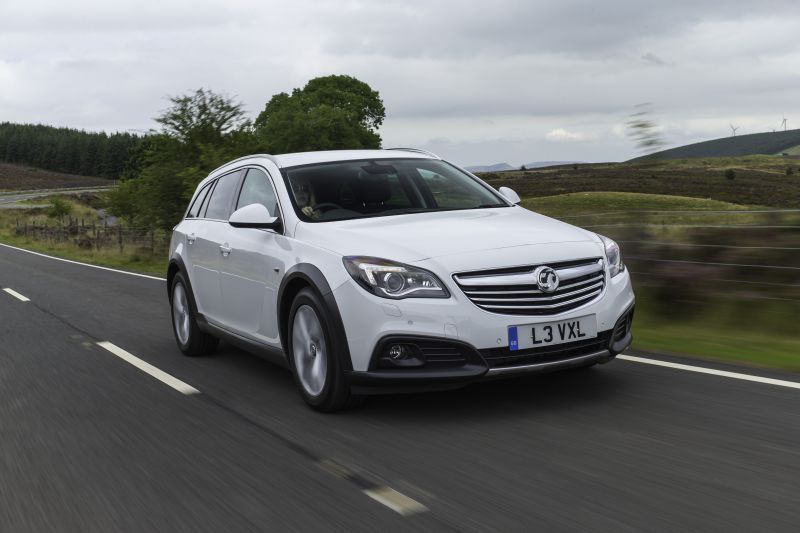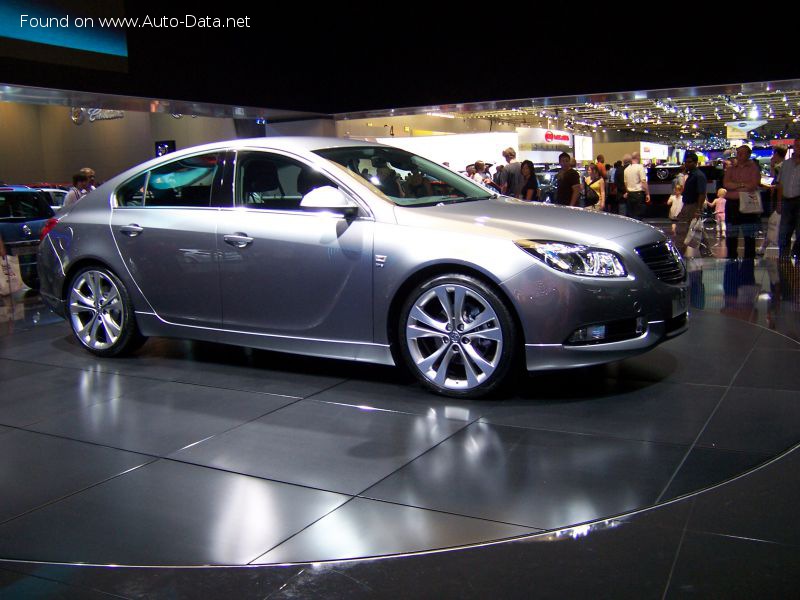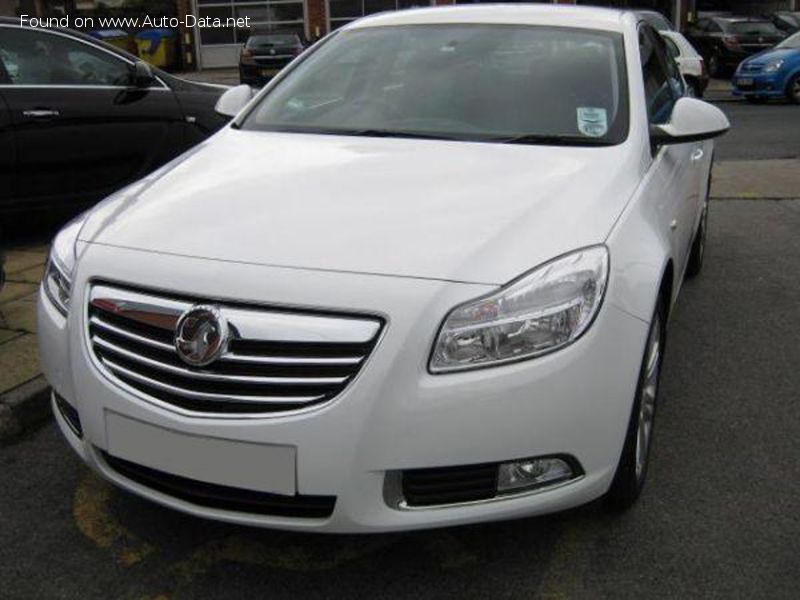
Introduction to the Vauxhall Insignia I Saloon 2.0i Turbo ecoTEC (220 Hp) AWD
The
Vauxhall Insignia I Saloon 2.0i Turbo ecoTEC (220 Hp) AWD
, launched in 2008, represented a significant departure for the Vauxhall brand in the United Kingdom and its Opel counterpart across continental Europe. As the successor to the long-serving Vectra, the Insignia was tasked with elevating the brand’s image in the highly competitive European D-segment (mid-size/large family car category). This first generation of the Insignia, produced until 2013, was conceived under General Motors’ global product development strategy, which aimed for more cohesive design language and shared platforms across its various brands. While the Vauxhall Insignia was never officially sold under that badge in the United States, its platform and design heavily influenced the North American market’s Buick Regal, showcasing the global ambitions of GM’s European operations.
The Insignia I Saloon was designed to offer a blend of sophisticated styling, enhanced driving dynamics, and improved interior quality, moving away from the more utilitarian aesthetic of its predecessor. The specific variant, the 2.0i Turbo ecoTEC (220 Hp) AWD, stood out as a performance-oriented offering within the lineup. It combined a potent turbocharged four-cylinder engine with an advanced all-wheel-drive system, aiming to provide a more engaging and secure driving experience, particularly appealing to executive buyers and those seeking a premium feel without venturing into traditional luxury brands. Its introduction marked a pivotal moment for Vauxhall/Opel, signaling a renewed focus on design and engineering prowess.
Engine and Performance: The Heart of the Vauxhall Insignia I Saloon 2.0i Turbo ecoTEC (220 Hp) AWD
At the core of the dynamic
Vauxhall Insignia I Saloon 2.0i Turbo ecoTEC (220 Hp) AWD
was a robust and technologically advanced powertrain. This particular model was equipped with the A20NHT engine, a 2.0-liter (1998 cm³) inline four-cylinder gasoline unit featuring a DOHC (Double Overhead Camshaft) valvetrain with four valves per cylinder. This engine was engineered with direct fuel injection and a twin-scroll turbocharger coupled with an intercooler, a combination designed to deliver strong performance across a wide rev range while maintaining a degree of efficiency.
The engine produced a respectable 220 horsepower at 5300 rpm, which, for a car in its class during this era, provided ample power for both spirited driving and comfortable highway cruising. Torque figures were equally impressive, peaking at 258.15 lb.-ft. (350 Nm) and available across a broad band from 2000 to 4000 rpm. This wide torque curve ensured excellent responsiveness and reduced the need for frequent downshifts, contributing to a relaxed yet capable driving experience. The power was efficiently transmitted to all four wheels via a precise 6-speed manual transmission, offering drivers full control over the engine’s output and enhancing the car’s sporty character.
Performance metrics for the 2.0i Turbo ecoTEC AWD were competitive, with the vehicle capable of accelerating from 0 to 60 mph in a brisk 6.9 seconds. Its top speed was electronically limited to approximately 149 mph (240 km/h), firmly placing it among the quicker offerings in its segment. Despite its performance credentials, the “ecoTEC” designation signified Vauxhall’s commitment to optimizing fuel efficiency and reducing emissions. The combined fuel economy was rated at 25.6 US mpg (9.2 liters/100 km), with extra-urban figures reaching 33.6 US mpg (7 liters/100 km). CO2 emissions stood at 215 g/km, meeting the stringent Euro 5 emission standard for its time. This balance of power and relative efficiency was a key selling point for the Insignia.
Design and Features: Sculptural Artistry Meets Engineering Prowess
The design of the Insignia I Saloon marked a significant evolution for Vauxhall, moving towards a more athletic and elegant aesthetic that GM termed “Sculptural Artistry meets German Precision.” The 4-door sedan body type exuded a sophisticated presence, characterized by flowing lines, a distinctive grille, and sleek headlights that gave the car a contemporary and upscale look. With a length of 190.16 inches, a width of 73.07 inches, and a height of 58.98 inches, the Insignia possessed a substantial road presence. Its relatively long wheelbase of 107.76 inches contributed to both interior spaciousness and stable handling.
Aerodynamics were a key consideration in the Insignia’s design, evidenced by an impressive drag coefficient (Cd) of just 0.27, which contributed to both fuel efficiency and reduced wind noise at higher speeds. The interior of the Insignia was designed with an emphasis on quality materials, ergonomic layout, and modern technology for its era. The cabin comfortably accommodated five occupants, offering a refined environment for long journeys. Standard features included a comprehensive infotainment system, climate control, and a range of connectivity options that were considered advanced for the late 2000s.
Chassis and suspension components were engineered to deliver a balanced ride and handling. The front suspension utilized an independent McPherson strut setup with coil springs and an anti-roll bar, while the rear featured an independent multi-link suspension. This combination aimed to provide a comfortable ride over varying road surfaces while maintaining precise control during spirited driving. Braking performance was handled by ventilated discs at the front and solid discs at the rear, complemented by an Anti-lock Braking System (ABS) for enhanced safety. Hydraulic power steering offered direct feedback to the driver, and the 225/55 R17 tires mounted on 17-inch alloy wheels provided a good balance of grip and ride comfort. The generous trunk space, ranging from 17.3 cubic feet (490 liters) to a maximum of 35.67 cubic feet (1010 liters) with the rear seats folded, added to the car’s practicality, making it a versatile option for families and business users alike.
Technical Specifications
| Category | Specification |
|---|---|
| General Information | |
| Brand | Vauxhall |
| Model | Insignia |
| Generation | Insignia I Saloon |
| Type (Engine) | 2.0i Turbo ecoTEC (220 Hp) AWD |
| Start of Production | 2008 year |
| End of Production | 2013 year |
| Powertrain Architecture | Internal Combustion engine |
| Body type | Sedan |
| Seats | 5 |
| Doors | 4 |
| Performance Specs | |
| Fuel consumption (economy) – urban | 18.1 US mpg (13 l/100 km) |
| Fuel consumption (economy) – extra urban | 33.6 US mpg (7 l/100 km) |
| Fuel consumption (economy) – combined | 25.6 US mpg (9.2 l/100 km) |
| CO2 emissions | 215 g/km |
| Fuel Type | Petrol (Gasoline) |
| Acceleration 0 – 60 mph | 6.9 sec |
| Acceleration 0 – 100 km/h | 7.3 sec |
| Maximum speed | 149.13 mph (240 km/h) |
| Emission standard | Euro 5 |
| Weight-to-power ratio | 7.5 kg/Hp, 132.7 Hp/tonne |
| Weight-to-torque ratio | 4.7 kg/Nm, 211.1 Nm/tonne |
| Engine Specs | |
| Power | 220 Hp @ 5300 rpm |
| Power per liter | 110.1 Hp/l |
| Torque | 258.15 lb.-ft. (350 Nm) @ 2000-4000 rpm |
| Engine layout | Front, Transverse |
| Engine Model/Code | A20NHT |
| Engine displacement | 2.0 Liters (1998 cm³, 121.93 cu. in.) |
| Number of cylinders | 4 |
| Engine configuration | Inline |
| Cylinder Bore | 3.39 in. (86 mm) |
| Piston Stroke | 3.39 in. (86 mm) |
| Compression ratio | 9.3:1 |
| Number of valves per cylinder | 4 |
| Fuel injection system | Direct injection |
| Engine aspiration | Twin-scroll turbo, Intercooler |
| Valvetrain | DOHC |
| Engine oil capacity | 6.34 US qt (6 l) |
| Coolant | 7.71 US qt (7.3 l) |
| Space, Volume and Weights | |
| Kerb Weight | 3655.26 lbs. (1658 kg) |
| Max. weight | 4960.4 lbs. (2250 kg) |
| Max load | 1305.14 lbs. (592 kg) |
| Trunk (boot) space – minimum | 17.3 cu. ft. (490 l) |
| Trunk (boot) space – maximum | 35.67 cu. ft. (1010 l) |
| Fuel tank capacity | 18.49 US gal (70 l) |
| Permitted trailer load with brakes (12%) | 4188.78 lbs. (1900 kg) |
| Permitted trailer load without brakes | 1653.47 lbs. (750 kg) |
| Dimensions | |
| Length | 190.16 in. (4830 mm) |
| Width | 73.07 in. (1856 mm) |
| Width including mirrors | 82.05 in. (2084 mm) |
| Height | 58.98 in. (1498 mm) |
| Wheelbase | 107.76 in. (2737 mm) |
| Front track | 62.4 in. (1585 mm) |
| Rear (Back) track | 62.4 in. (1585 mm) |
| Front overhang | 39.96 in. (1015 mm) |
| Rear overhang | 42.44 in. (1078 mm) |
| Ride height (ground clearance) | 6.3 in. (160 mm) |
| Drag coefficient (Cd) | 0.27 |
| Minimum turning circle (turning diameter) | 35.99 ft. (10.97 m) |
| Drivetrain, Brakes and Suspension Specs | |
| Drive wheel | All-wheel drive (4×4) |
| Number of gears and type of gearbox | 6 gears, manual transmission |
| Front suspension | Independent, type McPherson with coil spring and anti-roll bar |
| Rear suspension | Independent multi-link suspension |
| Front brakes | Ventilated discs |
| Rear brakes | Disc |
| Assisting systems | ABS (Anti-lock braking system) |
| Power steering | Hydraulic Steering |
| Tires size | 225/55 R17 |
| Wheel rims size | 17 inches |
Legacy and Market Impact
The Vauxhall Insignia I Saloon, particularly in its potent 2.0i Turbo ecoTEC (220 Hp) AWD configuration, carved out a significant niche in the European automotive landscape. Its introduction was a critical moment for Vauxhall and Opel, as it successfully managed to shake off the somewhat conservative image associated with its predecessor, the Vectra. The Insignia was lauded for its striking design, which garnered it the prestigious European Car of the Year award in 2009. This recognition underscored its impact on automotive design and engineering within the mainstream segment.
In its primary markets, the United Kingdom and continental Europe, the Insignia competed against a formidable array of rivals. These included well-established players like the Ford Mondeo, Volkswagen Passat, and Skoda Superb, as well as offerings from Asian manufacturers such as the Mazda 6 and European counterparts like the Peugeot 508 and Citroën C5. The Insignia distinguished itself with its blend of dynamic styling, a high-quality interior, and strong performance, especially in higher-trim models like the 2.0i Turbo AWD. The availability of an all-wheel-drive system, a feature not universally offered by all competitors in this segment, provided an additional layer of appeal, particularly in regions with challenging weather conditions or for drivers seeking enhanced traction and stability.
Beyond its immediate market success, the Insignia had a broader historical significance within General Motors. Its “Epsilon II” platform served as a versatile global architecture, underpinning various models across different continents. Most notably, in the North American market, the Insignia was rebadged and sold as the Buick Regal, revitalizing the Buick brand with a modern, European-engineered sedan. This cross-pollination demonstrated GM’s strategy of leveraging its global assets to create competitive products tailored to regional preferences.
The 2.0i Turbo ecoTEC (220 Hp) AWD variant, with its emphasis on performance and advanced drivetrain, showcased Vauxhall’s capability to deliver engaging driving experiences. It reinforced the brand’s commitment to offering sophisticated technology and a premium feel, moving it closer to the aspirations of its German and Japanese competitors. The first-generation Insignia’s legacy is one of successful transformation, setting a new benchmark for Vauxhall/Opel in terms of design appeal, driving dynamics, and technological integration, thereby securing its place as a pivotal model in the brand’s modern history.