The Vauxhall Insignia I Saloon (facelift 2013): A European Mid-Size Contender
The Vauxhall Insignia I Saloon (facelift 2013) represents a significant evolution of Vauxhall’s flagship mid-size sedan, a cornerstone of the brand’s lineup in the United Kingdom and a rebadged Opel Insignia across continental Europe. Launched in 2008 as a successor to the Vectra, the Insignia quickly established itself as a stylish and well-equipped contender in the highly competitive D-segment. The 2013 facelift brought a host of refinements, both aesthetic and mechanical, aiming to sharpen its appeal against formidable rivals. This particular variant, the 2.0 CDTi BiTurbo ecoTEC (195 Hp) Automatic, stood out as a performance-oriented yet remarkably efficient diesel option, showcasing the engineering prowess of General Motors’ European division. While never sold under the Vauxhall badge in the United States, the Insignia’s platform and technologies underpin vehicles like the Buick Regal, offering a glimpse into its global influence.
The facelifted first-generation Insignia Saloon, produced from 2013 to 2015, maintained its core identity as a spacious and comfortable four-door sedan designed for both family duties and executive transport. Its updated styling, refined interior, and enhanced powertrain options solidified its position as a compelling choice for buyers prioritizing a blend of practicality, economy, and driving dynamics in the European market.
Engine and Performance of the Vauxhall Insignia I Saloon (facelift 2013)
At the heart of the Vauxhall Insignia I Saloon (facelift 2013) 2.0 CDTi BiTurbo ecoTEC model lies a sophisticated 2.0-liter (1956 cm3 or 119.36 cu. in.) inline four-cylinder diesel engine, designated with the code A20DTR. This powerplant is a testament to modern diesel engineering, featuring a BiTurbo setup and an intercooler to optimize performance and efficiency. The BiTurbo system, utilizing two turbochargers working in sequence, ensures robust power delivery across the rev range, mitigating turbo lag typically associated with larger single-turbo units.
The engine generates a robust 195 horsepower at 4000 rpm, translating to an impressive 99.7 HP per liter of displacement. More significantly for a diesel, it produces a substantial 295.02 lb.-ft. (400 Nm) of torque, available across a broad and usable band from 1750 to 2500 rpm. This ample torque, directed to the front wheels via a smooth-shifting 6-speed automatic transmission, provides excellent real-world drivability, whether for highway cruising or navigating urban environments.
Performance figures for this variant are quite respectable for its class and fuel type. The Insignia 2.0 CDTi BiTurbo ecoTEC can accelerate from 0 to 60 mph in a brisk 8.4 seconds (0-100 km/h in 8.8 seconds), and reach a top speed of 142.29 mph (229 km/h). Despite its strong performance, efficiency remains a key highlight. The ecoTEC designation signifies Vauxhall’s commitment to fuel economy and lower emissions. Combined fuel consumption is rated at 42 US mpg (5.6 l/100 km), with extra-urban figures reaching an impressive 52.3 US mpg (4.5 l/100 km). Urban consumption stands at 30.9 US mpg (7.6 l/100 km). CO2 emissions are kept to 149 g/km, meeting the Euro 5 emission standard, further underscoring its environmental consciousness for its time. The engine also features a particulate filter, a crucial component for reducing diesel emissions.
Design and Features
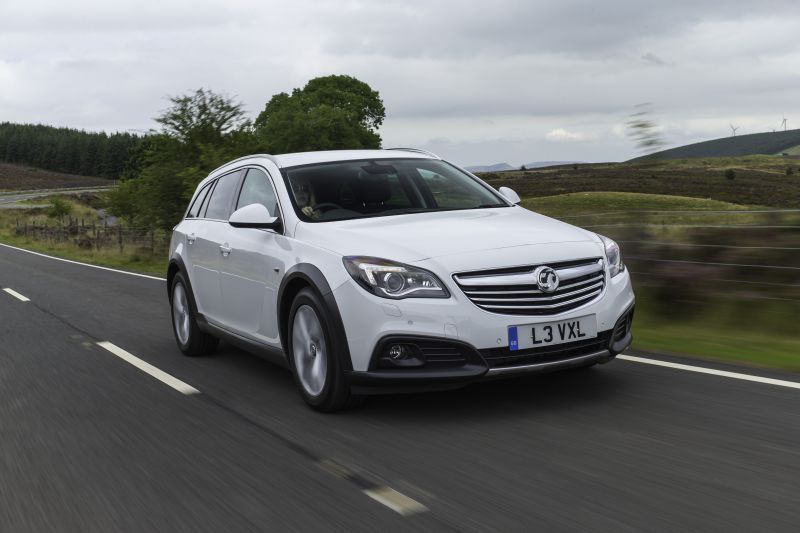
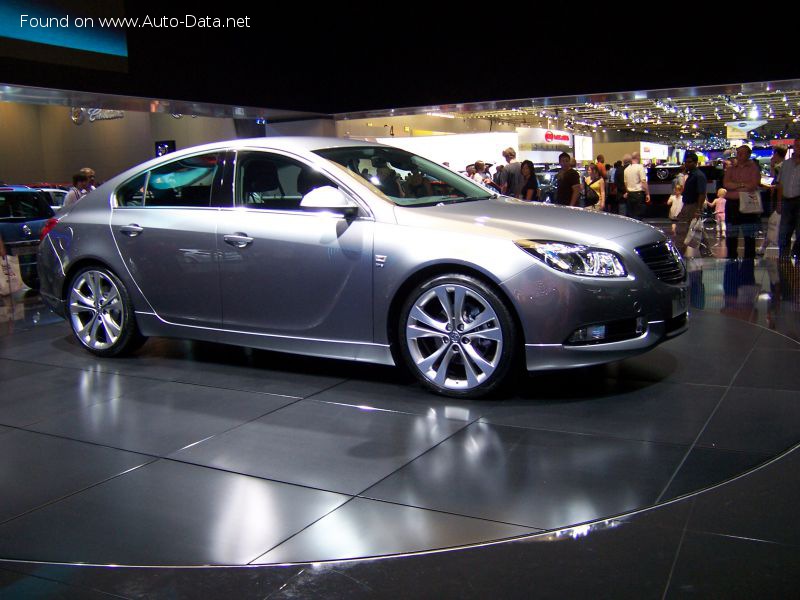
The 2013 facelift of the Vauxhall Insignia I Saloon brought a more refined and contemporary aesthetic to its already sleek profile. The four-door sedan body type retained its elegant, coupe-like roofline, but received updated front and rear fascias. The front featured a wider, lower grille, revised headlights with integrated LED daytime running lights, and a more sculpted bumper, giving it a more assertive road presence. At the rear, new LED taillights and a restyled trunk lid contributed to a more modern and cohesive look.
Inside, the facelift introduced significant improvements, focusing on ergonomics and perceived quality. The dashboard was redesigned with a cleaner layout, reducing button clutter, and incorporating a new infotainment system, often featuring a larger touchscreen display and improved connectivity options for the era. High-quality materials and soft-touch surfaces were prevalent, enhancing the cabin’s premium feel. The Insignia offered comfortable seating for five occupants, making it a practical choice for families or business users.
Practicality was a strong suit, with a minimum trunk space of 17.66 cu. ft. (500 liters), expanding to a generous 35.84 cu. ft. (1015 liters) with the rear seats folded, catering to various cargo needs. Standard safety features included an Anti-lock Braking System (ABS), and depending on the trim, a suite of airbags and electronic stability control systems. The vehicle rode on an independent McPherson strut front suspension and an independent multi-link rear suspension, providing a balanced ride and handling characteristics. Front brakes were ventilated discs, complemented by disc brakes at the rear, ensuring confident stopping power. The standard tire size was 215/60 R16 on 16-inch wheel rims.
Technical Specifications
| General Information | |
|---|---|
| Brand | Vauxhall |
| Model | Insignia |
| Generation | Insignia I Saloon (facelift 2013) |
| Type (Engine) | 2.0 CDTi BiTurbo ecoTEC (195 Hp) Automatic |
| Production Start / End | 2013 – 2015 |
| Powertrain Architecture | Internal Combustion Engine (Front-wheel drive) |
| Body Type | Sedan |
| Seats / Doors | 5 / 4 |
| Performance Specifications | |
| Fuel Consumption (Urban) | 7.6 l/100 km (30.9 US mpg) |
| Fuel Consumption (Extra Urban) | 4.5 l/100 km (52.3 US mpg) |
| Fuel Consumption (Combined) | 5.6 l/100 km (42 US mpg) |
| CO2 Emissions | 149 g/km |
| Fuel Type | Diesel |
| Acceleration 0-60 mph | 8.4 seconds |
| Maximum Speed | 142.29 mph (229 km/h) |
| Emission Standard | Euro 5 |
| Weight-to-Power Ratio | 8.5 kg/Hp (117.2 Hp/tonne) |
| Weight-to-Torque Ratio | 4.2 kg/Nm (240.4 Nm/tonne) |
| Engine Specifications | |
| Power | 195 Hp @ 4000 rpm |
| Power per Liter | 99.7 Hp/l |
| Torque | 295.02 lb.-ft. (400 Nm) @ 1750-2500 rpm |
| Engine Layout | Front, Transverse |
| Engine Model/Code | A20DTR |
| Engine Displacement | 1956 cm3 (119.36 cu. in.) |
| Number of Cylinders | 4 |
| Engine Configuration | Inline |
| Cylinder Bore | 3.27 in. (83 mm) |
| Piston Stroke | 3.56 in. (90.4 mm) |
| Valves per Cylinder | 4 |
| Fuel Injection System | Diesel Commonrail |
| Engine Aspiration | BiTurbo, Intercooler |
| Valvetrain | DOHC |
| Engine Oil Capacity | 4.5 l (4.76 US qt) |
| Coolant Capacity | 9 l (9.51 US qt) |
| Engine Systems | Particulate filter |
| Space, Volume, and Weights | |
| Kerb Weight | 3668.49 lbs. (1664 kg) |
| Trunk (Boot) Space (Min) | 17.66 cu. ft. (500 l) |
| Trunk (Boot) Space (Max) | 35.84 cu. ft. (1015 l) |
| Fuel Tank Capacity | 18.49 US gal (70 l) |
| Permitted Trailer Load with Brakes (12%) | 3747.86 lbs. (1700 kg) |
| Permitted Trailer Load without Brakes | 1653.47 lbs. (750 kg) |
| Dimensions | |
| Length | 190.63 in. (4842 mm) |
| Width | 73.07 in. (1856 mm) |
| Width (including mirrors) | 82.05 in. (2084 mm) |
| Height | 58.98 in. (1498 mm) |
| Wheelbase | 107.76 in. (2737 mm) |
| Front Overhang | 40.43 in. (1027 mm) |
| Rear Overhang | 42.44 in. (1078 mm) |
| Minimum Turning Circle | 37.4 ft. (11.4 m) |
| Drivetrain, Brakes, and Suspension | |
| Drivetrain Architecture | Front-wheel drive |
| Drive Wheel | Front-wheel drive |
| Gearbox | 6 gears, automatic transmission |
| Front Suspension | Independent, McPherson with coil spring and anti-roll bar |
| Rear Suspension | Independent multi-link suspension |
| Front Brakes | Ventilated discs |
| Rear Brakes | Disc |
| Assisting Systems | ABS (Anti-lock braking system) |
| Tires Size | 215/60 R16 |
| Wheel Rims Size | 16 inches |
Legacy and Market Impact
The Vauxhall Insignia, particularly after its 2013 facelift, cemented its reputation as a strong contender in the European mid-size sedan segment. It was a crucial model for Vauxhall in the UK, serving as a popular choice for both private buyers and significant fleet sales, often seen as company cars. Its blend of stylish design, spacious interior, comfortable ride, and efficient powertrains made it a compelling alternative to rivals from other mainstream brands.
In its primary markets, the Insignia competed directly with established players such as the Ford Mondeo (known as the Ford Fusion in North America), Volkswagen Passat, Skoda Superb, and Mazda 6. Against these competitors, the Insignia distinguished itself with its distinctive “sculptural artistry meets German precision” design philosophy, which resonated well with buyers looking for something a bit more expressive than some of its more conservative rivals. The 2.0 CDTi BiTurbo ecoTEC variant, in particular, offered a desirable combination of strong performance and exceptional fuel economy, appealing to those who covered long distances and sought lower running costs without sacrificing power.
The first-generation Insignia, including its facelifted iteration, played a vital role in elevating Vauxhall’s brand image, moving it towards a more premium and technologically advanced position compared to its Vectra predecessor. Its platform and engineering served as a foundation for other GM products globally, showcasing the expertise of GM’s European operations. While the Insignia nameplate continued with a second generation, the Insignia I Saloon (facelift 2013) remains a significant chapter in Vauxhall’s history, remembered as a capable and well-rounded D-segment sedan that successfully navigated the demands of a highly competitive automotive landscape. Its legacy is one of a practical, efficient, and surprisingly engaging vehicle that offered considerable value in its market.