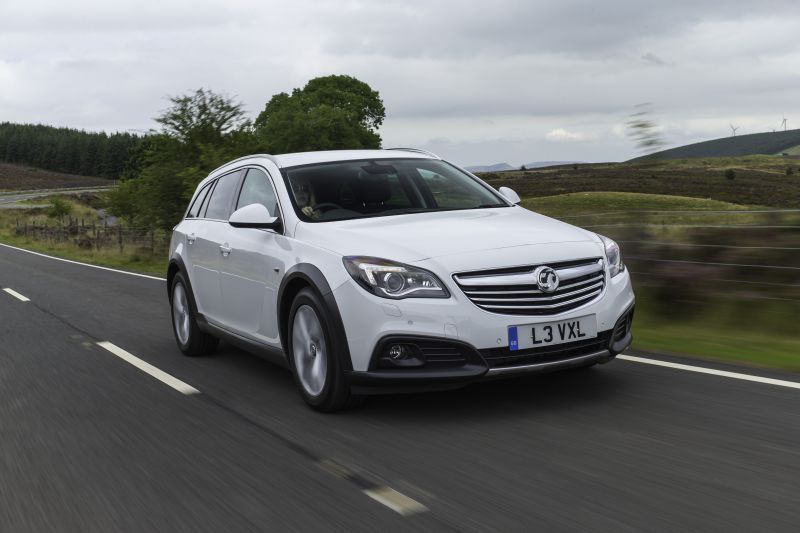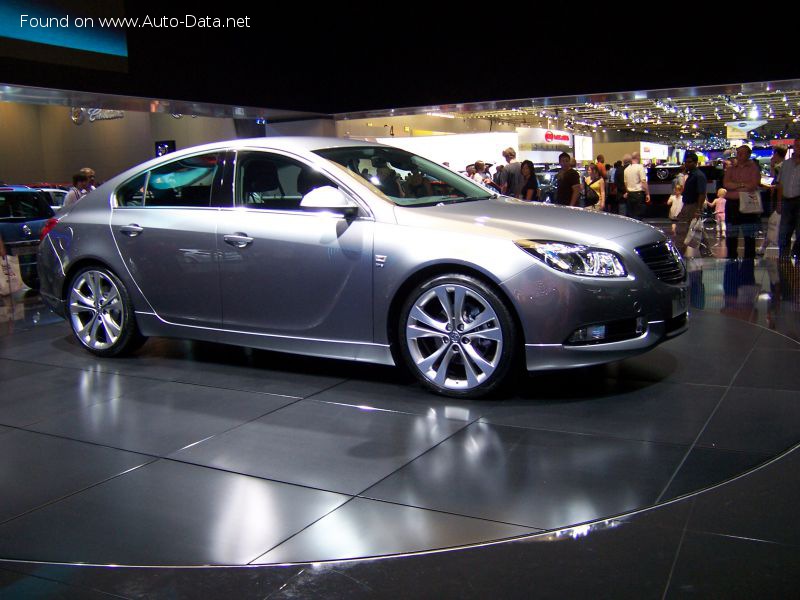
Vauxhall Insignia I Saloon (facelift 2013) 2.0 CDTi ecoFlex (140 Hp) Start/Stop
The Vauxhall Insignia I Saloon, specifically the facelifted model introduced in 2013, represented a significant contender in the highly competitive European D-segment. As the British market counterpart to the Opel Insignia, this mid-size sedan was designed to offer a blend of executive comfort, practical utility, and impressive fuel efficiency. The variant under review, the 2.0 CDTi ecoFlex (140 Hp) Start/Stop, was particularly notable for its focus on environmental consciousness and economical operation, a hallmark of diesel powertrains in the European market during its production run from 2013 to 2015. Positioned to appeal to both fleet buyers and private families, the Insignia I Saloon facelift sought to solidify Vauxhall’s presence against established rivals by offering refined styling, enhanced technology, and compelling running costs.
Evolution of the Vauxhall Insignia I Saloon
The original Insignia, launched in 2008, marked a departure from its Vectra predecessor, adopting a more premium and contemporary design language. The 2013 facelift brought a series of refinements aimed at keeping the model fresh and competitive. Visually, the updated Vauxhall Insignia I Saloon featured revised front and rear fascias, including new headlights with LED daytime running lights, a wider grille, and a subtly redesigned tailgate. Inside, Vauxhall improved material quality and ergonomics, particularly focusing on the infotainment system and instrument cluster. These updates were crucial in maintaining the Insignia’s appeal in a segment where aesthetics and cabin experience play a pivotal role in consumer choice. The ecoFlex designation, in particular, underscored Vauxhall’s commitment to delivering more environmentally friendly options without sacrificing performance or comfort.
Engine and Performance
At the heart of the Vauxhall Insignia I Saloon 2.0 CDTi ecoFlex (140 Hp) Start/Stop lies a robust and efficient 2.0-liter (1956 cm3 or 119.36 cu. in.) inline four-cylinder diesel engine, designated A20DTE. This powerplant delivers 140 horsepower at 4000 rpm, combined with a substantial torque output of 258.15 lb.-ft. (350 Nm) available across a broad rev range from 1750 to 2500 rpm. Such figures ensured flexible driving characteristics, making the car capable of both relaxed cruising and confident overtaking maneuvers. The engine’s layout is front-transverse, driving the front wheels through a precise 6-speed manual transmission.
The “ecoFlex” branding denotes a suite of technologies aimed at maximizing fuel efficiency and minimizing emissions. Key to this strategy is the Start/Stop system, which automatically shuts off the engine when the vehicle is stationary (e.g., at traffic lights) and restarts it seamlessly when the driver depresses the clutch. This feature significantly contributes to reducing fuel consumption in urban driving conditions. Fuel is delivered via a common rail diesel injection system, known for its precision and efficiency, while a turbocharger and intercooler ensure optimal air intake for enhanced power and responsiveness. The engine also features a DOHC valvetrain with four valves per cylinder, promoting efficient combustion. Complying with Euro 5 emission standards, the vehicle boasts impressive CO2 emissions of just 98 g/km.
Performance figures for this model reflect its balanced approach between efficiency and capability. The Vauxhall Insignia I Saloon 2.0 CDTi ecoFlex accelerates from 0 to 60 mph in approximately 10 seconds (0-100 km/h in 10.5 seconds) and can reach a maximum speed of 126.76 mph (204 km/h). These figures, while not sports-car-like, are more than adequate for daily driving and long-distance travel. The vehicle’s fuel economy is a standout feature, with a combined rating of 63.6 US mpg (3.7 l/100 km), and even more impressive on the extra-urban cycle at 73.5 US mpg (3.2 l/100 km). With a 18.49 US gallon (70 liter) fuel tank, the Insignia offered an extended cruising range, a highly desirable trait for European motorists.
Design and Features
The 2013 Vauxhall Insignia I Saloon maintains its elegant four-door sedan body style, exuding a sense of understated sophistication. Its dimensions are substantial for the segment, measuring 190.63 inches (4842 mm) in length, 73.07 inches (1856 mm) in width (82.05 inches or 2084 mm including mirrors), and 58.98 inches (1498 mm) in height. The wheelbase of 107.76 inches (2737 mm) contributes to a stable ride and generous interior space for five occupants.
Inside, the facelifted Insignia offered a more refined cabin environment. While specific trim levels and features would vary by market, typical amenities for a 2013 D-segment vehicle included climate control, a comprehensive infotainment system (upgraded for the facelift with fewer buttons and a more intuitive interface), and various connectivity options. Practicality was a strong suit, with a minimum trunk space of 17.66 cu. ft. (500 liters), expanding to an impressive 35.84 cu. ft. (1015 liters) with the rear seats folded, making it suitable for family trips or hauling larger items. Safety features for the era were well-represented, including ABS (Anti-lock Braking System) as standard, and likely a suite of airbags and electronic stability control systems, though not explicitly detailed in the provided data.
The chassis and suspension setup were designed for a comfortable yet composed ride. The front suspension utilized an independent McPherson strut design with coil springs and an anti-roll bar, while the rear featured an independent multi-link setup. This combination provided a good balance between ride comfort and handling precision. Braking duties were handled by ventilated discs at the front and solid discs at the rear, ensuring confident stopping power. The car rode on 215/60 R16 tires fitted to 16-inch wheel rims, a common size for efficiency and comfort in this segment.
Technical Specifications
| Category | Specification |
|---|---|
| Brand | Vauxhall |
| Model | Insignia |
| Generation | Insignia I Saloon (facelift 2013) |
| Type (Engine) | 2.0 CDTi ecoFlex (140 Hp) Start/Stop |
| Production Years | 2013 – 2015 |
| Powertrain Architecture | Internal Combustion engine |
| Body type | Sedan |
| Seats | 5 |
| Doors | 4 |
| Performance Specs | |
| Fuel consumption (economy) – urban | 52.3 US mpg (4.5 l/100 km) |
| Fuel consumption (economy) – extra urban | 73.5 US mpg (3.2 l/100 km) |
| Fuel consumption (economy) – combined | 63.6 US mpg (3.7 l/100 km) |
| CO2 emissions | 98 g/km |
| Fuel Type | Diesel |
| Acceleration 0 – 60 mph | 10 sec |
| Acceleration 0 – 100 km/h | 10.5 sec |
| Maximum speed | 126.76 mph (204 km/h) |
| Emission standard | Euro 5 |
| Weight-to-power ratio | 11.5 kg/Hp (86.8 Hp/tonne) |
| Weight-to-torque ratio | 4.6 kg/Nm (217 Nm/tonne) |
| Engine Specs | |
| Power | 140 Hp @ 4000 rpm |
| Power per liter | 71.6 Hp/l |
| Torque | 258.15 lb.-ft. (350 Nm) @ 1750-2500 rpm |
| Engine layout | Front, Transverse |
| Engine Model/Code | A20DTE |
| Engine displacement | 119.36 cu. in. (1956 cm3) |
| Number of cylinders | 4 |
| Engine configuration | Inline |
| Cylinder Bore | 3.27 in. (83 mm) |
| Piston Stroke | 3.56 in. (90.4 mm) |
| Number of valves per cylinder | 4 |
| Fuel injection system | Diesel Commonrail |
| Engine aspiration | Turbocharger, Intercooler |
| Valvetrain | DOHC |
| Engine oil capacity | 4.76 US qt (4.5 l) |
| Coolant capacity | 9.51 US qt (9 l) |
| Engine systems | Start & Stop System, Particulate filter |
| Space, Volume and Weights | |
| Kerb Weight | 3556.06 lbs. (1613 kg) |
| Trunk (boot) space – minimum | 17.66 cu. ft. (500 l) |
| Trunk (boot) space – maximum | 35.84 cu. ft. (1015 l) |
| Fuel tank capacity | 18.49 US gal (70 l) |
| Permitted trailer load with brakes (12%) | 3747.86 lbs. (1700 kg) |
| Permitted trailer load without brakes | 1653.47 lbs. (750 kg) |
| Dimensions | |
| Length | 190.63 in. (4842 mm) |
| Width | 73.07 in. (1856 mm) |
| Width including mirrors | 82.05 in. (2084 mm) |
| Height | 58.98 in. (1498 mm) |
| Wheelbase | 107.76 in. (2737 mm) |
| Front overhang | 40.43 in. (1027 mm) |
| Rear overhang | 42.44 in. (1078 mm) |
| Minimum turning circle (turning diameter) | 37.4 ft. (11.4 m) |
| Drivetrain, Brakes and Suspension Specs | |
| Drivetrain Architecture | Front wheel drive. Internal Combustion engine. |
| Drive wheel | Front wheel drive |
| Number of gears and type of gearbox | 6 gears, manual transmission |
| Front suspension | Independent, type McPherson with coil spring and anti-roll bar |
| Rear suspension | Independent multi-link suspension |
| Front brakes | Ventilated discs |
| Rear brakes | Disc |
| Assisting systems | ABS (Anti-lock braking system) |
| Tires size | 215/60 R16 |
| Wheel rims size | 16 inches |
Legacy and Market Impact
The Vauxhall Insignia I Saloon, particularly in its facelifted form and efficient ecoFlex guise, carved out a significant niche in the European D-segment. It faced stiff competition from segment leaders like the Ford Mondeo, Volkswagen Passat, Skoda Superb, and Peugeot 508. Despite the strong rivals, the Insignia maintained a reputation as a practical, well-equipped, and comfortable family car, particularly appealing to company car drivers and those prioritizing low running costs.
Its “ecoFlex” variants, like the 2.0 CDTi (140 Hp) Start/Stop, were instrumental in offering compelling fuel economy and low CO2 emissions, which translated into lower taxes and running costs in many European countries. This focus on efficiency, combined with a refined ride and a spacious interior, made the Insignia a strong value proposition. While Vauxhall as a brand is not present in the United States, the Insignia’s Opel counterpart was briefly sold in the U.S. as the Buick Regal, highlighting the platform’s global versatility and GM’s strategy of badge engineering across different markets. The Insignia’s design, which moved away from the more conservative styling of its predecessors, was generally well-received and contributed to its modern appeal.
In terms of historical significance, the Insignia represented Vauxhall’s renewed effort to compete with more premium brands in the executive sedan segment. It showcased advancements in diesel engine technology, demonstrating that power and efficiency could coexist in a mainstream vehicle. The model’s success laid the groundwork for future generations and helped maintain Vauxhall’s position as a key player in the UK automotive market. Its blend of practical features, comfortable driving dynamics, and a strong emphasis on economical operation ensured its enduring relevance during its production years and beyond, making it a reliable and respected choice for countless European drivers.