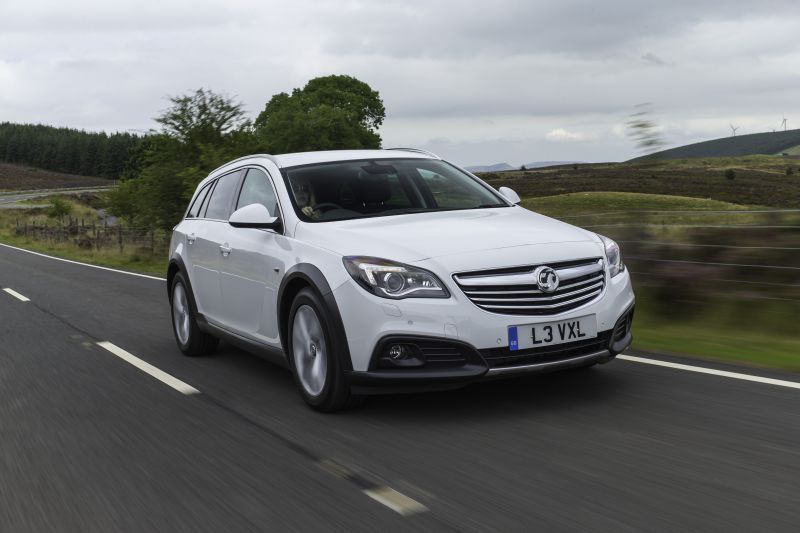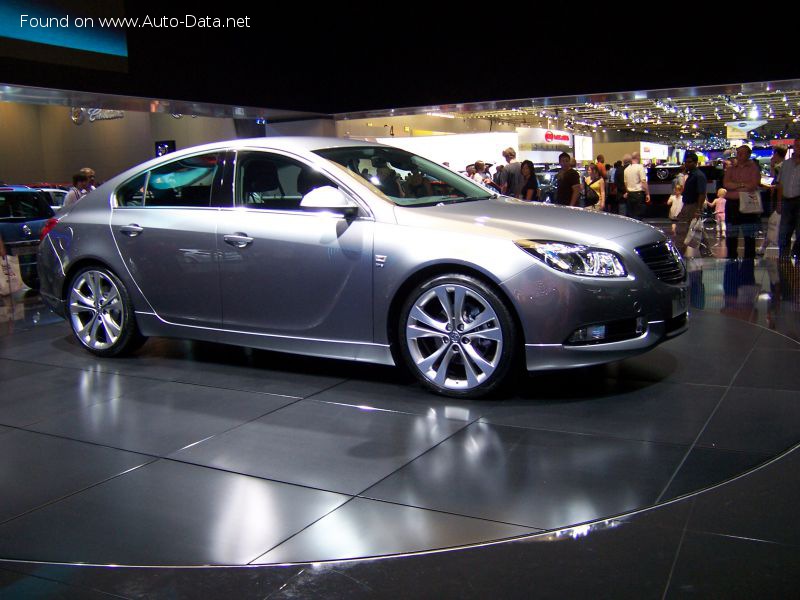
Vauxhall Insignia I Saloon (facelift 2013) 2.0 CDTi ecoTEC (163 Hp) Start/Stop
The Vauxhall Insignia I Saloon (facelift 2013) represents a significant refresh of Vauxhall’s first-generation mid-size family sedan, a crucial model for the brand in the United Kingdom. Launched in 2013 and produced through 2015, this iteration of the Insignia aimed to solidify its position in the highly competitive European D-segment, offering a blend of contemporary styling, enhanced technology, and impressive fuel efficiency, particularly with its advanced diesel powertrains. The specific variant, the 2.0 CDTi ecoTEC (163 Hp) Start/Stop, highlights Vauxhall’s commitment to economical yet capable family transportation, featuring a sophisticated diesel engine paired with modern efficiency systems. While the Insignia was primarily targeted at European markets, its underlying platform and design ethos were shared with its continental European sibling, the Opel Insignia, and even saw a rebadged presence in North America as the Buick Regal, demonstrating its global engineering roots.
This facelifted model introduced subtle yet effective design updates, interior refinements, and powertrain enhancements designed to keep it fresh against a host of rivals. Vauxhall, as the British arm of General Motors’ European operations (then Opel), tailored the Insignia to local tastes and market demands, focusing on practicality, comfortable ride quality, and low running costs, which were paramount for both private buyers and fleet operators in the UK. The 2.0 CDTi ecoTEC engine, with its 163 horsepower output, sat in a sweet spot, offering sufficient performance for highway cruising while delivering class-leading fuel economy figures.
Engine and Performance: The 2.0 CDTi ecoTEC Heart of the Vauxhall Insignia I Saloon (facelift 2013)
At the core of the Vauxhall Insignia I Saloon (facelift 2013) 2.0 CDTi ecoTEC variant is a robust and efficient 2.0-liter (119.36 cubic inches) inline four-cylinder diesel engine, internally designated A20DTH. This powerplant is a testament to modern diesel engineering, featuring a common rail fuel injection system, a turbocharger, and an intercooler to optimize combustion and power delivery. With a DOHC (Double Overhead Camshaft) valvetrain and four valves per cylinder, the engine is designed for both efficiency and smooth operation.
This particular configuration generates a respectable 163 horsepower at 4000 rpm, providing ample power for daily driving and comfortable long-distance journeys. More significantly for a diesel engine, it delivers a substantial 258.15 lb.-ft. of torque across a broad and accessible rev range, from 1750 to 2500 rpm. This strong torque output ensures excellent low-end grunt, making the Insignia feel effortless in city traffic and capable of confident overtaking maneuvers on the highway. Power is efficiently transferred to the front wheels via a precise 6-speed manual transmission, offering engaging control for the driver.
Performance figures for the Insignia 2.0 CDTi ecoTEC are competitive for its class. It accelerates from 0 to 60 mph in approximately 9 seconds, and boasts a top speed of 136.08 mph. However, where this engine truly shines is in its fuel economy. Equipped with Vauxhall’s ecoTEC technologies and a Start/Stop system, which automatically shuts off the engine when the vehicle is stationary and restarts it when the driver is ready to move, it achieves remarkable efficiency. The combined fuel economy is rated at an impressive 54.7 US mpg, with extra-urban figures reaching an outstanding 63.6 US mpg. These figures, coupled with CO2 emissions of just 114 g/km, meant the Insignia was an attractive proposition for buyers looking to minimize running costs and environmental impact, meeting the Euro 5 emission standard. The integration of a particulate filter further reduced harmful emissions, aligning with increasingly stringent European regulations.
Design and Features
The Vauxhall Insignia I Saloon (facelift 2013) maintained the sleek, coupe-like profile that defined the first-generation Insignia, a design language that was well-received upon its initial launch. The 2013 facelift brought subtle but meaningful updates to the exterior, including revised front and rear fascias, updated grille designs, and new headlamp and taillamp graphics, giving the car a more contemporary and sophisticated appearance. The “Saloon” body style, known as a sedan in the US, featured four doors and seating for five occupants, emphasizing its role as a practical family vehicle.
Inside, the facelift focused on improving ergonomics and material quality. The dashboard received a significant overhaul, featuring a more intuitive infotainment system and a cleaner layout for controls. While specific interior features would vary by trim level, the Insignia typically offered a comfortable and well-appointed cabin, with features such as climate control, a comprehensive audio system, and various connectivity options common for its era. Practicality was a strong suit, with a generous trunk capacity ranging from 17.66 cubic feet to an expansive 35.84 cubic feet with the rear seats folded, making it suitable for family trips and cargo hauling.
Underneath its stylish skin, the Insignia utilized a robust chassis designed for a balanced ride. The front suspension employed an independent McPherson strut setup with coil springs and an anti-roll bar (sway bar), providing precise steering and good roadholding. The rear featured an independent multi-link suspension, contributing to improved ride comfort and stability, especially over uneven surfaces. Braking performance was handled by ventilated discs at the front and solid discs at the rear, supported by an Anti-lock Braking System (ABS) for enhanced safety during emergency stops. The car rode on 215/60 R16 tires, mounted on 16-inch wheel rims, offering a good balance of comfort and grip. The overall design and engineering aimed to deliver a refined driving experience, characteristic of a European mid-size sedan.
Technical Specifications
| Category | Specification |
|---|---|
| General Information | |
| Brand | Vauxhall |
| Model | Insignia |
| Generation | Insignia I Saloon (facelift 2013) |
| Engine Type | 2.0 CDTi ecoTEC (163 Hp) Start/Stop |
| Production Start | 2013 year |
| Production End | 2015 year |
| Powertrain Architecture | Internal Combustion engine |
| Body Type | Sedan |
| Seats | 5 |
| Doors | 4 |
| Performance Specs | |
| Fuel Consumption (Urban) | 5.4 l/100 km (43.6 US mpg) |
| Fuel Consumption (Extra Urban) | 3.7 l/100 km (63.6 US mpg) |
| Fuel Consumption (Combined) | 4.3 l/100 km (54.7 US mpg) |
| CO2 Emissions | 114 g/km |
| Fuel Type | Diesel |
| Acceleration 0-60 mph | 9 sec |
| Maximum Speed | 219 km/h (136.08 mph) |
| Emission Standard | Euro 5 |
| Weight-to-Power Ratio | 10 kg/Hp (100.4 Hp/tonne) |
| Weight-to-Torque Ratio | 4.6 kg/Nm (215.7 Nm/tonne) |
| Engine Specs | |
| Power | 163 Hp @ 4000 rpm |
| Power per liter | 83.3 Hp/l |
| Torque | 350 Nm @ 1750-2500 rpm (258.15 lb.-ft.) |
| Engine Layout | Front, Transverse |
| Engine Model/Code | A20DTH |
| Engine Displacement | 1956 cm3 (119.36 cu. in.) |
| Number of Cylinders | 4 |
| Engine Configuration | Inline |
| Cylinder Bore | 83 mm (3.27 in.) |
| Piston Stroke | 90.4 mm (3.56 in.) |
| Valves per Cylinder | 4 |
| Fuel Injection System | Diesel Commonrail |
| Engine Aspiration | Turbocharger, Intercooler |
| Valvetrain | DOHC |
| Engine Oil Capacity | 4.5 l (4.76 US qt) |
| Coolant Capacity | 9 l (9.51 US qt) |
| Engine Systems | Start & Stop System, Particulate filter |
| Space, Volume and Weights | |
| Curb Weight | 1623 kg (3578.1 lbs.) |
| Max. Weight | 2130 kg (4695.85 lbs.) |
| Max Load | 507 kg (1117.74 lbs.) |
| Trunk (boot) Space – Minimum | 500 l (17.66 cu. ft.) |
| Trunk (boot) Space – Maximum | 1015 l (35.84 cu. ft.) |
| Fuel Tank Capacity | 70 l (18.49 US gal) |
| Permitted Trailer Load with Brakes (12%) | 1600 kg (3527.4 lbs.) |
| Permitted Trailer Load without Brakes | 750 kg (1653.47 lbs.) |
| Dimensions | |
| Length | 4842 mm (190.63 in.) |
| Width | 1856 mm (73.07 in.) |
| Width including Mirrors | 2084 mm (82.05 in.) |
| Height | 1498 mm (58.98 in.) |
| Wheelbase | 2737 mm (107.76 in.) |
| Front Overhang | 1027 mm (40.43 in.) |
| Rear Overhang | 1078 mm (42.44 in.) |
| Minimum Turning Circle (diameter) | 11.4 m (37.4 ft.) |
| Drivetrain, Brakes and Suspension Specs | |
| Drivetrain Architecture | Front-wheel drive (ICE drives front wheels) |
| Drive Wheel | Front wheel drive |
| Number of Gears and Type of Gearbox | 6 gears, manual transmission |
| Front Suspension | Independent, McPherson with coil spring and anti-roll bar |
| Rear Suspension | Independent multi-link suspension |
| Front Brakes | Ventilated discs |
| Rear Brakes | Disc |
| Assisting Systems | ABS (Anti-lock braking system) |
| Tire Size | 215/60 R16 |
| Wheel Rims Size | 16 inches |
Legacy and Market Impact
The Vauxhall Insignia I Saloon (facelift 2013) played a vital role in Vauxhall’s product lineup, serving as its flagship mid-size sedan in the UK market. It competed directly with formidable rivals in the European D-segment, including the Ford Mondeo, Volkswagen Passat, Skoda Superb, and Peugeot 508. In this fiercely contested segment, the Insignia carved out its niche by offering a compelling combination of attractive design, generous interior space, and, critically, outstanding fuel efficiency, especially with the 2.0 CDTi ecoTEC engine.
Its reputation was built on being a practical, comfortable, and cost-effective family car, particularly appealing to company car drivers and fleets due to its low CO2 emissions and excellent mpg figures, which translated into favorable tax implications in the UK. The facelift ensured it remained competitive, addressing feedback from the initial launch and incorporating updated technology and design cues. While it might not have offered the same dynamic prowess as some of its German competitors, it excelled in providing a smooth, quiet, and refined cruising experience, making it a popular choice for long-distance commuters.
The Insignia’s global impact extended beyond the Vauxhall badge. As mentioned, it was sold as the Opel Insignia in continental Europe and was rebadged as the Buick Regal in North America and China. This cross-continental strategy showcased GM’s ability to leverage a single robust platform for different markets, adapting the vehicle to suit regional preferences. The success of the Insignia platform globally underscored its fundamental strengths in engineering, safety, and packaging.
In the context of its time, the 2.0 CDTi ecoTEC engine was a standout, embodying the peak of diesel popularity in Europe before the “Dieselgate” scandal shifted public perception. Its blend of power and economy was highly sought after, making it a benchmark for efficiency in its class. The Start/Stop system, then a relatively new mainstream feature, further cemented its credentials as a forward-thinking, environmentally conscious vehicle. The Insignia’s legacy is that of a solid, dependable, and efficient workhorse that capably served the needs of British families and businesses, securing its place as a significant model in Vauxhall’s modern history. It paved the way for future generations of the Insignia, continuing the tradition of offering a competitive and well-rounded package in the mid-size segment.