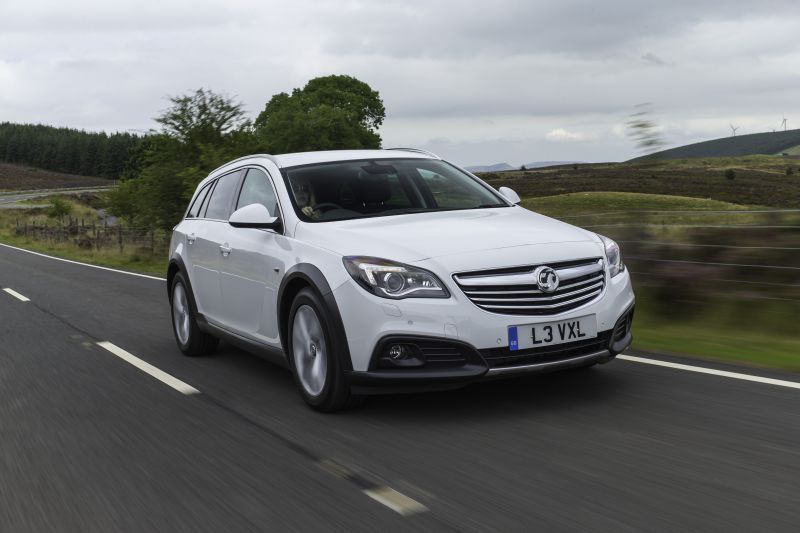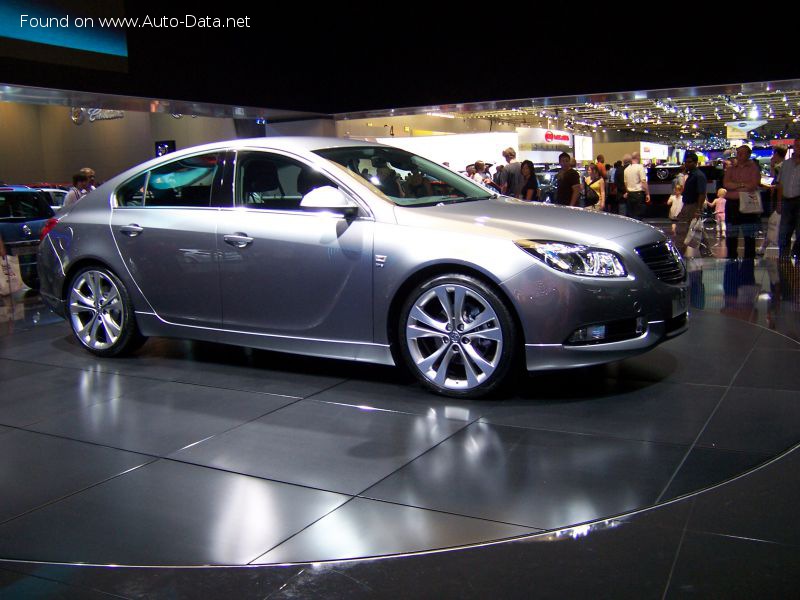
Vauxhall Insignia I Saloon (facelift 2013) 2.0i Turbo ecoTEC (250 Hp) Automatic: A Detailed Overview
The Vauxhall Insignia I Saloon (facelift 2013) 2.0i Turbo ecoTEC (250 Hp) Automatic represents a significant iteration of Vauxhall’s flagship D-segment (mid-size) sedan, primarily marketed in the United Kingdom. As the British counterpart to the Opel Insignia, a vehicle widely recognized across continental Europe, this model played a crucial role in Vauxhall’s lineup from its facelifted introduction in 2013 until the end of its first generation’s production in 2017. Positioned as a stylish and capable competitor in a fiercely contested segment, the Insignia aimed to blend executive comfort with accessible performance and modern technology, appealing to both private buyers and the robust fleet market.
The first-generation Insignia, originally launched in 2008, marked a departure from its Vectra predecessor with a more sophisticated design language and an increased focus on premium appeal. The 2013 facelift brought a host of refinements, addressing critical feedback and updating the vehicle to keep pace with evolving market expectations. This particular variant, equipped with the potent 2.0-liter Turbo ecoTEC engine delivering 250 horsepower and paired with an automatic transmission, highlighted Vauxhall’s commitment to offering compelling performance options within its mainstream sedan range. While never officially sold in the United States under the Vauxhall badge, its Opel Insignia sibling did find its way to North American shores as the Buick Regal, showcasing the global platform sharing within the General Motors (GM) family during that era.
Engine and Performance of the Vauxhall Insignia I Saloon (facelift 2013) 2.0i Turbo ecoTEC
At the heart of this particular Vauxhall Insignia I Saloon (facelift 2013) 2.0i Turbo ecoTEC model lies a robust and efficient 2.0-liter (1998 cm3 or 121.93 cubic inches) inline four-cylinder engine, designated by the code A20NHT. This powerplant features a sophisticated direct injection fuel system, double overhead camshafts (DOHC) with four valves per cylinder, and a turbocharger coupled with an intercooler. This advanced engineering allows the engine to produce a formidable 250 horsepower at 5300 rpm, translating to an impressive 125.1 horsepower per liter. More significantly for daily driving, the engine generates a substantial 295.02 lb.-ft. (400 Nm) of torque, available across a broad and usable rev range from 2500 to 4000 rpm. This wide torque band ensures responsive acceleration and effortless overtaking maneuvers, characteristic of a well-engineered turbocharged unit.
Power is delivered to the front wheels via a smooth-shifting 6-speed automatic transmission. This drivetrain architecture, combining a potent engine with a refined automatic gearbox, allows the Insignia to accelerate from 0 to 60 mph in a brisk 7.3 seconds (0-100 km/h in 7.7 seconds). The top speed is electronically limited to 152.24 mph (245 km/h), firmly placing it among the more performance-oriented offerings in its segment. Despite its strong performance figures, the “ecoTEC” designation signifies Vauxhall’s efforts to balance power with efficiency. The combined fuel economy is rated at 29.8 US mpg (7.9 l/100 km), with extra-urban driving yielding up to 39.9 US mpg (5.9 l/100 km). CO2 emissions are 186 g/km, adhering to the Euro 5 emission standard prevalent during its production years. This blend of performance and relative efficiency made the 2.0i Turbo ecoTEC an attractive option for buyers seeking both exhilarating drives and reasonable running costs.
Design and Features
The Vauxhall Insignia I Saloon (facelift 2013) presented a refreshed and more assertive aesthetic than its pre-facelift predecessor. Its body type is a four-door sedan (often referred to as a “saloon” in European markets), designed to comfortably seat five occupants. The facelift introduced a wider, lower grille, revised headlamp and taillamp designs with distinctive LED signatures, and a more sculpted rear bumper, giving the car a more contemporary and premium appearance. The overall length of 190.63 inches (4842 mm) and width of 73.07 inches (1856 mm) contribute to its imposing road presence and interior spaciousness, while the 107.76-inch (2737 mm) wheelbase ensures a stable and composed ride.
Inside, the 2013 facelift brought significant improvements to the cabin, particularly in terms of ergonomics and technology. The dashboard was redesigned to be more driver-focused, featuring higher-quality materials and an updated infotainment system. Key features typically included an advanced touchscreen display, improved connectivity options, and more intuitive controls. For a vehicle of its era, the Insignia offered a commendable array of safety features, including standard Anti-lock Braking System (ABS), multiple airbags, and a robust chassis. The suspension setup comprised an independent McPherson strut system with coil springs and an anti-roll bar at the front, paired with an independent multi-link suspension at the rear, designed to provide a balance of comfortable cruising and dynamic handling. The car rode on 225/55 R17 tires mounted on 17-inch wheel rims, providing a good balance between ride comfort and grip. Practicality was also a strong suit, with a generous trunk space ranging from 17.66 cubic feet (500 liters) to 35.84 cubic feet (1015 liters) with the rear seats folded, catering to family and business needs alike.
Technical Specifications
General Information |
|
| Brand | Vauxhall |
| Model | Insignia |
| Generation | Insignia I Saloon (facelift 2013) |
| Type (Engine) | 2.0i Turbo ecoTEC (250 Hp) Automatic |
| Production Start / End | 2013 – 2017 |
| Powertrain Architecture | Internal Combustion Engine |
| Body Type | Sedan |
| Seats / Doors | 5 / 4 |
Performance Specifications |
|
| Fuel Consumption (Urban) | 11.4 l/100 km (20.6 US mpg) |
| Fuel Consumption (Extra Urban) | 5.9 l/100 km (39.9 US mpg) |
| Fuel Consumption (Combined) | 7.9 l/100 km (29.8 US mpg) |
| CO2 Emissions | 186 g/km |
| Fuel Type | Petrol (Gasoline) |
| Acceleration 0-60 mph | 7.3 seconds |
| Acceleration 0-100 km/h | 7.7 seconds |
| Maximum Speed | 152.24 mph (245 km/h) |
| Emission Standard | Euro 5 |
| Weight-to-Power Ratio | 6.5 kg/Hp (155 Hp/tonne) |
| Weight-to-Torque Ratio | 4 kg/Nm (248 Nm/tonne) |
Engine Specifications |
|
| Power | 250 Hp @ 5300 rpm |
| Power per Liter | 125.1 Hp/l |
| Torque | 295.02 lb.-ft. (400 Nm) @ 2500-4000 rpm |
| Engine Layout | Front, Transverse |
| Engine Model/Code | A20NHT |
| Engine Displacement | 1998 cm3 (121.93 cu. in.) |
| Number of Cylinders | 4, Inline |
| Cylinder Bore | 3.39 in. (86 mm) |
| Piston Stroke | 3.39 in. (86 mm) |
| Number of Valves per Cylinder | 4 |
| Fuel Injection System | Direct injection |
| Engine Aspiration | Turbocharger, Intercooler |
| Valvetrain | DOHC |
| Engine Oil Capacity | 6 liters (6.34 US qt) |
| Coolant Capacity | 8 liters (8.45 US qt) |
Dimensions, Volume & Weights |
|
| Kerb Weight | 3556.06 lbs. (1613 kg) |
| Trunk (Boot) Space – Minimum | 17.66 cu. ft. (500 l) |
| Trunk (Boot) Space – Maximum | 35.84 cu. ft. (1015 l) |
| Fuel Tank Capacity | 18.49 US gal (70 l) |
| Permitted Trailer Load with Brakes (12%) | 3968.32 lbs. (1800 kg) |
| Permitted Trailer Load without Brakes | 1653.47 lbs. (750 kg) |
| Length | 190.63 in. (4842 mm) |
| Width | 73.07 in. (1856 mm) |
| Width including Mirrors | 82.05 in. (2084 mm) |
| Height | 58.98 in. (1498 mm) |
| Wheelbase | 107.76 in. (2737 mm) |
| Front Overhang | 40.43 in. (1027 mm) |
| Rear Overhang | 42.44 in. (1078 mm) |
| Minimum Turning Circle | 37.4 ft. (11.4 m) |
Drivetrain, Brakes and Suspension |
|
| Drivetrain Architecture | Internal combustion engine drives the front wheels. |
| Drive Wheel | Front-wheel drive |
| Number of Gears and Type of Gearbox | 6 gears, automatic transmission |
| Front Suspension | Independent, McPherson with coil spring and anti-roll bar |
| Rear Suspension | Independent multi-link suspension |
| Front Brakes | Ventilated discs |
| Rear Brakes | Disc |
| Assisting Systems | ABS (Anti-lock braking system) |
| Tires Size | 225/55 R17 |
| Wheel Rims Size | 17 inches |
Legacy and Market Impact of the Vauxhall Insignia I Saloon (facelift 2013)
The Vauxhall Insignia I Saloon (facelift 2013), particularly in its potent 2.0i Turbo ecoTEC (250 Hp) Automatic guise, cemented its place as a strong contender in the European mid-size sedan market. Its primary competitors included established rivals such as the Ford Mondeo, Volkswagen Passat, Skoda Superb, and Peugeot 508. The Insignia distinguished itself with its striking design, which was often praised for its executive presence and smooth lines. The facelift ensured it remained visually competitive and offered updated technology to meet the demands of a rapidly evolving automotive landscape.
Its reputation was built on a foundation of comfort, spaciousness, and a generally pleasant driving experience, especially on long journeys. The 250 horsepower variant, while not a dedicated performance model, provided ample power for confident highway cruising and spirited driving when desired, appealing to those who sought a blend of practicality and dynamism. This made it a popular choice not only for families but also for company car fleets, where its combination of style, features, and respectable fuel economy (for its power output) offered a compelling value proposition. The Insignia’s role as Vauxhall’s flagship sedan meant it carried the responsibility of showcasing the brand’s capabilities and design direction.
While the Vauxhall Insignia was never officially imported to the United States under its original branding, its mechanical underpinnings and design philosophy were evident in the Buick Regal, which was also a rebadged Opel Insignia. This cross-continental branding strategy by General Motors allowed the core engineering and design to achieve economies of scale, making the Insignia platform a globally significant product. The Insignia’s legacy is one of a solid, well-rounded family and executive sedan that provided a strong alternative to premium brands while offering a higher level of refinement and performance than many of its mainstream competitors. Its success paved the way for the second-generation Insignia, which continued to build on the foundations laid by this first, highly impactful model.